Request Demo
What are LEFTY1 modulators and how do they work?
25 June 2024
In the ever-evolving field of biomedical research, the quest to understand intricate biological pathways and their implications in disease has led researchers to explore numerous molecular modulators. One such intriguing player is LEFTY1, a protein that has garnered attention for its critical roles in developmental biology and disease modulation. In this post, we will delve into the world of LEFTY1 modulators, examining their mechanisms, functionality, and potential therapeutic applications.
LEFTY1 is a member of the TGF-beta (transforming growth factor-beta) family, which plays a pivotal role in regulating various cellular processes, including proliferation, differentiation, and apoptosis. LEFTY1 is particularly notable for its role in the establishment of left-right asymmetry during embryonic development, hence the name. LEFTY1 modulators are molecules or compounds that can influence the activity of LEFTY1, either enhancing or inhibiting its function. These modulators can have far-reaching implications in both developmental biology and disease treatment, making them a hot topic of research.
The mechanism by which LEFTY1 modulators operate is intricately tied to the protein's role in cellular signaling pathways. LEFTY1 typically functions by binding to its receptors on the cell surface, thereby initiating a cascade of intracellular events that influence gene expression and cellular behavior. Modulators of LEFTY1 can function in several ways. Some might enhance the binding affinity of LEFTY1 to its receptors, amplifying its signaling effects. Others might inhibit its interaction with these receptors, thus dampening LEFTY1's activity. Additionally, certain modulators can affect the stability and localization of LEFTY1, thereby regulating its availability to participate in signaling pathways. Through these various mechanisms, LEFTY1 modulators can finely tune the biological processes controlled by this protein.
The applications of LEFTY1 modulators are as diverse as they are promising. Given the protein’s central role in developmental processes, LEFTY1 modulators hold potential in regenerative medicine and developmental biology research. For instance, manipulating LEFTY1 activity could aid in understanding and potentially correcting developmental disorders associated with aberrant left-right asymmetry. This could have implications for conditions such as situs inversus, where the positions of the major visceral organs are mirrored from their normal locations.
Moreover, LEFTY1 modulators are being investigated in the context of cancer biology. Abnormal LEFTY1 signaling has been implicated in various cancers, including ovarian and prostate cancers. By modulating LEFTY1 activity, researchers hope to uncover new therapeutic strategies that could inhibit tumor growth and metastasis. For example, in cancers where LEFTY1 is found to suppress tumor progression, enhancing its activity through specific modulators could provide a novel treatment avenue.
In the realm of stem cell research, LEFTY1 modulators are also gaining traction. LEFTY1 is involved in maintaining the pluripotency of stem cells, which is their ability to differentiate into various cell types. Modulating LEFTY1 could therefore be critical in stem cell therapies, where precise control over cell differentiation is required to generate specific cell types for tissue repair and regeneration.
Additionally, LEFTY1 modulators might have applications in treating fibrotic diseases. Fibrosis, characterized by excessive tissue scarring and extracellular matrix deposition, often involves dysregulated TGF-beta signaling. As a member of this signaling family, LEFTY1 and its modulators could potentially be targeted to modulate fibrotic responses, offering hope for conditions such as liver cirrhosis and pulmonary fibrosis.
In conclusion, LEFTY1 modulators represent a fascinating and promising frontier in biomedical research. By influencing the activity of LEFTY1, these modulators have the potential to advance our understanding of developmental biology, stem cell science, cancer therapy, and fibrotic disease treatment. As research progresses, the insights gained from studying LEFTY1 modulators will undoubtedly contribute to the development of innovative therapeutic strategies, bringing us closer to addressing some of the most challenging health conditions.
LEFTY1 is a member of the TGF-beta (transforming growth factor-beta) family, which plays a pivotal role in regulating various cellular processes, including proliferation, differentiation, and apoptosis. LEFTY1 is particularly notable for its role in the establishment of left-right asymmetry during embryonic development, hence the name. LEFTY1 modulators are molecules or compounds that can influence the activity of LEFTY1, either enhancing or inhibiting its function. These modulators can have far-reaching implications in both developmental biology and disease treatment, making them a hot topic of research.
The mechanism by which LEFTY1 modulators operate is intricately tied to the protein's role in cellular signaling pathways. LEFTY1 typically functions by binding to its receptors on the cell surface, thereby initiating a cascade of intracellular events that influence gene expression and cellular behavior. Modulators of LEFTY1 can function in several ways. Some might enhance the binding affinity of LEFTY1 to its receptors, amplifying its signaling effects. Others might inhibit its interaction with these receptors, thus dampening LEFTY1's activity. Additionally, certain modulators can affect the stability and localization of LEFTY1, thereby regulating its availability to participate in signaling pathways. Through these various mechanisms, LEFTY1 modulators can finely tune the biological processes controlled by this protein.
The applications of LEFTY1 modulators are as diverse as they are promising. Given the protein’s central role in developmental processes, LEFTY1 modulators hold potential in regenerative medicine and developmental biology research. For instance, manipulating LEFTY1 activity could aid in understanding and potentially correcting developmental disorders associated with aberrant left-right asymmetry. This could have implications for conditions such as situs inversus, where the positions of the major visceral organs are mirrored from their normal locations.
Moreover, LEFTY1 modulators are being investigated in the context of cancer biology. Abnormal LEFTY1 signaling has been implicated in various cancers, including ovarian and prostate cancers. By modulating LEFTY1 activity, researchers hope to uncover new therapeutic strategies that could inhibit tumor growth and metastasis. For example, in cancers where LEFTY1 is found to suppress tumor progression, enhancing its activity through specific modulators could provide a novel treatment avenue.
In the realm of stem cell research, LEFTY1 modulators are also gaining traction. LEFTY1 is involved in maintaining the pluripotency of stem cells, which is their ability to differentiate into various cell types. Modulating LEFTY1 could therefore be critical in stem cell therapies, where precise control over cell differentiation is required to generate specific cell types for tissue repair and regeneration.
Additionally, LEFTY1 modulators might have applications in treating fibrotic diseases. Fibrosis, characterized by excessive tissue scarring and extracellular matrix deposition, often involves dysregulated TGF-beta signaling. As a member of this signaling family, LEFTY1 and its modulators could potentially be targeted to modulate fibrotic responses, offering hope for conditions such as liver cirrhosis and pulmonary fibrosis.
In conclusion, LEFTY1 modulators represent a fascinating and promising frontier in biomedical research. By influencing the activity of LEFTY1, these modulators have the potential to advance our understanding of developmental biology, stem cell science, cancer therapy, and fibrotic disease treatment. As research progresses, the insights gained from studying LEFTY1 modulators will undoubtedly contribute to the development of innovative therapeutic strategies, bringing us closer to addressing some of the most challenging health conditions.
How to obtain the latest development progress of all targets?
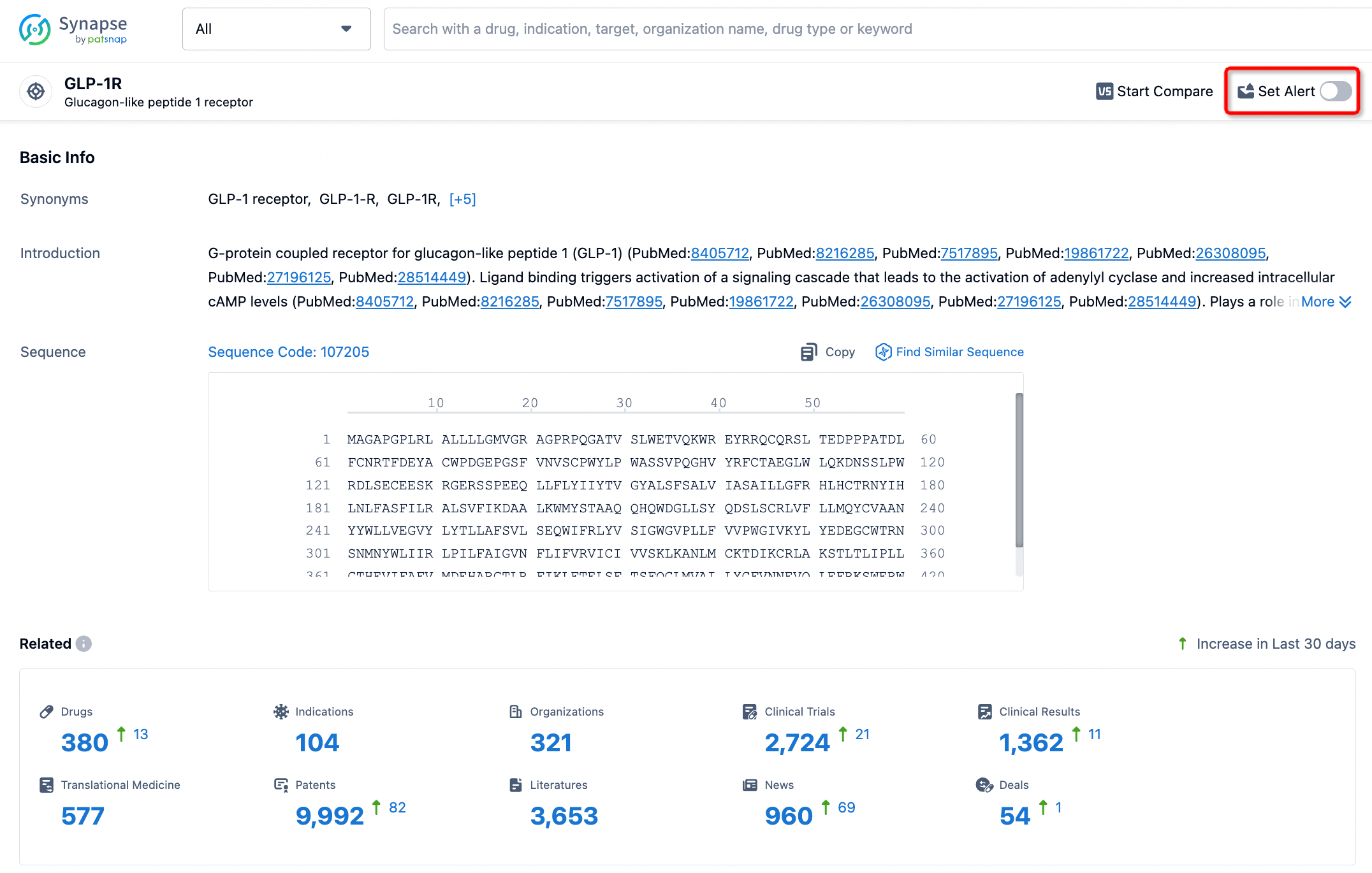
In the Synapse database, you can stay updated on the latest research and development advances of all targets. This service is accessible anytime and anywhere, with updates available daily or weekly. Use the "Set Alert" function to stay informed. Click on the image below to embark on a brand new journey of drug discovery!

AI Agents Built for Biopharma Breakthroughs
Accelerate discovery. Empower decisions. Transform outcomes.
Get started for free today!
Accelerate Strategic R&D decision making with Synapse, PatSnap’s AI-powered Connected Innovation Intelligence Platform Built for Life Sciences Professionals.
Start your data trial now!
Synapse data is also accessible to external entities via APIs or data packages. Empower better decisions with the latest in pharmaceutical intelligence.