Request Demo
What are LMP2 inhibitors and how do they work?
21 June 2024
LMP2 inhibitors represent a fascinating and promising area of medical research, particularly within the field of oncology and immunology. These inhibitors target a specific subunit of the immunoproteasome, known as LMP2 (low molecular mass polypeptide 2), which plays a critical role in antigen processing and presentation. By inhibiting LMP2, researchers aim to modulate immune responses and develop novel therapeutic strategies for various diseases. In this post, we will delve into the basics of LMP2 inhibitors, explore their mechanisms of action, and discuss their potential applications in medicine.
LMP2 is a component of the immunoproteasome, a specialized form of the proteasome found predominantly in immune cells. The immunoproteasome is essential for degrading proteins into peptides that are subsequently presented on the cell surface by major histocompatibility complex (MHC) class I molecules. This presentation is crucial for the immune system's ability to recognize and eliminate infected or malignant cells. Inhibiting LMP2 disrupts this process, which can have profound effects on immune function and cellular regulation.
The primary mechanism of action of LMP2 inhibitors involves the selective inhibition of the LMP2 subunit within the immunoproteasome. The inhibition of LMP2 affects the proteolytic activity of the immunoproteasome, leading to alterations in the peptide repertoire presented by MHC class I molecules. This can result in a modified immune response. By targeting LMP2, researchers hope to enhance or suppress specific immune pathways, thereby improving therapeutic outcomes in various diseases.
LMP2 inhibitors can influence the immune response in multiple ways. For instance, by modulating the antigen presentation, these inhibitors may help to enhance the recognition of cancer cells by the immune system, potentially leading to improved anti-tumor responses. Additionally, LMP2 inhibitors have been shown to affect the balance of pro-inflammatory and anti-inflammatory mediators, which could be exploited to treat autoimmune diseases or chronic inflammatory conditions.
The potential applications of LMP2 inhibitors are diverse and extend across several areas of medicine. In oncology, LMP2 inhibitors are being investigated as potential treatments for various types of cancer. By enhancing the immune system's ability to recognize and attack tumor cells, these inhibitors could complement existing immunotherapies and improve patient outcomes. For example, LMP2 inhibitors might be used in combination with immune checkpoint inhibitors to boost their effectiveness and overcome resistance mechanisms.
In the realm of autoimmune diseases, LMP2 inhibitors offer a novel approach to modulating immune responses. Autoimmune diseases, such as rheumatoid arthritis, multiple sclerosis, and lupus, are characterized by an overactive immune system that mistakenly attacks the body's own tissues. By selectively inhibiting LMP2, researchers aim to reduce the pathological immune response while preserving overall immune function. This could lead to new treatments that are more specific and have fewer side effects compared to current immunosuppressive therapies.
Moreover, LMP2 inhibitors could be valuable in the treatment of chronic inflammatory conditions. Conditions such as inflammatory bowel disease (IBD) and psoriasis are driven by persistent inflammation, which can cause significant tissue damage and impair quality of life. By targeting LMP2, it may be possible to modulate the inflammatory response and provide relief to patients suffering from these debilitating conditions.
In conclusion, LMP2 inhibitors represent a promising class of compounds with the potential to revolutionize the treatment of various diseases. By selectively targeting the LMP2 subunit of the immunoproteasome, these inhibitors can modulate immune responses and offer new therapeutic strategies for cancer, autoimmune diseases, and chronic inflammatory conditions. As research in this area continues to advance, we can look forward to the development of innovative treatments that harness the power of LMP2 inhibition to improve patient outcomes and enhance the quality of life for those affected by these challenging diseases.
LMP2 is a component of the immunoproteasome, a specialized form of the proteasome found predominantly in immune cells. The immunoproteasome is essential for degrading proteins into peptides that are subsequently presented on the cell surface by major histocompatibility complex (MHC) class I molecules. This presentation is crucial for the immune system's ability to recognize and eliminate infected or malignant cells. Inhibiting LMP2 disrupts this process, which can have profound effects on immune function and cellular regulation.
The primary mechanism of action of LMP2 inhibitors involves the selective inhibition of the LMP2 subunit within the immunoproteasome. The inhibition of LMP2 affects the proteolytic activity of the immunoproteasome, leading to alterations in the peptide repertoire presented by MHC class I molecules. This can result in a modified immune response. By targeting LMP2, researchers hope to enhance or suppress specific immune pathways, thereby improving therapeutic outcomes in various diseases.
LMP2 inhibitors can influence the immune response in multiple ways. For instance, by modulating the antigen presentation, these inhibitors may help to enhance the recognition of cancer cells by the immune system, potentially leading to improved anti-tumor responses. Additionally, LMP2 inhibitors have been shown to affect the balance of pro-inflammatory and anti-inflammatory mediators, which could be exploited to treat autoimmune diseases or chronic inflammatory conditions.
The potential applications of LMP2 inhibitors are diverse and extend across several areas of medicine. In oncology, LMP2 inhibitors are being investigated as potential treatments for various types of cancer. By enhancing the immune system's ability to recognize and attack tumor cells, these inhibitors could complement existing immunotherapies and improve patient outcomes. For example, LMP2 inhibitors might be used in combination with immune checkpoint inhibitors to boost their effectiveness and overcome resistance mechanisms.
In the realm of autoimmune diseases, LMP2 inhibitors offer a novel approach to modulating immune responses. Autoimmune diseases, such as rheumatoid arthritis, multiple sclerosis, and lupus, are characterized by an overactive immune system that mistakenly attacks the body's own tissues. By selectively inhibiting LMP2, researchers aim to reduce the pathological immune response while preserving overall immune function. This could lead to new treatments that are more specific and have fewer side effects compared to current immunosuppressive therapies.
Moreover, LMP2 inhibitors could be valuable in the treatment of chronic inflammatory conditions. Conditions such as inflammatory bowel disease (IBD) and psoriasis are driven by persistent inflammation, which can cause significant tissue damage and impair quality of life. By targeting LMP2, it may be possible to modulate the inflammatory response and provide relief to patients suffering from these debilitating conditions.
In conclusion, LMP2 inhibitors represent a promising class of compounds with the potential to revolutionize the treatment of various diseases. By selectively targeting the LMP2 subunit of the immunoproteasome, these inhibitors can modulate immune responses and offer new therapeutic strategies for cancer, autoimmune diseases, and chronic inflammatory conditions. As research in this area continues to advance, we can look forward to the development of innovative treatments that harness the power of LMP2 inhibition to improve patient outcomes and enhance the quality of life for those affected by these challenging diseases.
How to obtain the latest development progress of all targets?
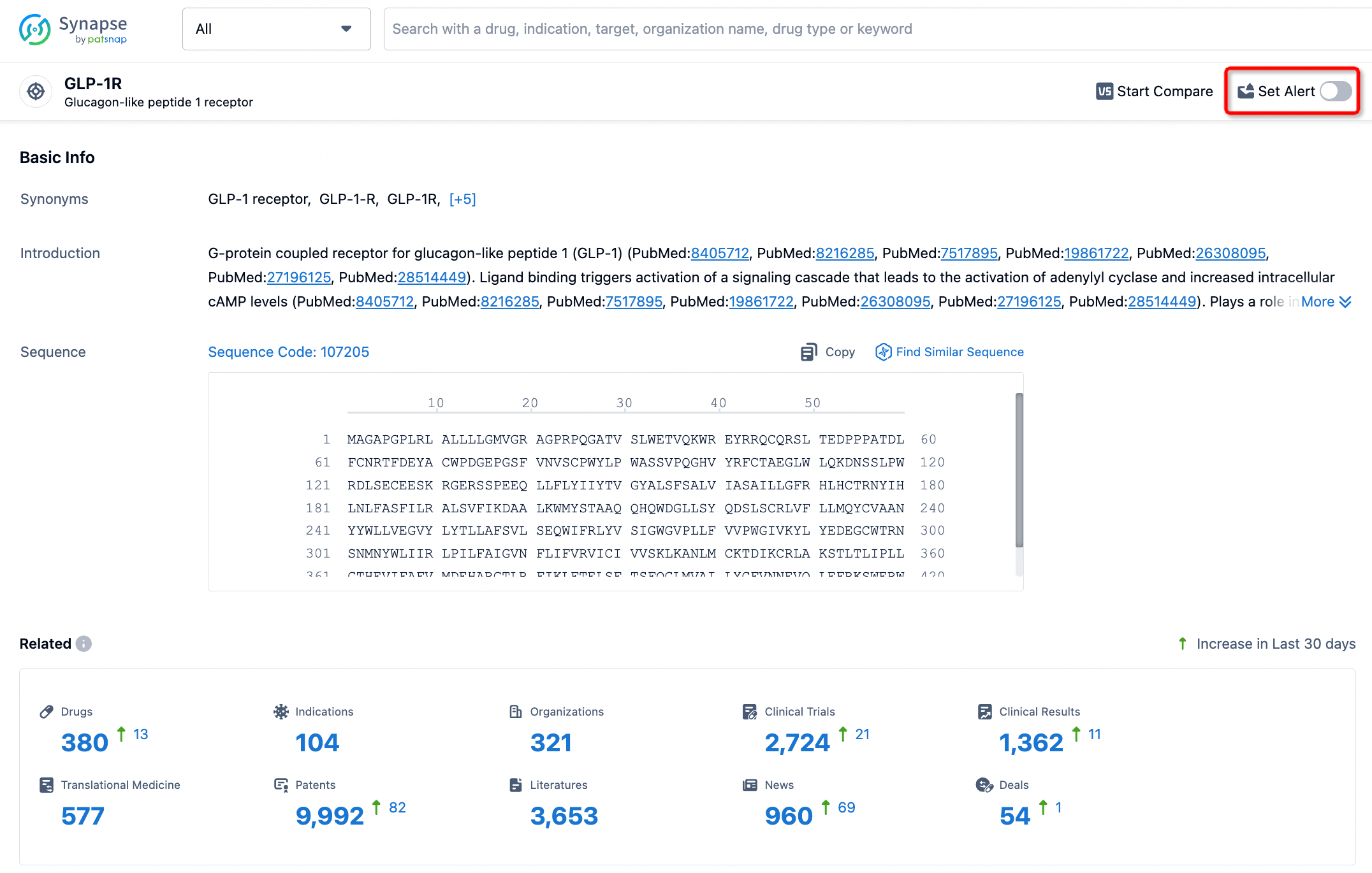
In the Synapse database, you can stay updated on the latest research and development advances of all targets. This service is accessible anytime and anywhere, with updates available daily or weekly. Use the "Set Alert" function to stay informed. Click on the image below to embark on a brand new journey of drug discovery!


AI Agents Built for Biopharma Breakthroughs
Accelerate discovery. Empower decisions. Transform outcomes.
Get started for free today!
Accelerate Strategic R&D decision making with Synapse, PatSnap’s AI-powered Connected Innovation Intelligence Platform Built for Life Sciences Professionals.
Start your data trial now!
Synapse data is also accessible to external entities via APIs or data packages. Empower better decisions with the latest in pharmaceutical intelligence.