Request Demo
What are LPAR1 modulators and how do they work?
25 June 2024
In the intricate world of cellular communication and signaling, LPAR1 modulators have emerged as a significant area of interest for researchers and clinicians alike. Lysophosphatidic acid receptor 1 (LPAR1) is a G protein-coupled receptor (GPCR) that plays an essential role in various physiological and pathological processes. Understanding how LPAR1 modulators work and their potential applications can open new avenues for innovative treatments across a range of diseases.
LPAR1 modulators are compounds that can either activate or inhibit the LPAR1 receptor. This receptor binds to lysophosphatidic acid (LPA), a lipid mediator involved in numerous cellular functions such as proliferation, migration, and survival. By modulating LPAR1 activity, these compounds can influence various biological processes, making them valuable tools for therapeutic intervention.
LPAR1 modulators work by altering the receptor's activity, either enhancing or inhibiting its signaling pathways. When LPA binds to LPAR1, it activates a cascade of intracellular events mediated by G proteins. These events can include the activation of several downstream signaling pathways such as the Rho, Ras, and phosphoinositide 3-kinase (PI3K) pathways. The outcome of these signaling cascades can vary depending on the cell type and the context of the signal, leading to diverse biological effects.
Agonists are LPAR1 modulators that activate the receptor, mimicking the natural ligand LPA. They can enhance the signaling pathways associated with LPAR1, potentially boosting processes like cell proliferation and migration. On the other hand, antagonists are modulators that inhibit the receptor's activity, blocking the effects of LPA. These inhibitors can prevent the activation of downstream signaling pathways, thereby mitigating processes such as inflammation and fibrosis.
LPAR1 modulators have shown promise in various therapeutic areas, thanks to their ability to influence critical biological processes. One of the most notable applications is in the treatment of fibrotic diseases. Fibrosis is characterized by excessive tissue scarring and can affect organs like the lungs, liver, and kidneys. By inhibiting LPAR1 activity, antagonists can reduce the fibrotic response and improve organ function. For instance, in idiopathic pulmonary fibrosis (IPF), a disease with limited treatment options, LPAR1 antagonists are being investigated for their potential to slow disease progression and improve patient outcomes.
Another significant application of LPAR1 modulators is in cancer therapy. Tumor cells often exploit LPAR1 signaling to promote their growth, survival, and metastasis. By targeting this pathway, LPAR1 antagonists can potentially inhibit tumor progression and sensitize cancer cells to existing treatments. Preclinical studies have shown that LPAR1 inhibitors can reduce tumor growth in various cancer types, including breast, ovarian, and glioblastoma.
In addition to fibrotic diseases and cancer, LPAR1 modulators are being explored for their potential in treating neurological disorders. LPA signaling has been implicated in neuroinflammation and neurodegeneration, conditions that underlie diseases such as multiple sclerosis and Alzheimer's disease. By modulating LPAR1 activity, researchers hope to develop new treatments that can protect neurons and reduce inflammation in the central nervous system.
Beyond these applications, LPAR1 modulators may also have a role in cardiovascular diseases, pain management, and metabolic disorders. For example, in cardiovascular diseases, LPAR1 signaling can influence vascular remodeling and atherosclerosis. In pain management, LPAR1 modulators may help alleviate chronic pain by targeting the pathways involved in pain perception.
In conclusion, LPAR1 modulators represent a promising class of compounds with broad therapeutic potential. By modulating the activity of the LPAR1 receptor, these agents can influence a wide range of biological processes, offering new hope for the treatment of fibrotic diseases, cancer, neurological disorders, and beyond. As research continues to uncover the complexities of LPAR1 signaling, the development of targeted modulators holds the promise of innovative therapies that can significantly improve patient outcomes across multiple medical conditions.
LPAR1 modulators are compounds that can either activate or inhibit the LPAR1 receptor. This receptor binds to lysophosphatidic acid (LPA), a lipid mediator involved in numerous cellular functions such as proliferation, migration, and survival. By modulating LPAR1 activity, these compounds can influence various biological processes, making them valuable tools for therapeutic intervention.
LPAR1 modulators work by altering the receptor's activity, either enhancing or inhibiting its signaling pathways. When LPA binds to LPAR1, it activates a cascade of intracellular events mediated by G proteins. These events can include the activation of several downstream signaling pathways such as the Rho, Ras, and phosphoinositide 3-kinase (PI3K) pathways. The outcome of these signaling cascades can vary depending on the cell type and the context of the signal, leading to diverse biological effects.
Agonists are LPAR1 modulators that activate the receptor, mimicking the natural ligand LPA. They can enhance the signaling pathways associated with LPAR1, potentially boosting processes like cell proliferation and migration. On the other hand, antagonists are modulators that inhibit the receptor's activity, blocking the effects of LPA. These inhibitors can prevent the activation of downstream signaling pathways, thereby mitigating processes such as inflammation and fibrosis.
LPAR1 modulators have shown promise in various therapeutic areas, thanks to their ability to influence critical biological processes. One of the most notable applications is in the treatment of fibrotic diseases. Fibrosis is characterized by excessive tissue scarring and can affect organs like the lungs, liver, and kidneys. By inhibiting LPAR1 activity, antagonists can reduce the fibrotic response and improve organ function. For instance, in idiopathic pulmonary fibrosis (IPF), a disease with limited treatment options, LPAR1 antagonists are being investigated for their potential to slow disease progression and improve patient outcomes.
Another significant application of LPAR1 modulators is in cancer therapy. Tumor cells often exploit LPAR1 signaling to promote their growth, survival, and metastasis. By targeting this pathway, LPAR1 antagonists can potentially inhibit tumor progression and sensitize cancer cells to existing treatments. Preclinical studies have shown that LPAR1 inhibitors can reduce tumor growth in various cancer types, including breast, ovarian, and glioblastoma.
In addition to fibrotic diseases and cancer, LPAR1 modulators are being explored for their potential in treating neurological disorders. LPA signaling has been implicated in neuroinflammation and neurodegeneration, conditions that underlie diseases such as multiple sclerosis and Alzheimer's disease. By modulating LPAR1 activity, researchers hope to develop new treatments that can protect neurons and reduce inflammation in the central nervous system.
Beyond these applications, LPAR1 modulators may also have a role in cardiovascular diseases, pain management, and metabolic disorders. For example, in cardiovascular diseases, LPAR1 signaling can influence vascular remodeling and atherosclerosis. In pain management, LPAR1 modulators may help alleviate chronic pain by targeting the pathways involved in pain perception.
In conclusion, LPAR1 modulators represent a promising class of compounds with broad therapeutic potential. By modulating the activity of the LPAR1 receptor, these agents can influence a wide range of biological processes, offering new hope for the treatment of fibrotic diseases, cancer, neurological disorders, and beyond. As research continues to uncover the complexities of LPAR1 signaling, the development of targeted modulators holds the promise of innovative therapies that can significantly improve patient outcomes across multiple medical conditions.
How to obtain the latest development progress of all targets?
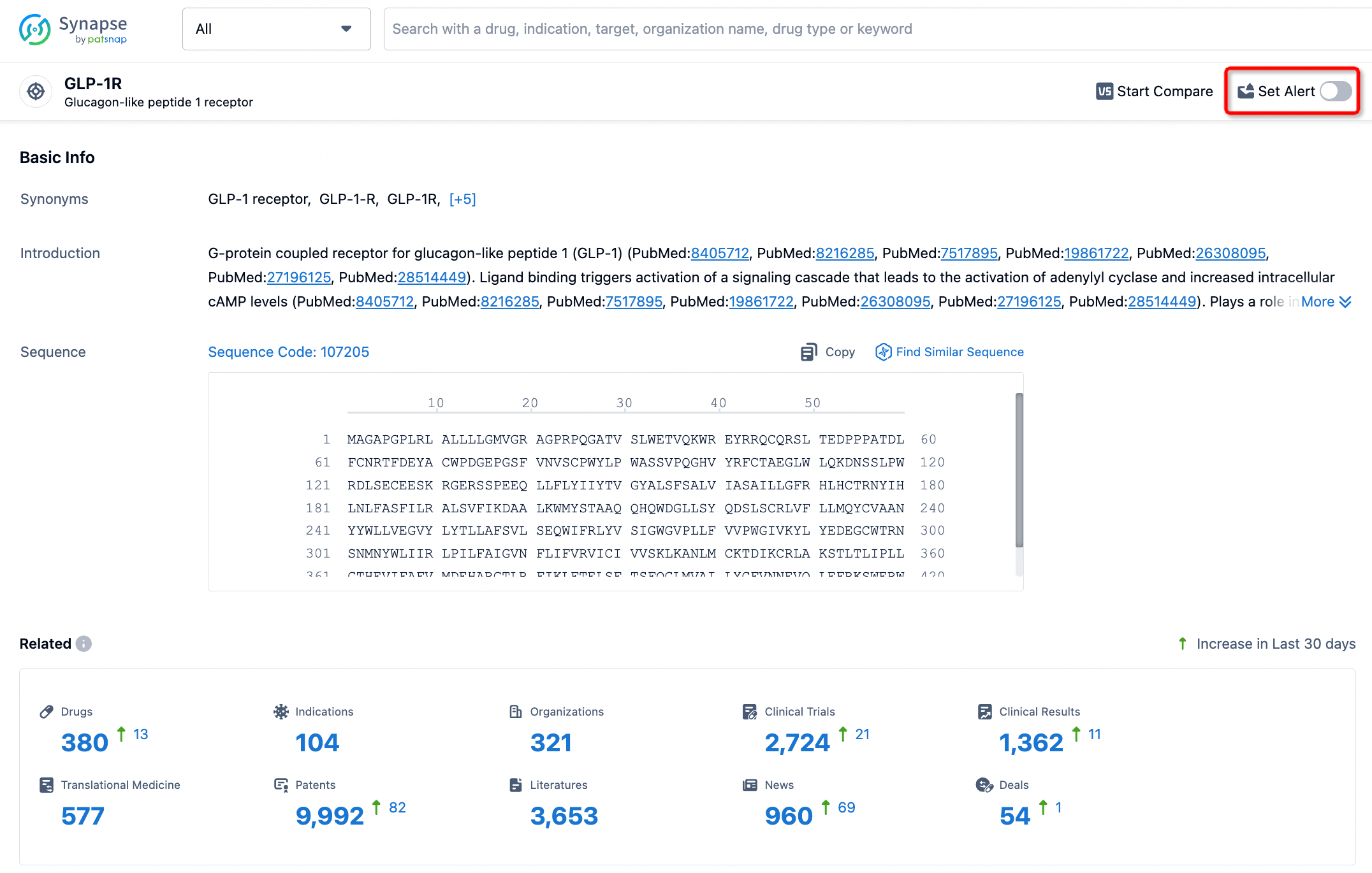
In the Synapse database, you can stay updated on the latest research and development advances of all targets. This service is accessible anytime and anywhere, with updates available daily or weekly. Use the "Set Alert" function to stay informed. Click on the image below to embark on a brand new journey of drug discovery!


AI Agents Built for Biopharma Breakthroughs
Accelerate discovery. Empower decisions. Transform outcomes.
Get started for free today!
Accelerate Strategic R&D decision making with Synapse, PatSnap’s AI-powered Connected Innovation Intelligence Platform Built for Life Sciences Professionals.
Start your data trial now!
Synapse data is also accessible to external entities via APIs or data packages. Empower better decisions with the latest in pharmaceutical intelligence.