Request Demo
What are MKK4 inhibitors and how do they work?
25 June 2024
Mitogen-activated protein kinase kinase 4, or MKK4, is a critical enzyme in the MAPK signaling pathway, which is involved in numerous cellular processes such as proliferation, differentiation, and apoptosis. The discovery and development of MKK4 inhibitors have opened new avenues in the treatment of various diseases, particularly cancer and inflammatory disorders. In this post, we'll delve into the fundamentals of MKK4 inhibitors, explore their mechanisms of action, and examine their current and potential therapeutic applications.
MKK4, also known as MAP2K4, is an essential kinase that facilitates the activation of c-Jun N-terminal kinases (JNKs) and p38 MAPKs. This activation cascade is crucial for the cellular response to stress stimuli, including cytokines, ultraviolet irradiation, and other environmental stressors. However, dysregulation of the MAPK pathway can lead to pathological conditions such as cancer, neurodegenerative diseases, and inflammatory disorders. As a result, targeting MKK4 has emerged as a promising strategy to modulate this pathway and ameliorate these conditions.
MKK4 inhibitors work by specifically binding to and inhibiting the activity of the MKK4 enzyme. These inhibitors can act through various mechanisms: competitive inhibition, where the inhibitor competes with ATP or substrate binding; allosteric inhibition, where the inhibitor binds to a site other than the active site, inducing conformational changes that reduce enzyme activity; or covalent inhibition, where the inhibitor forms a permanent bond with the enzyme. By obstructing MKK4 activity, these inhibitors prevent the subsequent activation of JNKs and p38 MAPKs, thereby modulating downstream signaling events.
The inhibition of MKK4 disrupts the MAPK signaling cascade, leading to altered cellular responses. For example, in cancer cells, MKK4 inhibition can induce apoptosis, reduce proliferation, and decrease metastatic potential. In inflammatory conditions, these inhibitors can diminish the production of pro-inflammatory cytokines and mitigate the inflammatory response. The precise effects of MKK4 inhibition depend on the specific context and cellular environment, but the overarching theme is the modulation of a critical signaling pathway to achieve therapeutic benefits.
MKK4 inhibitors hold significant promise in the treatment of a variety of diseases, primarily cancer and inflammatory disorders. In oncology, MKK4 has been implicated in tumor progression, metastasis, and resistance to chemotherapy. For instance, elevated MKK4 activity has been observed in pancreatic, ovarian, and prostate cancers, among others. By inhibiting MKK4, it is possible to sensitize these tumors to conventional treatments, reduce their metastatic potential, and improve patient outcomes. Several preclinical studies have demonstrated the efficacy of MKK4 inhibitors in reducing tumor growth and metastasis, paving the way for their potential use in clinical settings.
In the realm of inflammatory diseases, MKK4 inhibitors can be employed to counteract excessive inflammatory responses implicated in conditions such as rheumatoid arthritis, psoriasis, and inflammatory bowel disease. By dampening the MAPK signaling, these inhibitors can reduce the production of pro-inflammatory cytokines like TNF-α and IL-6, thus alleviating inflammation and its associated symptoms. Ongoing research is investigating the potential of MKK4 inhibitors in various inflammatory models, with promising results thus far.
The scope of MKK4 inhibitors may extend beyond cancer and inflammation. Neurodegenerative diseases such as Alzheimer's and Parkinson's disease have also been associated with aberrant MAPK signaling. By modulating this pathway, MKK4 inhibitors could offer a new therapeutic approach to slow disease progression and protect neuronal health. Additionally, their role in other stress-related conditions and metabolic disorders is being explored, underscoring the versatility and potential of these inhibitors.
In conclusion, MKK4 inhibitors represent a compelling area of research with significant therapeutic potential. By targeting a critical node in the MAPK signaling pathway, these inhibitors can modulate cellular responses in various pathological conditions. While much work remains to be done to translate preclinical findings into clinical applications, the future of MKK4 inhibitors in medicine looks promising. Continued research and development will be crucial in unlocking their full potential and bringing new hope to patients with cancer, inflammatory diseases, and beyond.
MKK4, also known as MAP2K4, is an essential kinase that facilitates the activation of c-Jun N-terminal kinases (JNKs) and p38 MAPKs. This activation cascade is crucial for the cellular response to stress stimuli, including cytokines, ultraviolet irradiation, and other environmental stressors. However, dysregulation of the MAPK pathway can lead to pathological conditions such as cancer, neurodegenerative diseases, and inflammatory disorders. As a result, targeting MKK4 has emerged as a promising strategy to modulate this pathway and ameliorate these conditions.
MKK4 inhibitors work by specifically binding to and inhibiting the activity of the MKK4 enzyme. These inhibitors can act through various mechanisms: competitive inhibition, where the inhibitor competes with ATP or substrate binding; allosteric inhibition, where the inhibitor binds to a site other than the active site, inducing conformational changes that reduce enzyme activity; or covalent inhibition, where the inhibitor forms a permanent bond with the enzyme. By obstructing MKK4 activity, these inhibitors prevent the subsequent activation of JNKs and p38 MAPKs, thereby modulating downstream signaling events.
The inhibition of MKK4 disrupts the MAPK signaling cascade, leading to altered cellular responses. For example, in cancer cells, MKK4 inhibition can induce apoptosis, reduce proliferation, and decrease metastatic potential. In inflammatory conditions, these inhibitors can diminish the production of pro-inflammatory cytokines and mitigate the inflammatory response. The precise effects of MKK4 inhibition depend on the specific context and cellular environment, but the overarching theme is the modulation of a critical signaling pathway to achieve therapeutic benefits.
MKK4 inhibitors hold significant promise in the treatment of a variety of diseases, primarily cancer and inflammatory disorders. In oncology, MKK4 has been implicated in tumor progression, metastasis, and resistance to chemotherapy. For instance, elevated MKK4 activity has been observed in pancreatic, ovarian, and prostate cancers, among others. By inhibiting MKK4, it is possible to sensitize these tumors to conventional treatments, reduce their metastatic potential, and improve patient outcomes. Several preclinical studies have demonstrated the efficacy of MKK4 inhibitors in reducing tumor growth and metastasis, paving the way for their potential use in clinical settings.
In the realm of inflammatory diseases, MKK4 inhibitors can be employed to counteract excessive inflammatory responses implicated in conditions such as rheumatoid arthritis, psoriasis, and inflammatory bowel disease. By dampening the MAPK signaling, these inhibitors can reduce the production of pro-inflammatory cytokines like TNF-α and IL-6, thus alleviating inflammation and its associated symptoms. Ongoing research is investigating the potential of MKK4 inhibitors in various inflammatory models, with promising results thus far.
The scope of MKK4 inhibitors may extend beyond cancer and inflammation. Neurodegenerative diseases such as Alzheimer's and Parkinson's disease have also been associated with aberrant MAPK signaling. By modulating this pathway, MKK4 inhibitors could offer a new therapeutic approach to slow disease progression and protect neuronal health. Additionally, their role in other stress-related conditions and metabolic disorders is being explored, underscoring the versatility and potential of these inhibitors.
In conclusion, MKK4 inhibitors represent a compelling area of research with significant therapeutic potential. By targeting a critical node in the MAPK signaling pathway, these inhibitors can modulate cellular responses in various pathological conditions. While much work remains to be done to translate preclinical findings into clinical applications, the future of MKK4 inhibitors in medicine looks promising. Continued research and development will be crucial in unlocking their full potential and bringing new hope to patients with cancer, inflammatory diseases, and beyond.
How to obtain the latest development progress of all targets?
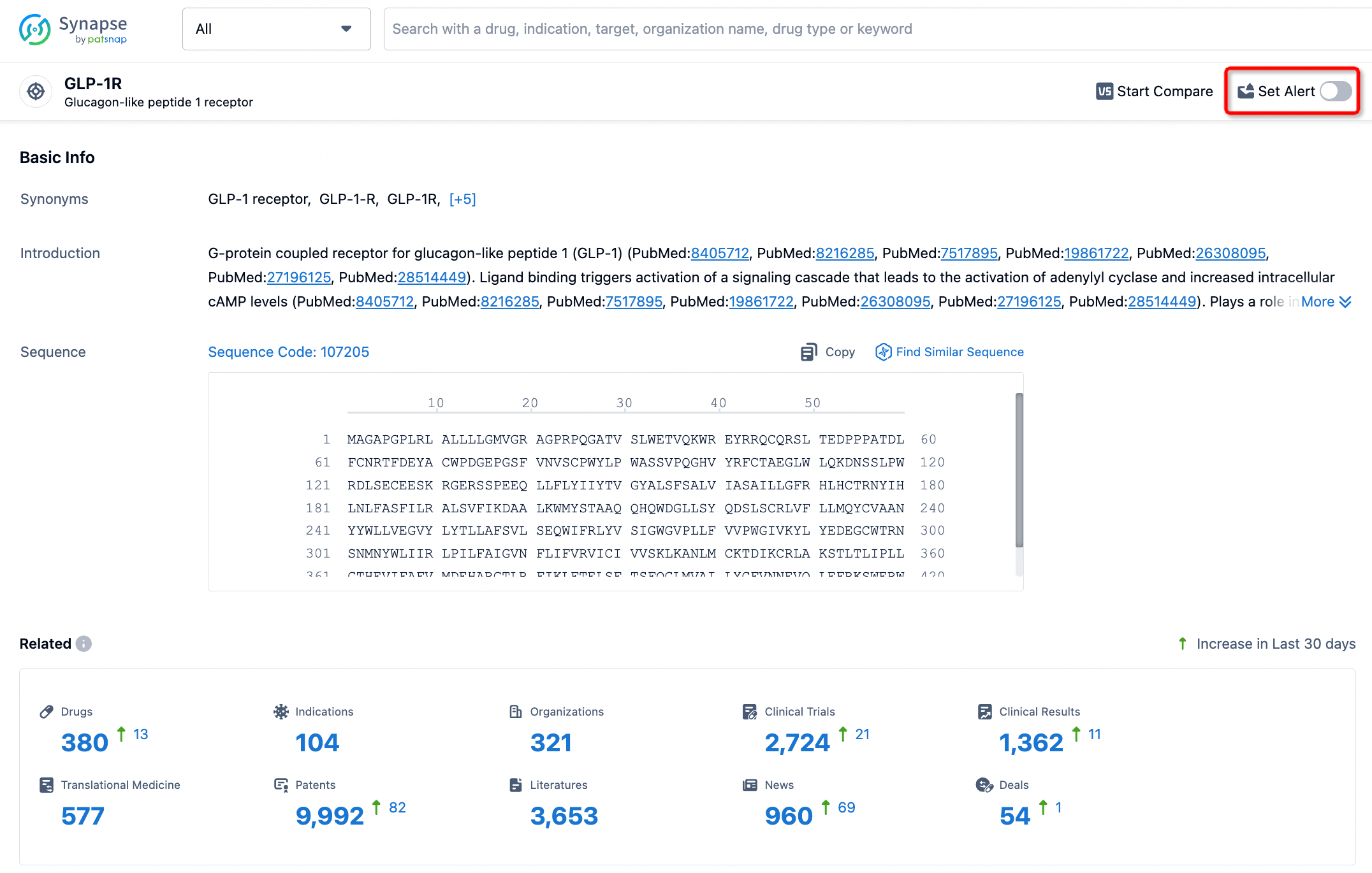
In the Synapse database, you can stay updated on the latest research and development advances of all targets. This service is accessible anytime and anywhere, with updates available daily or weekly. Use the "Set Alert" function to stay informed. Click on the image below to embark on a brand new journey of drug discovery!


AI Agents Built for Biopharma Breakthroughs
Accelerate discovery. Empower decisions. Transform outcomes.
Get started for free today!
Accelerate Strategic R&D decision making with Synapse, PatSnap’s AI-powered Connected Innovation Intelligence Platform Built for Life Sciences Professionals.
Start your data trial now!
Synapse data is also accessible to external entities via APIs or data packages. Empower better decisions with the latest in pharmaceutical intelligence.