Request Demo
What are nAChR α4/β2/α5 modulators and how do they work?
25 June 2024
Introduction to nAChR α4/β2/α5 modulators
Neuronal nicotinic acetylcholine receptors (nAChRs) are a diverse family of ligand-gated ion channels that play critical roles in the central and peripheral nervous systems. Among these receptors, the α4/β2/α5 subtype has garnered significant interest due to its involvement in various physiological and pathological processes. Modulators of these receptors are being actively researched for their potential therapeutic applications in a range of neurological and psychiatric disorders. This article aims to provide a comprehensive overview of how nAChR α4/β2/α5 modulators work, as well as their potential uses in medicine.
How do nAChR α4/β2/α5 modulators work?
To understand how nAChR α4/β2/α5 modulators function, it's essential to grasp the basic structure and operation of nAChRs. These receptors are pentameric proteins composed of five subunits that form a central ion channel. When a neurotransmitter like acetylcholine binds to the receptor, it triggers a conformational change that opens the ion channel, allowing the flow of cations such as sodium (Na+) and calcium (Ca2+) into the neuron. This ion influx leads to neuronal depolarization and the subsequent initiation of an action potential.
The α4/β2/α5 combination of subunits forms a particularly high-affinity receptor subtype in the brain. Modulators can be classified as agonists, partial agonists, antagonists, or allosteric modulators, depending on their interaction with the receptor. Agonists bind to the same site as acetylcholine and activate the receptor, while antagonists block this site and prevent activation. Partial agonists can activate the receptor but to a lesser degree than full agonists. Allosteric modulators, on the other hand, bind to a different site on the receptor and modify its response to acetylcholine, either enhancing or inhibiting its activity.
The α4/β2/α5 subtype is particularly sensitive to nicotine, which explains the addictive properties of tobacco. Nicotine acts as an agonist, increasing the flow of ions and leading to enhanced neurotransmission. Therefore, understanding and modulating this receptor subtype can have significant implications for treating nicotine addiction, among other conditions.
What are nAChR α4/β2/α5 modulators used for?
The therapeutic potential of nAChR α4/β2/α5 modulators is vast, encompassing a range of neurological and psychiatric disorders. Here's an overview of some key applications:
1. **Nicotine Addiction:** Given their high affinity for nicotine, the α4/β2/α5 receptors are prime targets for developing smoking cessation aids. Partial agonists like varenicline have already shown efficacy in helping people quit smoking by reducing cravings and withdrawal symptoms.
2. **Cognitive Enhancement:** These receptors are involved in cognitive processes such as learning and memory. Modulators that enhance α4/β2/α5 receptor activity could potentially improve cognitive function in conditions like Alzheimer's disease and schizophrenia. Preliminary studies have shown promise, but more research is needed to confirm these findings.
3. **Pain Management:** Chronic pain conditions may also benefit from nAChR modulation. Some studies suggest that these receptors play a role in pain perception and modulation, and targeting them could provide new avenues for analgesia.
4. **Neuropsychiatric Disorders:** Disorders like depression and anxiety are linked to dysregulation of neurotransmitter systems, including the cholinergic system. Modulating these receptors could offer new therapeutic approaches for these conditions. For instance, some research indicates that nAChR modulators have antidepressant and anxiolytic effects.
5. **Neurodegenerative Diseases:** Diseases such as Parkinson's and Huntington's involve the degeneration of neuronal pathways that may be influenced by nAChR activity. Modulating α4/β2/α5 receptors could potentially slow disease progression or alleviate symptoms.
6. **Epilepsy:** Abnormal neuronal excitability characterizes epilepsy, and nAChRs are involved in maintaining neuronal balance. Modulators could help stabilize neuronal activity, reducing seizure frequency and severity.
In summary, nAChR α4/β2/α5 modulators represent a promising area of research with the potential to address a variety of neurological and psychiatric conditions. While the field is still evolving, ongoing studies continue to shed light on the complex roles these receptors play in the brain, paving the way for new and innovative treatments. As research progresses, we can expect to see more targeted and effective therapies emerging from this exciting domain.
Neuronal nicotinic acetylcholine receptors (nAChRs) are a diverse family of ligand-gated ion channels that play critical roles in the central and peripheral nervous systems. Among these receptors, the α4/β2/α5 subtype has garnered significant interest due to its involvement in various physiological and pathological processes. Modulators of these receptors are being actively researched for their potential therapeutic applications in a range of neurological and psychiatric disorders. This article aims to provide a comprehensive overview of how nAChR α4/β2/α5 modulators work, as well as their potential uses in medicine.
How do nAChR α4/β2/α5 modulators work?
To understand how nAChR α4/β2/α5 modulators function, it's essential to grasp the basic structure and operation of nAChRs. These receptors are pentameric proteins composed of five subunits that form a central ion channel. When a neurotransmitter like acetylcholine binds to the receptor, it triggers a conformational change that opens the ion channel, allowing the flow of cations such as sodium (Na+) and calcium (Ca2+) into the neuron. This ion influx leads to neuronal depolarization and the subsequent initiation of an action potential.
The α4/β2/α5 combination of subunits forms a particularly high-affinity receptor subtype in the brain. Modulators can be classified as agonists, partial agonists, antagonists, or allosteric modulators, depending on their interaction with the receptor. Agonists bind to the same site as acetylcholine and activate the receptor, while antagonists block this site and prevent activation. Partial agonists can activate the receptor but to a lesser degree than full agonists. Allosteric modulators, on the other hand, bind to a different site on the receptor and modify its response to acetylcholine, either enhancing or inhibiting its activity.
The α4/β2/α5 subtype is particularly sensitive to nicotine, which explains the addictive properties of tobacco. Nicotine acts as an agonist, increasing the flow of ions and leading to enhanced neurotransmission. Therefore, understanding and modulating this receptor subtype can have significant implications for treating nicotine addiction, among other conditions.
What are nAChR α4/β2/α5 modulators used for?
The therapeutic potential of nAChR α4/β2/α5 modulators is vast, encompassing a range of neurological and psychiatric disorders. Here's an overview of some key applications:
1. **Nicotine Addiction:** Given their high affinity for nicotine, the α4/β2/α5 receptors are prime targets for developing smoking cessation aids. Partial agonists like varenicline have already shown efficacy in helping people quit smoking by reducing cravings and withdrawal symptoms.
2. **Cognitive Enhancement:** These receptors are involved in cognitive processes such as learning and memory. Modulators that enhance α4/β2/α5 receptor activity could potentially improve cognitive function in conditions like Alzheimer's disease and schizophrenia. Preliminary studies have shown promise, but more research is needed to confirm these findings.
3. **Pain Management:** Chronic pain conditions may also benefit from nAChR modulation. Some studies suggest that these receptors play a role in pain perception and modulation, and targeting them could provide new avenues for analgesia.
4. **Neuropsychiatric Disorders:** Disorders like depression and anxiety are linked to dysregulation of neurotransmitter systems, including the cholinergic system. Modulating these receptors could offer new therapeutic approaches for these conditions. For instance, some research indicates that nAChR modulators have antidepressant and anxiolytic effects.
5. **Neurodegenerative Diseases:** Diseases such as Parkinson's and Huntington's involve the degeneration of neuronal pathways that may be influenced by nAChR activity. Modulating α4/β2/α5 receptors could potentially slow disease progression or alleviate symptoms.
6. **Epilepsy:** Abnormal neuronal excitability characterizes epilepsy, and nAChRs are involved in maintaining neuronal balance. Modulators could help stabilize neuronal activity, reducing seizure frequency and severity.
In summary, nAChR α4/β2/α5 modulators represent a promising area of research with the potential to address a variety of neurological and psychiatric conditions. While the field is still evolving, ongoing studies continue to shed light on the complex roles these receptors play in the brain, paving the way for new and innovative treatments. As research progresses, we can expect to see more targeted and effective therapies emerging from this exciting domain.
How to obtain the latest development progress of all targets?
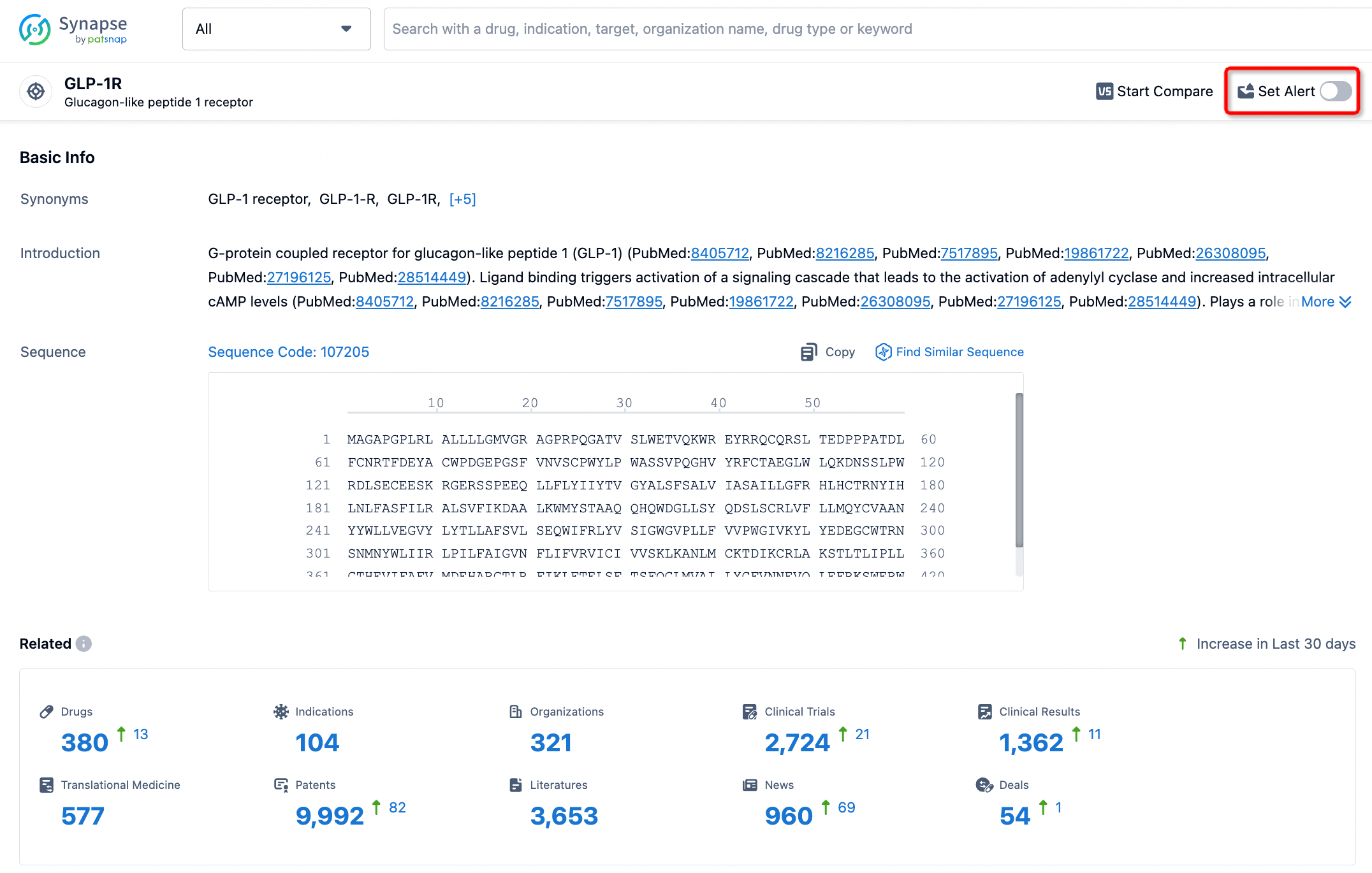
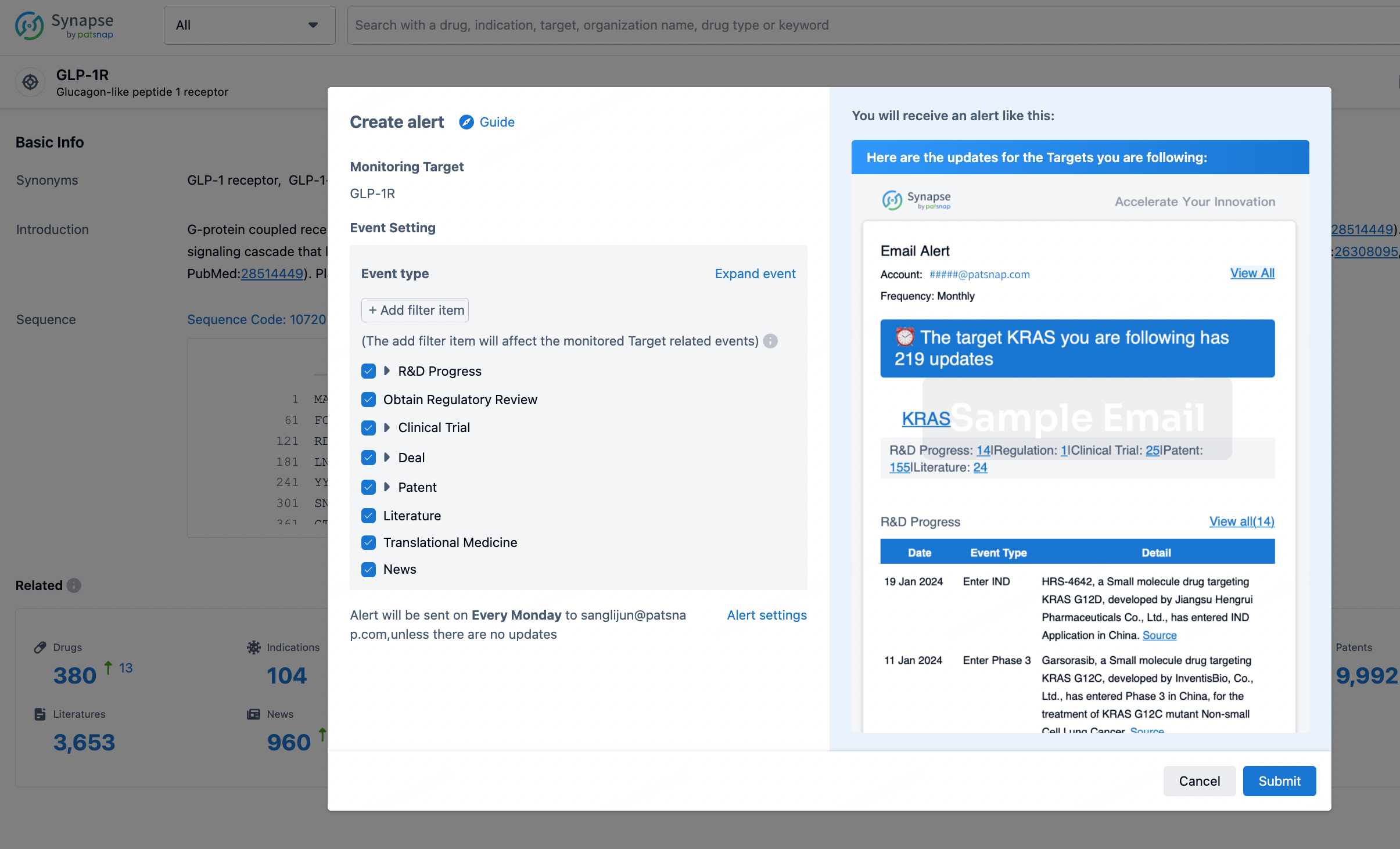
In the Synapse database, you can stay updated on the latest research and development advances of all targets. This service is accessible anytime and anywhere, with updates available daily or weekly. Use the "Set Alert" function to stay informed. Click on the image below to embark on a brand new journey of drug discovery!

AI Agents Built for Biopharma Breakthroughs
Accelerate discovery. Empower decisions. Transform outcomes.
Get started for free today!
Accelerate Strategic R&D decision making with Synapse, PatSnap’s AI-powered Connected Innovation Intelligence Platform Built for Life Sciences Professionals.
Start your data trial now!
Synapse data is also accessible to external entities via APIs or data packages. Empower better decisions with the latest in pharmaceutical intelligence.