Request Demo
What are Nav1.7 modulators and how do they work?
21 June 2024
The discovery and development of Nav1.7 modulators have opened new avenues in the treatment of pain, promising more effective and targeted therapies for individuals suffering from chronic pain conditions. In this post, we will explore what Nav1.7 modulators are, how they work, and their potential applications in the medical field.
Nav1.7 modulators are a class of compounds that specifically target the Nav1.7 sodium channel, a protein that plays a crucial role in the transmission of pain signals in the nervous system. These modulators can either enhance or inhibit the activity of the Nav1.7 channel, thereby influencing pain perception. The Nav1.7 sodium channel is predominantly expressed in peripheral neurons, particularly in the dorsal root ganglia and trigeminal ganglia, which are key players in the sensory pathways that transmit pain signals to the brain.
The Nav1.7 sodium channel belongs to a larger family of voltage-gated sodium channels that are essential for the generation and propagation of action potentials in neurons. These channels open in response to changes in membrane potential, allowing sodium ions to flow into the cell and initiate an electrical signal. In the context of pain, the Nav1.7 channel is particularly important because it helps to amplify and transmit pain signals from the site of injury or inflammation to the central nervous system.
Nav1.7 modulators work by altering the activity of the Nav1.7 sodium channel, either by blocking or enhancing its function. For instance, Nav1.7 inhibitors bind to the channel and prevent it from opening, thereby reducing the influx of sodium ions and dampening the pain signal. This mechanism is particularly useful in conditions where pain signals are abnormally amplified, such as in chronic pain disorders. On the other hand, Nav1.7 enhancers increase the activity of the channel, which could be beneficial in conditions where pain perception is diminished or abnormal, although this application is less common.
The development of Nav1.7 modulators has been driven by the need for more effective pain management strategies, particularly for chronic pain conditions that are resistant to traditional analgesics like opioids. Chronic pain affects millions of people worldwide and can significantly impact quality of life. Current treatments often come with a host of side effects and the potential for addiction, particularly with long-term opioid use. Nav1.7 modulators offer a more targeted approach by specifically addressing the underlying mechanisms of pain transmission without affecting other physiological processes.
One of the most promising applications of Nav1.7 modulators is in the treatment of neuropathic pain, a type of chronic pain that arises from nerve damage. Neuropathic pain is notoriously difficult to treat and often responds poorly to conventional painkillers. Nav1.7 inhibitors, by reducing the hyperactivity of pain-transmitting neurons, have shown potential in alleviating this type of pain. For instance, several clinical trials are currently underway to evaluate the efficacy of Nav1.7 inhibitors in patients with conditions like postherpetic neuralgia, diabetic neuropathy, and trigeminal neuralgia.
In addition to neuropathic pain, Nav1.7 modulators are being investigated for their potential in treating inflammatory pain, such as that associated with arthritis. Inflammatory pain involves the activation of peripheral nerves by inflammatory mediators, leading to heightened pain sensitivity. By modulating the activity of Nav1.7 channels, these compounds could help to reduce pain and inflammation, offering a novel therapeutic option for patients.
Research into Nav1.7 modulators has also shed light on rare genetic disorders like congenital insensitivity to pain (CIP), where individuals are born with mutations in the Nav1.7 gene that render them unable to feel pain. Studying these mutations has provided valuable insights into the physiological role of Nav1.7 and has guided the development of new drugs that can mimic or counteract these effects.
In conclusion, Nav1.7 modulators represent a promising frontier in pain management, offering targeted and potentially more effective treatments for chronic pain conditions. By specifically modulating the activity of the Nav1.7 sodium channel, these compounds have the potential to alleviate pain without the significant side effects associated with current analgesics. As research continues to advance, we can look forward to new and innovative therapies that could significantly improve the lives of individuals suffering from chronic pain.
Nav1.7 modulators are a class of compounds that specifically target the Nav1.7 sodium channel, a protein that plays a crucial role in the transmission of pain signals in the nervous system. These modulators can either enhance or inhibit the activity of the Nav1.7 channel, thereby influencing pain perception. The Nav1.7 sodium channel is predominantly expressed in peripheral neurons, particularly in the dorsal root ganglia and trigeminal ganglia, which are key players in the sensory pathways that transmit pain signals to the brain.
The Nav1.7 sodium channel belongs to a larger family of voltage-gated sodium channels that are essential for the generation and propagation of action potentials in neurons. These channels open in response to changes in membrane potential, allowing sodium ions to flow into the cell and initiate an electrical signal. In the context of pain, the Nav1.7 channel is particularly important because it helps to amplify and transmit pain signals from the site of injury or inflammation to the central nervous system.
Nav1.7 modulators work by altering the activity of the Nav1.7 sodium channel, either by blocking or enhancing its function. For instance, Nav1.7 inhibitors bind to the channel and prevent it from opening, thereby reducing the influx of sodium ions and dampening the pain signal. This mechanism is particularly useful in conditions where pain signals are abnormally amplified, such as in chronic pain disorders. On the other hand, Nav1.7 enhancers increase the activity of the channel, which could be beneficial in conditions where pain perception is diminished or abnormal, although this application is less common.
The development of Nav1.7 modulators has been driven by the need for more effective pain management strategies, particularly for chronic pain conditions that are resistant to traditional analgesics like opioids. Chronic pain affects millions of people worldwide and can significantly impact quality of life. Current treatments often come with a host of side effects and the potential for addiction, particularly with long-term opioid use. Nav1.7 modulators offer a more targeted approach by specifically addressing the underlying mechanisms of pain transmission without affecting other physiological processes.
One of the most promising applications of Nav1.7 modulators is in the treatment of neuropathic pain, a type of chronic pain that arises from nerve damage. Neuropathic pain is notoriously difficult to treat and often responds poorly to conventional painkillers. Nav1.7 inhibitors, by reducing the hyperactivity of pain-transmitting neurons, have shown potential in alleviating this type of pain. For instance, several clinical trials are currently underway to evaluate the efficacy of Nav1.7 inhibitors in patients with conditions like postherpetic neuralgia, diabetic neuropathy, and trigeminal neuralgia.
In addition to neuropathic pain, Nav1.7 modulators are being investigated for their potential in treating inflammatory pain, such as that associated with arthritis. Inflammatory pain involves the activation of peripheral nerves by inflammatory mediators, leading to heightened pain sensitivity. By modulating the activity of Nav1.7 channels, these compounds could help to reduce pain and inflammation, offering a novel therapeutic option for patients.
Research into Nav1.7 modulators has also shed light on rare genetic disorders like congenital insensitivity to pain (CIP), where individuals are born with mutations in the Nav1.7 gene that render them unable to feel pain. Studying these mutations has provided valuable insights into the physiological role of Nav1.7 and has guided the development of new drugs that can mimic or counteract these effects.
In conclusion, Nav1.7 modulators represent a promising frontier in pain management, offering targeted and potentially more effective treatments for chronic pain conditions. By specifically modulating the activity of the Nav1.7 sodium channel, these compounds have the potential to alleviate pain without the significant side effects associated with current analgesics. As research continues to advance, we can look forward to new and innovative therapies that could significantly improve the lives of individuals suffering from chronic pain.
How to obtain the latest development progress of all targets?
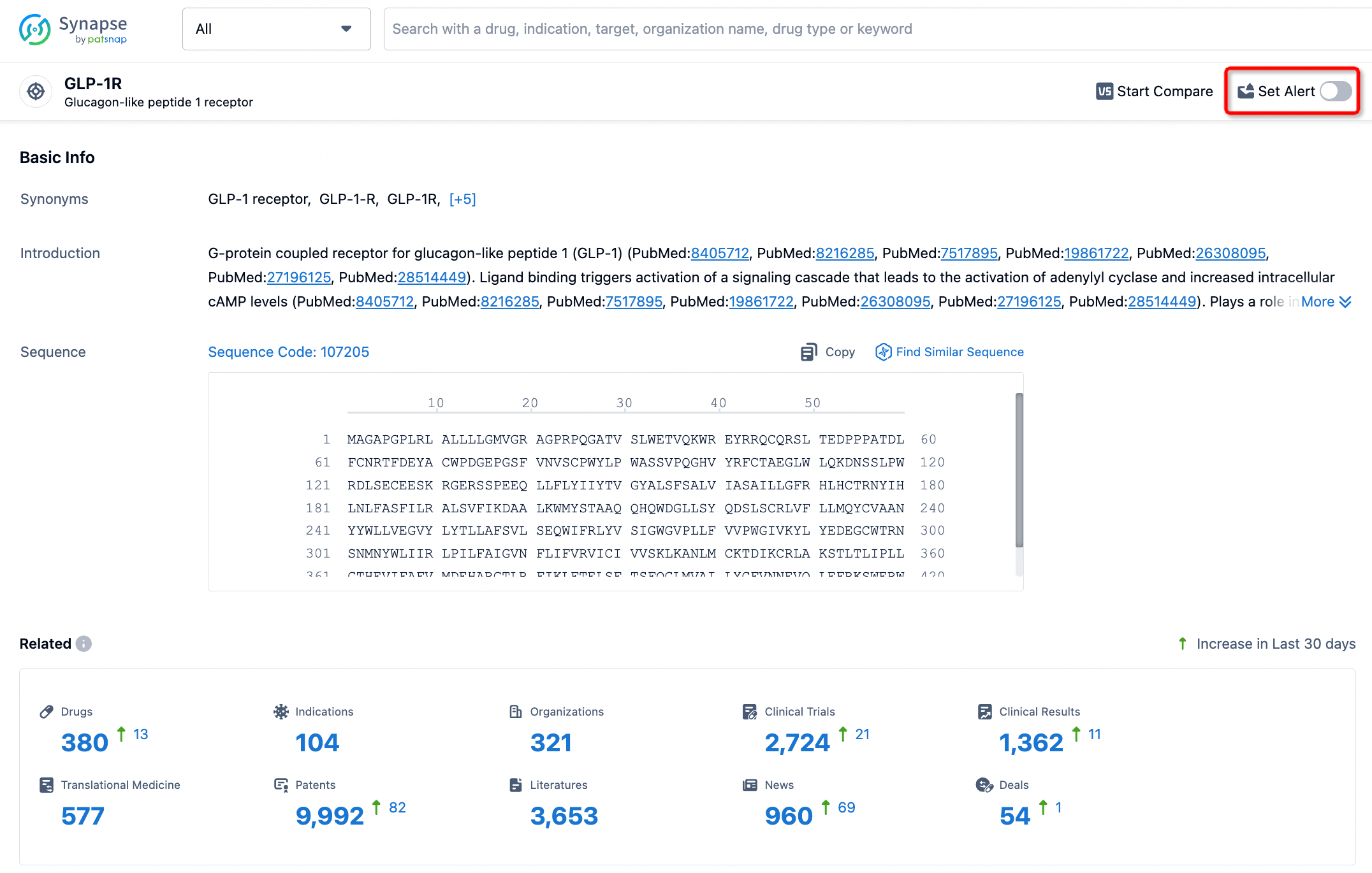
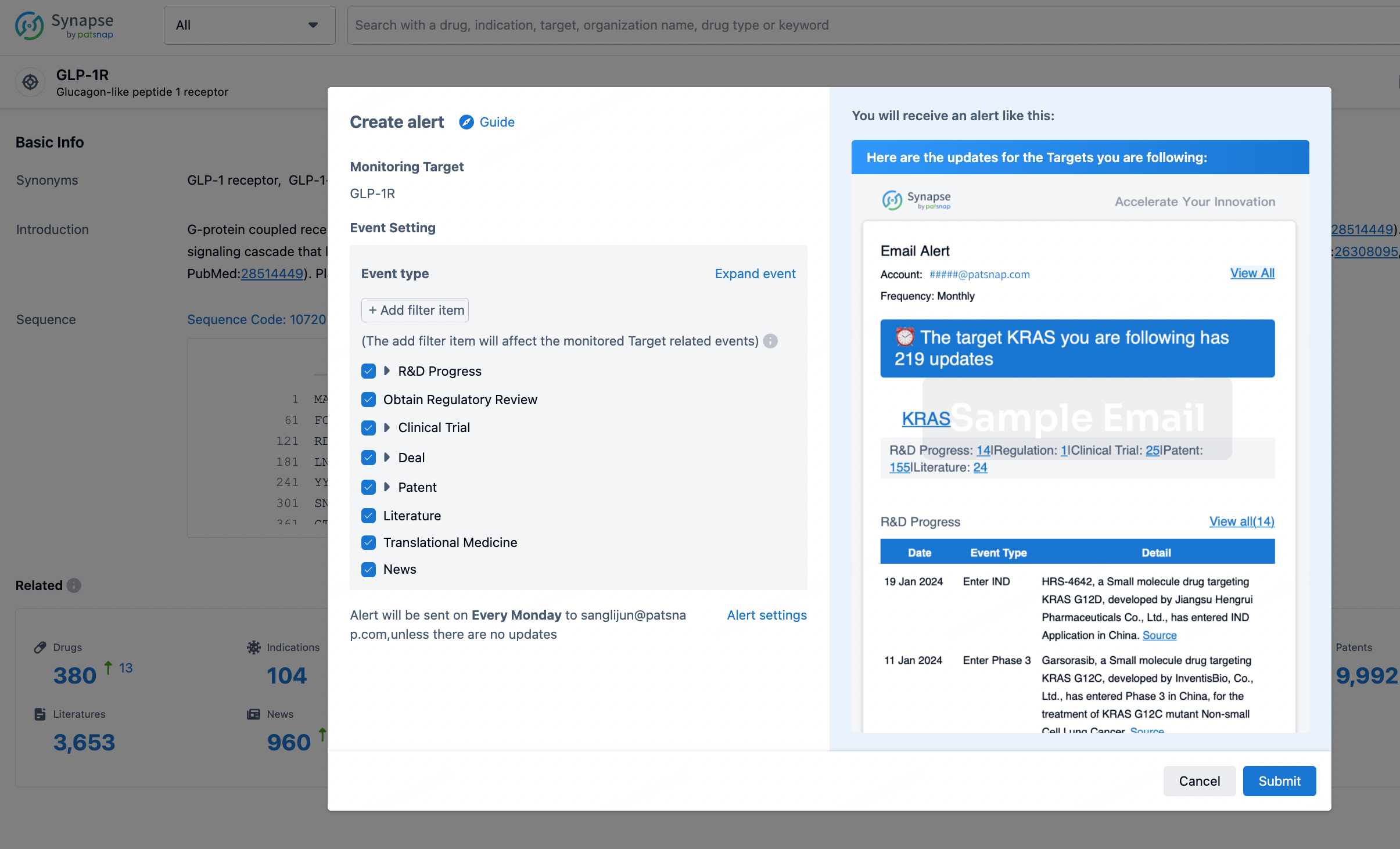
In the Synapse database, you can stay updated on the latest research and development advances of all targets. This service is accessible anytime and anywhere, with updates available daily or weekly. Use the "Set Alert" function to stay informed. Click on the image below to embark on a brand new journey of drug discovery!

Hiro LS Researcher
The AI Search Engine Built to Accelerate Biopharma Decisions
Search across billion-scale life sciences data to uncover signals, validate evidence, and act with confidence.
Ask any biopharma research question→
Get started for free today!
Accelerate Strategic R&D decision making with Synapse, Patsnap’s AI-powered Connected Innovation Intelligence Platform Built for Life Sciences Professionals.
Discover Synapse Data Servers
Synapse data is now integrated into the PatSnap LS Model Context Protocol (MCP) service. Customize your LLM agent now using our MCP server!