Request Demo
What are NEK7 modulators and how do they work?
25 June 2024
The human body is a complex network of cells and molecules that work in harmony to maintain health and function. Within this intricate system, proteins play a critical role in regulating various biological processes. One such protein, NIMA-related kinase 7 (NEK7), has recently garnered significant attention in the scientific community. NEK7 is a serine/threonine kinase that is involved in crucial cellular processes such as mitosis and microtubule organization. Understanding and modulating the activity of NEK7 has become an area of intense research, particularly because of its implications in various diseases, including cancer and inflammatory conditions. In this article, we will delve into what NEK7 modulators are, how they work, and their potential applications.
NEK7 modulators primarily function by influencing the activity of NEK7, either enhancing or inhibiting its function. NEK7 is involved in the regulation of microtubule organization during mitosis, a process essential for accurate cell division. By modulating NEK7 activity, researchers aim to control these cellular processes. NEK7 modulators can be small molecules, peptides, or even RNA-based agents designed to interact with NEK7 and alter its activity.
One of the most common approaches to modulating NEK7 activity is the use of small molecule inhibitors. These inhibitors are designed to bind to the kinase domain of NEK7, thereby preventing its interaction with ATP, which is essential for its kinase activity. By blocking the ATP binding site, these inhibitors effectively shut down the kinase activity of NEK7, leading to alterations in cell cycle progression and microtubule dynamics. On the other hand, activators of NEK7 can enhance its activity, promoting its role in microtubule organization and cell division.
Another promising strategy involves the use of RNA interference (RNAi) and CRISPR/Cas9 technologies to modulate NEK7 expression. RNAi can be used to silence NEK7 expression, thereby reducing its activity in the cell. CRISPR/Cas9 can be employed to either knock out the NEK7 gene entirely or introduce specific mutations that alter its function. These genetic approaches offer a high degree of specificity and have been instrumental in dissecting the functional roles of NEK7 in various cellular processes.
The modulation of NEK7 activity has significant therapeutic potential, particularly in the field of oncology. NEK7 is often overexpressed in various types of cancer, including breast, lung, and colorectal cancers. By inhibiting NEK7 activity, researchers aim to disrupt the cell cycle of cancer cells, thereby inhibiting their proliferation and inducing apoptosis. Several preclinical studies have demonstrated the efficacy of NEK7 inhibitors in reducing tumor growth in animal models, highlighting their potential as anticancer agents.
Beyond cancer, NEK7 modulators also hold promise in the treatment of inflammatory diseases. NEK7 has been implicated in the activation of the NLRP3 inflammasome, a multiprotein complex involved in the innate immune response. Aberrant activation of the NLRP3 inflammasome is associated with various inflammatory disorders, including gout, rheumatoid arthritis, and Alzheimer’s disease. By inhibiting NEK7, it is possible to reduce the activation of the NLRP3 inflammasome, thereby mitigating inflammation and its associated pathologies.
In addition to cancer and inflammatory diseases, NEK7 modulators are also being explored for their potential in treating neurodegenerative diseases. Dysregulation of microtubule dynamics, a process regulated by NEK7, is a hallmark of several neurodegenerative conditions, including Alzheimer’s and Parkinson’s diseases. By modulating NEK7 activity, researchers hope to restore normal microtubule function and slow the progression of these debilitating diseases.
In conclusion, NEK7 modulators represent a promising avenue for therapeutic intervention in a variety of diseases. By understanding how these modulators work and their potential applications, researchers are paving the way for the development of novel treatments that could significantly impact patient outcomes. As our knowledge of NEK7 and its modulators continues to grow, so too does the potential for innovative therapies that target this crucial kinase.
NEK7 modulators primarily function by influencing the activity of NEK7, either enhancing or inhibiting its function. NEK7 is involved in the regulation of microtubule organization during mitosis, a process essential for accurate cell division. By modulating NEK7 activity, researchers aim to control these cellular processes. NEK7 modulators can be small molecules, peptides, or even RNA-based agents designed to interact with NEK7 and alter its activity.
One of the most common approaches to modulating NEK7 activity is the use of small molecule inhibitors. These inhibitors are designed to bind to the kinase domain of NEK7, thereby preventing its interaction with ATP, which is essential for its kinase activity. By blocking the ATP binding site, these inhibitors effectively shut down the kinase activity of NEK7, leading to alterations in cell cycle progression and microtubule dynamics. On the other hand, activators of NEK7 can enhance its activity, promoting its role in microtubule organization and cell division.
Another promising strategy involves the use of RNA interference (RNAi) and CRISPR/Cas9 technologies to modulate NEK7 expression. RNAi can be used to silence NEK7 expression, thereby reducing its activity in the cell. CRISPR/Cas9 can be employed to either knock out the NEK7 gene entirely or introduce specific mutations that alter its function. These genetic approaches offer a high degree of specificity and have been instrumental in dissecting the functional roles of NEK7 in various cellular processes.
The modulation of NEK7 activity has significant therapeutic potential, particularly in the field of oncology. NEK7 is often overexpressed in various types of cancer, including breast, lung, and colorectal cancers. By inhibiting NEK7 activity, researchers aim to disrupt the cell cycle of cancer cells, thereby inhibiting their proliferation and inducing apoptosis. Several preclinical studies have demonstrated the efficacy of NEK7 inhibitors in reducing tumor growth in animal models, highlighting their potential as anticancer agents.
Beyond cancer, NEK7 modulators also hold promise in the treatment of inflammatory diseases. NEK7 has been implicated in the activation of the NLRP3 inflammasome, a multiprotein complex involved in the innate immune response. Aberrant activation of the NLRP3 inflammasome is associated with various inflammatory disorders, including gout, rheumatoid arthritis, and Alzheimer’s disease. By inhibiting NEK7, it is possible to reduce the activation of the NLRP3 inflammasome, thereby mitigating inflammation and its associated pathologies.
In addition to cancer and inflammatory diseases, NEK7 modulators are also being explored for their potential in treating neurodegenerative diseases. Dysregulation of microtubule dynamics, a process regulated by NEK7, is a hallmark of several neurodegenerative conditions, including Alzheimer’s and Parkinson’s diseases. By modulating NEK7 activity, researchers hope to restore normal microtubule function and slow the progression of these debilitating diseases.
In conclusion, NEK7 modulators represent a promising avenue for therapeutic intervention in a variety of diseases. By understanding how these modulators work and their potential applications, researchers are paving the way for the development of novel treatments that could significantly impact patient outcomes. As our knowledge of NEK7 and its modulators continues to grow, so too does the potential for innovative therapies that target this crucial kinase.
How to obtain the latest development progress of all targets?
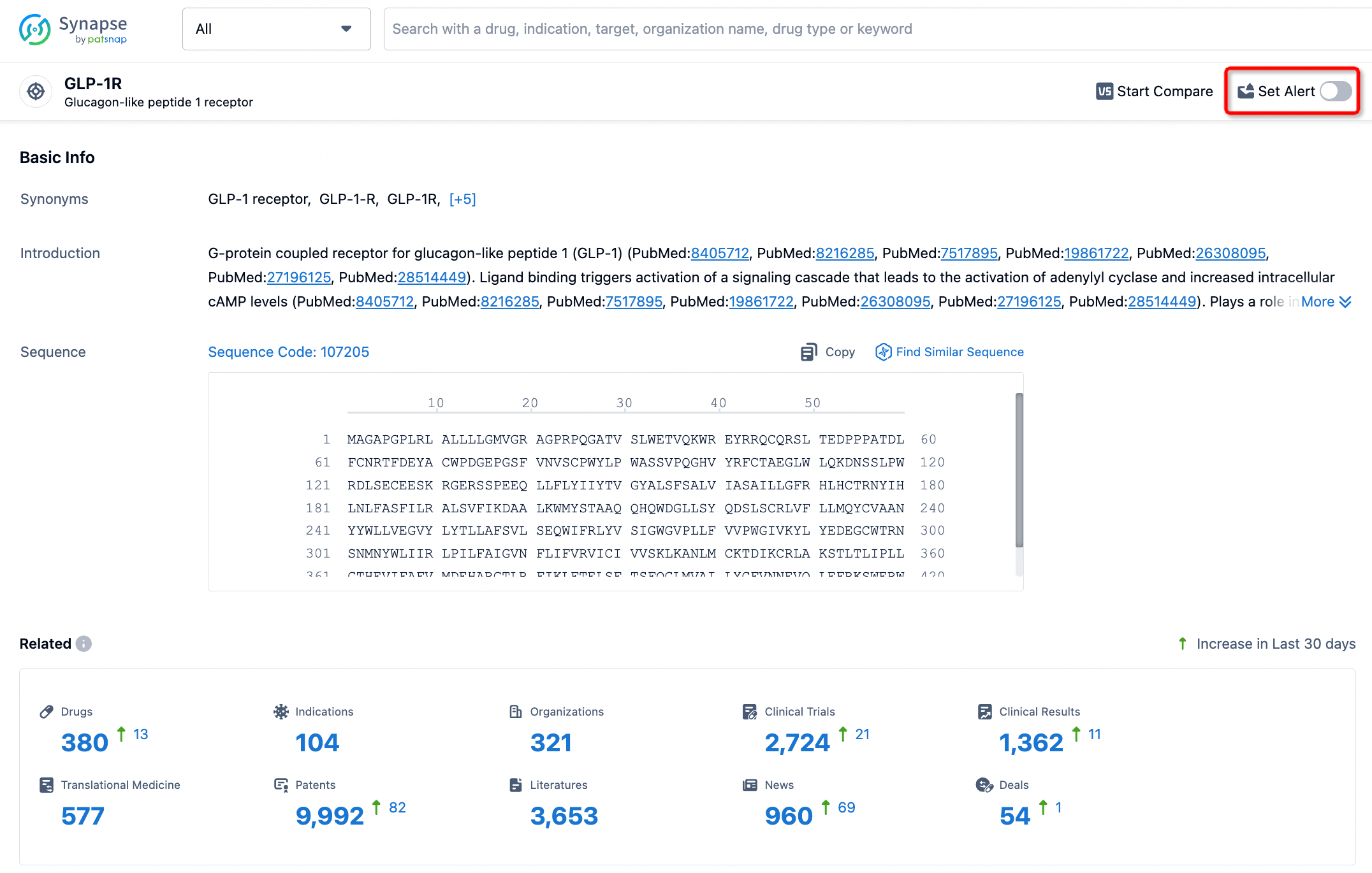
In the Synapse database, you can stay updated on the latest research and development advances of all targets. This service is accessible anytime and anywhere, with updates available daily or weekly. Use the "Set Alert" function to stay informed. Click on the image below to embark on a brand new journey of drug discovery!


AI Agents Built for Biopharma Breakthroughs
Accelerate discovery. Empower decisions. Transform outcomes.
Get started for free today!
Accelerate Strategic R&D decision making with Synapse, PatSnap’s AI-powered Connected Innovation Intelligence Platform Built for Life Sciences Professionals.
Start your data trial now!
Synapse data is also accessible to external entities via APIs or data packages. Empower better decisions with the latest in pharmaceutical intelligence.