Request Demo
What are nfP2X7 inhibitors and how do they work?
21 June 2024
The world of medical science is in constant flux, and one of the more exciting developments in recent years has been the discovery and ongoing study of nfP2X7 inhibitors. These compounds represent a promising frontier in the treatment of a variety of conditions, from chronic pain to cancer. In this blog post, we'll delve into what nfP2X7 inhibitors are, how they work, and what they are used for in the medical field.
P2X7 is a type of receptor found on the surface of many different cells, including immune cells, nerves, and cancer cells. This receptor is part of the P2X family of receptors, which are known for their role in cellular signaling, particularly in response to the presence of extracellular ATP (adenosine triphosphate). Unlike other P2X receptors, P2X7 has a unique structure in its carboxyl-terminal tail, which enables it to form a large pore in the cell membrane upon prolonged activation. This pore can allow ions and other small molecules to pass through, leading to cell death in some cases.
Non-functional P2X7 (nfP2X7) refers to a variant of the P2X7 receptor that, despite being present on the cell surface, does not exhibit the same functional properties as the normal P2X7 receptor. These nfP2X7 receptors are often overexpressed in a variety of diseases, particularly cancers. Researchers have seized upon this overexpression as a potential therapeutic target, leading to the development of nfP2X7 inhibitors.
The exact mechanisms by which nfP2X7 inhibitors exert their effects are still under investigation, but a few key actions have been identified. Firstly, these inhibitors can block the binding of extracellular ATP to the nfP2X7 receptors. This is significant because ATP, when binding to P2X7, often leads to the activation of downstream signaling pathways that promote inflammation and cell proliferation—processes that are detrimental in conditions like cancer and chronic inflammatory diseases. By preventing ATP from binding to nfP2X7, these inhibitors can effectively dampen these harmful pathways.
Secondly, nfP2X7 inhibitors may induce apoptosis, or programmed cell death, in cells that overexpress this receptor. Apoptosis is a natural process that helps remove damaged or unwanted cells, and its induction is a key goal in cancer therapy. Inhibiting nfP2X7 can disrupt the cellular environment to a point where cancer cells are more likely to undergo apoptosis, thereby reducing tumor growth.
Finally, nfP2X7 inhibitors can modulate immune responses. nfP2X7 is often found on immune cells like macrophages and T-cells. By inhibiting this receptor, these compounds can alter the activity of immune cells, potentially leading to reduced inflammation and a more balanced immune response. This is particularly valuable in autoimmune diseases and chronic inflammatory conditions.
One of the most promising applications of nfP2X7 inhibitors is in the field of oncology. Cancer cells frequently exhibit high levels of nfP2X7, and inhibiting this receptor has been shown to reduce tumor growth and metastasis in preclinical studies. These findings are particularly encouraging for cancers that are resistant to traditional therapies, as nfP2X7 inhibitors represent a novel mechanism of action that could bypass existing resistance pathways.
Beyond cancer, nfP2X7 inhibitors are being explored for their potential in treating chronic pain conditions. Chronic pain often involves neuroinflammation, a process in which the P2X7 receptor plays a key role. By targeting nfP2X7, these inhibitors could provide a new avenue for pain relief, especially for conditions that do not respond well to conventional painkillers.
In addition, nfP2X7 inhibitors are being investigated for their role in autoimmune diseases like rheumatoid arthritis and multiple sclerosis. These conditions are characterized by an overactive immune response, and by modulating the function of immune cells through nfP2X7 inhibition, it may be possible to achieve better disease control with fewer side effects compared to current therapies.
The exploration of nfP2X7 inhibitors is still in its early stages, but the potential applications are vast and varied. As research progresses, we can expect to see more refined and effective inhibitors making their way into clinical trials, and hopefully, into the hands of clinicians who can use them to improve patient outcomes across a range of challenging conditions.
P2X7 is a type of receptor found on the surface of many different cells, including immune cells, nerves, and cancer cells. This receptor is part of the P2X family of receptors, which are known for their role in cellular signaling, particularly in response to the presence of extracellular ATP (adenosine triphosphate). Unlike other P2X receptors, P2X7 has a unique structure in its carboxyl-terminal tail, which enables it to form a large pore in the cell membrane upon prolonged activation. This pore can allow ions and other small molecules to pass through, leading to cell death in some cases.
Non-functional P2X7 (nfP2X7) refers to a variant of the P2X7 receptor that, despite being present on the cell surface, does not exhibit the same functional properties as the normal P2X7 receptor. These nfP2X7 receptors are often overexpressed in a variety of diseases, particularly cancers. Researchers have seized upon this overexpression as a potential therapeutic target, leading to the development of nfP2X7 inhibitors.
The exact mechanisms by which nfP2X7 inhibitors exert their effects are still under investigation, but a few key actions have been identified. Firstly, these inhibitors can block the binding of extracellular ATP to the nfP2X7 receptors. This is significant because ATP, when binding to P2X7, often leads to the activation of downstream signaling pathways that promote inflammation and cell proliferation—processes that are detrimental in conditions like cancer and chronic inflammatory diseases. By preventing ATP from binding to nfP2X7, these inhibitors can effectively dampen these harmful pathways.
Secondly, nfP2X7 inhibitors may induce apoptosis, or programmed cell death, in cells that overexpress this receptor. Apoptosis is a natural process that helps remove damaged or unwanted cells, and its induction is a key goal in cancer therapy. Inhibiting nfP2X7 can disrupt the cellular environment to a point where cancer cells are more likely to undergo apoptosis, thereby reducing tumor growth.
Finally, nfP2X7 inhibitors can modulate immune responses. nfP2X7 is often found on immune cells like macrophages and T-cells. By inhibiting this receptor, these compounds can alter the activity of immune cells, potentially leading to reduced inflammation and a more balanced immune response. This is particularly valuable in autoimmune diseases and chronic inflammatory conditions.
One of the most promising applications of nfP2X7 inhibitors is in the field of oncology. Cancer cells frequently exhibit high levels of nfP2X7, and inhibiting this receptor has been shown to reduce tumor growth and metastasis in preclinical studies. These findings are particularly encouraging for cancers that are resistant to traditional therapies, as nfP2X7 inhibitors represent a novel mechanism of action that could bypass existing resistance pathways.
Beyond cancer, nfP2X7 inhibitors are being explored for their potential in treating chronic pain conditions. Chronic pain often involves neuroinflammation, a process in which the P2X7 receptor plays a key role. By targeting nfP2X7, these inhibitors could provide a new avenue for pain relief, especially for conditions that do not respond well to conventional painkillers.
In addition, nfP2X7 inhibitors are being investigated for their role in autoimmune diseases like rheumatoid arthritis and multiple sclerosis. These conditions are characterized by an overactive immune response, and by modulating the function of immune cells through nfP2X7 inhibition, it may be possible to achieve better disease control with fewer side effects compared to current therapies.
The exploration of nfP2X7 inhibitors is still in its early stages, but the potential applications are vast and varied. As research progresses, we can expect to see more refined and effective inhibitors making their way into clinical trials, and hopefully, into the hands of clinicians who can use them to improve patient outcomes across a range of challenging conditions.
How to obtain the latest development progress of all targets?
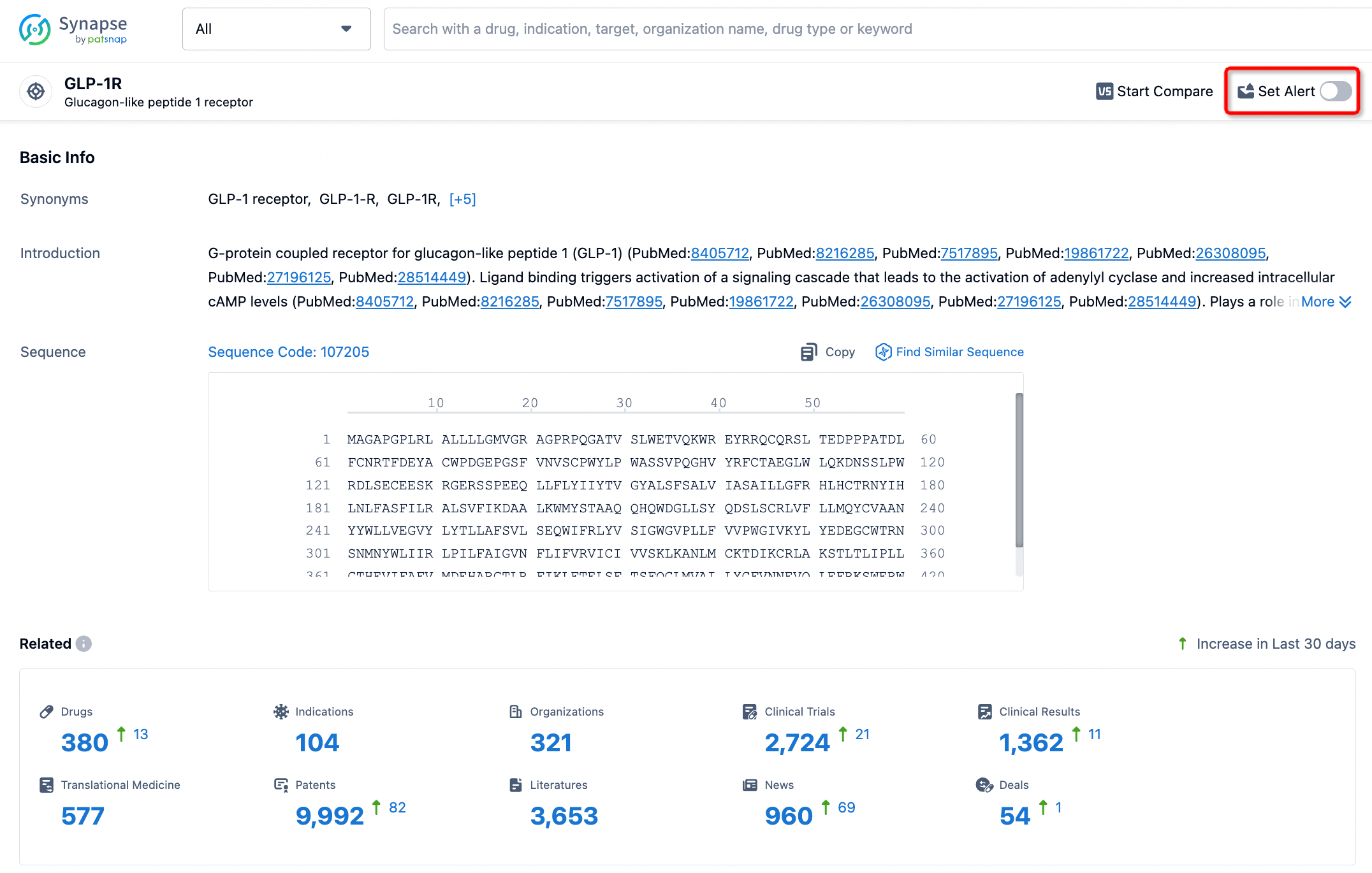
In the Synapse database, you can stay updated on the latest research and development advances of all targets. This service is accessible anytime and anywhere, with updates available daily or weekly. Use the "Set Alert" function to stay informed. Click on the image below to embark on a brand new journey of drug discovery!


AI Agents Built for Biopharma Breakthroughs
Accelerate discovery. Empower decisions. Transform outcomes.
Get started for free today!
Accelerate Strategic R&D decision making with Synapse, PatSnap’s AI-powered Connected Innovation Intelligence Platform Built for Life Sciences Professionals.
Start your data trial now!
Synapse data is also accessible to external entities via APIs or data packages. Empower better decisions with the latest in pharmaceutical intelligence.