Request Demo
What are NTRK modulators and how do they work?
25 June 2024
NTRK modulators have emerged as a significant breakthrough in the field of oncology, providing new hope for patients with cancers driven by neurotrophic tyrosine receptor kinase (NTRK) gene fusions. These modulators represent a class of targeted therapies that zero in on specific genetic abnormalities, offering a more personalized and effective treatment option for certain cancer patients. In this post, we'll delve into the mechanisms of NTRK modulators, explore how they work, and discuss their current applications in medicine.
NTRK modulators function by specifically targeting the abnormal proteins produced by NTRK gene fusions. The NTRK family comprises three genes: NTRK1, NTRK2, and NTRK3, which encode for the proteins TrkA, TrkB, and TrkC, respectively. These proteins are receptor tyrosine kinases involved in the development and functioning of the nervous system. In their normal state, they play crucial roles in cell growth, differentiation, and survival.
However, when these genes become aberrantly fused with other genes—a process known as gene fusion—they produce abnormal, constantly active proteins. These dysregulated proteins can drive the uncontrolled growth of cancer cells. NTRK modulators work by binding to these abnormal proteins and inhibiting their kinase activity. This inhibition prevents the downstream signaling pathways that promote tumor growth and survival, effectively halting the progression of cancer.
The mechanism of action for NTRK modulators is highly specific. These drugs are designed to fit into the ATP-binding pocket of the Trk proteins, blocking their ability to phosphorylate and activate downstream signaling molecules. This specificity not only makes them effective but also reduces the likelihood of off-target effects, which are a common concern with traditional chemotherapy.
NTRK modulators are primarily used for the treatment of cancers that harbor NTRK gene fusions. These fusions are rare but can be found in a variety of cancers, including but not limited to, certain types of sarcomas, thyroid cancers, and some lung cancers. The presence of an NTRK gene fusion is typically identified through genetic testing, which allows healthcare providers to tailor treatment plans based on the molecular profile of a patient's tumor.
One of the most remarkable aspects of NTRK modulators is their broad applicability across different types of cancers. Traditional cancer treatments often depend on the location and type of the tumor, such as breast or lung cancer. In contrast, NTRK modulators are agnostic to the tumor type; they are effective as long as the cancer harbors an NTRK gene fusion. This paradigm shift towards tumor-agnostic therapies represents a significant advance in personalized medicine.
Currently, two NTRK modulators—larotrectinib and entrectinib—have been approved by regulatory agencies for clinical use. Both drugs have demonstrated high response rates in clinical trials, leading to significant tumor shrinkage in a substantial proportion of patients. Moreover, these responses have been observed across a wide range of tumor types, affirming the effectiveness of NTRK modulators as a versatile cancer treatment option.
The use of NTRK modulators has also shown promise in overcoming some of the limitations of conventional therapies. For instance, patients who have developed resistance to other treatments may still respond to NTRK modulators, providing an additional line of defense against cancer progression. Furthermore, these drugs are generally well-tolerated, with fewer side effects compared to traditional chemotherapy. This improves the quality of life for patients, allowing them to continue their daily activities with minimal disruption.
In conclusion, NTRK modulators represent a groundbreaking advancement in the treatment of cancers driven by NTRK gene fusions. By specifically targeting the abnormal proteins that fuel tumor growth, these drugs offer a highly effective and personalized treatment option. Their broad applicability across different cancer types and favorable safety profile make them a promising addition to the arsenal of cancer therapies. As research continues and more patients gain access to these innovative treatments, the impact of NTRK modulators on the field of oncology and patient outcomes is likely to grow even further.
NTRK modulators function by specifically targeting the abnormal proteins produced by NTRK gene fusions. The NTRK family comprises three genes: NTRK1, NTRK2, and NTRK3, which encode for the proteins TrkA, TrkB, and TrkC, respectively. These proteins are receptor tyrosine kinases involved in the development and functioning of the nervous system. In their normal state, they play crucial roles in cell growth, differentiation, and survival.
However, when these genes become aberrantly fused with other genes—a process known as gene fusion—they produce abnormal, constantly active proteins. These dysregulated proteins can drive the uncontrolled growth of cancer cells. NTRK modulators work by binding to these abnormal proteins and inhibiting their kinase activity. This inhibition prevents the downstream signaling pathways that promote tumor growth and survival, effectively halting the progression of cancer.
The mechanism of action for NTRK modulators is highly specific. These drugs are designed to fit into the ATP-binding pocket of the Trk proteins, blocking their ability to phosphorylate and activate downstream signaling molecules. This specificity not only makes them effective but also reduces the likelihood of off-target effects, which are a common concern with traditional chemotherapy.
NTRK modulators are primarily used for the treatment of cancers that harbor NTRK gene fusions. These fusions are rare but can be found in a variety of cancers, including but not limited to, certain types of sarcomas, thyroid cancers, and some lung cancers. The presence of an NTRK gene fusion is typically identified through genetic testing, which allows healthcare providers to tailor treatment plans based on the molecular profile of a patient's tumor.
One of the most remarkable aspects of NTRK modulators is their broad applicability across different types of cancers. Traditional cancer treatments often depend on the location and type of the tumor, such as breast or lung cancer. In contrast, NTRK modulators are agnostic to the tumor type; they are effective as long as the cancer harbors an NTRK gene fusion. This paradigm shift towards tumor-agnostic therapies represents a significant advance in personalized medicine.
Currently, two NTRK modulators—larotrectinib and entrectinib—have been approved by regulatory agencies for clinical use. Both drugs have demonstrated high response rates in clinical trials, leading to significant tumor shrinkage in a substantial proportion of patients. Moreover, these responses have been observed across a wide range of tumor types, affirming the effectiveness of NTRK modulators as a versatile cancer treatment option.
The use of NTRK modulators has also shown promise in overcoming some of the limitations of conventional therapies. For instance, patients who have developed resistance to other treatments may still respond to NTRK modulators, providing an additional line of defense against cancer progression. Furthermore, these drugs are generally well-tolerated, with fewer side effects compared to traditional chemotherapy. This improves the quality of life for patients, allowing them to continue their daily activities with minimal disruption.
In conclusion, NTRK modulators represent a groundbreaking advancement in the treatment of cancers driven by NTRK gene fusions. By specifically targeting the abnormal proteins that fuel tumor growth, these drugs offer a highly effective and personalized treatment option. Their broad applicability across different cancer types and favorable safety profile make them a promising addition to the arsenal of cancer therapies. As research continues and more patients gain access to these innovative treatments, the impact of NTRK modulators on the field of oncology and patient outcomes is likely to grow even further.
How to obtain the latest development progress of all targets?
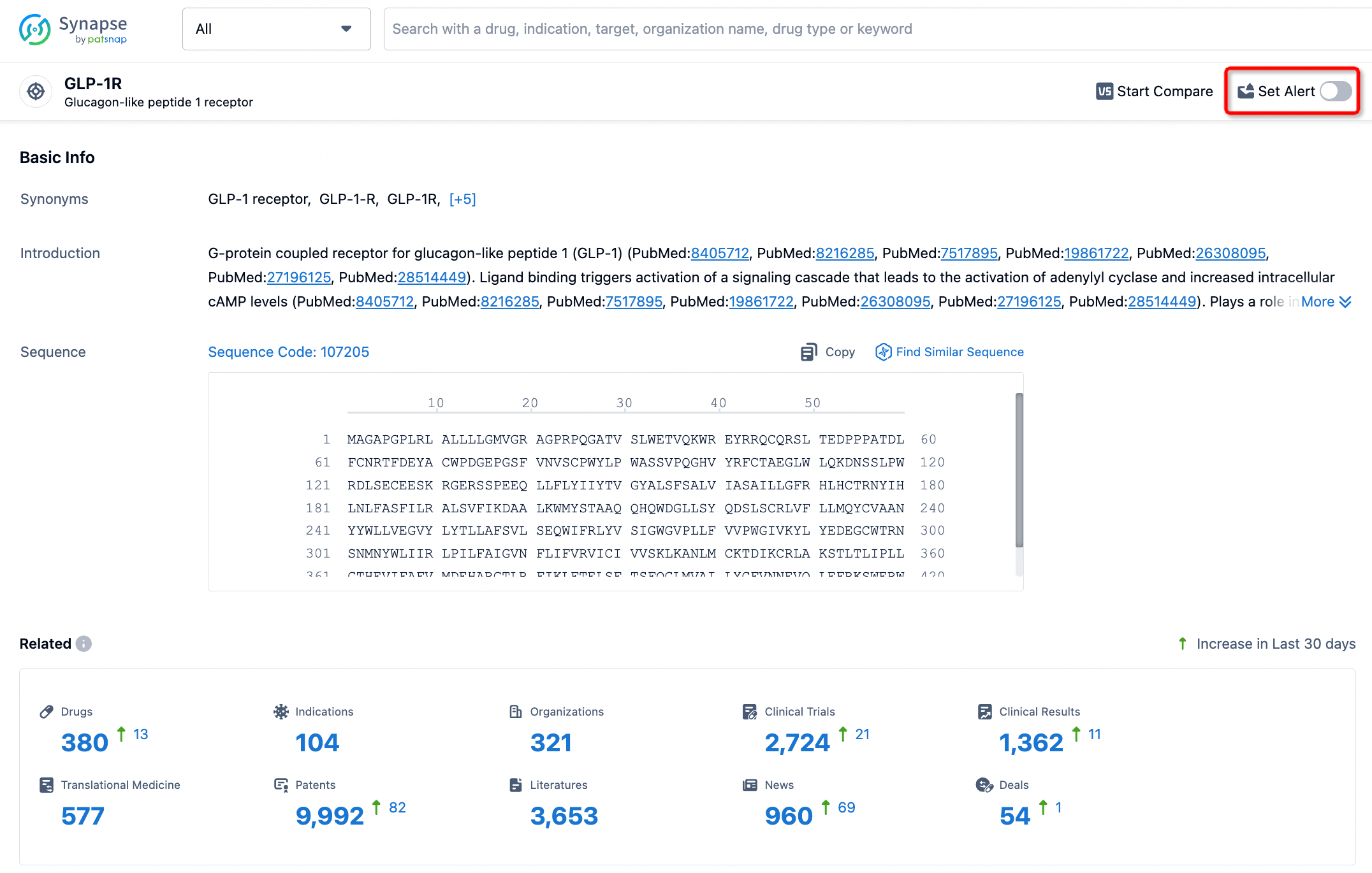
In the Synapse database, you can stay updated on the latest research and development advances of all targets. This service is accessible anytime and anywhere, with updates available daily or weekly. Use the "Set Alert" function to stay informed. Click on the image below to embark on a brand new journey of drug discovery!


AI Agents Built for Biopharma Breakthroughs
Accelerate discovery. Empower decisions. Transform outcomes.
Get started for free today!
Accelerate Strategic R&D decision making with Synapse, PatSnap’s AI-powered Connected Innovation Intelligence Platform Built for Life Sciences Professionals.
Start your data trial now!
Synapse data is also accessible to external entities via APIs or data packages. Empower better decisions with the latest in pharmaceutical intelligence.