Request Demo
What are PDGFR gene inhibitors and how do they work?
21 June 2024
The PDGFR gene, or Platelet-Derived Growth Factor Receptor gene, plays a crucial role in the regulation of cellular proliferation, differentiation, and development. PDGFR gene inhibitors have emerged as a significant therapeutic option, especially in the treatment of various cancers and fibrotic diseases. These inhibitors target the PDGFR pathway, which, when abnormally activated, can lead to uncontrolled cell division and tumorigenesis. Understanding how PDGFR gene inhibitors work and their applications can provide insight into their importance in modern medicine.
PDGFR gene inhibitors function by blocking the activity of the PDGFR proteins, primarily PDGFR-α and PDGFR-β, which are receptor tyrosine kinases. Normally, PDGFs (Platelet-Derived Growth Factors) bind to these receptors, triggering a cascade of downstream signaling pathways that promote cell growth, migration, and survival. However, mutations or overexpression of PDGFR can lead to persistent activation, causing uncontrolled cell proliferation and contributing to the development of cancers and fibrotic diseases.
PDGFR gene inhibitors are designed to specifically target and inhibit the kinase activity of PDGFR-α and PDGFR-β. These inhibitors bind to the ATP-binding sites of the receptors, preventing their phosphorylation and subsequent activation. By blocking these signals, the inhibitors can halt the growth and proliferation of the abnormal cells. Furthermore, PDGFR inhibitors can also promote apoptosis, or programmed cell death, of cancerous cells, thereby reducing tumor size and progression.
The development of specific PDGFR inhibitors has been an area of intense research, resulting in several drugs that have shown efficacy in clinical trials. These inhibitors often function by selectively binding to the PDGFR receptors, thus minimizing the effects on normal, healthy cells and reducing potential side effects.
PDGFR gene inhibitors are primarily used in the treatment of certain types of cancers, particularly those where PDGFR signaling plays a significant role in disease progression. One of the most notable cancers treated with PDGFR inhibitors is gastrointestinal stromal tumors (GISTs). GISTs often have mutations in the PDGFR-α gene, leading to continuous receptor activation. Drugs such as imatinib (Gleevec) have been developed to specifically target and inhibit PDGFR, resulting in significant improvements in patient outcomes.
Another application of PDGFR inhibitors is in the treatment of chronic myeloid leukemia (CML). While BCR-ABL fusion protein is the primary target in CML, PDGFR inhibitors also play a role in managing the disease due to the involvement of PDGFR signaling pathways. Imatinib, for instance, has been shown to effectively inhibit both BCR-ABL and PDGFR, providing a dual mechanism of action against leukemia cells.
Beyond oncology, PDGFR inhibitors are also being explored for their potential in treating fibrotic diseases. Conditions such as idiopathic pulmonary fibrosis (IPF) and systemic sclerosis involve abnormal PDGFR signaling, leading to excessive tissue fibrosis. By inhibiting PDGFR activity, these drugs can help reduce fibrosis and improve organ function. Nintedanib (Ofev), for example, is a PDGFR inhibitor that has been approved for the treatment of IPF, demonstrating the versatility of these inhibitors beyond cancer therapy.
The use of PDGFR inhibitors is not without challenges. Resistance to these drugs can develop over time, necessitating the continuous development of new inhibitors and combination therapies to overcome resistance mechanisms. Additionally, while PDGFR inhibitors are generally well-tolerated, they can have side effects, including edema, fatigue, and gastrointestinal disturbances, which need to be managed in clinical settings.
In conclusion, PDGFR gene inhibitors represent a crucial advancement in targeted therapy for cancer and fibrotic diseases. By specifically targeting the PDGFR signaling pathway, these inhibitors can effectively halt abnormal cell proliferation and promote cell death, leading to improved patient outcomes. As research continues, the development of new PDGFR inhibitors and combination therapies holds promise for expanding their therapeutic applications and overcoming existing challenges.
PDGFR gene inhibitors function by blocking the activity of the PDGFR proteins, primarily PDGFR-α and PDGFR-β, which are receptor tyrosine kinases. Normally, PDGFs (Platelet-Derived Growth Factors) bind to these receptors, triggering a cascade of downstream signaling pathways that promote cell growth, migration, and survival. However, mutations or overexpression of PDGFR can lead to persistent activation, causing uncontrolled cell proliferation and contributing to the development of cancers and fibrotic diseases.
PDGFR gene inhibitors are designed to specifically target and inhibit the kinase activity of PDGFR-α and PDGFR-β. These inhibitors bind to the ATP-binding sites of the receptors, preventing their phosphorylation and subsequent activation. By blocking these signals, the inhibitors can halt the growth and proliferation of the abnormal cells. Furthermore, PDGFR inhibitors can also promote apoptosis, or programmed cell death, of cancerous cells, thereby reducing tumor size and progression.
The development of specific PDGFR inhibitors has been an area of intense research, resulting in several drugs that have shown efficacy in clinical trials. These inhibitors often function by selectively binding to the PDGFR receptors, thus minimizing the effects on normal, healthy cells and reducing potential side effects.
PDGFR gene inhibitors are primarily used in the treatment of certain types of cancers, particularly those where PDGFR signaling plays a significant role in disease progression. One of the most notable cancers treated with PDGFR inhibitors is gastrointestinal stromal tumors (GISTs). GISTs often have mutations in the PDGFR-α gene, leading to continuous receptor activation. Drugs such as imatinib (Gleevec) have been developed to specifically target and inhibit PDGFR, resulting in significant improvements in patient outcomes.
Another application of PDGFR inhibitors is in the treatment of chronic myeloid leukemia (CML). While BCR-ABL fusion protein is the primary target in CML, PDGFR inhibitors also play a role in managing the disease due to the involvement of PDGFR signaling pathways. Imatinib, for instance, has been shown to effectively inhibit both BCR-ABL and PDGFR, providing a dual mechanism of action against leukemia cells.
Beyond oncology, PDGFR inhibitors are also being explored for their potential in treating fibrotic diseases. Conditions such as idiopathic pulmonary fibrosis (IPF) and systemic sclerosis involve abnormal PDGFR signaling, leading to excessive tissue fibrosis. By inhibiting PDGFR activity, these drugs can help reduce fibrosis and improve organ function. Nintedanib (Ofev), for example, is a PDGFR inhibitor that has been approved for the treatment of IPF, demonstrating the versatility of these inhibitors beyond cancer therapy.
The use of PDGFR inhibitors is not without challenges. Resistance to these drugs can develop over time, necessitating the continuous development of new inhibitors and combination therapies to overcome resistance mechanisms. Additionally, while PDGFR inhibitors are generally well-tolerated, they can have side effects, including edema, fatigue, and gastrointestinal disturbances, which need to be managed in clinical settings.
In conclusion, PDGFR gene inhibitors represent a crucial advancement in targeted therapy for cancer and fibrotic diseases. By specifically targeting the PDGFR signaling pathway, these inhibitors can effectively halt abnormal cell proliferation and promote cell death, leading to improved patient outcomes. As research continues, the development of new PDGFR inhibitors and combination therapies holds promise for expanding their therapeutic applications and overcoming existing challenges.
How to obtain the latest development progress of all targets?
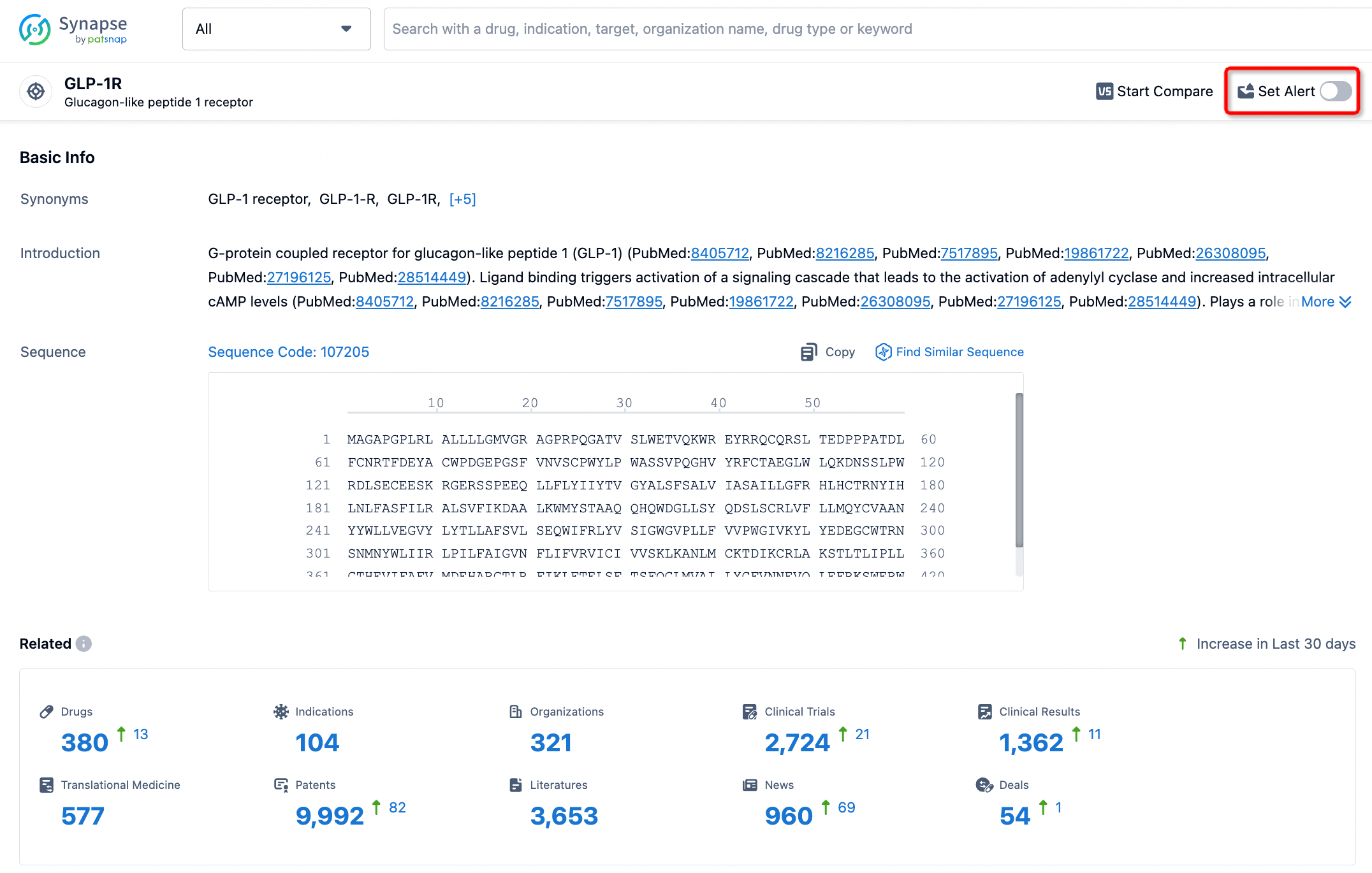
In the Synapse database, you can stay updated on the latest research and development advances of all targets. This service is accessible anytime and anywhere, with updates available daily or weekly. Use the "Set Alert" function to stay informed. Click on the image below to embark on a brand new journey of drug discovery!


AI Agents Built for Biopharma Breakthroughs
Accelerate discovery. Empower decisions. Transform outcomes.
Get started for free today!
Accelerate Strategic R&D decision making with Synapse, PatSnap’s AI-powered Connected Innovation Intelligence Platform Built for Life Sciences Professionals.
Start your data trial now!
Synapse data is also accessible to external entities via APIs or data packages. Empower better decisions with the latest in pharmaceutical intelligence.