Request Demo
What are PDGFRα inhibitors and how do they work?
21 June 2024
Platelet-derived growth factor receptor alpha (PDGFRα) inhibitors have emerged as a critical class of targeted therapies in the realm of oncology and beyond. These inhibitors play a significant role in the treatment of various malignancies and other diseases characterized by abnormal cell growth and proliferation. This post aims to delve into the intricacies of PDGFRα inhibitors, exploring how they function and what therapeutic applications they serve.
PDGFRα is a cell surface tyrosine kinase receptor that is activated by binding to its ligands, platelet-derived growth factor (PDGF) isoforms. Once activated, PDGFRα initiates a cascade of downstream signaling pathways that promote cell growth, survival, and proliferation. While this mechanism is essential for normal cellular functions, aberrant activation of PDGFRα can lead to uncontrolled cellular proliferation, contributing to the pathogenesis of various cancers and fibrotic diseases.
PDGFRα inhibitors are designed to target and inhibit the activity of this receptor, thus intercepting the signaling pathways that lead to unwanted cell proliferation. These inhibitors typically function by competitively binding to the ATP-binding site of the receptor’s tyrosine kinase domain, thereby preventing phosphorylation and subsequent activation of downstream signaling molecules. By halting these signals, PDGFRα inhibitors effectively impede abnormal cell growth and induce apoptosis in cancerous or fibrotic cells.
Among the most well-known PDGFRα inhibitors are imatinib, sunitinib, and crenolanib. These drugs exhibit varying degrees of specificity and potency against PDGFRα and are often used in combination with other therapies to maximize therapeutic efficacy. The choice of inhibitor and treatment regimen largely depends on the specific type of disease and the patient's overall health condition.
PDGFRα inhibitors have found a wide range of applications across various medical disciplines. In oncology, these inhibitors are primarily used to treat cancers that exhibit overexpression or mutations of the PDGFRα gene. For instance, gastrointestinal stromal tumors (GISTs) often harbor mutations in the PDGFRA gene, making PDGFRα inhibitors like imatinib the cornerstone of treatment for this malignancy. By effectively targeting the mutant receptor, these inhibitors can induce tumor regression and prolong patient survival.
Besides GISTs, PDGFRα inhibitors have shown promise in treating other types of cancers such as gliomas, non-small cell lung cancer (NSCLC), and ovarian cancer. In gliomas, for example, PDGFRα overexpression is frequently observed and contributes to tumor growth and resistance to conventional therapies. Inhibitors of PDGFRα can help to overcome this resistance, offering a new avenue for treatment in patients with refractory gliomas.
PDGFRα inhibitors also play a pivotal role in managing fibrotic diseases, where excessive fibroblast activity leads to tissue scarring and organ dysfunction. Conditions such as idiopathic pulmonary fibrosis (IPF) and systemic sclerosis can benefit from PDGFRα inhibition, as these diseases often involve upregulated PDGF signaling. By curbing the activity of PDGFRα, these inhibitors can mitigate fibroblast proliferation and collagen deposition, slowing disease progression and improving clinical outcomes.
Moreover, PDGFRα inhibitors are being explored for their potential in treating other non-cancerous conditions such as diabetic nephropathy and age-related macular degeneration (AMD), where pathological angiogenesis and fibrosis play critical roles. The versatility of PDGFRα inhibitors in addressing a range of pathological processes underscores their therapeutic potential across diverse medical fields.
In conclusion, PDGFRα inhibitors represent a powerful class of targeted therapies with broad applications in oncology and beyond. By specifically targeting the PDGFRα receptor, these inhibitors can effectively disrupt aberrant cell signaling, offering hope for patients with various cancers and fibrotic diseases. As research continues to elucidate the complexities of PDGFRα signaling and its role in disease, the development of more refined and potent inhibitors promises to further expand the therapeutic landscape, ultimately improving patient outcomes across multiple disciplines.
PDGFRα is a cell surface tyrosine kinase receptor that is activated by binding to its ligands, platelet-derived growth factor (PDGF) isoforms. Once activated, PDGFRα initiates a cascade of downstream signaling pathways that promote cell growth, survival, and proliferation. While this mechanism is essential for normal cellular functions, aberrant activation of PDGFRα can lead to uncontrolled cellular proliferation, contributing to the pathogenesis of various cancers and fibrotic diseases.
PDGFRα inhibitors are designed to target and inhibit the activity of this receptor, thus intercepting the signaling pathways that lead to unwanted cell proliferation. These inhibitors typically function by competitively binding to the ATP-binding site of the receptor’s tyrosine kinase domain, thereby preventing phosphorylation and subsequent activation of downstream signaling molecules. By halting these signals, PDGFRα inhibitors effectively impede abnormal cell growth and induce apoptosis in cancerous or fibrotic cells.
Among the most well-known PDGFRα inhibitors are imatinib, sunitinib, and crenolanib. These drugs exhibit varying degrees of specificity and potency against PDGFRα and are often used in combination with other therapies to maximize therapeutic efficacy. The choice of inhibitor and treatment regimen largely depends on the specific type of disease and the patient's overall health condition.
PDGFRα inhibitors have found a wide range of applications across various medical disciplines. In oncology, these inhibitors are primarily used to treat cancers that exhibit overexpression or mutations of the PDGFRα gene. For instance, gastrointestinal stromal tumors (GISTs) often harbor mutations in the PDGFRA gene, making PDGFRα inhibitors like imatinib the cornerstone of treatment for this malignancy. By effectively targeting the mutant receptor, these inhibitors can induce tumor regression and prolong patient survival.
Besides GISTs, PDGFRα inhibitors have shown promise in treating other types of cancers such as gliomas, non-small cell lung cancer (NSCLC), and ovarian cancer. In gliomas, for example, PDGFRα overexpression is frequently observed and contributes to tumor growth and resistance to conventional therapies. Inhibitors of PDGFRα can help to overcome this resistance, offering a new avenue for treatment in patients with refractory gliomas.
PDGFRα inhibitors also play a pivotal role in managing fibrotic diseases, where excessive fibroblast activity leads to tissue scarring and organ dysfunction. Conditions such as idiopathic pulmonary fibrosis (IPF) and systemic sclerosis can benefit from PDGFRα inhibition, as these diseases often involve upregulated PDGF signaling. By curbing the activity of PDGFRα, these inhibitors can mitigate fibroblast proliferation and collagen deposition, slowing disease progression and improving clinical outcomes.
Moreover, PDGFRα inhibitors are being explored for their potential in treating other non-cancerous conditions such as diabetic nephropathy and age-related macular degeneration (AMD), where pathological angiogenesis and fibrosis play critical roles. The versatility of PDGFRα inhibitors in addressing a range of pathological processes underscores their therapeutic potential across diverse medical fields.
In conclusion, PDGFRα inhibitors represent a powerful class of targeted therapies with broad applications in oncology and beyond. By specifically targeting the PDGFRα receptor, these inhibitors can effectively disrupt aberrant cell signaling, offering hope for patients with various cancers and fibrotic diseases. As research continues to elucidate the complexities of PDGFRα signaling and its role in disease, the development of more refined and potent inhibitors promises to further expand the therapeutic landscape, ultimately improving patient outcomes across multiple disciplines.
How to obtain the latest development progress of all targets?
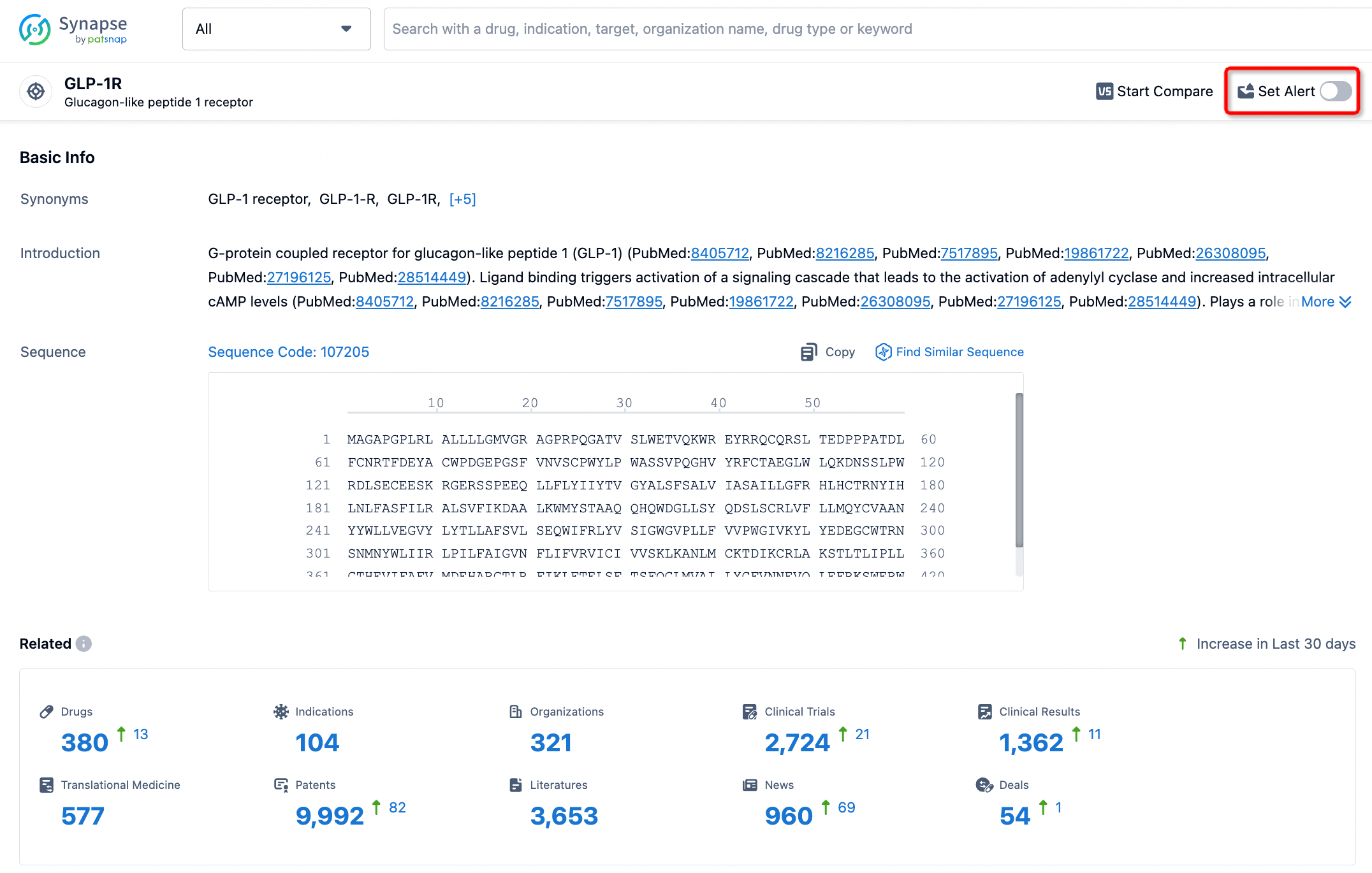
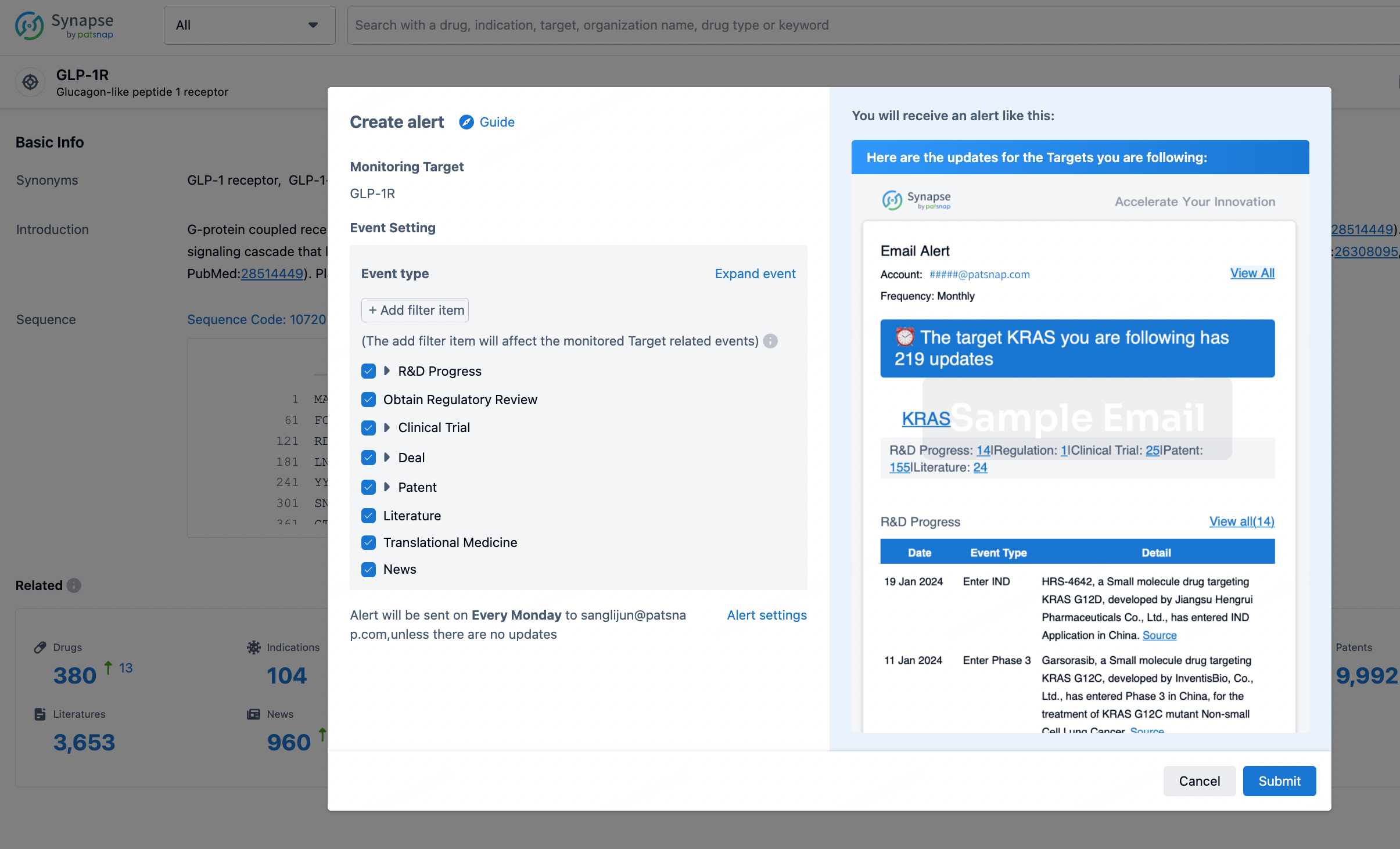
In the Synapse database, you can stay updated on the latest research and development advances of all targets. This service is accessible anytime and anywhere, with updates available daily or weekly. Use the "Set Alert" function to stay informed. Click on the image below to embark on a brand new journey of drug discovery!

AI Agents Built for Biopharma Breakthroughs
Accelerate discovery. Empower decisions. Transform outcomes.
Get started for free today!
Accelerate Strategic R&D decision making with Synapse, PatSnap’s AI-powered Connected Innovation Intelligence Platform Built for Life Sciences Professionals.
Start your data trial now!
Synapse data is also accessible to external entities via APIs or data packages. Empower better decisions with the latest in pharmaceutical intelligence.