Request Demo
What are Pfbc1 inhibitors and how do they work?
25 June 2024
Pfbc1 inhibitors have recently emerged as a promising area of research within the field of pharmacology. These molecules have the potential to provide therapeutic benefits in several medical conditions by targeting the Pfbc1 protein. In this post, we will explore what Pfbc1 inhibitors are, how they work, and their potential applications in medicine.
Pfbc1 inhibitors are a class of compounds designed to specifically inhibit the activity of the Pfbc1 protein. The Pfbc1 protein plays a crucial role in various cellular processes, including signal transduction, cell growth, and apoptosis. Dysregulation of Pfbc1 activity has been implicated in numerous diseases, ranging from cancer to neurodegenerative disorders. By inhibiting the Pfbc1 protein, researchers aim to correct these dysregulations and restore normal cellular function.
The mechanism of action of Pfbc1 inhibitors primarily revolves around their ability to bind to the Pfbc1 protein and block its activity. This can be achieved through competitive inhibition, where the inhibitor competes with the natural substrate of the Pfbc1 protein for binding sites, or non-competitive inhibition, where the inhibitor binds to a different site on the protein, causing conformational changes that reduce its activity. By precisely targeting Pfbc1, these inhibitors can modulate various downstream signaling pathways that are essential for cellular homeostasis.
Pfbc1 inhibitors are being investigated for their potential therapeutic benefits in a variety of medical conditions. One of the most promising applications is in oncology. Cancer cells often exhibit aberrant Pfbc1 activity, which contributes to uncontrolled cell growth and resistance to apoptosis. By inhibiting Pfbc1, these compounds can help to suppress tumor growth and sensitize cancer cells to conventional treatments like chemotherapy and radiation therapy. Several preclinical studies have shown that Pfbc1 inhibitors can effectively reduce tumor size and improve survival rates in animal models of cancer.
In addition to cancer, Pfbc1 inhibitors are also being explored for their potential in treating neurodegenerative diseases such as Alzheimer's and Parkinson's. In these conditions, abnormal Pfbc1 activity has been linked to the accumulation of toxic protein aggregates and neuronal cell death. By inhibiting Pfbc1, researchers hope to reduce the formation of these aggregates and protect neurons from degeneration. Early-stage studies have shown promising results, with Pfbc1 inhibitors demonstrating the ability to improve cognitive function and reduce neuroinflammation in animal models.
Another area where Pfbc1 inhibitors are showing potential is in the treatment of inflammatory diseases. Chronic inflammation is a hallmark of many conditions, including rheumatoid arthritis, inflammatory bowel disease, and psoriasis. Pfbc1 has been found to play a role in the regulation of inflammatory pathways, and its inhibition could help to reduce inflammation and alleviate symptoms. Preliminary studies have indicated that Pfbc1 inhibitors can decrease the production of pro-inflammatory cytokines and improve clinical outcomes in animal models of inflammatory diseases.
While the research on Pfbc1 inhibitors is still in its early stages, the initial findings are encouraging. These compounds have the potential to become valuable tools in the fight against cancer, neurodegenerative diseases, and inflammatory conditions. However, further studies are needed to fully understand their mechanisms of action, optimize their efficacy, and assess their safety in humans. As research progresses, Pfbc1 inhibitors may one day become an integral part of the therapeutic arsenal for a wide range of diseases, offering new hope to patients worldwide.
Pfbc1 inhibitors are a class of compounds designed to specifically inhibit the activity of the Pfbc1 protein. The Pfbc1 protein plays a crucial role in various cellular processes, including signal transduction, cell growth, and apoptosis. Dysregulation of Pfbc1 activity has been implicated in numerous diseases, ranging from cancer to neurodegenerative disorders. By inhibiting the Pfbc1 protein, researchers aim to correct these dysregulations and restore normal cellular function.
The mechanism of action of Pfbc1 inhibitors primarily revolves around their ability to bind to the Pfbc1 protein and block its activity. This can be achieved through competitive inhibition, where the inhibitor competes with the natural substrate of the Pfbc1 protein for binding sites, or non-competitive inhibition, where the inhibitor binds to a different site on the protein, causing conformational changes that reduce its activity. By precisely targeting Pfbc1, these inhibitors can modulate various downstream signaling pathways that are essential for cellular homeostasis.
Pfbc1 inhibitors are being investigated for their potential therapeutic benefits in a variety of medical conditions. One of the most promising applications is in oncology. Cancer cells often exhibit aberrant Pfbc1 activity, which contributes to uncontrolled cell growth and resistance to apoptosis. By inhibiting Pfbc1, these compounds can help to suppress tumor growth and sensitize cancer cells to conventional treatments like chemotherapy and radiation therapy. Several preclinical studies have shown that Pfbc1 inhibitors can effectively reduce tumor size and improve survival rates in animal models of cancer.
In addition to cancer, Pfbc1 inhibitors are also being explored for their potential in treating neurodegenerative diseases such as Alzheimer's and Parkinson's. In these conditions, abnormal Pfbc1 activity has been linked to the accumulation of toxic protein aggregates and neuronal cell death. By inhibiting Pfbc1, researchers hope to reduce the formation of these aggregates and protect neurons from degeneration. Early-stage studies have shown promising results, with Pfbc1 inhibitors demonstrating the ability to improve cognitive function and reduce neuroinflammation in animal models.
Another area where Pfbc1 inhibitors are showing potential is in the treatment of inflammatory diseases. Chronic inflammation is a hallmark of many conditions, including rheumatoid arthritis, inflammatory bowel disease, and psoriasis. Pfbc1 has been found to play a role in the regulation of inflammatory pathways, and its inhibition could help to reduce inflammation and alleviate symptoms. Preliminary studies have indicated that Pfbc1 inhibitors can decrease the production of pro-inflammatory cytokines and improve clinical outcomes in animal models of inflammatory diseases.
While the research on Pfbc1 inhibitors is still in its early stages, the initial findings are encouraging. These compounds have the potential to become valuable tools in the fight against cancer, neurodegenerative diseases, and inflammatory conditions. However, further studies are needed to fully understand their mechanisms of action, optimize their efficacy, and assess their safety in humans. As research progresses, Pfbc1 inhibitors may one day become an integral part of the therapeutic arsenal for a wide range of diseases, offering new hope to patients worldwide.
How to obtain the latest development progress of all targets?
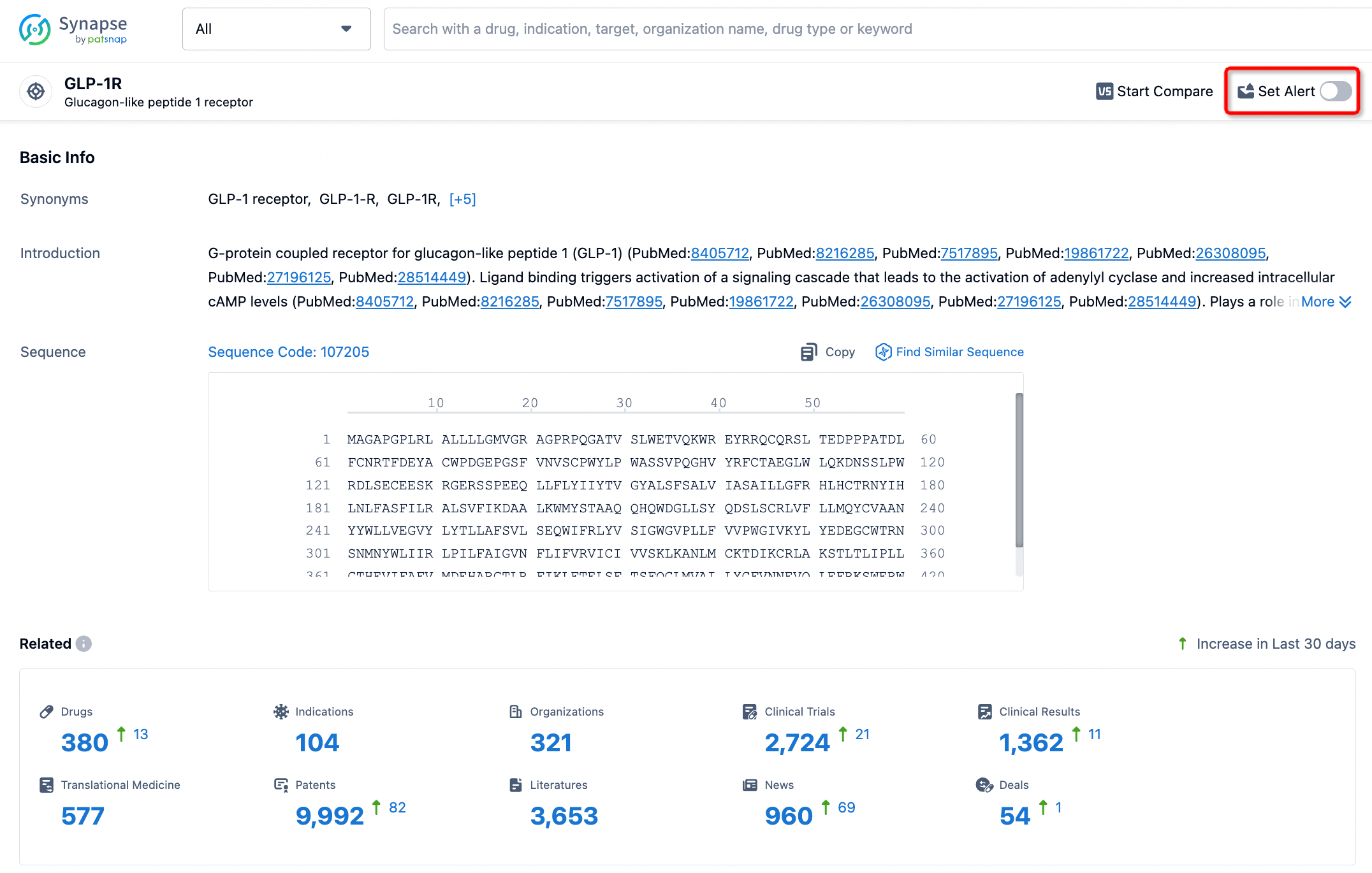
In the Synapse database, you can stay updated on the latest research and development advances of all targets. This service is accessible anytime and anywhere, with updates available daily or weekly. Use the "Set Alert" function to stay informed. Click on the image below to embark on a brand new journey of drug discovery!


AI Agents Built for Biopharma Breakthroughs
Accelerate discovery. Empower decisions. Transform outcomes.
Get started for free today!
Accelerate Strategic R&D decision making with Synapse, PatSnap’s AI-powered Connected Innovation Intelligence Platform Built for Life Sciences Professionals.
Start your data trial now!
Synapse data is also accessible to external entities via APIs or data packages. Empower better decisions with the latest in pharmaceutical intelligence.