Request Demo
What are PKM2 stimulants and how do they work?
25 June 2024
Pyruvate kinase M2 (PKM2) is a crucial enzyme involved in the regulation of glycolysis, the process by which glucose is converted into energy in the form of ATP. Unlike other pyruvate kinase isoforms, PKM2 possesses unique properties that allow it to play a multifaceted role in cellular metabolism, growth, and survival, particularly in rapidly dividing cells such as cancer cells. This makes PKM2 a particularly interesting target for therapeutic intervention. PKM2 stimulants are compounds designed to enhance the activity of PKM2, thereby modulating metabolic pathways and affecting cellular behavior in beneficial ways.
PKM2 functions as a metabolic switch that can alternate between a highly active tetrameric form and a less active dimeric form. The tetrameric form of PKM2 facilitates the conversion of phosphoenolpyruvate (PEP) to pyruvate, a crucial step in glycolysis. This form is associated with high rates of ATP production. The dimeric form, on the other hand, is less efficient in catalyzing this reaction and is involved in redirecting glycolytic intermediates toward anabolic processes, essential for cell growth and proliferation. PKM2 stimulants work by promoting the formation or stabilization of the tetrameric form, thereby enhancing glycolytic flux and ATP production.
The activation of PKM2 can also lead to alterations in metabolic signaling pathways. For instance, increased PKM2 activity can reduce the availability of glycolytic intermediates for biosynthetic processes, thereby limiting the proliferation of rapidly dividing cells like cancer cells. Moreover, PKM2 stimulants can influence cellular redox states and the generation of reactive oxygen species (ROS), which can further affect cell survival and function. Therefore, the design of PKM2 stimulants involves a fine balance between modulating energy production and controlling cellular proliferation and survival.
PKM2 stimulants are primarily being investigated for their potential role in cancer therapy. Cancer cells often exhibit altered metabolic pathways, known as the Warburg effect, where they rely heavily on glycolysis for energy production, even in the presence of sufficient oxygen. By targeting PKM2, researchers aim to exploit this metabolic vulnerability. The stimulation of PKM2 activity can push cancer cells towards excessive energy production, leading to metabolic exhaustion and cell death. Additionally, this can reduce the availability of glycolytic intermediates that are essential for the synthesis of nucleotides, amino acids, and lipids, thereby impeding tumor growth and proliferation.
Beyond oncology, PKM2 stimulants may also have therapeutic applications in other diseases characterized by metabolic dysregulation. For example, in metabolic disorders such as diabetes and obesity, modifying the activity of PKM2 could help restore normal metabolic function and improve energy balance. Furthermore, PKM2 activators are being explored for their potential to enhance immune cell function. Certain immune cells, such as T cells and macrophages, undergo metabolic reprogramming upon activation. Modulating PKM2 activity in these cells could enhance their ability to fight infections and cancer.
The development of PKM2 stimulants is still in its early stages, with many challenges to overcome. One major hurdle is achieving selective modulation of PKM2 without affecting other isoforms of pyruvate kinase, such as PKM1, which is predominantly expressed in non-proliferating tissues like muscle and brain. Another challenge is the potential for off-target effects, as PKM2 is involved in various cellular processes beyond glycolysis, including gene expression and cell signaling. Therefore, the design of PKM2 stimulants requires a thorough understanding of the enzyme’s structure, function, and regulation.
In conclusion, PKM2 stimulants represent a promising avenue for therapeutic intervention in cancer and other metabolic diseases. By enhancing the activity of PKM2, these compounds have the potential to disrupt the altered metabolic pathways that underpin various pathological conditions. However, further research is needed to fully elucidate the mechanisms of action, optimize the selectivity and efficacy of these stimulants, and evaluate their safety and efficacy in clinical settings. As our understanding of PKM2 and its role in cellular metabolism continues to grow, so too will the potential for innovative treatments that harness the power of metabolic regulation.
PKM2 functions as a metabolic switch that can alternate between a highly active tetrameric form and a less active dimeric form. The tetrameric form of PKM2 facilitates the conversion of phosphoenolpyruvate (PEP) to pyruvate, a crucial step in glycolysis. This form is associated with high rates of ATP production. The dimeric form, on the other hand, is less efficient in catalyzing this reaction and is involved in redirecting glycolytic intermediates toward anabolic processes, essential for cell growth and proliferation. PKM2 stimulants work by promoting the formation or stabilization of the tetrameric form, thereby enhancing glycolytic flux and ATP production.
The activation of PKM2 can also lead to alterations in metabolic signaling pathways. For instance, increased PKM2 activity can reduce the availability of glycolytic intermediates for biosynthetic processes, thereby limiting the proliferation of rapidly dividing cells like cancer cells. Moreover, PKM2 stimulants can influence cellular redox states and the generation of reactive oxygen species (ROS), which can further affect cell survival and function. Therefore, the design of PKM2 stimulants involves a fine balance between modulating energy production and controlling cellular proliferation and survival.
PKM2 stimulants are primarily being investigated for their potential role in cancer therapy. Cancer cells often exhibit altered metabolic pathways, known as the Warburg effect, where they rely heavily on glycolysis for energy production, even in the presence of sufficient oxygen. By targeting PKM2, researchers aim to exploit this metabolic vulnerability. The stimulation of PKM2 activity can push cancer cells towards excessive energy production, leading to metabolic exhaustion and cell death. Additionally, this can reduce the availability of glycolytic intermediates that are essential for the synthesis of nucleotides, amino acids, and lipids, thereby impeding tumor growth and proliferation.
Beyond oncology, PKM2 stimulants may also have therapeutic applications in other diseases characterized by metabolic dysregulation. For example, in metabolic disorders such as diabetes and obesity, modifying the activity of PKM2 could help restore normal metabolic function and improve energy balance. Furthermore, PKM2 activators are being explored for their potential to enhance immune cell function. Certain immune cells, such as T cells and macrophages, undergo metabolic reprogramming upon activation. Modulating PKM2 activity in these cells could enhance their ability to fight infections and cancer.
The development of PKM2 stimulants is still in its early stages, with many challenges to overcome. One major hurdle is achieving selective modulation of PKM2 without affecting other isoforms of pyruvate kinase, such as PKM1, which is predominantly expressed in non-proliferating tissues like muscle and brain. Another challenge is the potential for off-target effects, as PKM2 is involved in various cellular processes beyond glycolysis, including gene expression and cell signaling. Therefore, the design of PKM2 stimulants requires a thorough understanding of the enzyme’s structure, function, and regulation.
In conclusion, PKM2 stimulants represent a promising avenue for therapeutic intervention in cancer and other metabolic diseases. By enhancing the activity of PKM2, these compounds have the potential to disrupt the altered metabolic pathways that underpin various pathological conditions. However, further research is needed to fully elucidate the mechanisms of action, optimize the selectivity and efficacy of these stimulants, and evaluate their safety and efficacy in clinical settings. As our understanding of PKM2 and its role in cellular metabolism continues to grow, so too will the potential for innovative treatments that harness the power of metabolic regulation.
How to obtain the latest development progress of all targets?
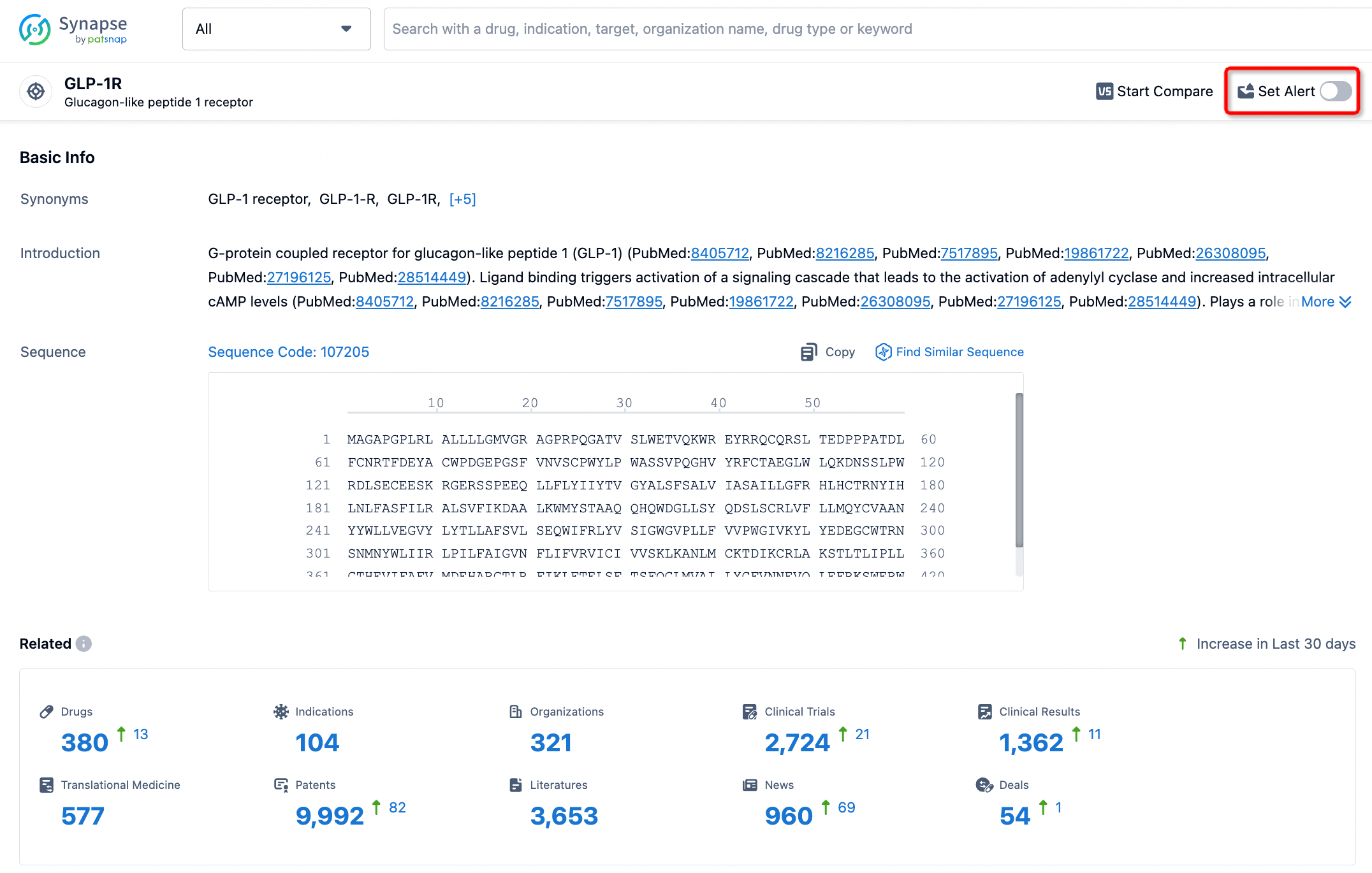
In the Synapse database, you can stay updated on the latest research and development advances of all targets. This service is accessible anytime and anywhere, with updates available daily or weekly. Use the "Set Alert" function to stay informed. Click on the image below to embark on a brand new journey of drug discovery!


AI Agents Built for Biopharma Breakthroughs
Accelerate discovery. Empower decisions. Transform outcomes.
Get started for free today!
Accelerate Strategic R&D decision making with Synapse, PatSnap’s AI-powered Connected Innovation Intelligence Platform Built for Life Sciences Professionals.
Start your data trial now!
Synapse data is also accessible to external entities via APIs or data packages. Empower better decisions with the latest in pharmaceutical intelligence.