Request Demo
What are RORα inhibitors and how do they work?
25 June 2024
RORα, or Retinoic acid receptor-related orphan receptor alpha, is a nuclear receptor that plays a critical role in various physiological processes, including circadian rhythm regulation, immune response modulation, and lipid metabolism. The inhibition of RORα has garnered significant attention in recent years due to its therapeutic potential in treating a range of diseases. This blog post delves into the nature of RORα inhibitors, their mechanisms of action, and their diverse applications in modern medicine.
RORα inhibitors are compounds designed to selectively bind to and inhibit the activity of the RORα receptor. This receptor is part of the nuclear receptor superfamily and functions as a transcription factor, regulating the expression of genes involved in critical biological processes. The inhibition of RORα can modulate these pathways, thereby presenting opportunities for therapeutic intervention in diseases where these pathways are dysregulated.
One prominent feature of RORα inhibitors is their ability to interfere with the circadian clock. RORα is a key regulator of circadian rhythms, which are the body’s internal biological clocks that cycle roughly every 24 hours. By inhibiting RORα, these compounds can influence the expression of clock genes and proteins involved in maintaining circadian rhythms. This modulation can be particularly useful in conditions where circadian disruptions are implicated, such as sleep disorders, metabolic syndrome, and certain psychiatric conditions.
Another crucial mechanism by which RORα inhibitors exert their effects is through the modulation of the immune system. RORα has been shown to play a role in the differentiation and function of various immune cells, including Th17 cells, which are implicated in autoimmune diseases. By inhibiting RORα, these compounds can reduce Th17 cell differentiation and activity, potentially alleviating symptoms in autoimmune conditions such as multiple sclerosis and rheumatoid arthritis.
Furthermore, RORα inhibitors also impact lipid metabolism. RORα is involved in the regulation of genes responsible for lipid synthesis and storage. Inhibiting RORα can therefore influence lipid levels in the body, offering potential benefits in the management of diseases characterized by lipid dysregulation, such as non-alcoholic fatty liver disease (NAFLD) and atherosclerosis.
The potential therapeutic applications of RORα inhibitors are vast and varied. In the realm of circadian rhythm disorders, RORα inhibitors offer promise in treating conditions such as delayed sleep phase disorder and non-24-hour sleep-wake disorder. By normalizing the circadian clock, these drugs can help restore healthy sleep patterns and improve overall quality of life for affected individuals.
In the context of metabolic diseases, RORα inhibitors may provide novel treatments for conditions like obesity and type 2 diabetes. By modulating lipid metabolism and improving insulin sensitivity, these compounds can address key aspects of metabolic syndrome. Additionally, their impact on circadian rhythms can further support metabolic health, as disruptions in circadian timing are often linked to metabolic dysregulation.
Autoimmune diseases represent another significant area of interest for RORα inhibitors. Th17 cells, regulated by RORα, play a pivotal role in the pathogenesis of multiple sclerosis, psoriasis, and other autoimmune conditions. By inhibiting RORα, these drugs can reduce the pathogenic activity of Th17 cells, potentially leading to improved outcomes for patients with these debilitating diseases.
Moreover, RORα inhibitors hold promise in the field of oncology. Recent studies have suggested that RORα may play a role in cancer progression and metastasis. By targeting RORα, it may be possible to develop therapies that inhibit tumor growth and spread, offering new hope for cancer patients.
In conclusion, RORα inhibitors represent a burgeoning area of pharmaceutical research with the potential to revolutionize the treatment of a wide range of diseases. By understanding the mechanisms through which these compounds work and exploring their diverse applications, researchers and clinicians can harness the power of RORα inhibition to improve patient outcomes across multiple therapeutic areas. As research continues to advance, the future of RORα inhibitors looks incredibly promising, offering new avenues for the treatment of complex and challenging medical conditions.
RORα inhibitors are compounds designed to selectively bind to and inhibit the activity of the RORα receptor. This receptor is part of the nuclear receptor superfamily and functions as a transcription factor, regulating the expression of genes involved in critical biological processes. The inhibition of RORα can modulate these pathways, thereby presenting opportunities for therapeutic intervention in diseases where these pathways are dysregulated.
One prominent feature of RORα inhibitors is their ability to interfere with the circadian clock. RORα is a key regulator of circadian rhythms, which are the body’s internal biological clocks that cycle roughly every 24 hours. By inhibiting RORα, these compounds can influence the expression of clock genes and proteins involved in maintaining circadian rhythms. This modulation can be particularly useful in conditions where circadian disruptions are implicated, such as sleep disorders, metabolic syndrome, and certain psychiatric conditions.
Another crucial mechanism by which RORα inhibitors exert their effects is through the modulation of the immune system. RORα has been shown to play a role in the differentiation and function of various immune cells, including Th17 cells, which are implicated in autoimmune diseases. By inhibiting RORα, these compounds can reduce Th17 cell differentiation and activity, potentially alleviating symptoms in autoimmune conditions such as multiple sclerosis and rheumatoid arthritis.
Furthermore, RORα inhibitors also impact lipid metabolism. RORα is involved in the regulation of genes responsible for lipid synthesis and storage. Inhibiting RORα can therefore influence lipid levels in the body, offering potential benefits in the management of diseases characterized by lipid dysregulation, such as non-alcoholic fatty liver disease (NAFLD) and atherosclerosis.
The potential therapeutic applications of RORα inhibitors are vast and varied. In the realm of circadian rhythm disorders, RORα inhibitors offer promise in treating conditions such as delayed sleep phase disorder and non-24-hour sleep-wake disorder. By normalizing the circadian clock, these drugs can help restore healthy sleep patterns and improve overall quality of life for affected individuals.
In the context of metabolic diseases, RORα inhibitors may provide novel treatments for conditions like obesity and type 2 diabetes. By modulating lipid metabolism and improving insulin sensitivity, these compounds can address key aspects of metabolic syndrome. Additionally, their impact on circadian rhythms can further support metabolic health, as disruptions in circadian timing are often linked to metabolic dysregulation.
Autoimmune diseases represent another significant area of interest for RORα inhibitors. Th17 cells, regulated by RORα, play a pivotal role in the pathogenesis of multiple sclerosis, psoriasis, and other autoimmune conditions. By inhibiting RORα, these drugs can reduce the pathogenic activity of Th17 cells, potentially leading to improved outcomes for patients with these debilitating diseases.
Moreover, RORα inhibitors hold promise in the field of oncology. Recent studies have suggested that RORα may play a role in cancer progression and metastasis. By targeting RORα, it may be possible to develop therapies that inhibit tumor growth and spread, offering new hope for cancer patients.
In conclusion, RORα inhibitors represent a burgeoning area of pharmaceutical research with the potential to revolutionize the treatment of a wide range of diseases. By understanding the mechanisms through which these compounds work and exploring their diverse applications, researchers and clinicians can harness the power of RORα inhibition to improve patient outcomes across multiple therapeutic areas. As research continues to advance, the future of RORα inhibitors looks incredibly promising, offering new avenues for the treatment of complex and challenging medical conditions.
How to obtain the latest development progress of all targets?
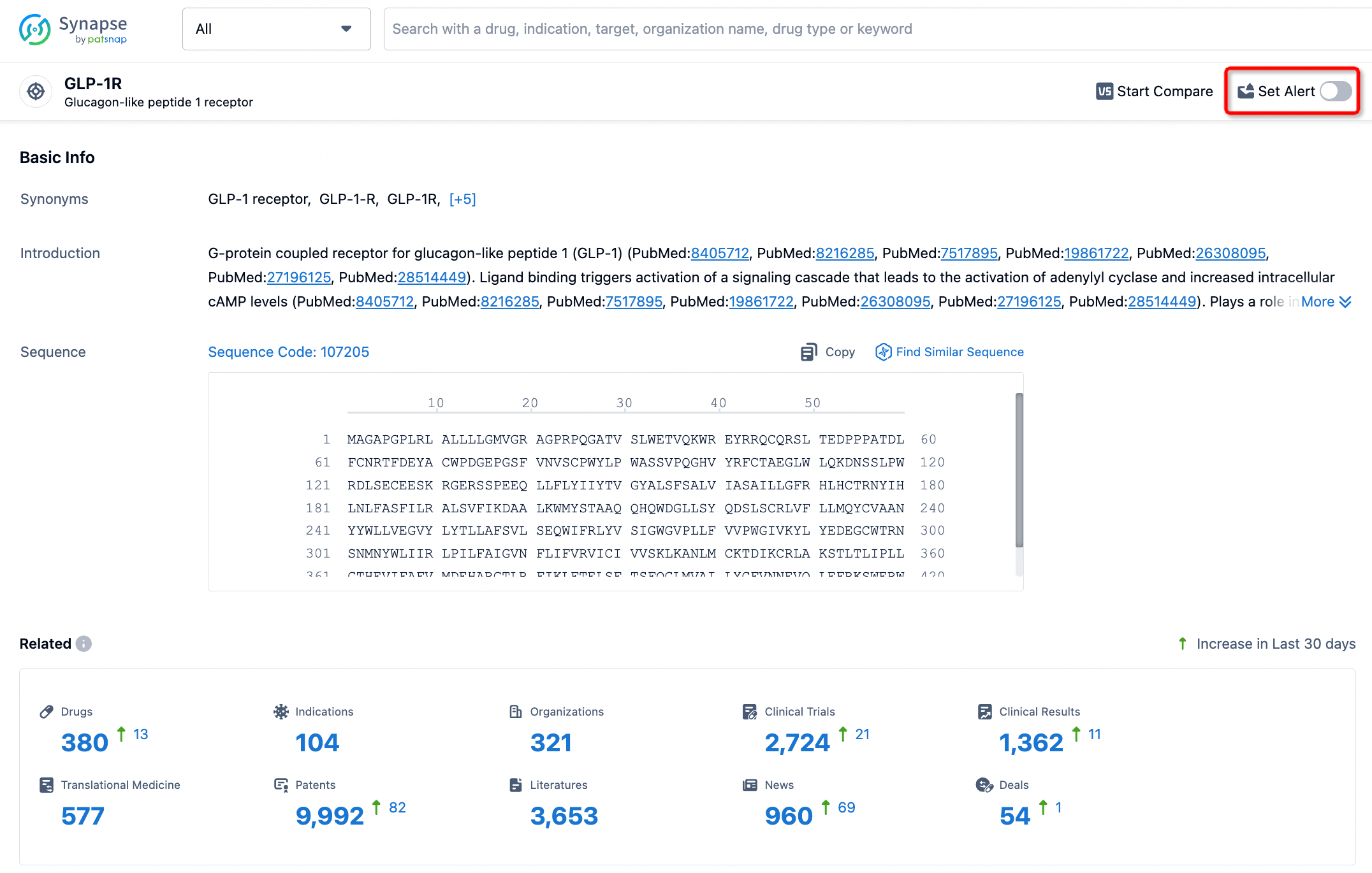
In the Synapse database, you can stay updated on the latest research and development advances of all targets. This service is accessible anytime and anywhere, with updates available daily or weekly. Use the "Set Alert" function to stay informed. Click on the image below to embark on a brand new journey of drug discovery!


Hiro LS Researcher
The AI Search Engine Built to Accelerate Biopharma Decisions
Search across billion-scale life sciences data to uncover signals, validate evidence, and act with confidence.
Ask any biopharma research question→
Get started for free today!
Accelerate Strategic R&D decision making with Synapse, Patsnap’s AI-powered Connected Innovation Intelligence Platform Built for Life Sciences Professionals.
Discover Synapse Data Servers
Synapse data is now integrated into the PatSnap LS Model Context Protocol (MCP) service. Customize your LLM agent now using our MCP server!