Request Demo
What are Scavenger receptor modulators and how do they work?
26 June 2024
Scavenger receptors are a diverse group of receptors primarily known for their ability to bind and clear a variety of ligands, including modified lipoproteins, pathogens, and apoptotic cells. This versatile functionality positions them at the crossroads of various physiological and pathological processes, such as host defense, lipid metabolism, and the regulation of inflammation. Scavenger receptor modulators are compounds or molecules that influence the activity of scavenger receptors, offering promising therapeutic potentials in addressing a multitude of diseases.
Scavenger receptor modulators work by interacting with scavenger receptors in ways that either enhance or inhibit their activity. Depending on the specific type of scavenger receptor and the modulator involved, these interactions can result in diverse biological outcomes.
There are several classes of scavenger receptors, including Class A, B, and D, each with its own unique structure and function. For instance, Class A scavenger receptors, like SR-A1, are known for their role in binding modified forms of low-density lipoprotein (LDL), such as oxidized LDL (oxLDL). Modulators targeting these receptors can either block or promote the uptake of oxLDL into macrophages, thereby influencing the progression of atherosclerosis.
Similarly, Class B scavenger receptors, such as CD36, are involved in lipid metabolism and the immune response. Modulating CD36 activity can alter the uptake of fatty acids and the clearance of apoptotic cells, impacting conditions like metabolic syndrome and chronic inflammation.
Scavenger receptor modulators can work through several mechanisms. Some modulators act as competitive inhibitors, blocking the binding of ligands to the receptor. Others may function as agonists, enhancing receptor activity and promoting ligand uptake. Additionally, certain modulators can influence receptor expression on the cell surface, either upregulating or downregulating their availability.
The therapeutic applications of scavenger receptor modulators are vast and varied, reflecting the diverse roles of scavenger receptors in human health and disease. One of the primary areas of interest is cardiovascular disease, particularly atherosclerosis. By modulating the activity of scavenger receptors like SR-A1 and CD36, researchers aim to control the uptake of oxLDL by macrophages, a key step in the formation of atherosclerotic plaques. By reducing plaque formation, these modulators have the potential to lower the risk of heart attacks and strokes.
Another promising application is in the field of metabolic disorders. Scavenger receptors such as CD36 play a crucial role in lipid metabolism. Modulating these receptors can help regulate fatty acid uptake and storage, offering potential treatments for conditions like obesity, type 2 diabetes, and non-alcoholic fatty liver disease (NAFLD). By improving lipid homeostasis, scavenger receptor modulators can mitigate the metabolic dysregulation that underlies these diseases.
Scavenger receptor modulators also hold promise in the treatment of infectious diseases. Many pathogens, including bacteria, viruses, and fungi, are recognized and cleared by scavenger receptors. Enhancing this clearance can boost the body’s innate immune response, providing a novel approach to combating infections. Conversely, in cases where an overactive immune response leads to tissue damage, such as in sepsis, inhibitors of scavenger receptors may help prevent excessive inflammation and improve outcomes.
Cancer is another area where scavenger receptor modulators show potential. Certain scavenger receptors are involved in the tumor microenvironment, influencing processes like angiogenesis, immune evasion, and metastasis. By modulating these receptors, it may be possible to inhibit tumor growth and spread, offering new avenues for cancer therapy.
In conclusion, scavenger receptors are vital components of numerous physiological processes, and their modulation offers exciting therapeutic possibilities. Whether through enhancing immune response, regulating lipid metabolism, or preventing pathological inflammation, scavenger receptor modulators have the potential to address a wide range of diseases. As research in this field continues to advance, we can expect to see new and innovative treatments emerging, bringing hope to patients suffering from some of the most challenging health conditions.
Scavenger receptor modulators work by interacting with scavenger receptors in ways that either enhance or inhibit their activity. Depending on the specific type of scavenger receptor and the modulator involved, these interactions can result in diverse biological outcomes.
There are several classes of scavenger receptors, including Class A, B, and D, each with its own unique structure and function. For instance, Class A scavenger receptors, like SR-A1, are known for their role in binding modified forms of low-density lipoprotein (LDL), such as oxidized LDL (oxLDL). Modulators targeting these receptors can either block or promote the uptake of oxLDL into macrophages, thereby influencing the progression of atherosclerosis.
Similarly, Class B scavenger receptors, such as CD36, are involved in lipid metabolism and the immune response. Modulating CD36 activity can alter the uptake of fatty acids and the clearance of apoptotic cells, impacting conditions like metabolic syndrome and chronic inflammation.
Scavenger receptor modulators can work through several mechanisms. Some modulators act as competitive inhibitors, blocking the binding of ligands to the receptor. Others may function as agonists, enhancing receptor activity and promoting ligand uptake. Additionally, certain modulators can influence receptor expression on the cell surface, either upregulating or downregulating their availability.
The therapeutic applications of scavenger receptor modulators are vast and varied, reflecting the diverse roles of scavenger receptors in human health and disease. One of the primary areas of interest is cardiovascular disease, particularly atherosclerosis. By modulating the activity of scavenger receptors like SR-A1 and CD36, researchers aim to control the uptake of oxLDL by macrophages, a key step in the formation of atherosclerotic plaques. By reducing plaque formation, these modulators have the potential to lower the risk of heart attacks and strokes.
Another promising application is in the field of metabolic disorders. Scavenger receptors such as CD36 play a crucial role in lipid metabolism. Modulating these receptors can help regulate fatty acid uptake and storage, offering potential treatments for conditions like obesity, type 2 diabetes, and non-alcoholic fatty liver disease (NAFLD). By improving lipid homeostasis, scavenger receptor modulators can mitigate the metabolic dysregulation that underlies these diseases.
Scavenger receptor modulators also hold promise in the treatment of infectious diseases. Many pathogens, including bacteria, viruses, and fungi, are recognized and cleared by scavenger receptors. Enhancing this clearance can boost the body’s innate immune response, providing a novel approach to combating infections. Conversely, in cases where an overactive immune response leads to tissue damage, such as in sepsis, inhibitors of scavenger receptors may help prevent excessive inflammation and improve outcomes.
Cancer is another area where scavenger receptor modulators show potential. Certain scavenger receptors are involved in the tumor microenvironment, influencing processes like angiogenesis, immune evasion, and metastasis. By modulating these receptors, it may be possible to inhibit tumor growth and spread, offering new avenues for cancer therapy.
In conclusion, scavenger receptors are vital components of numerous physiological processes, and their modulation offers exciting therapeutic possibilities. Whether through enhancing immune response, regulating lipid metabolism, or preventing pathological inflammation, scavenger receptor modulators have the potential to address a wide range of diseases. As research in this field continues to advance, we can expect to see new and innovative treatments emerging, bringing hope to patients suffering from some of the most challenging health conditions.
How to obtain the latest development progress of all targets?
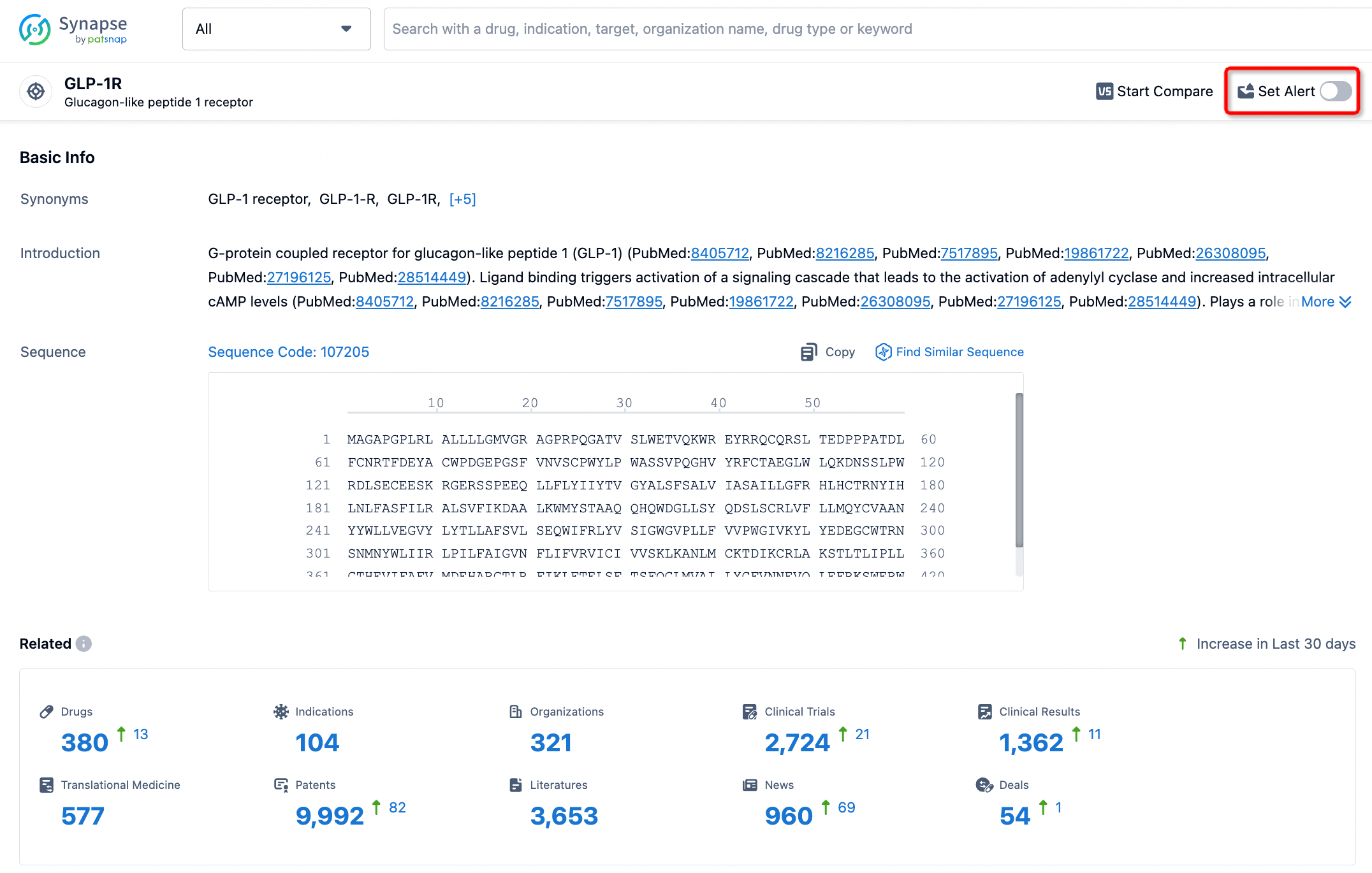
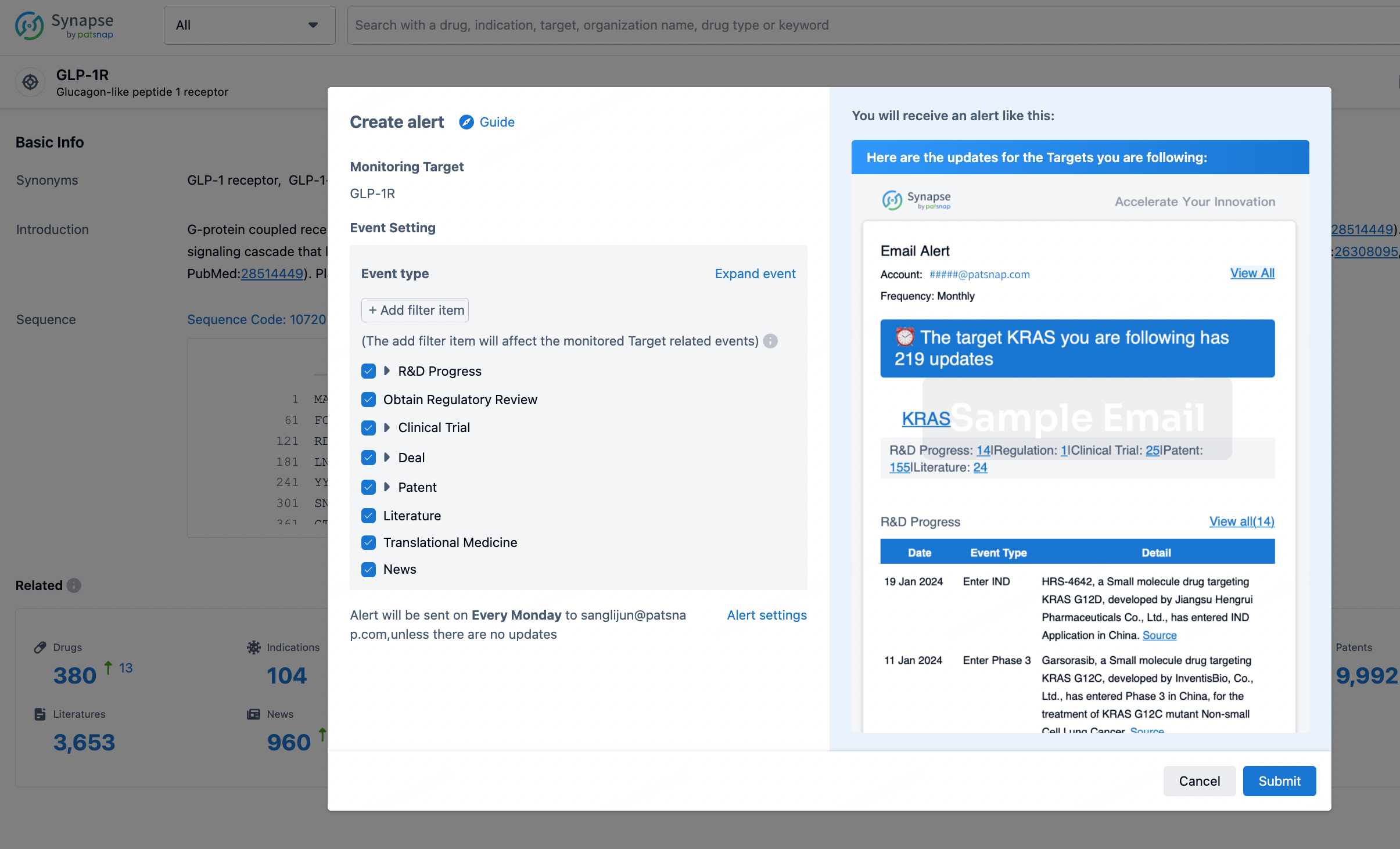
In the Synapse database, you can stay updated on the latest research and development advances of all targets. This service is accessible anytime and anywhere, with updates available daily or weekly. Use the "Set Alert" function to stay informed. Click on the image below to embark on a brand new journey of drug discovery!
Hiro LS Researcher
The AI Search Engine Built to Accelerate Biopharma Decisions
Search across billion-scale life sciences data to uncover signals, validate evidence, and act with confidence.
Ask any biopharma research question→
Get started for free today!
Accelerate Strategic R&D decision making with Synapse, Patsnap’s AI-powered Connected Innovation Intelligence Platform Built for Life Sciences Professionals.
Discover Synapse Data Servers
Synapse data is now integrated into the PatSnap LS Model Context Protocol (MCP) service. Customize your LLM agent now using our MCP server!