Request Demo
What are the side effects of Alalevonadifloxacin mesylate?
12 July 2024
Alalevonadifloxacin mesylate is a relatively new antibiotic that belongs to the fluoroquinolone class of drugs. It is primarily used to treat various bacterial infections, including those that are resistant to other antibiotics. While this medication can be highly effective, it is essential to be aware of its potential side effects, which can range from mild to severe.
One of the most common side effects of Alalevonadifloxacin mesylate involves gastrointestinal disturbances. Patients may experience nausea, vomiting, diarrhea, and abdominal pain. These symptoms are usually mild and tend to resolve on their own without requiring any specific treatment. However, if these symptoms persist or become severe, it is essential to consult a healthcare provider for further evaluation.
Another notable side effect is related to the central nervous system. Some individuals may experience headaches, dizziness, and lightheadedness. In rare cases, more severe neurological side effects like seizures, tremors, and confusion can occur. These symptoms warrant immediate medical attention as they can be indicative of more serious underlying conditions.
Cutaneous reactions are also reported with the use of Alalevonadifloxacin mesylate. Patients may develop rashes, itching, and other signs of skin irritation. Although these symptoms are typically not severe, they can be bothersome and may require discontinuation of the medication in some cases. Severe cutaneous reactions, such as Stevens-Johnson syndrome or toxic epidermal necrolysis, although extremely rare, necessitate urgent medical intervention.
Cardiovascular side effects have also been observed. Alalevonadifloxacin mesylate can cause prolongation of the QT interval on an electrocardiogram, which can predispose patients to a type of arrhythmia called Torsades de Pointes. This condition is potentially life-threatening and requires immediate medical care. Patients with pre-existing heart conditions or those taking other medications that can prolong the QT interval should use Alalevonadifloxacin mesylate with caution.
Musculoskeletal issues are another concern with this antibiotic. Tendonitis and tendon rupture have been reported, particularly in older adults and those who are on corticosteroid therapy. Symptoms include pain, swelling, and difficulty moving the affected tendon. If any of these symptoms occur, it is crucial to stop the medication and seek medical advice promptly.
Liver function abnormalities can also arise from the use of Alalevonadifloxacin mesylate. Elevated liver enzymes, jaundice, and, in rare instances, severe liver damage can occur. Regular monitoring of liver function tests is advisable for those on prolonged therapy or those with pre-existing liver conditions.
Renal side effects are less common but still noteworthy. Some patients may experience changes in kidney function, including increased serum creatinine levels and decreased urine output. Regular monitoring of kidney function is recommended, especially for those with pre-existing renal conditions.
Hematologic side effects are rare but possible. These can include changes in blood cell counts such as leukopenia, thrombocytopenia, and anemia. Regular blood tests may be required for patients on long-term treatment to monitor for these potential issues.
Lastly, hypersensitivity reactions can occur with Alalevonadifloxacin mesylate. Symptoms can range from mild allergic reactions like hives and itching to severe anaphylactic reactions, which are medical emergencies requiring immediate intervention.
In conclusion, while Alalevonadifloxacin mesylate is a potent antibiotic with a broad spectrum of activity, it is not without its side effects. Patients should be well-informed about these potential risks and should communicate any adverse symptoms they experience to their healthcare provider promptly. Regular monitoring and a thorough assessment of the patient's medical history can help mitigate some of these risks and ensure that the medication is used safely and effectively.
One of the most common side effects of Alalevonadifloxacin mesylate involves gastrointestinal disturbances. Patients may experience nausea, vomiting, diarrhea, and abdominal pain. These symptoms are usually mild and tend to resolve on their own without requiring any specific treatment. However, if these symptoms persist or become severe, it is essential to consult a healthcare provider for further evaluation.
Another notable side effect is related to the central nervous system. Some individuals may experience headaches, dizziness, and lightheadedness. In rare cases, more severe neurological side effects like seizures, tremors, and confusion can occur. These symptoms warrant immediate medical attention as they can be indicative of more serious underlying conditions.
Cutaneous reactions are also reported with the use of Alalevonadifloxacin mesylate. Patients may develop rashes, itching, and other signs of skin irritation. Although these symptoms are typically not severe, they can be bothersome and may require discontinuation of the medication in some cases. Severe cutaneous reactions, such as Stevens-Johnson syndrome or toxic epidermal necrolysis, although extremely rare, necessitate urgent medical intervention.
Cardiovascular side effects have also been observed. Alalevonadifloxacin mesylate can cause prolongation of the QT interval on an electrocardiogram, which can predispose patients to a type of arrhythmia called Torsades de Pointes. This condition is potentially life-threatening and requires immediate medical care. Patients with pre-existing heart conditions or those taking other medications that can prolong the QT interval should use Alalevonadifloxacin mesylate with caution.
Musculoskeletal issues are another concern with this antibiotic. Tendonitis and tendon rupture have been reported, particularly in older adults and those who are on corticosteroid therapy. Symptoms include pain, swelling, and difficulty moving the affected tendon. If any of these symptoms occur, it is crucial to stop the medication and seek medical advice promptly.
Liver function abnormalities can also arise from the use of Alalevonadifloxacin mesylate. Elevated liver enzymes, jaundice, and, in rare instances, severe liver damage can occur. Regular monitoring of liver function tests is advisable for those on prolonged therapy or those with pre-existing liver conditions.
Renal side effects are less common but still noteworthy. Some patients may experience changes in kidney function, including increased serum creatinine levels and decreased urine output. Regular monitoring of kidney function is recommended, especially for those with pre-existing renal conditions.
Hematologic side effects are rare but possible. These can include changes in blood cell counts such as leukopenia, thrombocytopenia, and anemia. Regular blood tests may be required for patients on long-term treatment to monitor for these potential issues.
Lastly, hypersensitivity reactions can occur with Alalevonadifloxacin mesylate. Symptoms can range from mild allergic reactions like hives and itching to severe anaphylactic reactions, which are medical emergencies requiring immediate intervention.
In conclusion, while Alalevonadifloxacin mesylate is a potent antibiotic with a broad spectrum of activity, it is not without its side effects. Patients should be well-informed about these potential risks and should communicate any adverse symptoms they experience to their healthcare provider promptly. Regular monitoring and a thorough assessment of the patient's medical history can help mitigate some of these risks and ensure that the medication is used safely and effectively.
How to obtain the latest development progress of all drugs?
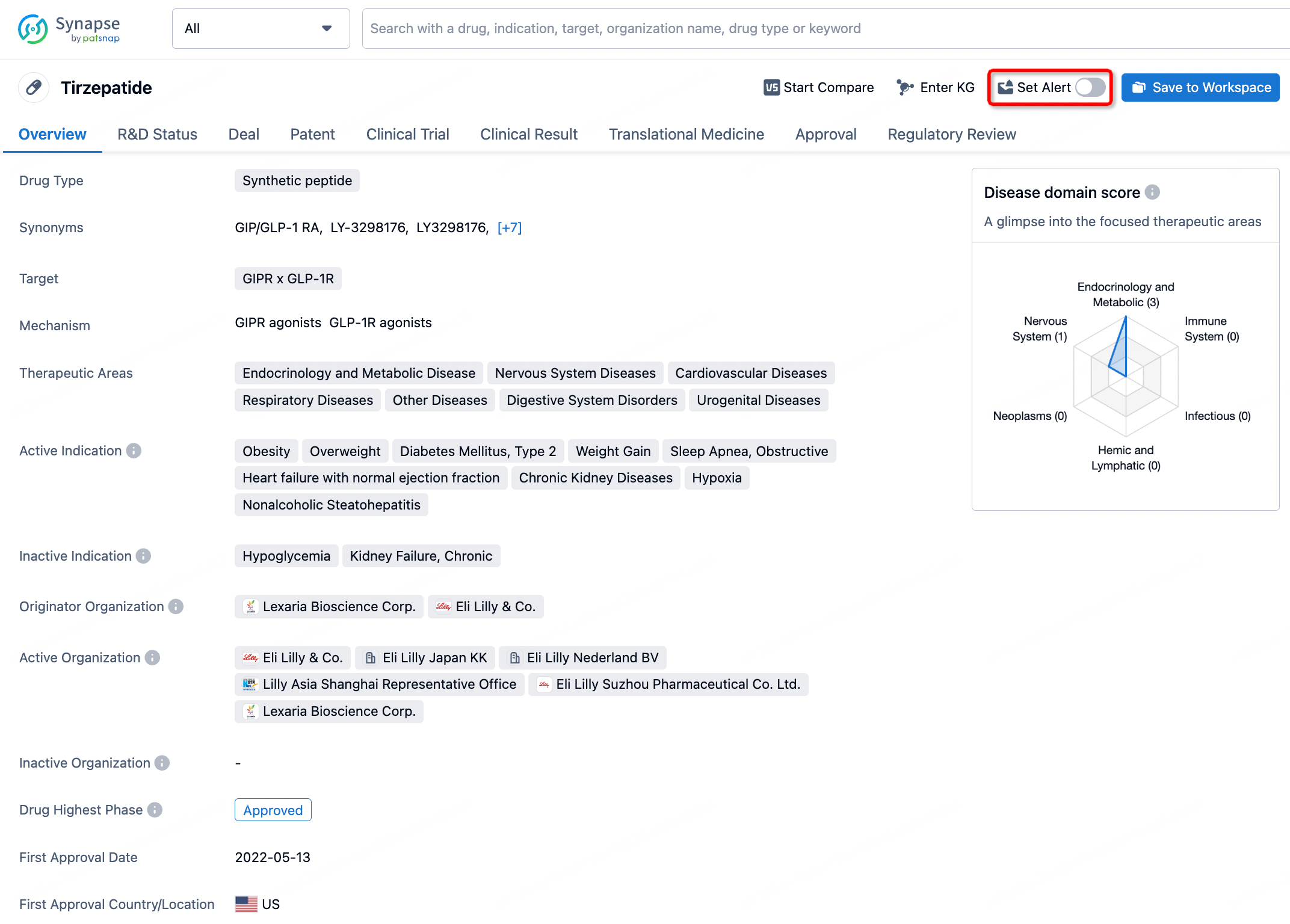
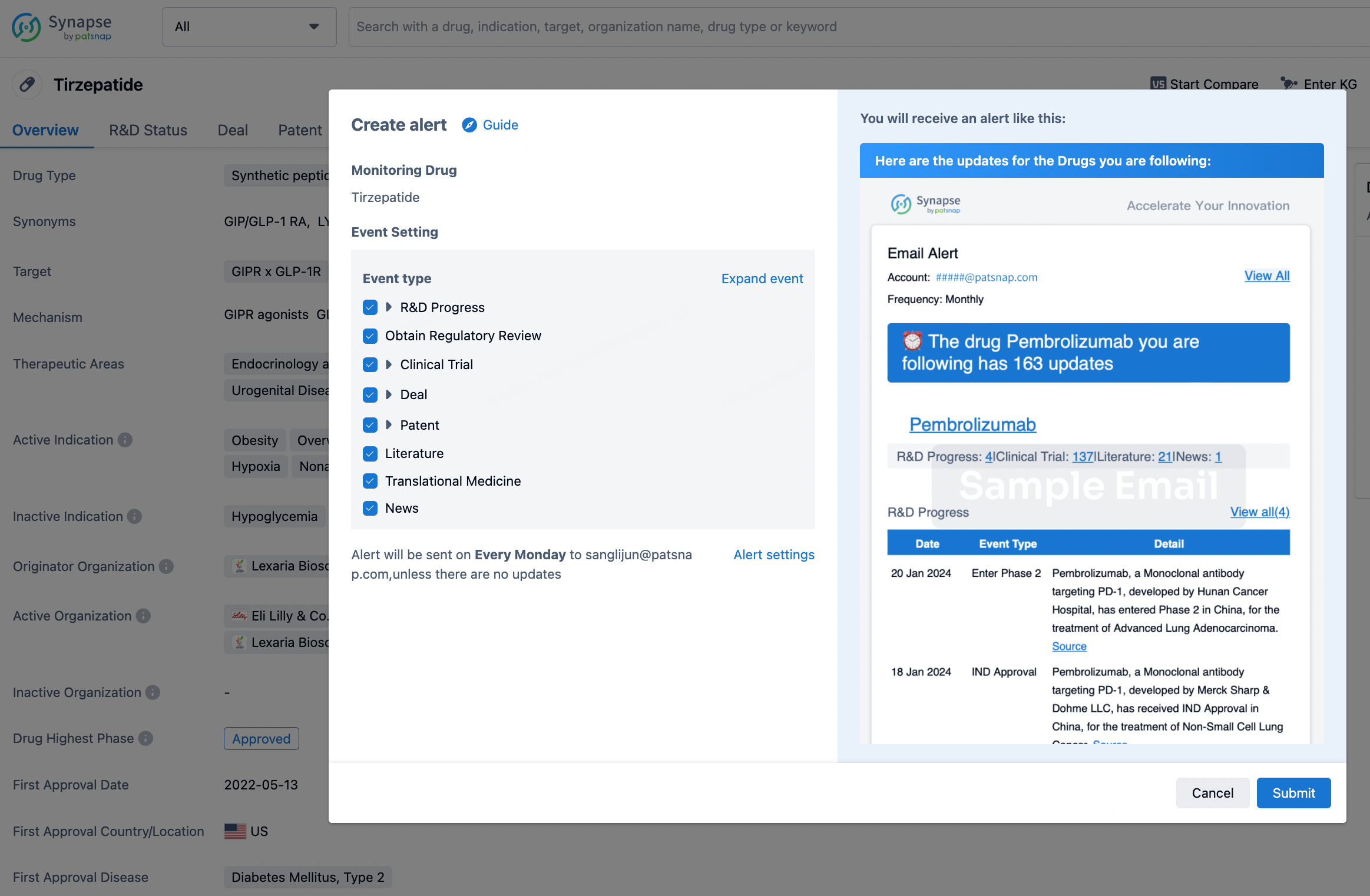
In the Synapse database, you can stay updated on the latest research and development advances of all drugs. This service is accessible anytime and anywhere, with updates available daily or weekly. Use the "Set Alert" function to stay informed. Click on the image below to embark on a brand new journey of drug discovery!

AI Agents Built for Biopharma Breakthroughs
Accelerate discovery. Empower decisions. Transform outcomes.
Get started for free today!
Accelerate Strategic R&D decision making with Synapse, PatSnap’s AI-powered Connected Innovation Intelligence Platform Built for Life Sciences Professionals.
Start your data trial now!
Synapse data is also accessible to external entities via APIs or data packages. Empower better decisions with the latest in pharmaceutical intelligence.