Request Demo
What are the side effects of Albutrepenonacog alfa?
12 July 2024
Albutrepenonacog alfa is a treatment used primarily for individuals with hemophilia B, a genetic disorder that impairs the blood's ability to clot properly. While this medication can be life-saving and significantly improve quality of life for those affected by hemophilia, it is essential to be aware of the potential side effects associated with its use. Understanding these side effects can help patients and healthcare providers manage and mitigate any adverse reactions.
One of the most common side effects of Albutrepenonacog alfa is the development of inhibitors or antibodies against the medication. These inhibitors can reduce the effectiveness of the treatment, making it harder to control bleeding episodes. In such cases, alternative therapies may be required to manage the condition effectively.
Patients may also experience infusion reactions, which can occur during or shortly after the administration of the medication. These reactions can include symptoms such as headache, dizziness, nausea, vomiting, and fever. It's crucial to monitor for these signs and report them to a healthcare provider immediately, as they can range from mild to severe.
Another potential side effect is allergic reactions. Although rare, some individuals may develop hypersensitivity to the medication, manifesting as symptoms like itching, rash, hives, or more severe reactions such as anaphylaxis. Anaphylaxis is a medical emergency characterized by difficulty breathing, swelling of the face or throat, and a rapid drop in blood pressure. Immediate medical attention is required if any signs of an allergic reaction occur.
In addition, some patients may experience pain or discomfort at the injection site. This can include redness, swelling, or tenderness where the medication was administered. While typically mild and temporary, it is important to monitor these symptoms and consult with a healthcare provider if they persist or worsen.
Other side effects can include dizziness, fatigue, and headaches. These symptoms are generally mild but can impact a patient's daily activities and overall well-being. Staying hydrated, getting adequate rest, and notifying a healthcare provider can help manage these side effects.
It is also worth noting that, like any medication, Albutrepenonacog alfa carries the risk of more serious side effects, although they are less common. For instance, some patients might experience thromboembolic events, which involve the formation of blood clots that can travel to vital organs and cause complications such as deep vein thrombosis or pulmonary embolism. Prompt medical intervention is crucial if symptoms such as chest pain, difficulty breathing, or localized swelling and redness occur.
Finally, long-term use of Albutrepenonacog alfa may require regular monitoring and blood tests to ensure that the medication is working effectively and to identify any potential complications early on. It is essential to maintain open communication with healthcare providers and report any unusual symptoms or concerns promptly.
In summary, while Albutrepenonacog alfa can be an effective treatment for hemophilia B, it is not without its potential side effects. Patients should be aware of the possible risks, including the development of inhibitors, infusion reactions, allergic reactions, injection site discomfort, headaches, fatigue, and the rare possibility of thromboembolic events. Regular monitoring and communication with healthcare providers are key to managing these side effects and ensuring the best possible outcome.
One of the most common side effects of Albutrepenonacog alfa is the development of inhibitors or antibodies against the medication. These inhibitors can reduce the effectiveness of the treatment, making it harder to control bleeding episodes. In such cases, alternative therapies may be required to manage the condition effectively.
Patients may also experience infusion reactions, which can occur during or shortly after the administration of the medication. These reactions can include symptoms such as headache, dizziness, nausea, vomiting, and fever. It's crucial to monitor for these signs and report them to a healthcare provider immediately, as they can range from mild to severe.
Another potential side effect is allergic reactions. Although rare, some individuals may develop hypersensitivity to the medication, manifesting as symptoms like itching, rash, hives, or more severe reactions such as anaphylaxis. Anaphylaxis is a medical emergency characterized by difficulty breathing, swelling of the face or throat, and a rapid drop in blood pressure. Immediate medical attention is required if any signs of an allergic reaction occur.
In addition, some patients may experience pain or discomfort at the injection site. This can include redness, swelling, or tenderness where the medication was administered. While typically mild and temporary, it is important to monitor these symptoms and consult with a healthcare provider if they persist or worsen.
Other side effects can include dizziness, fatigue, and headaches. These symptoms are generally mild but can impact a patient's daily activities and overall well-being. Staying hydrated, getting adequate rest, and notifying a healthcare provider can help manage these side effects.
It is also worth noting that, like any medication, Albutrepenonacog alfa carries the risk of more serious side effects, although they are less common. For instance, some patients might experience thromboembolic events, which involve the formation of blood clots that can travel to vital organs and cause complications such as deep vein thrombosis or pulmonary embolism. Prompt medical intervention is crucial if symptoms such as chest pain, difficulty breathing, or localized swelling and redness occur.
Finally, long-term use of Albutrepenonacog alfa may require regular monitoring and blood tests to ensure that the medication is working effectively and to identify any potential complications early on. It is essential to maintain open communication with healthcare providers and report any unusual symptoms or concerns promptly.
In summary, while Albutrepenonacog alfa can be an effective treatment for hemophilia B, it is not without its potential side effects. Patients should be aware of the possible risks, including the development of inhibitors, infusion reactions, allergic reactions, injection site discomfort, headaches, fatigue, and the rare possibility of thromboembolic events. Regular monitoring and communication with healthcare providers are key to managing these side effects and ensuring the best possible outcome.
How to obtain the latest development progress of all drugs?
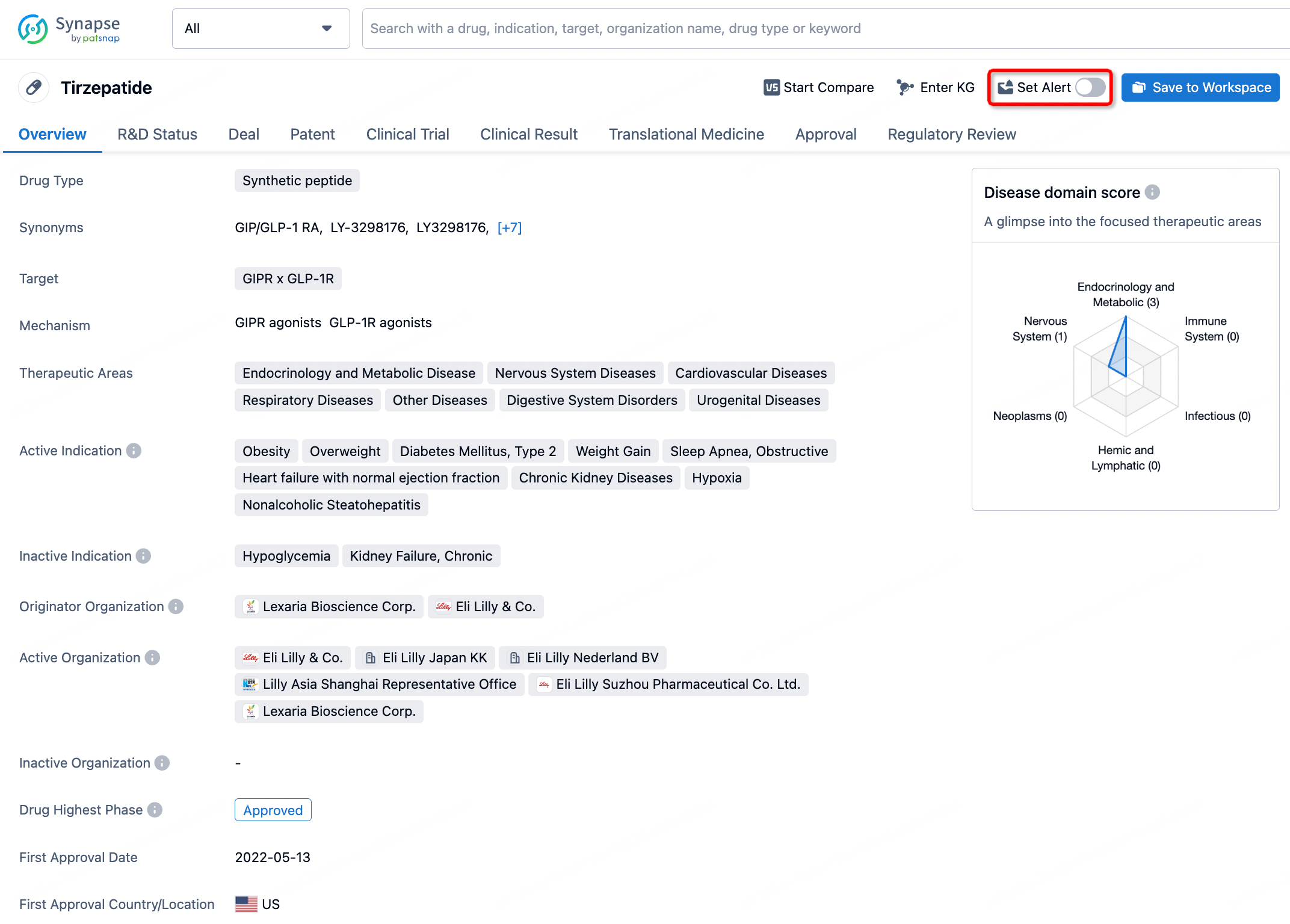
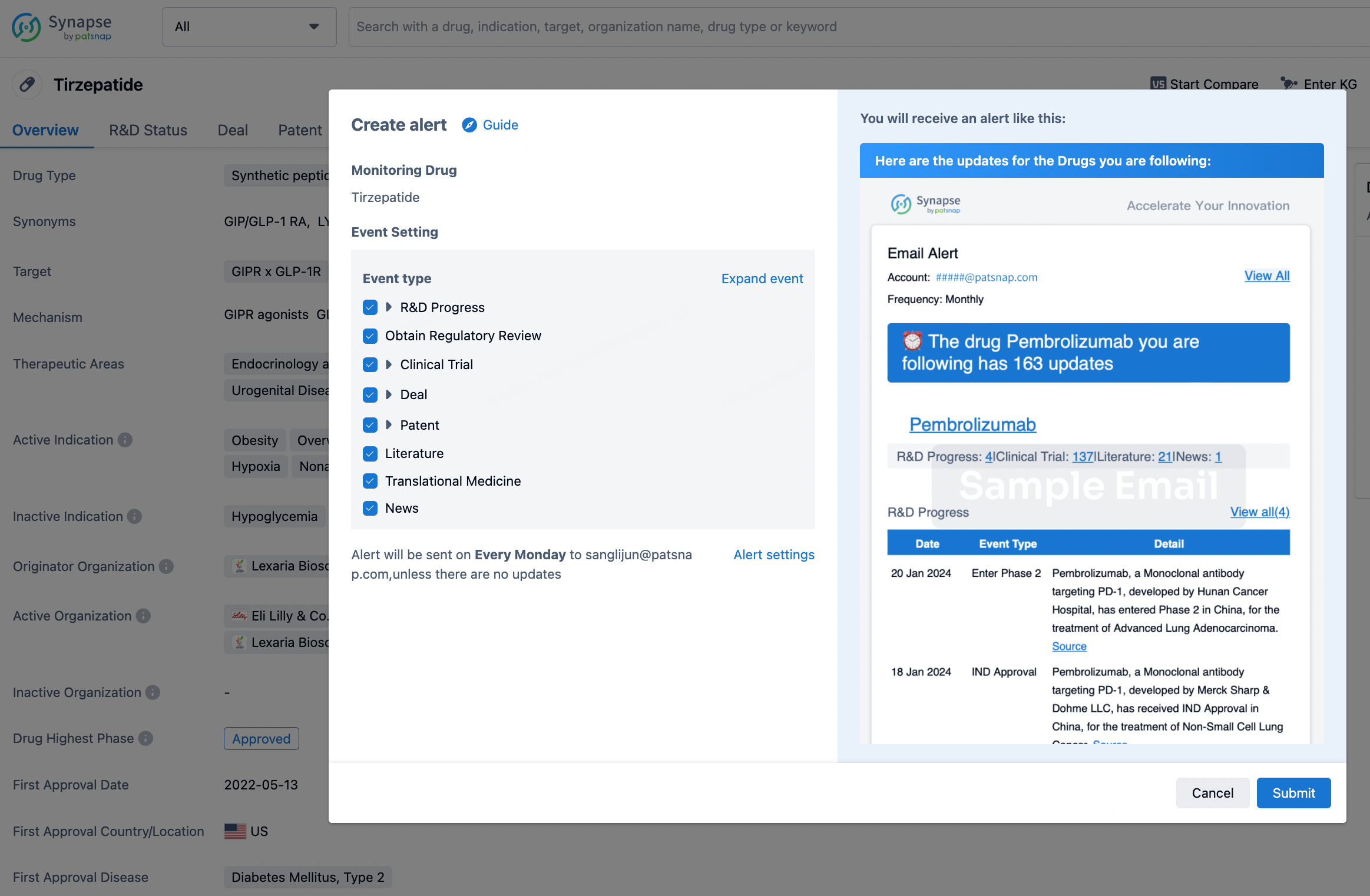
In the Synapse database, you can stay updated on the latest research and development advances of all drugs. This service is accessible anytime and anywhere, with updates available daily or weekly. Use the "Set Alert" function to stay informed. Click on the image below to embark on a brand new journey of drug discovery!

AI Agents Built for Biopharma Breakthroughs
Accelerate discovery. Empower decisions. Transform outcomes.
Get started for free today!
Accelerate Strategic R&D decision making with Synapse, PatSnap’s AI-powered Connected Innovation Intelligence Platform Built for Life Sciences Professionals.
Start your data trial now!
Synapse data is also accessible to external entities via APIs or data packages. Empower better decisions with the latest in pharmaceutical intelligence.