Request Demo
What are the side effects of Carmofur?
12 July 2024
Carmofur is an anti-cancer drug, specifically a type of chemotherapy agent that falls under the category of fluoropyrimidines. It is primarily used to treat various forms of cancer, including colorectal cancer, and works by interfering with the growth of cancer cells. Like many chemotherapy drugs, Carmofur comes with a range of potential side effects that patients need to be aware of. Understanding these side effects can help in managing them effectively and improving the overall quality of life during treatment.
One of the most common side effects of Carmofur is gastrointestinal discomfort. Patients may experience nausea, vomiting, and diarrhea. These symptoms can range from mild to severe and may require medication to manage. It's crucial for patients to stay hydrated and maintain a balanced diet to help mitigate these effects. Eating smaller, more frequent meals and avoiding heavy, greasy foods can also alleviate some of the discomfort.
Fatigue is another frequently reported side effect. This is not just regular tiredness but a profound sense of exhaustion that doesn't go away with rest. This type of fatigue can significantly impact daily activities and quality of life. Patients are advised to pace themselves, prioritize essential tasks, and engage in light physical activity as tolerated to help manage this fatigue.
Another side effect of Carmofur is myelosuppression, which refers to the decreased production of blood cells. This can lead to anemia (low red blood cells), increasing the risk of infections due to low white blood cells, and easy bruising or bleeding because of low platelet counts. Regular blood tests are necessary to monitor these parameters, and treatments such as blood transfusions or growth factor injections may be required.
Skin reactions are also relatively common with Carmofur. These can include rashes, redness, and peeling, particularly on the hands and feet. This condition, known as hand-foot syndrome, can be painful and may limit daily activities. Patients should keep their skin well-moisturized, avoid hot water, and wear comfortable shoes and gloves to protect their skin.
Some patients may experience neurological side effects, including peripheral neuropathy. This condition manifests as tingling, numbness, or pain in the hands and feet. While these symptoms are often mild, they can become severe and impact fine motor skills. It's essential to report any neurological symptoms to a healthcare provider promptly, as early intervention can prevent the progression of this side effect.
Oral side effects can also occur. Patients might develop mouth sores, known as mucositis, which can make eating and drinking painful. Maintaining good oral hygiene and using mouthwashes recommended by healthcare providers can help manage this condition. Soft, non-acidic foods are also advisable to reduce discomfort.
In some instances, Carmofur may cause liver toxicity, which can be serious if not monitored and managed. Regular liver function tests are necessary to detect any early signs of liver damage, and dose adjustments or discontinuation of the drug may be required if significant toxicity is observed.
Furthermore, some patients might experience cardiovascular side effects, although these are less common. Symptoms such as chest pain, shortness of breath, or irregular heartbeats should be reported immediately to a healthcare provider, as these could indicate serious complications.
Finally, psychological effects such as depression and anxiety are not uncommon during cancer treatment with Carmofur. The emotional and psychological burden of dealing with cancer and its treatment can be overwhelming. Support from mental health professionals, support groups, and counseling can be invaluable in managing these aspects.
In conclusion, while Carmofur is an effective chemotherapy agent for treating certain types of cancer, it comes with a range of potential side effects that can significantly impact a patient's quality of life. Close monitoring, proactive management of symptoms, and effective communication with healthcare providers are essential to navigate these challenges. By understanding and preparing for these side effects, patients and their families can better manage the complexities of cancer treatment.
One of the most common side effects of Carmofur is gastrointestinal discomfort. Patients may experience nausea, vomiting, and diarrhea. These symptoms can range from mild to severe and may require medication to manage. It's crucial for patients to stay hydrated and maintain a balanced diet to help mitigate these effects. Eating smaller, more frequent meals and avoiding heavy, greasy foods can also alleviate some of the discomfort.
Fatigue is another frequently reported side effect. This is not just regular tiredness but a profound sense of exhaustion that doesn't go away with rest. This type of fatigue can significantly impact daily activities and quality of life. Patients are advised to pace themselves, prioritize essential tasks, and engage in light physical activity as tolerated to help manage this fatigue.
Another side effect of Carmofur is myelosuppression, which refers to the decreased production of blood cells. This can lead to anemia (low red blood cells), increasing the risk of infections due to low white blood cells, and easy bruising or bleeding because of low platelet counts. Regular blood tests are necessary to monitor these parameters, and treatments such as blood transfusions or growth factor injections may be required.
Skin reactions are also relatively common with Carmofur. These can include rashes, redness, and peeling, particularly on the hands and feet. This condition, known as hand-foot syndrome, can be painful and may limit daily activities. Patients should keep their skin well-moisturized, avoid hot water, and wear comfortable shoes and gloves to protect their skin.
Some patients may experience neurological side effects, including peripheral neuropathy. This condition manifests as tingling, numbness, or pain in the hands and feet. While these symptoms are often mild, they can become severe and impact fine motor skills. It's essential to report any neurological symptoms to a healthcare provider promptly, as early intervention can prevent the progression of this side effect.
Oral side effects can also occur. Patients might develop mouth sores, known as mucositis, which can make eating and drinking painful. Maintaining good oral hygiene and using mouthwashes recommended by healthcare providers can help manage this condition. Soft, non-acidic foods are also advisable to reduce discomfort.
In some instances, Carmofur may cause liver toxicity, which can be serious if not monitored and managed. Regular liver function tests are necessary to detect any early signs of liver damage, and dose adjustments or discontinuation of the drug may be required if significant toxicity is observed.
Furthermore, some patients might experience cardiovascular side effects, although these are less common. Symptoms such as chest pain, shortness of breath, or irregular heartbeats should be reported immediately to a healthcare provider, as these could indicate serious complications.
Finally, psychological effects such as depression and anxiety are not uncommon during cancer treatment with Carmofur. The emotional and psychological burden of dealing with cancer and its treatment can be overwhelming. Support from mental health professionals, support groups, and counseling can be invaluable in managing these aspects.
In conclusion, while Carmofur is an effective chemotherapy agent for treating certain types of cancer, it comes with a range of potential side effects that can significantly impact a patient's quality of life. Close monitoring, proactive management of symptoms, and effective communication with healthcare providers are essential to navigate these challenges. By understanding and preparing for these side effects, patients and their families can better manage the complexities of cancer treatment.
How to obtain the latest development progress of all drugs?
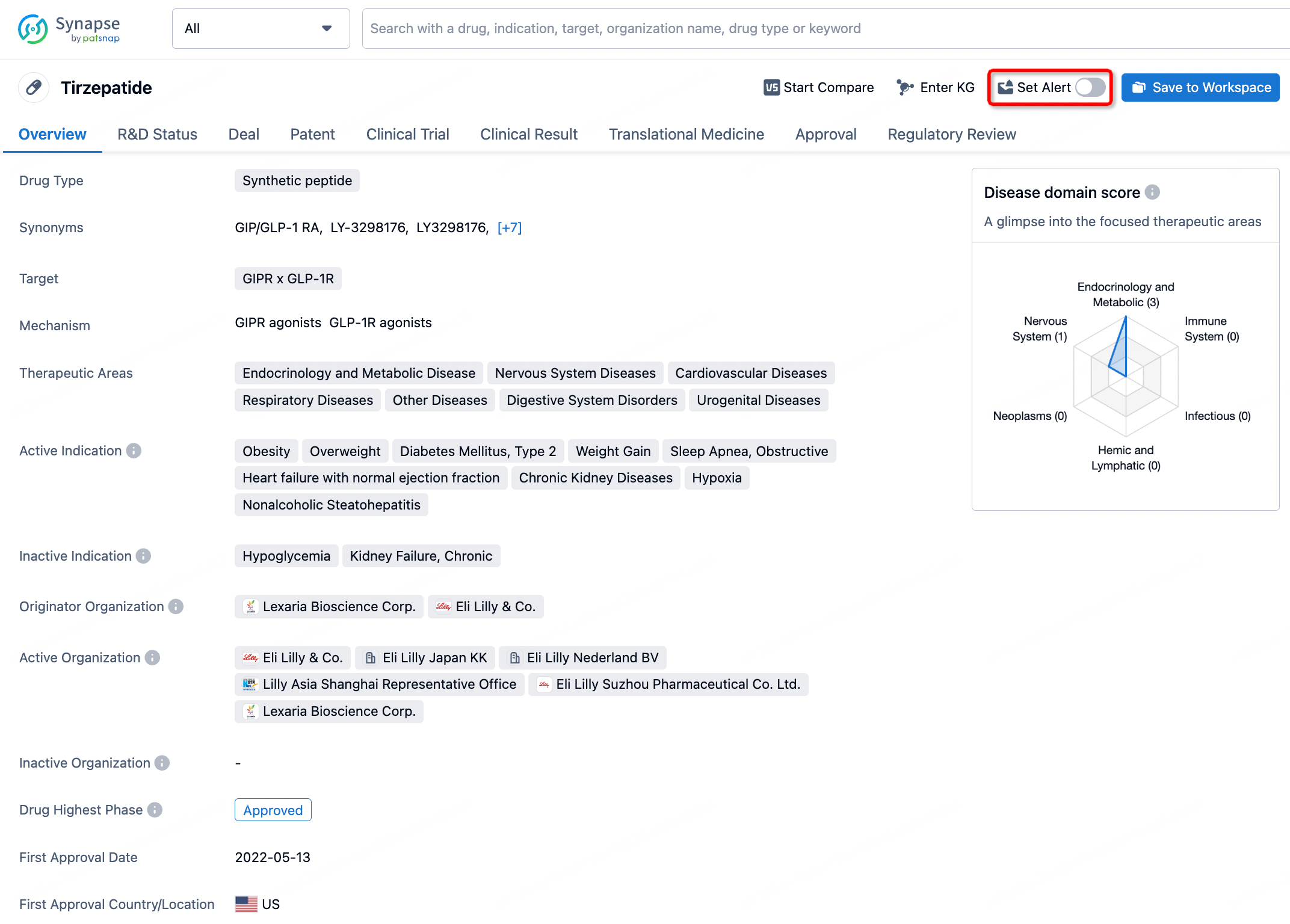
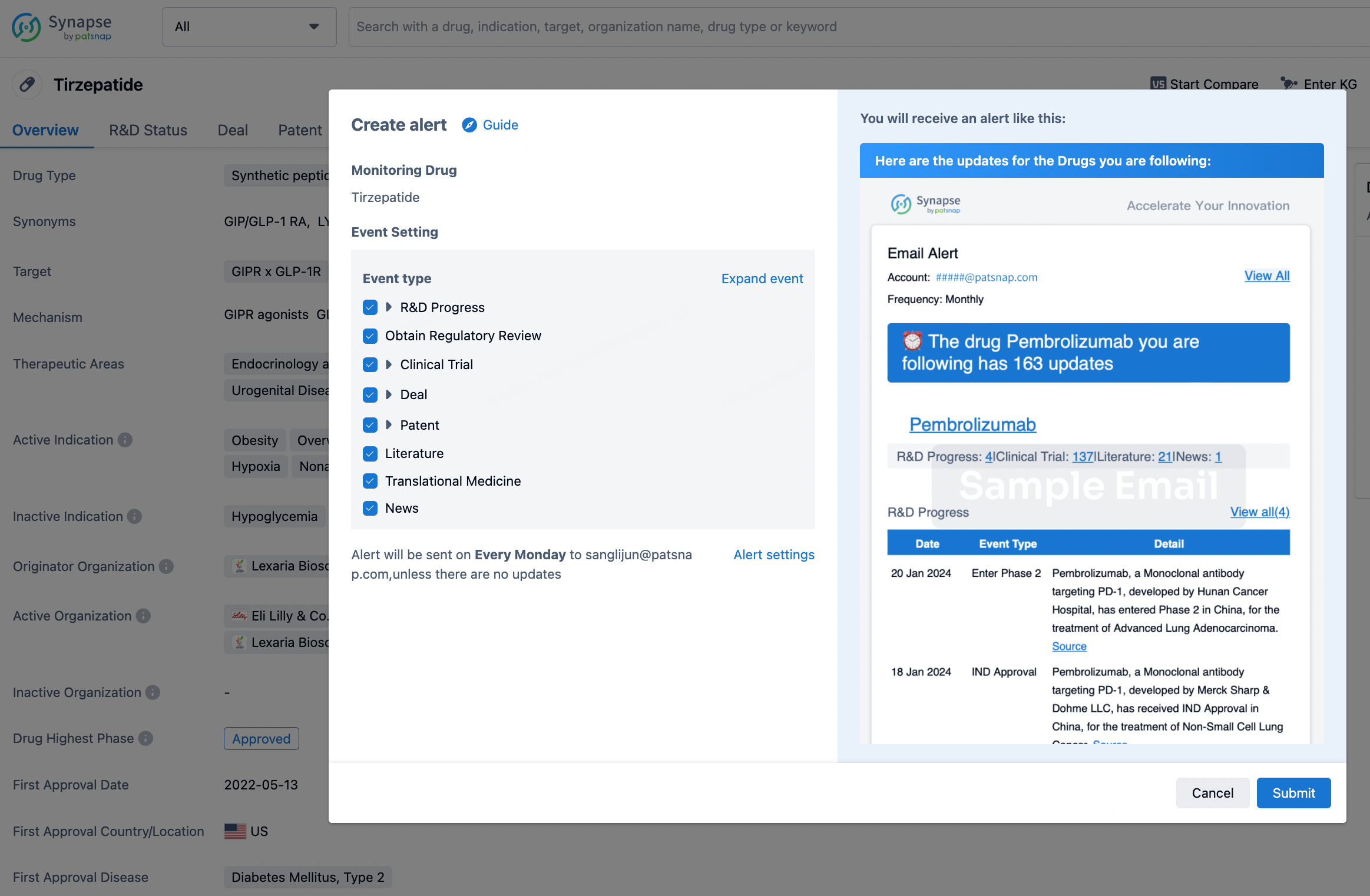
In the Synapse database, you can stay updated on the latest research and development advances of all drugs. This service is accessible anytime and anywhere, with updates available daily or weekly. Use the "Set Alert" function to stay informed. Click on the image below to embark on a brand new journey of drug discovery!
AI Agents Built for Biopharma Breakthroughs
Accelerate discovery. Empower decisions. Transform outcomes.
Get started for free today!
Accelerate Strategic R&D decision making with Synapse, PatSnap’s AI-powered Connected Innovation Intelligence Platform Built for Life Sciences Professionals.
Start your data trial now!
Synapse data is also accessible to external entities via APIs or data packages. Empower better decisions with the latest in pharmaceutical intelligence.