Request Demo
What are the side effects of Carumonam Sodium?
12 July 2024
Carumonam Sodium is a type of monobactam antibiotic, typically administered to treat a variety of bacterial infections. Like all medications, while it can be highly effective in combating infections, it may also come with a range of potential side effects. Understanding these side effects can help patients and healthcare providers better manage the treatment process.
One of the more common side effects of Carumonam Sodium includes gastrointestinal issues. Patients may experience symptoms such as nausea, vomiting, and diarrhea. These symptoms often occur as the body's natural response to the antibiotic, which can disrupt the balance of good bacteria in the stomach and intestines. While these symptoms are typically mild and resolve on their own, persistent or severe gastrointestinal issues should be reported to a healthcare provider.
Another possible side effect is related to hypersensitivity or allergic reactions. Some individuals may develop a rash, itching, or hives. More serious allergic reactions, though rare, include symptoms like swelling of the face, tongue, or throat, severe dizziness, and difficulty breathing. These symptoms can indicate anaphylaxis, a life-threatening condition that requires immediate medical attention.
Carumonam Sodium can also affect the hematologic system, leading to changes in blood cell counts. Some patients may experience conditions such as neutropenia (a decrease in white blood cells), which can make the body more susceptible to infections. Thrombocytopenia (a decrease in platelets) may also occur, leading to increased bleeding or bruising. Regular blood tests are often conducted during treatment to monitor these potential changes.
Another side effect to be aware of is the potential for liver enzyme elevations. This can sometimes indicate liver stress or damage. Patients might not always exhibit symptoms of liver issues, but some possible signs include jaundice (yellowing of the skin and eyes), dark urine, and abdominal pain. Liver function tests are usually part of the monitoring process during the administration of this antibiotic to ensure the liver remains healthy.
Neurological side effects, although less common, can also occur. These may include headaches, dizziness, or changes in mental state such as confusion or hallucinations. Patients experiencing these symptoms should consult their healthcare provider, as dose adjustments might be necessary.
In addition to the above, some patients might experience localized side effects related to the injection site if Carumonam Sodium is administered via injection. These can include pain, redness, or swelling at the site of injection. Generally, these symptoms are mild and temporary but should be monitored to ensure they do not develop into more severe reactions.
Finally, it's important to note that the use of any antibiotic, including Carumonam Sodium, can potentially lead to a secondary infection. This is often due to the disruption of normal bacterial flora, paving the way for opportunistic infections like yeast infections or Clostridium difficile-associated diarrhea.
In conclusion, while Carumonam Sodium is an effective antibiotic for treating diverse bacterial infections, it comes with a range of potential side effects. Healthcare providers typically weigh the benefits against these risks when prescribing this medication, and patients are encouraged to communicate any adverse effects they experience. Regular monitoring and open communication can significantly enhance the safety and efficacy of treatment with Carumonam Sodium.
One of the more common side effects of Carumonam Sodium includes gastrointestinal issues. Patients may experience symptoms such as nausea, vomiting, and diarrhea. These symptoms often occur as the body's natural response to the antibiotic, which can disrupt the balance of good bacteria in the stomach and intestines. While these symptoms are typically mild and resolve on their own, persistent or severe gastrointestinal issues should be reported to a healthcare provider.
Another possible side effect is related to hypersensitivity or allergic reactions. Some individuals may develop a rash, itching, or hives. More serious allergic reactions, though rare, include symptoms like swelling of the face, tongue, or throat, severe dizziness, and difficulty breathing. These symptoms can indicate anaphylaxis, a life-threatening condition that requires immediate medical attention.
Carumonam Sodium can also affect the hematologic system, leading to changes in blood cell counts. Some patients may experience conditions such as neutropenia (a decrease in white blood cells), which can make the body more susceptible to infections. Thrombocytopenia (a decrease in platelets) may also occur, leading to increased bleeding or bruising. Regular blood tests are often conducted during treatment to monitor these potential changes.
Another side effect to be aware of is the potential for liver enzyme elevations. This can sometimes indicate liver stress or damage. Patients might not always exhibit symptoms of liver issues, but some possible signs include jaundice (yellowing of the skin and eyes), dark urine, and abdominal pain. Liver function tests are usually part of the monitoring process during the administration of this antibiotic to ensure the liver remains healthy.
Neurological side effects, although less common, can also occur. These may include headaches, dizziness, or changes in mental state such as confusion or hallucinations. Patients experiencing these symptoms should consult their healthcare provider, as dose adjustments might be necessary.
In addition to the above, some patients might experience localized side effects related to the injection site if Carumonam Sodium is administered via injection. These can include pain, redness, or swelling at the site of injection. Generally, these symptoms are mild and temporary but should be monitored to ensure they do not develop into more severe reactions.
Finally, it's important to note that the use of any antibiotic, including Carumonam Sodium, can potentially lead to a secondary infection. This is often due to the disruption of normal bacterial flora, paving the way for opportunistic infections like yeast infections or Clostridium difficile-associated diarrhea.
In conclusion, while Carumonam Sodium is an effective antibiotic for treating diverse bacterial infections, it comes with a range of potential side effects. Healthcare providers typically weigh the benefits against these risks when prescribing this medication, and patients are encouraged to communicate any adverse effects they experience. Regular monitoring and open communication can significantly enhance the safety and efficacy of treatment with Carumonam Sodium.
How to obtain the latest development progress of all drugs?
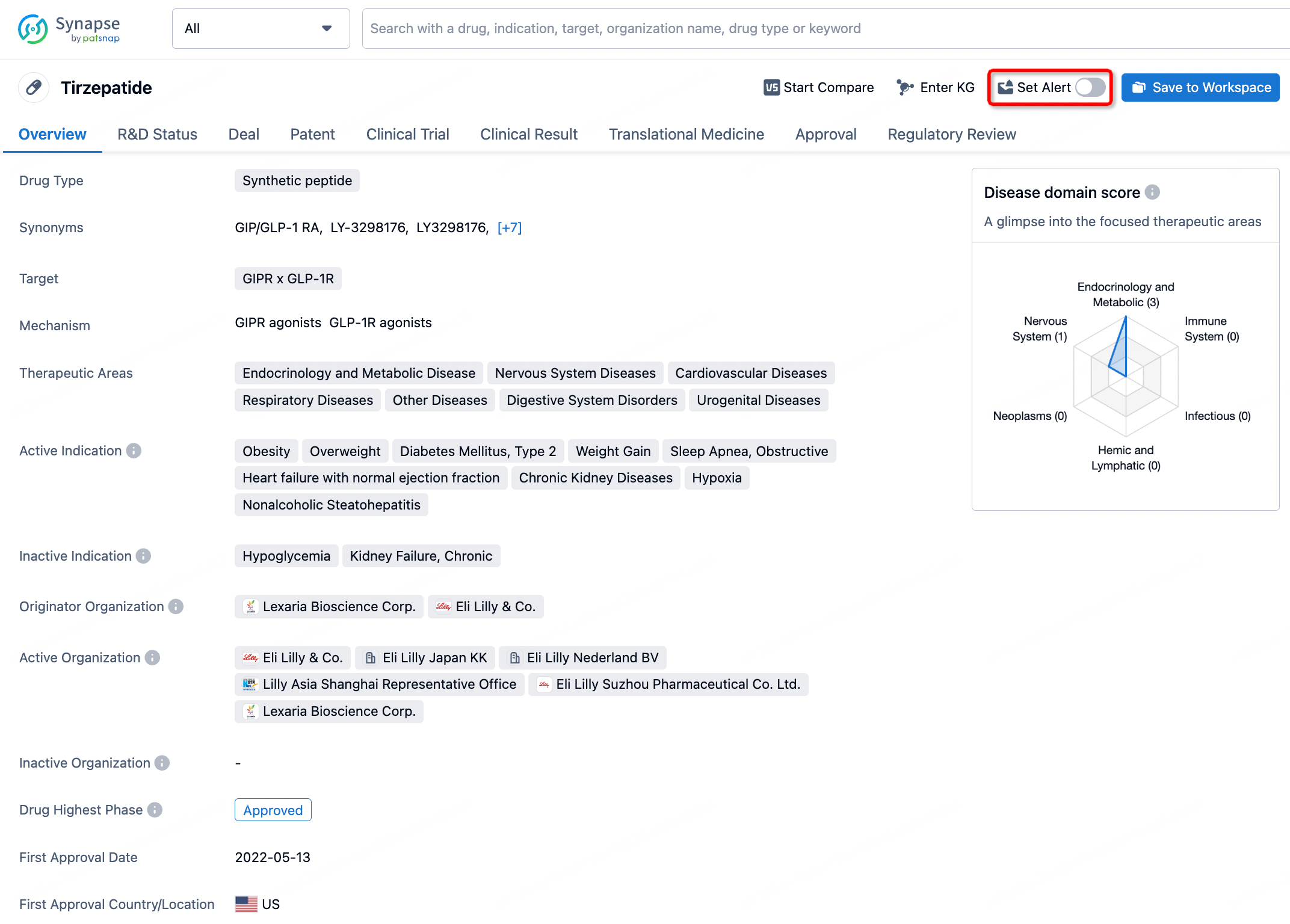
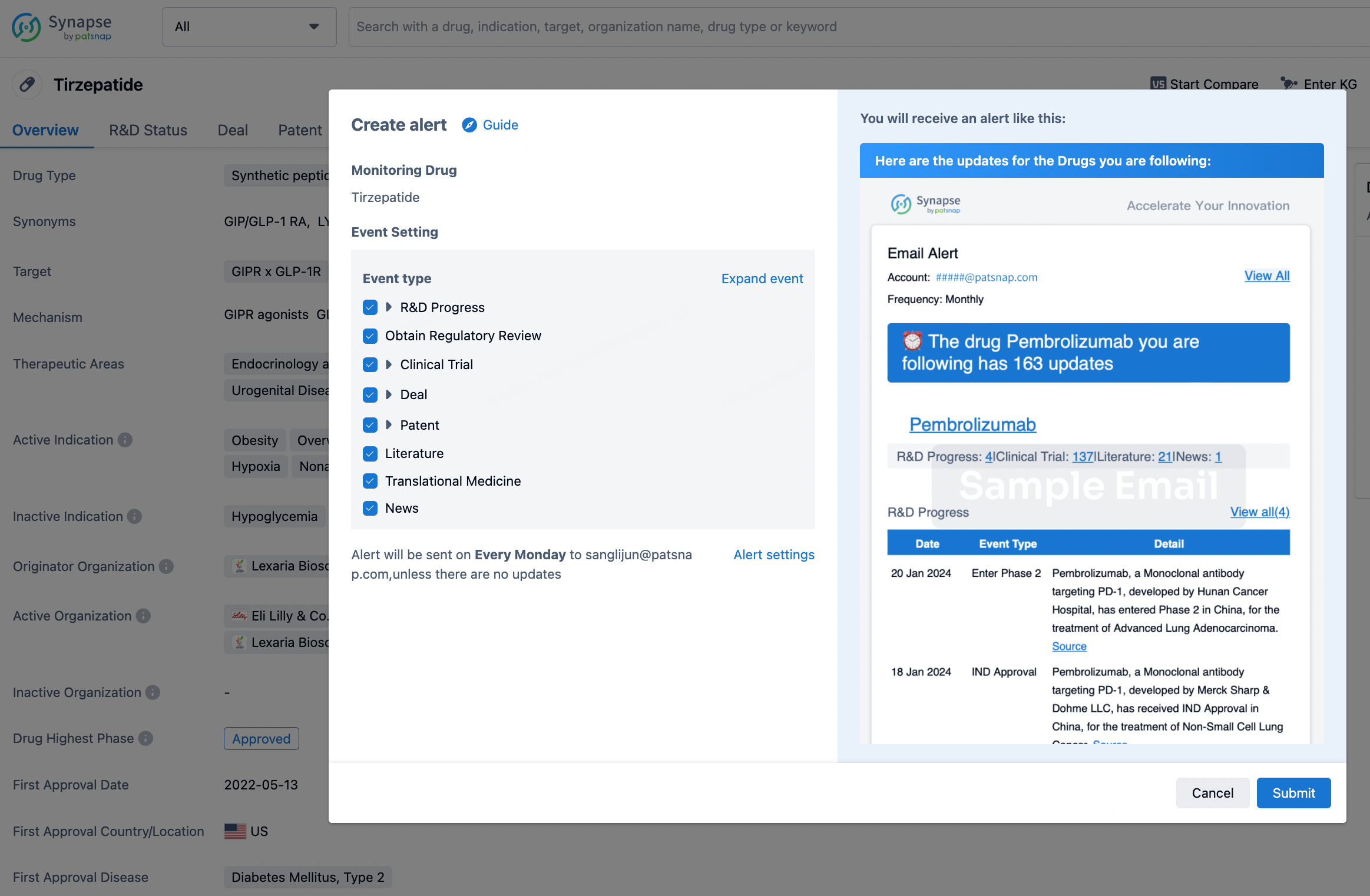
In the Synapse database, you can stay updated on the latest research and development advances of all drugs. This service is accessible anytime and anywhere, with updates available daily or weekly. Use the "Set Alert" function to stay informed. Click on the image below to embark on a brand new journey of drug discovery!

AI Agents Built for Biopharma Breakthroughs
Accelerate discovery. Empower decisions. Transform outcomes.
Get started for free today!
Accelerate Strategic R&D decision making with Synapse, PatSnap’s AI-powered Connected Innovation Intelligence Platform Built for Life Sciences Professionals.
Start your data trial now!
Synapse data is also accessible to external entities via APIs or data packages. Empower better decisions with the latest in pharmaceutical intelligence.