Request Demo
What are the side effects of Cerliponase Alfa?
12 July 2024
Cerliponase alfa is a recombinant form of human tripeptidyl peptidase-1 (TPP1) enzyme, used as an enzyme replacement therapy for individuals with late infantile neuronal ceroid lipofuscinosis type 2 (CLN2), a type of Batten disease. While the treatment offers significant benefits in slowing the progression of this rare and debilitating condition, it is important to be aware of its potential side effects. This article will delve into the common, less common, and serious side effects associated with cerliponase alfa to provide a comprehensive understanding for patients and caregivers.
One of the most frequently reported side effects of cerliponase alfa is infusion-related reactions. These reactions can range from mild to severe and often occur during or shortly after the administration of the enzyme. Symptoms may include fever, chills, rash, and nausea. In some cases, patients may experience more severe reactions such as difficulty breathing, low blood pressure, or anaphylaxis, necessitating immediate medical intervention. Pre-medication with antihistamines or corticosteroids can sometimes mitigate these reactions.
Another common side effect observed in patients receiving cerliponase alfa is headache. This can vary from mild to moderate in intensity and may be accompanied by other symptoms such as dizziness or fatigue. While headaches can often be managed with over-the-counter pain relievers, persistent or severe headaches should be discussed with a healthcare provider to rule out other underlying causes.
Seizures are also a noteworthy side effect associated with cerliponase alfa, particularly given that many patients with CLN2 already have a predisposition to seizures. While the enzyme replacement therapy aims to reduce the frequency and severity of seizures associated with the disease, some patients may still experience them as a side effect of the treatment. It is crucial for caregivers to monitor seizure activity and report any changes to the treating physician for appropriate management.
Infections are another potential risk for patients undergoing cerliponase alfa therapy. Because the treatment involves intraventricular administration (directly into the brain through a surgically implanted reservoir and catheter), there is a risk of infection at the site of the implant or within the central nervous system. Signs of infection may include fever, redness or swelling at the site, and changes in neurological status such as increased irritability or lethargy. Prompt medical evaluation is necessary if an infection is suspected.
Hypersensitivity reactions are another side effect that can occur with cerliponase alfa. These reactions may manifest as skin rashes, itching, or more severe symptoms such as swelling of the face, lips, or tongue. In rare cases, hypersensitivity can lead to anaphylaxis, which is a life-threatening condition requiring emergency medical treatment. Patients and caregivers should be educated about the signs of hypersensitivity and advised to seek immediate medical attention if these symptoms occur.
Another serious but less common side effect is the potential for complications related to the surgical implantation of the reservoir and catheter used for drug administration. These complications can include device-related infections, mechanical malfunctions, or issues with catheter placement. Regular monitoring and maintenance of the device are essential to minimize these risks and ensure the safe delivery of the medication.
In addition to these more commonly reported side effects, patients may also experience other less frequent adverse effects such as abdominal pain, diarrhea, and vomiting. These gastrointestinal symptoms can often be managed with supportive care and should be reported to the healthcare provider to determine the best course of action.
In summary, while cerliponase alfa offers significant therapeutic benefits for individuals with CLN2, it is not without its side effects. Patients and caregivers should be well-informed about the potential risks, including infusion-related reactions, headaches, seizures, infections, hypersensitivity reactions, and complications related to the surgical implantation of the delivery device. Close monitoring and communication with the healthcare team are essential to managing these side effects and ensuring the best possible outcome for patients undergoing this treatment.
One of the most frequently reported side effects of cerliponase alfa is infusion-related reactions. These reactions can range from mild to severe and often occur during or shortly after the administration of the enzyme. Symptoms may include fever, chills, rash, and nausea. In some cases, patients may experience more severe reactions such as difficulty breathing, low blood pressure, or anaphylaxis, necessitating immediate medical intervention. Pre-medication with antihistamines or corticosteroids can sometimes mitigate these reactions.
Another common side effect observed in patients receiving cerliponase alfa is headache. This can vary from mild to moderate in intensity and may be accompanied by other symptoms such as dizziness or fatigue. While headaches can often be managed with over-the-counter pain relievers, persistent or severe headaches should be discussed with a healthcare provider to rule out other underlying causes.
Seizures are also a noteworthy side effect associated with cerliponase alfa, particularly given that many patients with CLN2 already have a predisposition to seizures. While the enzyme replacement therapy aims to reduce the frequency and severity of seizures associated with the disease, some patients may still experience them as a side effect of the treatment. It is crucial for caregivers to monitor seizure activity and report any changes to the treating physician for appropriate management.
Infections are another potential risk for patients undergoing cerliponase alfa therapy. Because the treatment involves intraventricular administration (directly into the brain through a surgically implanted reservoir and catheter), there is a risk of infection at the site of the implant or within the central nervous system. Signs of infection may include fever, redness or swelling at the site, and changes in neurological status such as increased irritability or lethargy. Prompt medical evaluation is necessary if an infection is suspected.
Hypersensitivity reactions are another side effect that can occur with cerliponase alfa. These reactions may manifest as skin rashes, itching, or more severe symptoms such as swelling of the face, lips, or tongue. In rare cases, hypersensitivity can lead to anaphylaxis, which is a life-threatening condition requiring emergency medical treatment. Patients and caregivers should be educated about the signs of hypersensitivity and advised to seek immediate medical attention if these symptoms occur.
Another serious but less common side effect is the potential for complications related to the surgical implantation of the reservoir and catheter used for drug administration. These complications can include device-related infections, mechanical malfunctions, or issues with catheter placement. Regular monitoring and maintenance of the device are essential to minimize these risks and ensure the safe delivery of the medication.
In addition to these more commonly reported side effects, patients may also experience other less frequent adverse effects such as abdominal pain, diarrhea, and vomiting. These gastrointestinal symptoms can often be managed with supportive care and should be reported to the healthcare provider to determine the best course of action.
In summary, while cerliponase alfa offers significant therapeutic benefits for individuals with CLN2, it is not without its side effects. Patients and caregivers should be well-informed about the potential risks, including infusion-related reactions, headaches, seizures, infections, hypersensitivity reactions, and complications related to the surgical implantation of the delivery device. Close monitoring and communication with the healthcare team are essential to managing these side effects and ensuring the best possible outcome for patients undergoing this treatment.
How to obtain the latest development progress of all drugs?
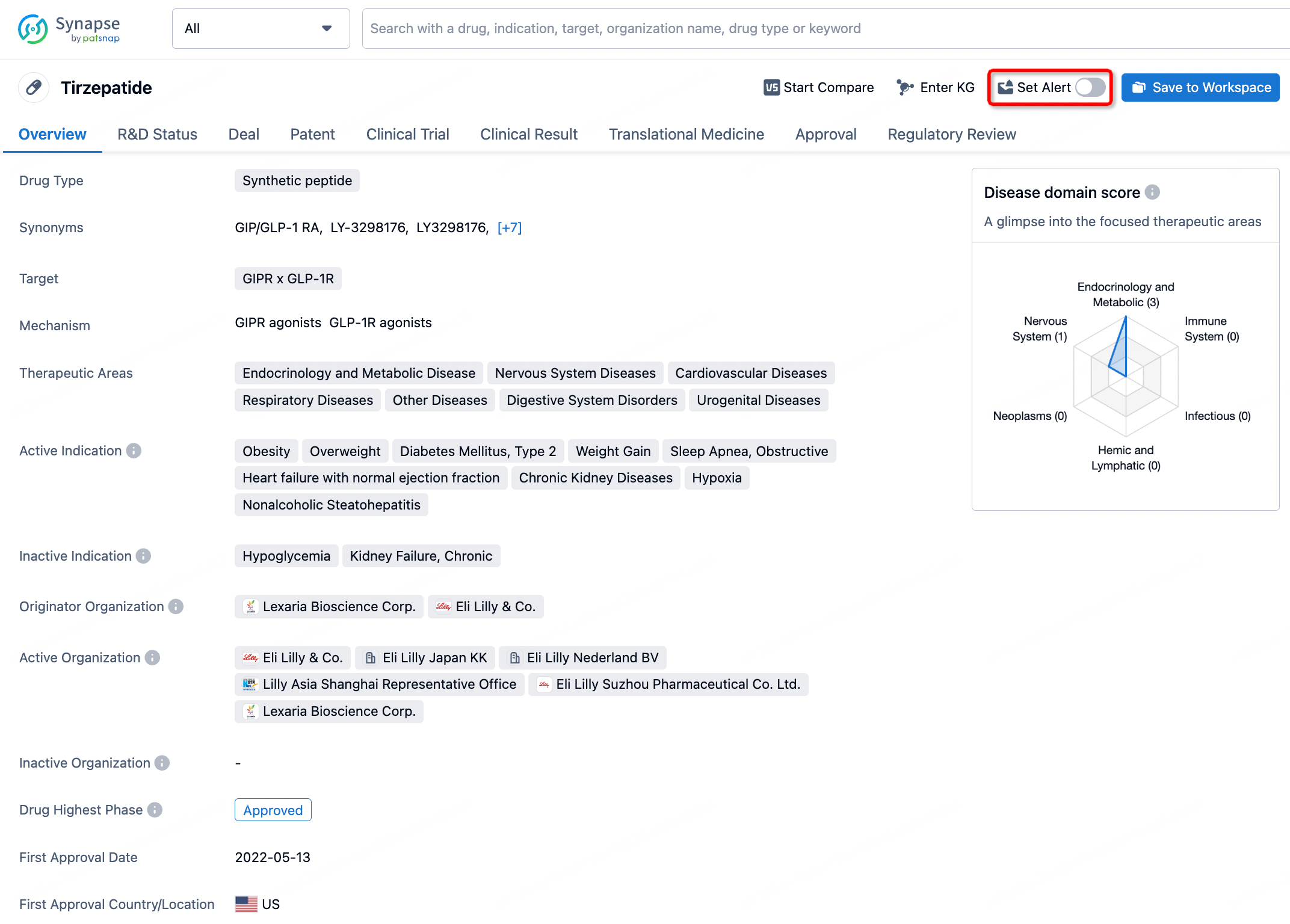
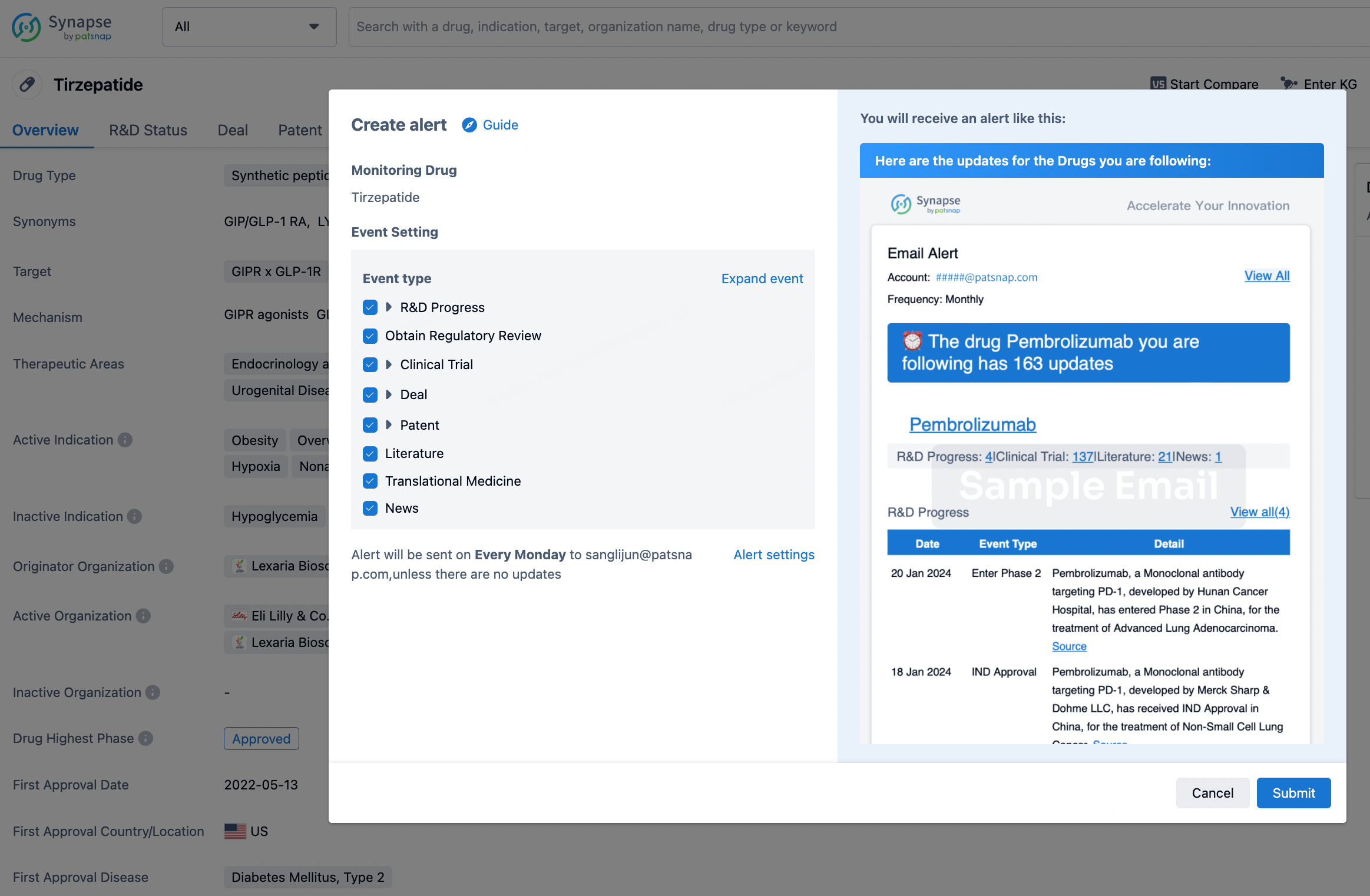
In the Synapse database, you can stay updated on the latest research and development advances of all drugs. This service is accessible anytime and anywhere, with updates available daily or weekly. Use the "Set Alert" function to stay informed. Click on the image below to embark on a brand new journey of drug discovery!

AI Agents Built for Biopharma Breakthroughs
Accelerate discovery. Empower decisions. Transform outcomes.
Get started for free today!
Accelerate Strategic R&D decision making with Synapse, PatSnap’s AI-powered Connected Innovation Intelligence Platform Built for Life Sciences Professionals.
Start your data trial now!
Synapse data is also accessible to external entities via APIs or data packages. Empower better decisions with the latest in pharmaceutical intelligence.