Request Demo
What are the side effects of Cibenzoline Succinate?
12 July 2024
Cibenzoline Succinate is a medication that belongs to the class of antiarrhythmic agents. It is commonly used to treat certain types of heart rhythm disorders (arrhythmias) by helping to maintain a normal and consistent heartbeat. Like any medication, Cibenzoline Succinate comes with its own set of side effects, which can vary among individuals based on factors such as dosage, overall health, and other medications being taken.
One of the most common side effects of Cibenzoline Succinate is dizziness. This can occur because the medication works by altering the electrical impulses in the heart, which can sometimes affect the balance of signals in the brain as well. Patients are often advised to avoid driving or operating heavy machinery until they are sure how the medication affects them.
Another frequently reported side effect is gastrointestinal discomfort. This can include symptoms like nausea, vomiting, and abdominal pain. Some patients may also experience changes in appetite or weight.
Cibenzoline Succinate can also affect the cardiovascular system in ways other than stabilizing the heartbeat. For instance, some patients may experience a drop in blood pressure (hypotension), which can lead to symptoms like lightheadedness, fainting, or palpitations. In rare cases, it can cause more severe arrhythmias or exacerbate pre-existing heart conditions.
Fatigue and muscle weakness are additional side effects that some individuals may experience. These symptoms are often mild but can be troubling for those with physically demanding lifestyles or occupations. Monitoring by a healthcare provider is essential to ensure that these side effects do not become debilitating.
Some patients may experience allergic reactions to Cibenzoline Succinate. Symptoms of an allergic reaction can include rash, itching, swelling, severe dizziness, and trouble breathing. Immediate medical attention is required if any of these symptoms occur.
Another serious but less common side effect is liver dysfunction. Signs of liver problems can include yellowing of the skin or eyes (jaundice), dark urine, severe stomach or abdominal pain, and persistent nausea or vomiting. Regular liver function tests are often recommended for individuals taking Cibenzoline Succinate to catch any liver-related issues early.
Cibenzoline Succinate can also affect blood sugar levels, making it important for diabetic patients to monitor their blood sugar more closely. Symptoms of altered blood sugar levels can include excessive thirst, frequent urination, confusion, or unusual fatigue.
Some individuals may also experience changes in blood cell counts, which can manifest as symptoms like easy bruising or bleeding, persistent sore throat, or fever. Regular blood tests are often part of the treatment plan to monitor for these potential issues.
It's worth noting that the side effects mentioned here do not cover all possible side effects, and individuals may experience different reactions. Patients are encouraged to discuss any side effects they experience with their healthcare provider, who can adjust the dosage or suggest alternative treatments if necessary.
In conclusion, while Cibenzoline Succinate can be highly effective in managing certain types of arrhythmias, it comes with a range of potential side effects that need to be carefully monitored. Regular consultations with a healthcare provider are essential for managing these side effects and ensuring the medication's efficacy and safety.
One of the most common side effects of Cibenzoline Succinate is dizziness. This can occur because the medication works by altering the electrical impulses in the heart, which can sometimes affect the balance of signals in the brain as well. Patients are often advised to avoid driving or operating heavy machinery until they are sure how the medication affects them.
Another frequently reported side effect is gastrointestinal discomfort. This can include symptoms like nausea, vomiting, and abdominal pain. Some patients may also experience changes in appetite or weight.
Cibenzoline Succinate can also affect the cardiovascular system in ways other than stabilizing the heartbeat. For instance, some patients may experience a drop in blood pressure (hypotension), which can lead to symptoms like lightheadedness, fainting, or palpitations. In rare cases, it can cause more severe arrhythmias or exacerbate pre-existing heart conditions.
Fatigue and muscle weakness are additional side effects that some individuals may experience. These symptoms are often mild but can be troubling for those with physically demanding lifestyles or occupations. Monitoring by a healthcare provider is essential to ensure that these side effects do not become debilitating.
Some patients may experience allergic reactions to Cibenzoline Succinate. Symptoms of an allergic reaction can include rash, itching, swelling, severe dizziness, and trouble breathing. Immediate medical attention is required if any of these symptoms occur.
Another serious but less common side effect is liver dysfunction. Signs of liver problems can include yellowing of the skin or eyes (jaundice), dark urine, severe stomach or abdominal pain, and persistent nausea or vomiting. Regular liver function tests are often recommended for individuals taking Cibenzoline Succinate to catch any liver-related issues early.
Cibenzoline Succinate can also affect blood sugar levels, making it important for diabetic patients to monitor their blood sugar more closely. Symptoms of altered blood sugar levels can include excessive thirst, frequent urination, confusion, or unusual fatigue.
Some individuals may also experience changes in blood cell counts, which can manifest as symptoms like easy bruising or bleeding, persistent sore throat, or fever. Regular blood tests are often part of the treatment plan to monitor for these potential issues.
It's worth noting that the side effects mentioned here do not cover all possible side effects, and individuals may experience different reactions. Patients are encouraged to discuss any side effects they experience with their healthcare provider, who can adjust the dosage or suggest alternative treatments if necessary.
In conclusion, while Cibenzoline Succinate can be highly effective in managing certain types of arrhythmias, it comes with a range of potential side effects that need to be carefully monitored. Regular consultations with a healthcare provider are essential for managing these side effects and ensuring the medication's efficacy and safety.
How to obtain the latest development progress of all drugs?
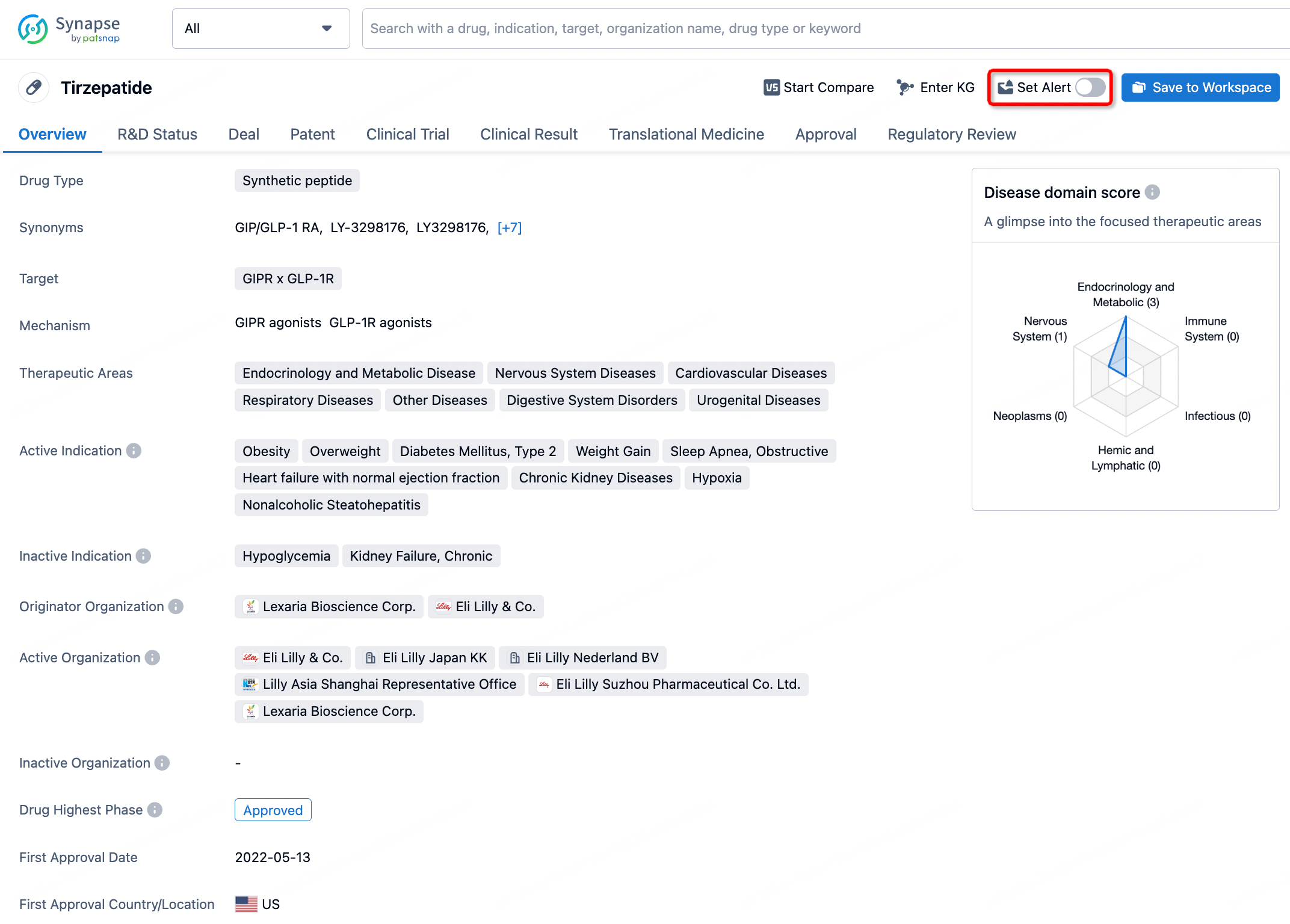
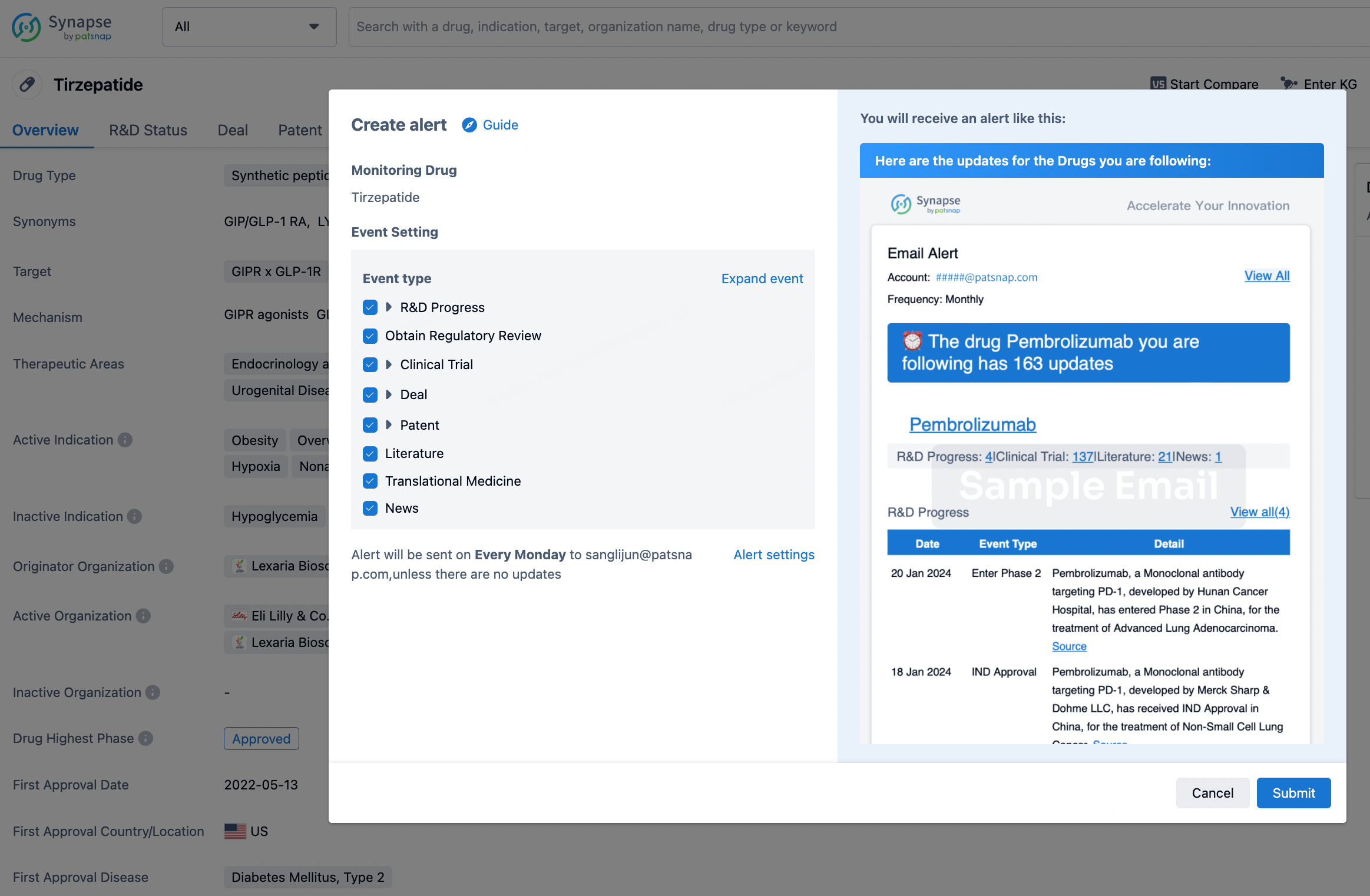
In the Synapse database, you can stay updated on the latest research and development advances of all drugs. This service is accessible anytime and anywhere, with updates available daily or weekly. Use the "Set Alert" function to stay informed. Click on the image below to embark on a brand new journey of drug discovery!

AI Agents Built for Biopharma Breakthroughs
Accelerate discovery. Empower decisions. Transform outcomes.
Get started for free today!
Accelerate Strategic R&D decision making with Synapse, PatSnap’s AI-powered Connected Innovation Intelligence Platform Built for Life Sciences Professionals.
Start your data trial now!
Synapse data is also accessible to external entities via APIs or data packages. Empower better decisions with the latest in pharmaceutical intelligence.