Request Demo
What are the side effects of Climazolam?
12 July 2024
Climazolam is a medication that belongs to the benzodiazepine class of drugs, commonly prescribed for its sedative and anxiolytic effects. It is often used to treat anxiety disorders, insomnia, and certain types of seizures. Like other benzodiazepines, Climazolam works by enhancing the effect of the neurotransmitter gamma-aminobutyric acid (GABA) in the brain, which helps to calm the nervous system. Despite its therapeutic benefits, Climazolam can have several side effects, ranging from mild to severe. Understanding these side effects is crucial for both patients and healthcare providers to ensure its safe and effective use.
One of the most common side effects of Climazolam is drowsiness. Patients taking this medication may experience excessive sleepiness and fatigue, which can interfere with daily activities. This sedative effect can be beneficial for those with insomnia but can be problematic for individuals who need to stay alert, such as when driving or operating machinery. Additionally, this drowsiness can contribute to an increased risk of falls and accidents, particularly in older adults.
Another frequent side effect is dizziness or lightheadedness. Patients may feel unsteady or as if the room is spinning, which can be disorienting and uncomfortable. This side effect is typically more pronounced when the medication is first started or when the dose is increased. It is advisable to stand up slowly from a sitting or lying position to minimize the risk of fainting or falls.
Climazolam can also cause cognitive impairments, including problems with memory, concentration, and coordination. Some patients report experiencing confusion or difficulty focusing on tasks. These cognitive effects can be particularly concerning for individuals who require high levels of mental alertness for their work or daily activities. Long-term use of benzodiazepines has been associated with an increased risk of developing dementia or other cognitive disorders in older adults.
In addition to these central nervous system effects, Climazolam can cause gastrointestinal issues such as nausea, vomiting, and constipation. These effects are generally mild and tend to improve with continued use of the medication. However, persistent or severe gastrointestinal symptoms should be discussed with a healthcare provider.
Emotional and psychological changes can also occur with Climazolam use. Some patients may experience mood swings, irritability, or even depression. In rare cases, paradoxical reactions such as increased anxiety, agitation, or aggressive behavior can occur. These reactions are more common in children, the elderly, and individuals with a history of psychiatric disorders.
One of the most serious potential side effects of Climazolam is the development of dependence and withdrawal symptoms. Benzodiazepines, including Climazolam, can be highly addictive, particularly when used for extended periods or at high doses. Patients may develop a tolerance to the drug, meaning they require higher doses to achieve the same effect. Abrupt discontinuation of Climazolam can lead to withdrawal symptoms such as anxiety, insomnia, tremors, and, in severe cases, seizures. Therefore, it is crucial for patients to follow their healthcare provider's instructions carefully and not to stop the medication suddenly without medical guidance.
Respiratory depression is another severe side effect, especially when Climazolam is taken in combination with other central nervous system depressants such as alcohol, opioids, or certain antidepressants. This can lead to dangerously slow or shallow breathing, which can be life-threatening. Individuals with pre-existing respiratory conditions like chronic obstructive pulmonary disease (COPD) or sleep apnea are at higher risk for this side effect.
In conclusion, while Climazolam can be an effective treatment for anxiety, insomnia, and certain seizure disorders, it is not without its risks. Patients should be well-informed about the potential side effects and work closely with their healthcare provider to monitor for any adverse reactions. Proper use, including adherence to prescribed dosages and gradual tapering when discontinuing the medication, can help minimize these risks and ensure safe and effective therapy. As with any medication, the benefits and risks must be weighed carefully to determine the most appropriate treatment for each individual.
One of the most common side effects of Climazolam is drowsiness. Patients taking this medication may experience excessive sleepiness and fatigue, which can interfere with daily activities. This sedative effect can be beneficial for those with insomnia but can be problematic for individuals who need to stay alert, such as when driving or operating machinery. Additionally, this drowsiness can contribute to an increased risk of falls and accidents, particularly in older adults.
Another frequent side effect is dizziness or lightheadedness. Patients may feel unsteady or as if the room is spinning, which can be disorienting and uncomfortable. This side effect is typically more pronounced when the medication is first started or when the dose is increased. It is advisable to stand up slowly from a sitting or lying position to minimize the risk of fainting or falls.
Climazolam can also cause cognitive impairments, including problems with memory, concentration, and coordination. Some patients report experiencing confusion or difficulty focusing on tasks. These cognitive effects can be particularly concerning for individuals who require high levels of mental alertness for their work or daily activities. Long-term use of benzodiazepines has been associated with an increased risk of developing dementia or other cognitive disorders in older adults.
In addition to these central nervous system effects, Climazolam can cause gastrointestinal issues such as nausea, vomiting, and constipation. These effects are generally mild and tend to improve with continued use of the medication. However, persistent or severe gastrointestinal symptoms should be discussed with a healthcare provider.
Emotional and psychological changes can also occur with Climazolam use. Some patients may experience mood swings, irritability, or even depression. In rare cases, paradoxical reactions such as increased anxiety, agitation, or aggressive behavior can occur. These reactions are more common in children, the elderly, and individuals with a history of psychiatric disorders.
One of the most serious potential side effects of Climazolam is the development of dependence and withdrawal symptoms. Benzodiazepines, including Climazolam, can be highly addictive, particularly when used for extended periods or at high doses. Patients may develop a tolerance to the drug, meaning they require higher doses to achieve the same effect. Abrupt discontinuation of Climazolam can lead to withdrawal symptoms such as anxiety, insomnia, tremors, and, in severe cases, seizures. Therefore, it is crucial for patients to follow their healthcare provider's instructions carefully and not to stop the medication suddenly without medical guidance.
Respiratory depression is another severe side effect, especially when Climazolam is taken in combination with other central nervous system depressants such as alcohol, opioids, or certain antidepressants. This can lead to dangerously slow or shallow breathing, which can be life-threatening. Individuals with pre-existing respiratory conditions like chronic obstructive pulmonary disease (COPD) or sleep apnea are at higher risk for this side effect.
In conclusion, while Climazolam can be an effective treatment for anxiety, insomnia, and certain seizure disorders, it is not without its risks. Patients should be well-informed about the potential side effects and work closely with their healthcare provider to monitor for any adverse reactions. Proper use, including adherence to prescribed dosages and gradual tapering when discontinuing the medication, can help minimize these risks and ensure safe and effective therapy. As with any medication, the benefits and risks must be weighed carefully to determine the most appropriate treatment for each individual.
How to obtain the latest development progress of all drugs?
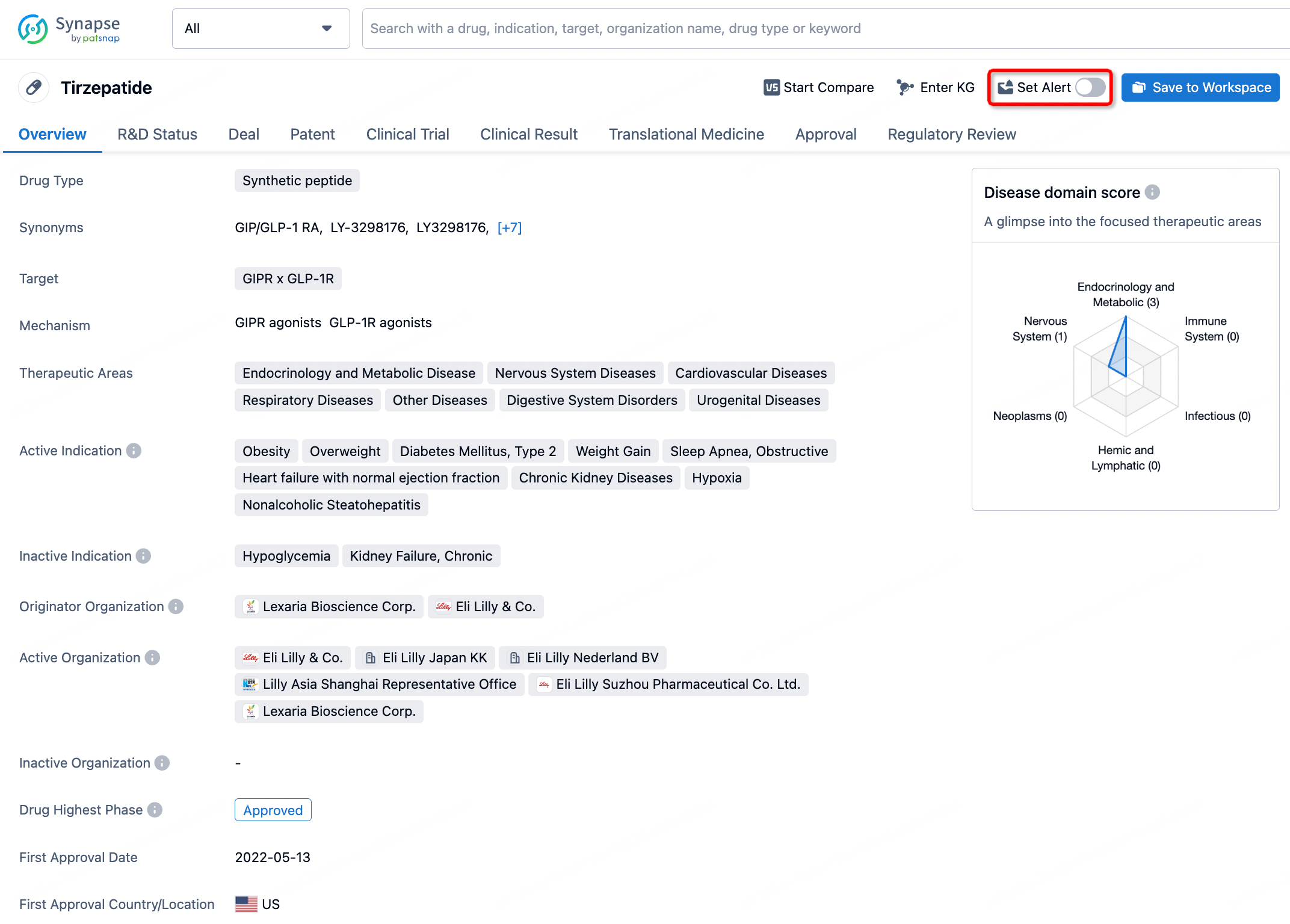
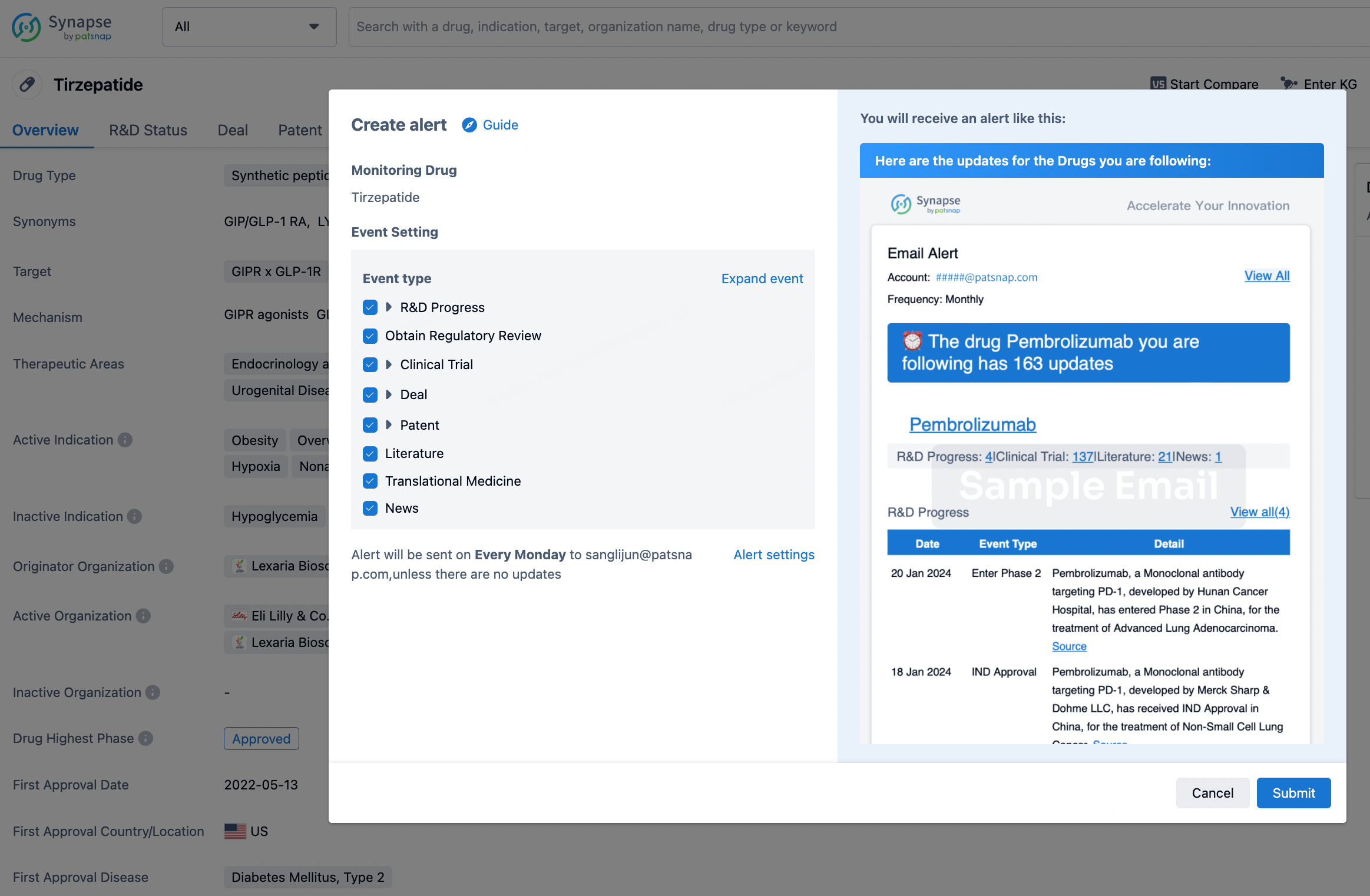
In the Synapse database, you can stay updated on the latest research and development advances of all drugs. This service is accessible anytime and anywhere, with updates available daily or weekly. Use the "Set Alert" function to stay informed. Click on the image below to embark on a brand new journey of drug discovery!

AI Agents Built for Biopharma Breakthroughs
Accelerate discovery. Empower decisions. Transform outcomes.
Get started for free today!
Accelerate Strategic R&D decision making with Synapse, PatSnap’s AI-powered Connected Innovation Intelligence Platform Built for Life Sciences Professionals.
Start your data trial now!
Synapse data is also accessible to external entities via APIs or data packages. Empower better decisions with the latest in pharmaceutical intelligence.