Request Demo
What are the side effects of Dihexyverine Hydrochloride?
12 July 2024
Dihexyverine Hydrochloride is a medication commonly used for its antispasmodic properties, particularly in the treatment of gastrointestinal disorders. While it can be effective in alleviating symptoms associated with such conditions, like other medications, it comes with a range of potential side effects. Understanding these side effects is crucial for patients and healthcare providers to manage treatment effectively.
One of the most common side effects of Dihexyverine Hydrochloride is dry mouth. This occurs because the medication reduces the production of saliva, which can lead to discomfort and an increased risk of dental issues if persistent. Patients are often advised to maintain good oral hygiene and stay hydrated to mitigate this side effect.
Another frequent side effect is blurred vision. This can result from the drug’s anticholinergic action, which affects the muscles in the eyes. Individuals experiencing this symptom should avoid driving or operating heavy machinery until their vision returns to normal.
Constipation is also a notable side effect. Dihexyverine Hydrochloride can slow down bowel movements, leading to discomfort and digestive issues. To counteract this, healthcare providers might recommend dietary adjustments, increased fluid intake, and possibly the use of laxatives if necessary.
Dizziness and lightheadedness are additional side effects that some patients may encounter. These symptoms are particularly common when rising from a seated or lying position, a condition known as orthostatic hypotension. Patients experiencing these symptoms should move slowly to reduce the risk of falls and injuries.
In some cases, patients may experience urinary retention. This side effect is due to the medication’s impact on the bladder’s ability to contract properly. Those who encounter difficulty in urinating or feel an incomplete bladder emptying should seek medical advice promptly.
Less commonly, Dihexyverine Hydrochloride can cause skin reactions such as rashes or itching. These reactions may be mild but should be reported to a healthcare provider, especially if they persist or worsen, as they might indicate an allergic reaction.
Some patients might also experience an increased heart rate, known as tachycardia. This can be concerning, particularly for individuals with underlying heart conditions. Monitoring and discussing this side effect with a healthcare provider is essential to ensure it does not escalate into a more serious issue.
Another rare but serious side effect is confusion or cognitive impairment, especially in elderly patients. This can affect daily functioning and overall quality of life, necessitating a careful assessment of the risks and benefits of continuing the medication.
In conclusion, while Dihexyverine Hydrochloride can be effective in managing symptoms of gastrointestinal disorders, it is associated with several potential side effects. These range from common issues like dry mouth and constipation to less frequent but more severe problems such as tachycardia and cognitive impairment. Patients prescribed this medication should be closely monitored by their healthcare providers to manage these side effects effectively and adjust treatment as needed.
One of the most common side effects of Dihexyverine Hydrochloride is dry mouth. This occurs because the medication reduces the production of saliva, which can lead to discomfort and an increased risk of dental issues if persistent. Patients are often advised to maintain good oral hygiene and stay hydrated to mitigate this side effect.
Another frequent side effect is blurred vision. This can result from the drug’s anticholinergic action, which affects the muscles in the eyes. Individuals experiencing this symptom should avoid driving or operating heavy machinery until their vision returns to normal.
Constipation is also a notable side effect. Dihexyverine Hydrochloride can slow down bowel movements, leading to discomfort and digestive issues. To counteract this, healthcare providers might recommend dietary adjustments, increased fluid intake, and possibly the use of laxatives if necessary.
Dizziness and lightheadedness are additional side effects that some patients may encounter. These symptoms are particularly common when rising from a seated or lying position, a condition known as orthostatic hypotension. Patients experiencing these symptoms should move slowly to reduce the risk of falls and injuries.
In some cases, patients may experience urinary retention. This side effect is due to the medication’s impact on the bladder’s ability to contract properly. Those who encounter difficulty in urinating or feel an incomplete bladder emptying should seek medical advice promptly.
Less commonly, Dihexyverine Hydrochloride can cause skin reactions such as rashes or itching. These reactions may be mild but should be reported to a healthcare provider, especially if they persist or worsen, as they might indicate an allergic reaction.
Some patients might also experience an increased heart rate, known as tachycardia. This can be concerning, particularly for individuals with underlying heart conditions. Monitoring and discussing this side effect with a healthcare provider is essential to ensure it does not escalate into a more serious issue.
Another rare but serious side effect is confusion or cognitive impairment, especially in elderly patients. This can affect daily functioning and overall quality of life, necessitating a careful assessment of the risks and benefits of continuing the medication.
In conclusion, while Dihexyverine Hydrochloride can be effective in managing symptoms of gastrointestinal disorders, it is associated with several potential side effects. These range from common issues like dry mouth and constipation to less frequent but more severe problems such as tachycardia and cognitive impairment. Patients prescribed this medication should be closely monitored by their healthcare providers to manage these side effects effectively and adjust treatment as needed.
How to obtain the latest development progress of all drugs?
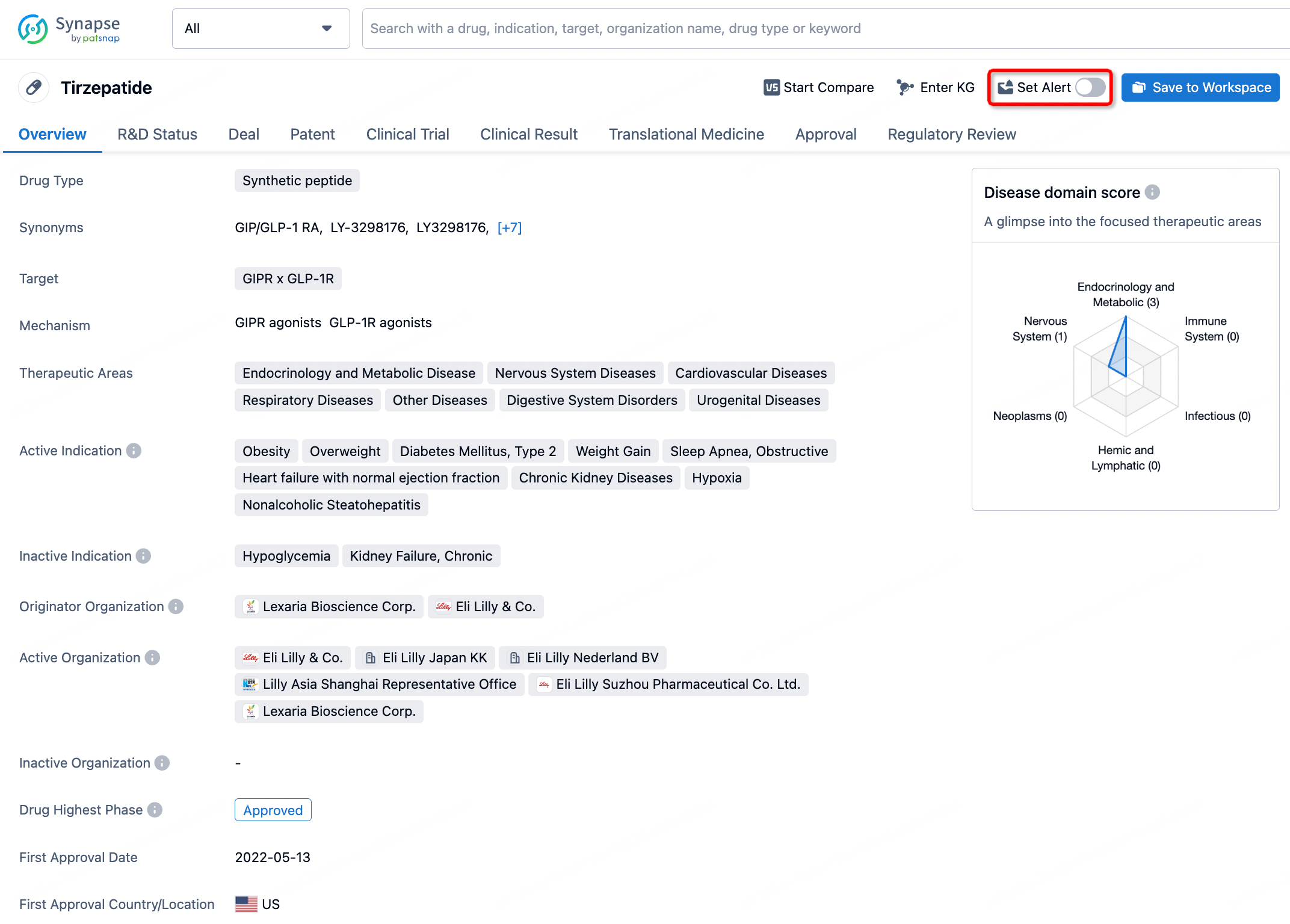
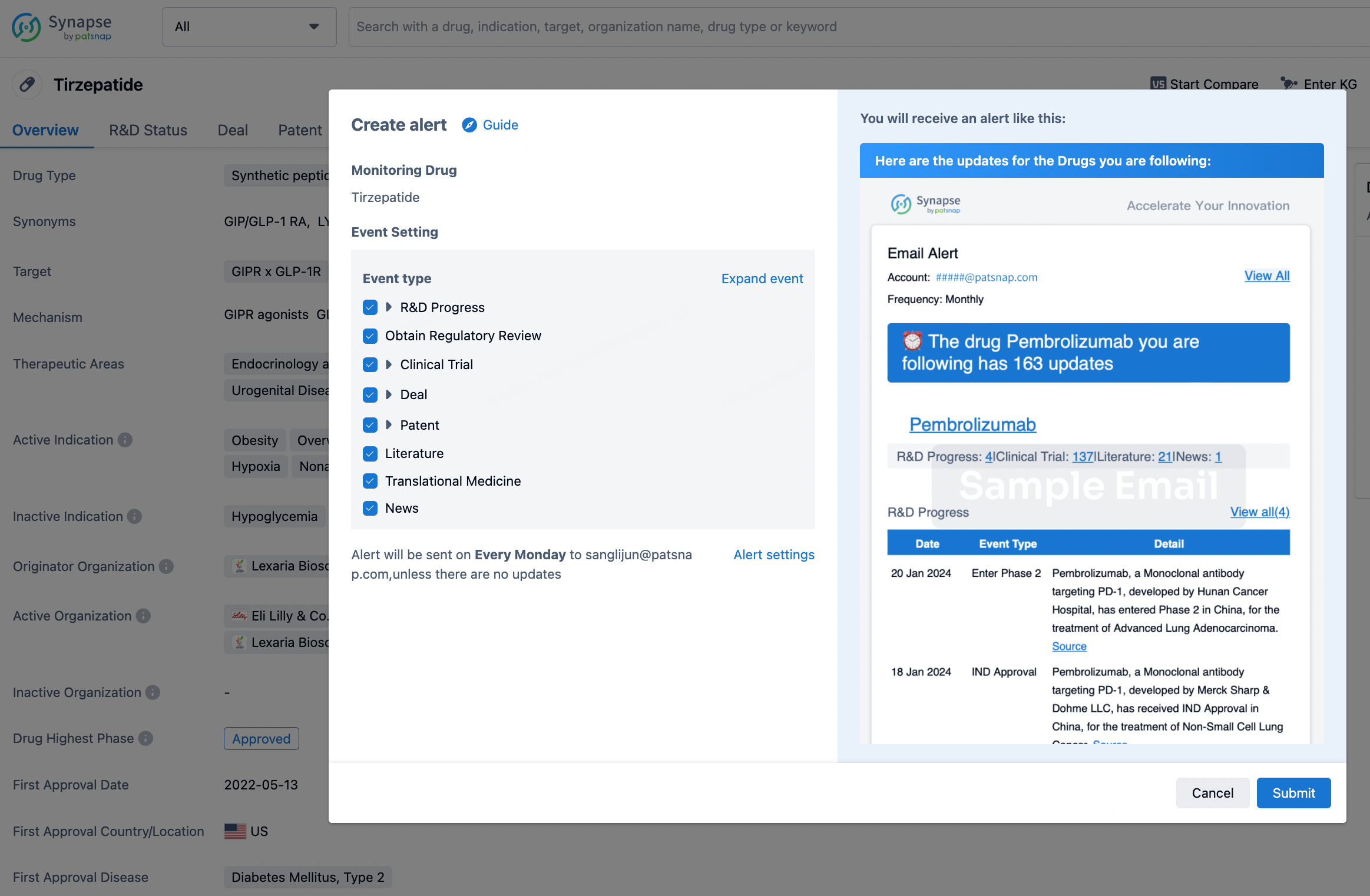
In the Synapse database, you can stay updated on the latest research and development advances of all drugs. This service is accessible anytime and anywhere, with updates available daily or weekly. Use the "Set Alert" function to stay informed. Click on the image below to embark on a brand new journey of drug discovery!

AI Agents Built for Biopharma Breakthroughs
Accelerate discovery. Empower decisions. Transform outcomes.
Get started for free today!
Accelerate Strategic R&D decision making with Synapse, PatSnap’s AI-powered Connected Innovation Intelligence Platform Built for Life Sciences Professionals.
Start your data trial now!
Synapse data is also accessible to external entities via APIs or data packages. Empower better decisions with the latest in pharmaceutical intelligence.