Request Demo
What are the side effects of Efepoetin alfa?
12 July 2024
Efepoetin alfa, a synthetic form of erythropoietin, is commonly used to treat anemia, particularly in patients with chronic kidney disease or those undergoing chemotherapy. Like any medication, Efepoetin alfa can have side effects. Understanding these potential adverse effects can help patients and caregivers make informed decisions about its use.
One of the most frequently reported side effects of Efepoetin alfa is an increase in blood pressure. Hypertension can occur because the drug stimulates red blood cell production, which thickens the blood and increases the workload on the heart and blood vessels. Patients on Efepoetin alfa should have their blood pressure monitored regularly, and those with pre-existing hypertension may require adjustments in their medication regimen.
Headaches are another common side effect. While generally mild, these headaches can sometimes be severe and persistent. Over-the-counter pain relievers might help, but it's important to consult a healthcare provider to rule out more serious conditions.
Some patients experience joint, muscle, or bone pain. This discomfort is usually temporary and subsides as the body adjusts to the medication. However, if the pain becomes severe or persists, it's advisable to seek medical advice.
Efepoetin alfa can also lead to serious allergic reactions, although these are rare. Symptoms of a severe allergic reaction may include rash, itching, swelling, severe dizziness, and difficulty breathing. Immediate medical attention is necessary if any of these symptoms occur.
Another potential risk is the formation of blood clots. Increased red cell mass can heighten the risk of thromboembolic events, such as deep vein thrombosis, pulmonary embolism, or stroke. Patients with a history of blood clots or cardiovascular diseases need to be particularly cautious and should discuss these risks with their healthcare provider.
Some patients might develop antibody-mediated pure red cell aplasia (PRCA), a condition where the body stops producing red blood cells. This is a rare but serious complication that requires immediate medical intervention and discontinuation of the drug.
Gastrointestinal issues like nausea and vomiting may also occur. These symptoms are generally mild and can often be managed with dietary adjustments and supportive care.
Lastly, there's a potential for skin reactions at the injection site, such as redness, swelling, or pain. These reactions are usually mild and resolve on their own. Rotating the injection site and proper injection techniques can help mitigate these effects.
In summary, while Efepoetin alfa can be highly effective in treating anemia, it comes with a range of potential side effects. Regular monitoring and open communication with healthcare providers are essential to manage these risks effectively. Patients should report any unusual symptoms or side effects to their healthcare provider promptly to ensure optimal treatment outcomes.
One of the most frequently reported side effects of Efepoetin alfa is an increase in blood pressure. Hypertension can occur because the drug stimulates red blood cell production, which thickens the blood and increases the workload on the heart and blood vessels. Patients on Efepoetin alfa should have their blood pressure monitored regularly, and those with pre-existing hypertension may require adjustments in their medication regimen.
Headaches are another common side effect. While generally mild, these headaches can sometimes be severe and persistent. Over-the-counter pain relievers might help, but it's important to consult a healthcare provider to rule out more serious conditions.
Some patients experience joint, muscle, or bone pain. This discomfort is usually temporary and subsides as the body adjusts to the medication. However, if the pain becomes severe or persists, it's advisable to seek medical advice.
Efepoetin alfa can also lead to serious allergic reactions, although these are rare. Symptoms of a severe allergic reaction may include rash, itching, swelling, severe dizziness, and difficulty breathing. Immediate medical attention is necessary if any of these symptoms occur.
Another potential risk is the formation of blood clots. Increased red cell mass can heighten the risk of thromboembolic events, such as deep vein thrombosis, pulmonary embolism, or stroke. Patients with a history of blood clots or cardiovascular diseases need to be particularly cautious and should discuss these risks with their healthcare provider.
Some patients might develop antibody-mediated pure red cell aplasia (PRCA), a condition where the body stops producing red blood cells. This is a rare but serious complication that requires immediate medical intervention and discontinuation of the drug.
Gastrointestinal issues like nausea and vomiting may also occur. These symptoms are generally mild and can often be managed with dietary adjustments and supportive care.
Lastly, there's a potential for skin reactions at the injection site, such as redness, swelling, or pain. These reactions are usually mild and resolve on their own. Rotating the injection site and proper injection techniques can help mitigate these effects.
In summary, while Efepoetin alfa can be highly effective in treating anemia, it comes with a range of potential side effects. Regular monitoring and open communication with healthcare providers are essential to manage these risks effectively. Patients should report any unusual symptoms or side effects to their healthcare provider promptly to ensure optimal treatment outcomes.
How to obtain the latest development progress of all drugs?
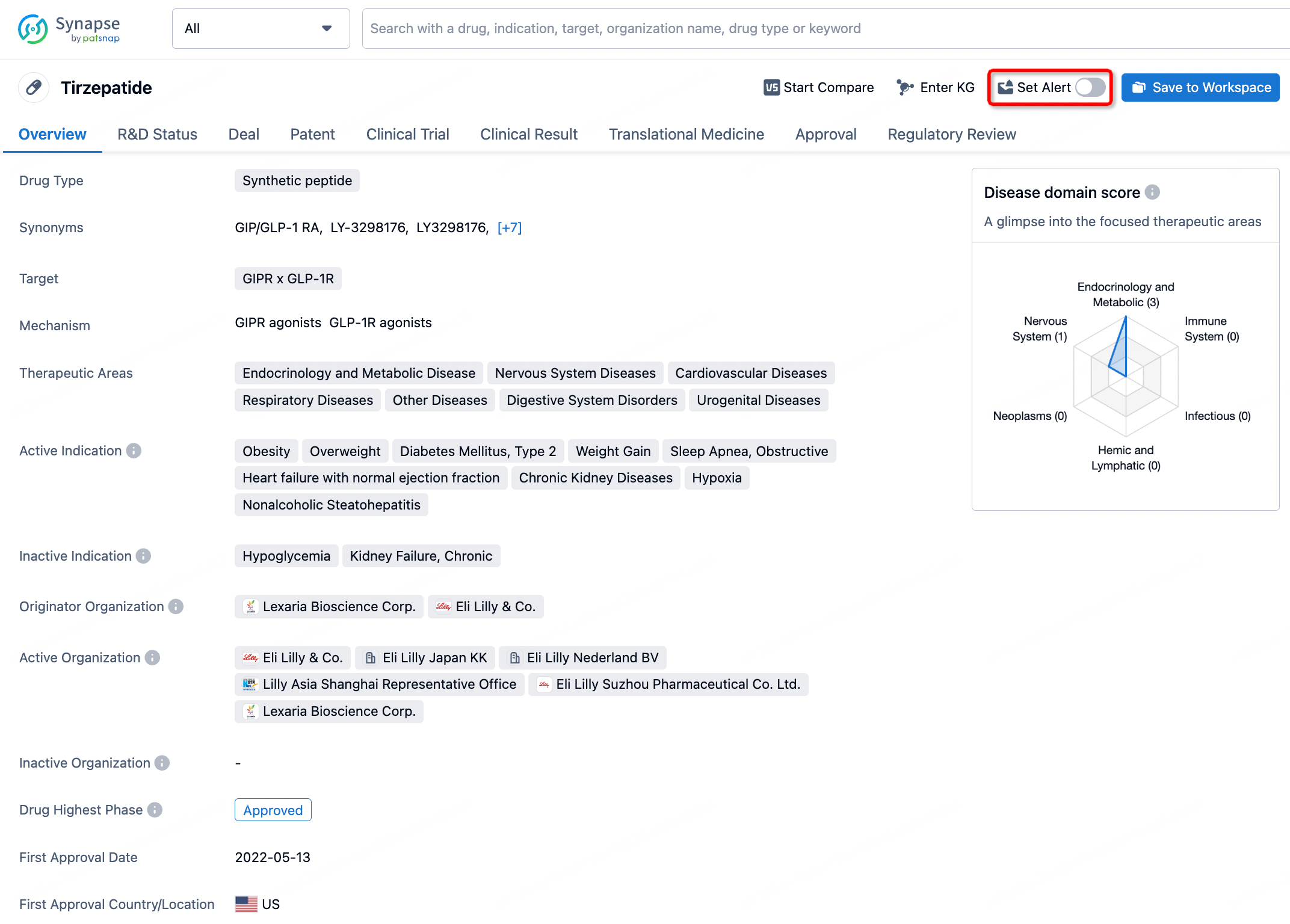
In the Synapse database, you can stay updated on the latest research and development advances of all drugs. This service is accessible anytime and anywhere, with updates available daily or weekly. Use the "Set Alert" function to stay informed. Click on the image below to embark on a brand new journey of drug discovery!


AI Agents Built for Biopharma Breakthroughs
Accelerate discovery. Empower decisions. Transform outcomes.
Get started for free today!
Accelerate Strategic R&D decision making with Synapse, PatSnap’s AI-powered Connected Innovation Intelligence Platform Built for Life Sciences Professionals.
Start your data trial now!
Synapse data is also accessible to external entities via APIs or data packages. Empower better decisions with the latest in pharmaceutical intelligence.