Request Demo
What are the side effects of Encainide Hydrochloride?
12 July 2024
Encainide Hydrochloride is a medication that was once used to treat certain types of irregular heartbeats, known as arrhythmias. It belongs to the class of drugs called antiarrhythmics, and it works by blocking sodium channels in the heart to stabilize abnormal rhythms. However, like many medications, Encainide Hydrochloride can cause a range of side effects, which ultimately led to its withdrawal from the market in many countries. Understanding these side effects is crucial for anyone studying past or current treatments for arrhythmias.
One of the most significant side effects of Encainide Hydrochloride is its proarrhythmic effect, which means that instead of correcting abnormal heart rhythms, it can sometimes cause or worsen them. This paradoxical effect was particularly dangerous because it could lead to severe and potentially life-threatening conditions like ventricular fibrillation or ventricular tachycardia.
Patients taking Encainide Hydrochloride also reported experiencing dizziness and light-headedness. These symptoms could be attributed to the drug's potential to lower blood pressure and affect the central nervous system. In severe cases, this could result in fainting spells, which might pose additional risks if they occurred while operating machinery or driving.
Another concerning side effect was the possibility of heart failure. Encainide Hydrochloride could depress myocardial function, which means it could weaken the heart's ability to pump blood effectively. This side effect was particularly risky for patients with pre-existing heart conditions.
Gastrointestinal issues were also commonly reported among users of Encainide Hydrochloride. These included nausea, vomiting, and abdominal pain. While generally not life-threatening, these side effects could significantly impact the quality of life and lead to discontinuation of the medication.
Neurological side effects such as headaches and fatigue were also noted. These symptoms could be relatively mild but persistent, leading to general discomfort and a decrease in daily functioning.
Additionally, some patients experienced allergic reactions, which could manifest as skin rashes, itching, or more severe reactions like angioedema, which involves swelling of the deeper layers of the skin, often around the eyes and lips.
In summary, while Encainide Hydrochloride was initially considered a promising treatment for arrhythmias, its range of side effects—especially its proarrhythmic potential and impact on heart function—led to its decline in clinical use. Patients and healthcare providers must weigh the benefits and risks of any medication, and in the case of Encainide Hydrochloride, the risks often outweighed the benefits. As always, any medication should only be used under the guidance and supervision of a qualified healthcare provider.
One of the most significant side effects of Encainide Hydrochloride is its proarrhythmic effect, which means that instead of correcting abnormal heart rhythms, it can sometimes cause or worsen them. This paradoxical effect was particularly dangerous because it could lead to severe and potentially life-threatening conditions like ventricular fibrillation or ventricular tachycardia.
Patients taking Encainide Hydrochloride also reported experiencing dizziness and light-headedness. These symptoms could be attributed to the drug's potential to lower blood pressure and affect the central nervous system. In severe cases, this could result in fainting spells, which might pose additional risks if they occurred while operating machinery or driving.
Another concerning side effect was the possibility of heart failure. Encainide Hydrochloride could depress myocardial function, which means it could weaken the heart's ability to pump blood effectively. This side effect was particularly risky for patients with pre-existing heart conditions.
Gastrointestinal issues were also commonly reported among users of Encainide Hydrochloride. These included nausea, vomiting, and abdominal pain. While generally not life-threatening, these side effects could significantly impact the quality of life and lead to discontinuation of the medication.
Neurological side effects such as headaches and fatigue were also noted. These symptoms could be relatively mild but persistent, leading to general discomfort and a decrease in daily functioning.
Additionally, some patients experienced allergic reactions, which could manifest as skin rashes, itching, or more severe reactions like angioedema, which involves swelling of the deeper layers of the skin, often around the eyes and lips.
In summary, while Encainide Hydrochloride was initially considered a promising treatment for arrhythmias, its range of side effects—especially its proarrhythmic potential and impact on heart function—led to its decline in clinical use. Patients and healthcare providers must weigh the benefits and risks of any medication, and in the case of Encainide Hydrochloride, the risks often outweighed the benefits. As always, any medication should only be used under the guidance and supervision of a qualified healthcare provider.
How to obtain the latest development progress of all drugs?
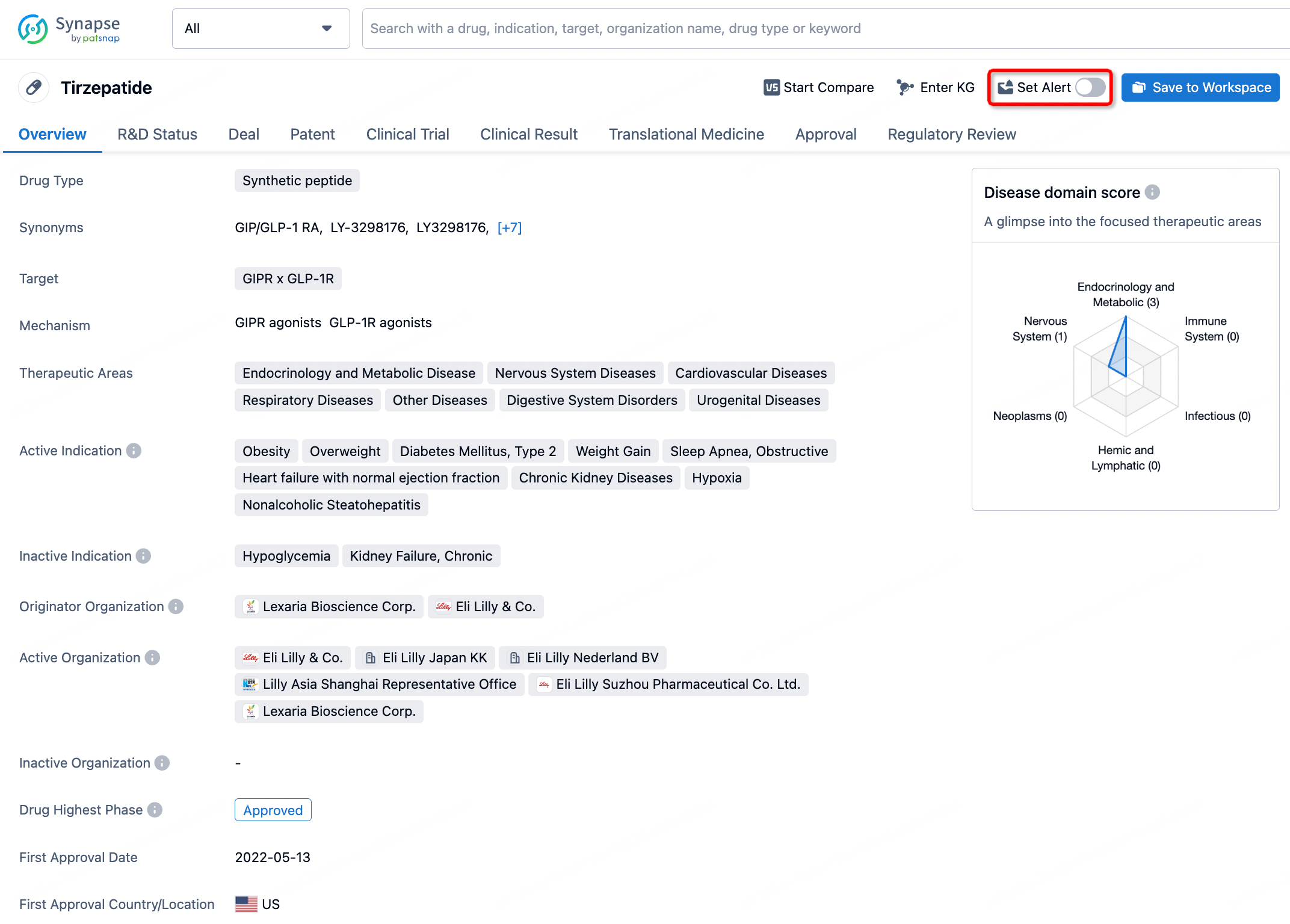
In the Synapse database, you can stay updated on the latest research and development advances of all drugs. This service is accessible anytime and anywhere, with updates available daily or weekly. Use the "Set Alert" function to stay informed. Click on the image below to embark on a brand new journey of drug discovery!


AI Agents Built for Biopharma Breakthroughs
Accelerate discovery. Empower decisions. Transform outcomes.
Get started for free today!
Accelerate Strategic R&D decision making with Synapse, PatSnap’s AI-powered Connected Innovation Intelligence Platform Built for Life Sciences Professionals.
Start your data trial now!
Synapse data is also accessible to external entities via APIs or data packages. Empower better decisions with the latest in pharmaceutical intelligence.