Request Demo
What are the side effects of Flutemetamol F-18?
12 July 2024
Flutemetamol F-18 is a radiopharmaceutical used in positron emission tomography (PET) imaging to detect beta-amyloid plaques in the brain, which are associated with Alzheimer's disease. While this imaging agent is pivotal for early diagnosis and research, it is crucial for patients and healthcare providers to understand the potential side effects associated with its use.
The administration of Flutemetamol F-18 is generally well-tolerated, but like any medical procedure or pharmaceutical agent, it may present some adverse effects. These side effects can range from mild to severe, though the latter is less common. Here, we detail the potential side effects to ensure that patients are well-informed.
One of the most commonly reported side effects is the sensation of pain or discomfort at the injection site. This can include swelling, redness, or bruising and is generally temporary, resolving without the need for medical intervention.
Patients may also experience allergic reactions, though this is rare. Symptoms of an allergic reaction can include itching, rash, hives, or swelling of the face, lips, tongue, or throat. In severe cases, anaphylaxis may occur, characterized by difficulty breathing, rapid heart rate, and a significant drop in blood pressure. Immediate medical attention is required if any signs of a severe allergic reaction are observed.
Another potential side effect is the exposure to radiation, intrinsic to any radiopharmaceutical substance. Although the level of radiation used in Flutemetamol F-18 PET scans is considered low and generally safe, it does contribute to the cumulative lifetime radiation exposure. This is particularly relevant for patients requiring multiple imaging sessions over time. While the risk is minimal, it is an important consideration, especially for vulnerable populations such as pregnant women and young children.
Some patients have reported mild systemic side effects, including headache, dizziness, nausea, or fatigue. These symptoms are usually transient and resolve on their own. However, if they persist or worsen, it is advisable to consult a healthcare professional.
In extremely rare cases, more severe side effects may occur, such as changes in blood pressure or irregular heart rhythms. Patients with pre-existing cardiovascular conditions should discuss these risks with their healthcare provider before undergoing the procedure.
Another concern, although uncommon, is the potential for nephrotoxicity, particularly in patients with pre-existing kidney conditions. It is essential to monitor renal function closely after the administration of Flutemetamol F-18 in these individuals.
Overall, while Flutemetamol F-18 is a valuable tool in the early detection and management of Alzheimer's disease, it is not devoid of side effects. Patients should be thoroughly informed and discuss any concerns with their healthcare providers to weigh the benefits against the potential risks. As with any medical procedure, informed consent and diligent monitoring are key components to ensuring patient safety and optimal outcomes.
The administration of Flutemetamol F-18 is generally well-tolerated, but like any medical procedure or pharmaceutical agent, it may present some adverse effects. These side effects can range from mild to severe, though the latter is less common. Here, we detail the potential side effects to ensure that patients are well-informed.
One of the most commonly reported side effects is the sensation of pain or discomfort at the injection site. This can include swelling, redness, or bruising and is generally temporary, resolving without the need for medical intervention.
Patients may also experience allergic reactions, though this is rare. Symptoms of an allergic reaction can include itching, rash, hives, or swelling of the face, lips, tongue, or throat. In severe cases, anaphylaxis may occur, characterized by difficulty breathing, rapid heart rate, and a significant drop in blood pressure. Immediate medical attention is required if any signs of a severe allergic reaction are observed.
Another potential side effect is the exposure to radiation, intrinsic to any radiopharmaceutical substance. Although the level of radiation used in Flutemetamol F-18 PET scans is considered low and generally safe, it does contribute to the cumulative lifetime radiation exposure. This is particularly relevant for patients requiring multiple imaging sessions over time. While the risk is minimal, it is an important consideration, especially for vulnerable populations such as pregnant women and young children.
Some patients have reported mild systemic side effects, including headache, dizziness, nausea, or fatigue. These symptoms are usually transient and resolve on their own. However, if they persist or worsen, it is advisable to consult a healthcare professional.
In extremely rare cases, more severe side effects may occur, such as changes in blood pressure or irregular heart rhythms. Patients with pre-existing cardiovascular conditions should discuss these risks with their healthcare provider before undergoing the procedure.
Another concern, although uncommon, is the potential for nephrotoxicity, particularly in patients with pre-existing kidney conditions. It is essential to monitor renal function closely after the administration of Flutemetamol F-18 in these individuals.
Overall, while Flutemetamol F-18 is a valuable tool in the early detection and management of Alzheimer's disease, it is not devoid of side effects. Patients should be thoroughly informed and discuss any concerns with their healthcare providers to weigh the benefits against the potential risks. As with any medical procedure, informed consent and diligent monitoring are key components to ensuring patient safety and optimal outcomes.
How to obtain the latest development progress of all drugs?
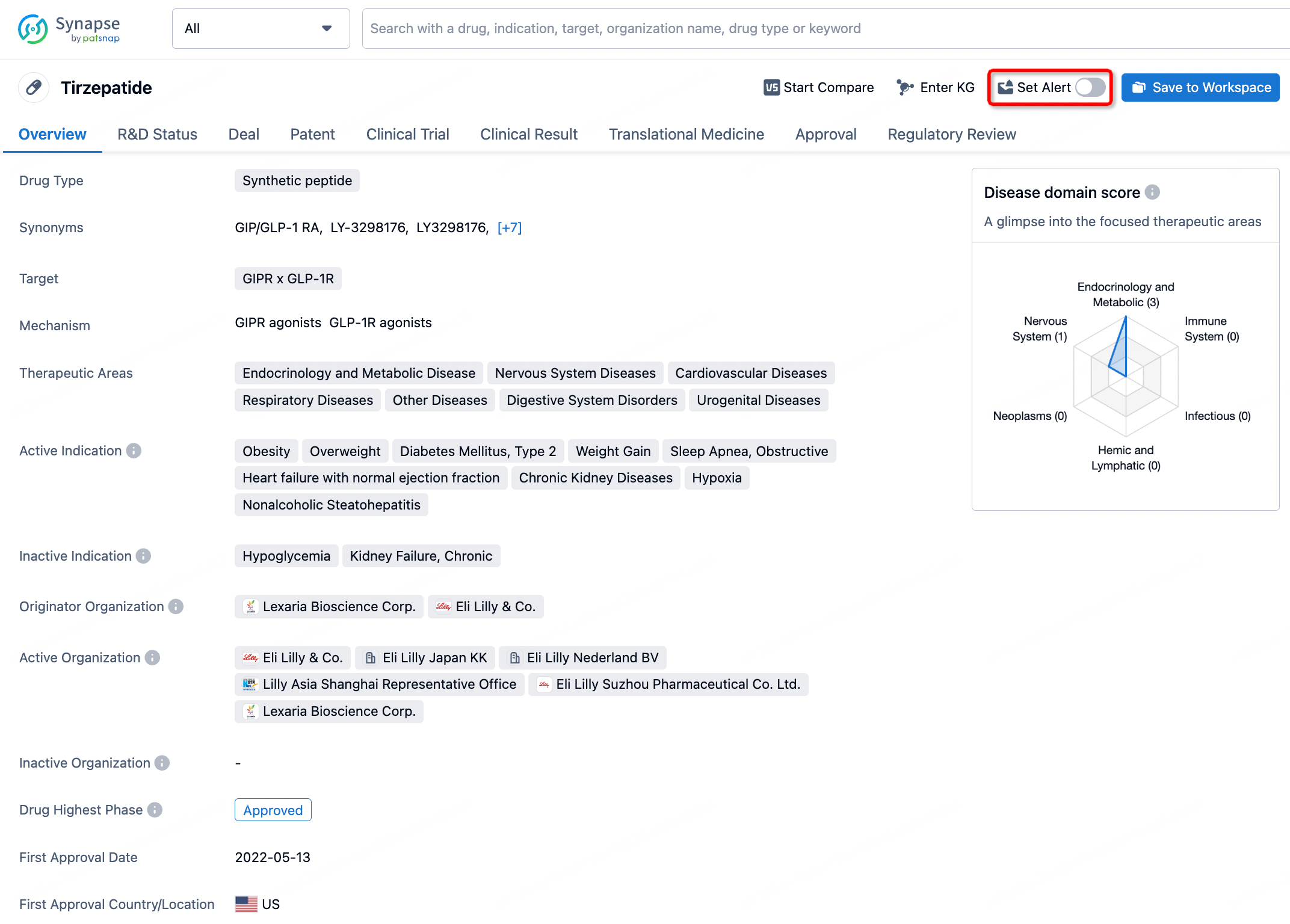
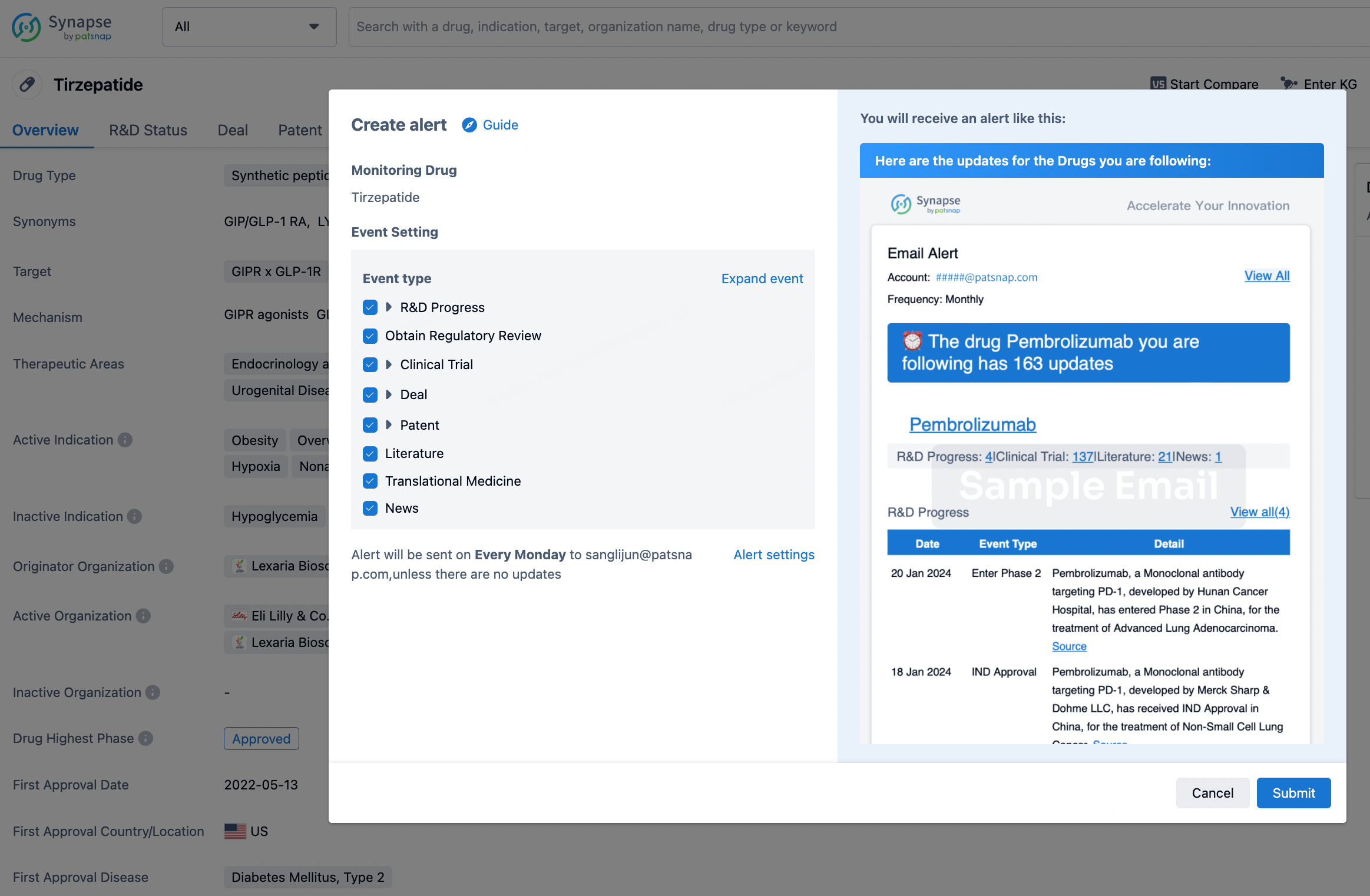
In the Synapse database, you can stay updated on the latest research and development advances of all drugs. This service is accessible anytime and anywhere, with updates available daily or weekly. Use the "Set Alert" function to stay informed. Click on the image below to embark on a brand new journey of drug discovery!
AI Agents Built for Biopharma Breakthroughs
Accelerate discovery. Empower decisions. Transform outcomes.
Get started for free today!
Accelerate Strategic R&D decision making with Synapse, PatSnap’s AI-powered Connected Innovation Intelligence Platform Built for Life Sciences Professionals.
Start your data trial now!
Synapse data is also accessible to external entities via APIs or data packages. Empower better decisions with the latest in pharmaceutical intelligence.