Request Demo
What are the side effects of Gadoterate Meglumine?
12 July 2024
Gadoterate meglumine is a gadolinium-based contrast agent (GBCA) commonly used in magnetic resonance imaging (MRI) to enhance the visibility of internal body structures. While it is generally considered safe and effective, like all medical substances, it can have side effects. Understanding these side effects is crucial for both patients and healthcare providers to ensure the safe use of Gadoterate meglumine.
One of the most common side effects of gadoterate meglumine is a mild headache. This is usually temporary and resolves on its own without the need for medical intervention. Some patients may also experience dizziness or a sensation of lightheadedness shortly after the administration of the contrast agent. These symptoms are typically short-lived, but it is advisable to inform your healthcare provider if they persist or worsen.
Another frequent side effect is nausea. Although not severe, it can be uncomfortable. Vomiting is less common, but it can occur. Patients are usually advised to stay well-hydrated before and after the MRI procedure to minimize these gastrointestinal symptoms.
Injection site reactions are also relatively common. These can include pain, swelling, or redness at the site where the contrast agent was injected. Most of these reactions are mild and resolve without treatment. However, in rare cases, more severe skin reactions, such as rashes or itching, may develop.
Allergic reactions to gadoterate meglumine are rare but can occur. These reactions can range from mild to severe. Mild allergic reactions may involve skin rashes, itching, or hives. In more severe cases, patients might experience difficulty breathing, swelling of the face or throat, or anaphylactic shock. Immediate medical attention is required if any signs of a severe allergic reaction occur.
Nephrogenic systemic fibrosis (NSF) is a very rare but serious side effect associated with gadolinium-based contrast agents, including gadoterate meglumine. NSF is a condition that affects the skin, muscles, and internal organs, causing thickening and hardening of the tissues. Patients with severe kidney problems are at a higher risk of developing NSF. Therefore, it is crucial to assess kidney function before administering gadoterate meglumine, especially in patients with a history of kidney disease.
Long-term side effects of gadoterate meglumine are still a subject of ongoing research. Recent studies have raised concerns about the potential for gadolinium retention in the body, particularly in the brain, even years after the administration of the contrast agent. Although the clinical implications of gadolinium retention are not yet fully understood, it has prompted the FDA and other regulatory bodies to issue guidelines to minimize unnecessary use of gadolinium-based contrast agents.
In conclusion, while gadoterate meglumine is generally safe and effective for enhancing MRI images, it is not without potential side effects. Common side effects like headache, dizziness, and nausea are usually mild and transient. Injection site reactions and mild allergic responses can occur but are typically manageable. Severe allergic reactions and rare conditions like nephrogenic systemic fibrosis require immediate medical attention. Ongoing research into the long-term effects of gadolinium retention underscores the importance of using this contrast agent judiciously, particularly in vulnerable populations. Always consult your healthcare provider for a comprehensive risk assessment tailored to your specific medical condition before undergoing any procedure involving gadoterate meglumine.
One of the most common side effects of gadoterate meglumine is a mild headache. This is usually temporary and resolves on its own without the need for medical intervention. Some patients may also experience dizziness or a sensation of lightheadedness shortly after the administration of the contrast agent. These symptoms are typically short-lived, but it is advisable to inform your healthcare provider if they persist or worsen.
Another frequent side effect is nausea. Although not severe, it can be uncomfortable. Vomiting is less common, but it can occur. Patients are usually advised to stay well-hydrated before and after the MRI procedure to minimize these gastrointestinal symptoms.
Injection site reactions are also relatively common. These can include pain, swelling, or redness at the site where the contrast agent was injected. Most of these reactions are mild and resolve without treatment. However, in rare cases, more severe skin reactions, such as rashes or itching, may develop.
Allergic reactions to gadoterate meglumine are rare but can occur. These reactions can range from mild to severe. Mild allergic reactions may involve skin rashes, itching, or hives. In more severe cases, patients might experience difficulty breathing, swelling of the face or throat, or anaphylactic shock. Immediate medical attention is required if any signs of a severe allergic reaction occur.
Nephrogenic systemic fibrosis (NSF) is a very rare but serious side effect associated with gadolinium-based contrast agents, including gadoterate meglumine. NSF is a condition that affects the skin, muscles, and internal organs, causing thickening and hardening of the tissues. Patients with severe kidney problems are at a higher risk of developing NSF. Therefore, it is crucial to assess kidney function before administering gadoterate meglumine, especially in patients with a history of kidney disease.
Long-term side effects of gadoterate meglumine are still a subject of ongoing research. Recent studies have raised concerns about the potential for gadolinium retention in the body, particularly in the brain, even years after the administration of the contrast agent. Although the clinical implications of gadolinium retention are not yet fully understood, it has prompted the FDA and other regulatory bodies to issue guidelines to minimize unnecessary use of gadolinium-based contrast agents.
In conclusion, while gadoterate meglumine is generally safe and effective for enhancing MRI images, it is not without potential side effects. Common side effects like headache, dizziness, and nausea are usually mild and transient. Injection site reactions and mild allergic responses can occur but are typically manageable. Severe allergic reactions and rare conditions like nephrogenic systemic fibrosis require immediate medical attention. Ongoing research into the long-term effects of gadolinium retention underscores the importance of using this contrast agent judiciously, particularly in vulnerable populations. Always consult your healthcare provider for a comprehensive risk assessment tailored to your specific medical condition before undergoing any procedure involving gadoterate meglumine.
How to obtain the latest development progress of all drugs?
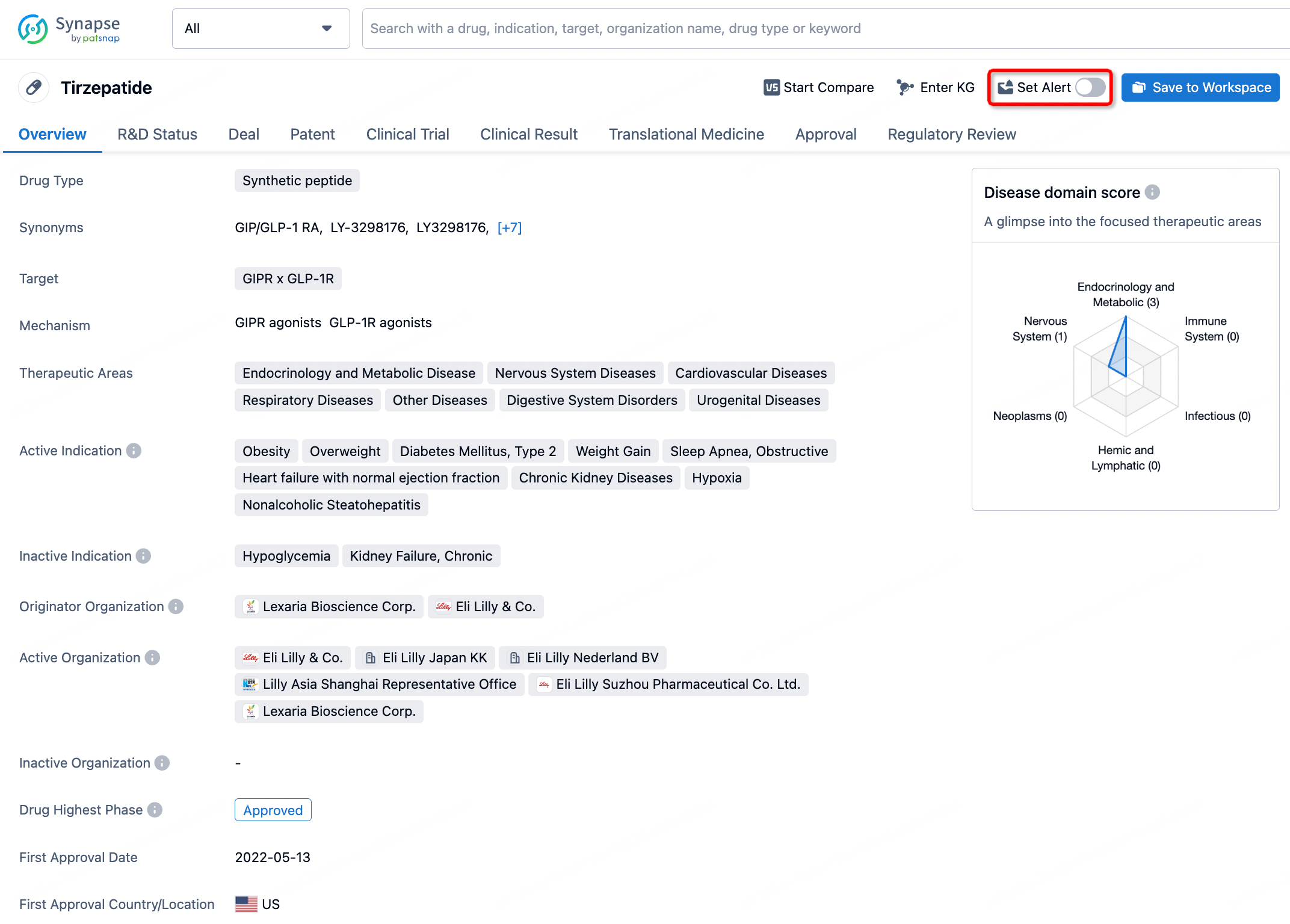
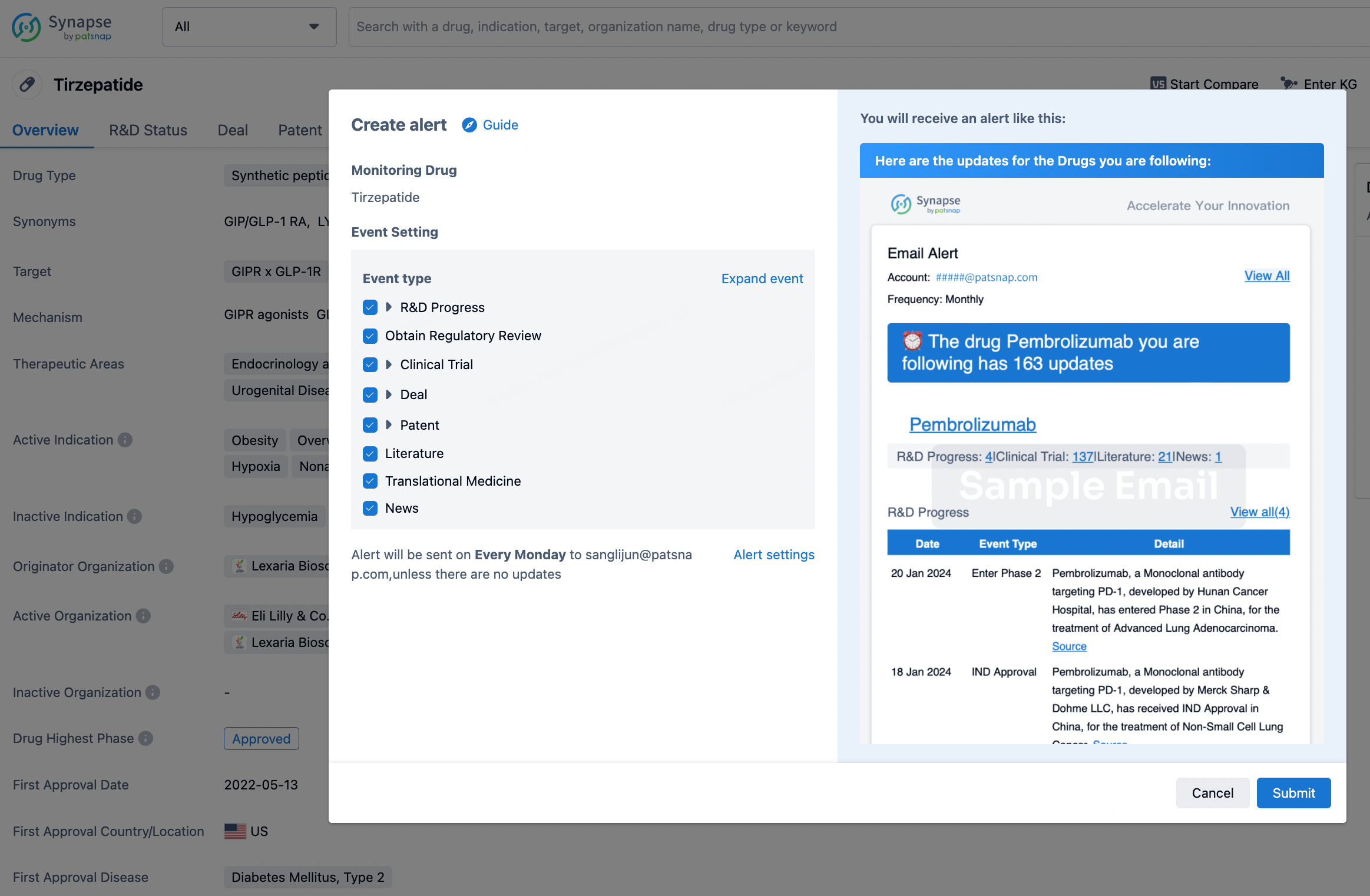
In the Synapse database, you can stay updated on the latest research and development advances of all drugs. This service is accessible anytime and anywhere, with updates available daily or weekly. Use the "Set Alert" function to stay informed. Click on the image below to embark on a brand new journey of drug discovery!

AI Agents Built for Biopharma Breakthroughs
Accelerate discovery. Empower decisions. Transform outcomes.
Get started for free today!
Accelerate Strategic R&D decision making with Synapse, PatSnap’s AI-powered Connected Innovation Intelligence Platform Built for Life Sciences Professionals.
Start your data trial now!
Synapse data is also accessible to external entities via APIs or data packages. Empower better decisions with the latest in pharmaceutical intelligence.