Request Demo
What are the side effects of Glibornuride?
13 July 2024
Glibornuride is an oral antidiabetic agent belonging to the sulfonylurea class, used to manage blood sugar levels in individuals with type 2 diabetes. While it is effective in controlling hyperglycemia, it is important to be aware of its potential side effects. Understanding these side effects can help patients and healthcare providers to monitor and manage them appropriately.
One of the primary side effects of Glibornuride is hypoglycemia, or low blood sugar. Hypoglycemia can manifest as symptoms such as dizziness, sweating, confusion, headache, hunger, irritability, and, in severe cases, loss of consciousness or seizures. This side effect is particularly concerning for patients who may not recognize the early signs of low blood sugar.
Gastrointestinal issues are also relatively common with Glibornuride. Patients might experience nausea, vomiting, stomach pain, and diarrhea. These symptoms are usually mild and may subside as the body adjusts to the medication, but persistent or severe gastrointestinal discomfort should be reported to a healthcare provider.
Allergic reactions, though rare, can occur with Glibornuride. Signs of an allergic reaction include rash, itching, swelling (especially of the face, tongue, and throat), severe dizziness, and difficulty breathing. Immediate medical attention is required if any of these symptoms are observed.
Weight gain is another potential side effect associated with Glibornuride. This is a common issue with sulfonylureas due to their mechanism of increasing insulin release, which can lead to an increase in appetite and subsequent weight gain. Patients should be mindful of their diet and exercise routines to mitigate this effect.
Some patients might experience hematologic issues such as anemia, leukopenia (a reduction in white blood cells), or thrombocytopenia (a reduction in platelets). These conditions can lead to symptoms like fatigue, increased susceptibility to infections, and easy bruising or bleeding. Regular blood tests are often recommended to monitor for these potential issues.
Liver function abnormalities can also occur with the use of Glibornuride. Elevated liver enzymes indicative of liver stress or damage may be detected in blood tests. In rare cases, jaundice (yellowing of the skin or eyes) can occur, indicating more serious liver issues. It is crucial to monitor liver function periodically while on this medication.
Glibornuride can also impact cardiovascular health. Some studies suggest that sulfonylureas may increase the risk of cardiovascular events such as heart attacks or strokes. Patients with a history of cardiovascular disease should discuss the risks and benefits of this medication with their healthcare provider.
Finally, while less common, there are reports of dermatological side effects such as photosensitivity reactions, where the skin becomes more sensitive to sunlight, potentially leading to sunburns or rashes even with minimal sun exposure. Patients are advised to use sun protection when outdoors.
In conclusion, while Glibornuride is effective for managing type 2 diabetes, it is associated with several potential side effects ranging from hypoglycemia and gastrointestinal discomfort to more serious issues like allergic reactions, hematologic abnormalities, liver dysfunction, cardiovascular risks, and dermatological reactions. Regular monitoring and communication with a healthcare provider can help manage these side effects effectively, ensuring that the benefits of the medication outweigh the risks for each individual patient.
One of the primary side effects of Glibornuride is hypoglycemia, or low blood sugar. Hypoglycemia can manifest as symptoms such as dizziness, sweating, confusion, headache, hunger, irritability, and, in severe cases, loss of consciousness or seizures. This side effect is particularly concerning for patients who may not recognize the early signs of low blood sugar.
Gastrointestinal issues are also relatively common with Glibornuride. Patients might experience nausea, vomiting, stomach pain, and diarrhea. These symptoms are usually mild and may subside as the body adjusts to the medication, but persistent or severe gastrointestinal discomfort should be reported to a healthcare provider.
Allergic reactions, though rare, can occur with Glibornuride. Signs of an allergic reaction include rash, itching, swelling (especially of the face, tongue, and throat), severe dizziness, and difficulty breathing. Immediate medical attention is required if any of these symptoms are observed.
Weight gain is another potential side effect associated with Glibornuride. This is a common issue with sulfonylureas due to their mechanism of increasing insulin release, which can lead to an increase in appetite and subsequent weight gain. Patients should be mindful of their diet and exercise routines to mitigate this effect.
Some patients might experience hematologic issues such as anemia, leukopenia (a reduction in white blood cells), or thrombocytopenia (a reduction in platelets). These conditions can lead to symptoms like fatigue, increased susceptibility to infections, and easy bruising or bleeding. Regular blood tests are often recommended to monitor for these potential issues.
Liver function abnormalities can also occur with the use of Glibornuride. Elevated liver enzymes indicative of liver stress or damage may be detected in blood tests. In rare cases, jaundice (yellowing of the skin or eyes) can occur, indicating more serious liver issues. It is crucial to monitor liver function periodically while on this medication.
Glibornuride can also impact cardiovascular health. Some studies suggest that sulfonylureas may increase the risk of cardiovascular events such as heart attacks or strokes. Patients with a history of cardiovascular disease should discuss the risks and benefits of this medication with their healthcare provider.
Finally, while less common, there are reports of dermatological side effects such as photosensitivity reactions, where the skin becomes more sensitive to sunlight, potentially leading to sunburns or rashes even with minimal sun exposure. Patients are advised to use sun protection when outdoors.
In conclusion, while Glibornuride is effective for managing type 2 diabetes, it is associated with several potential side effects ranging from hypoglycemia and gastrointestinal discomfort to more serious issues like allergic reactions, hematologic abnormalities, liver dysfunction, cardiovascular risks, and dermatological reactions. Regular monitoring and communication with a healthcare provider can help manage these side effects effectively, ensuring that the benefits of the medication outweigh the risks for each individual patient.
How to obtain the latest development progress of all drugs?
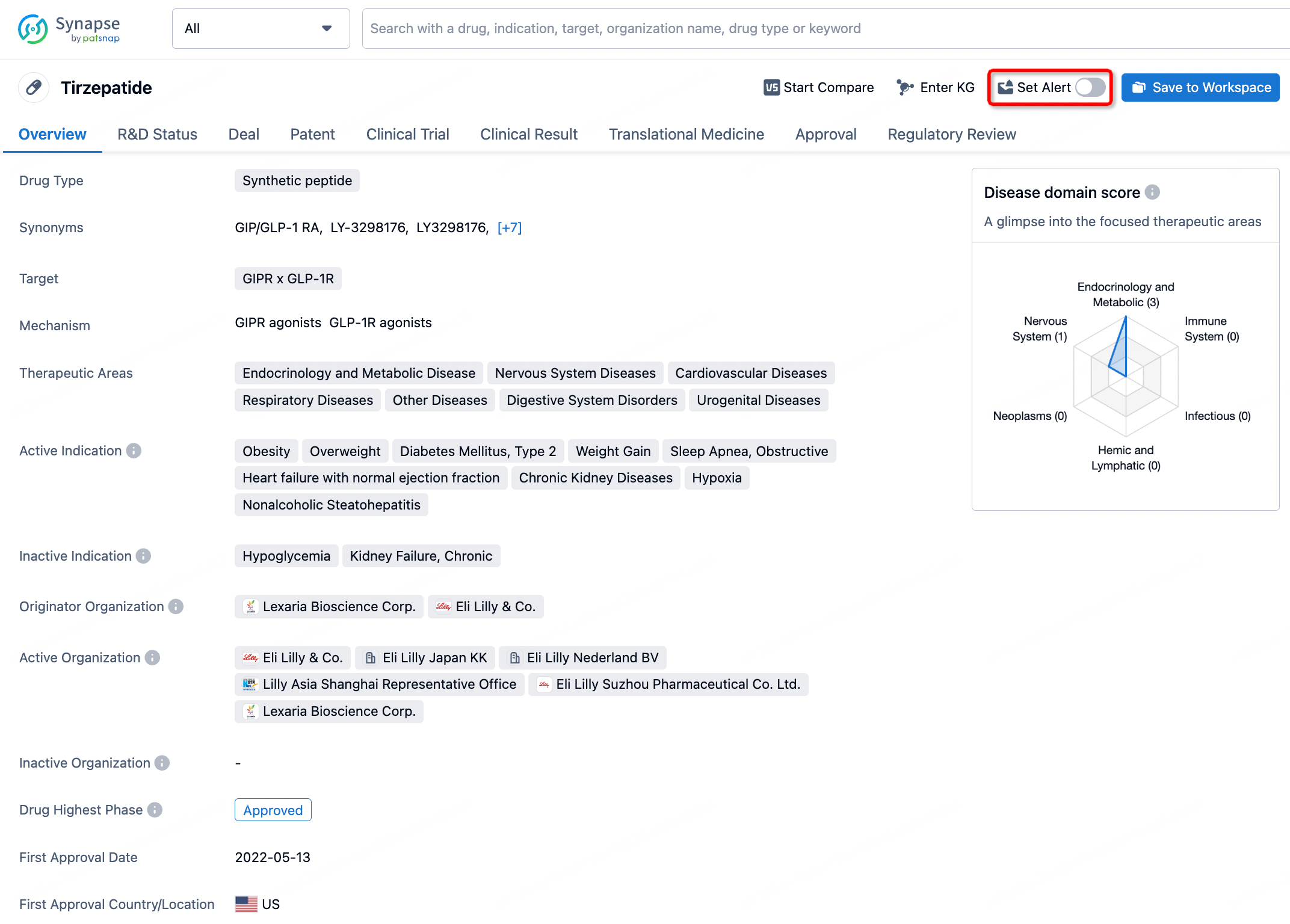
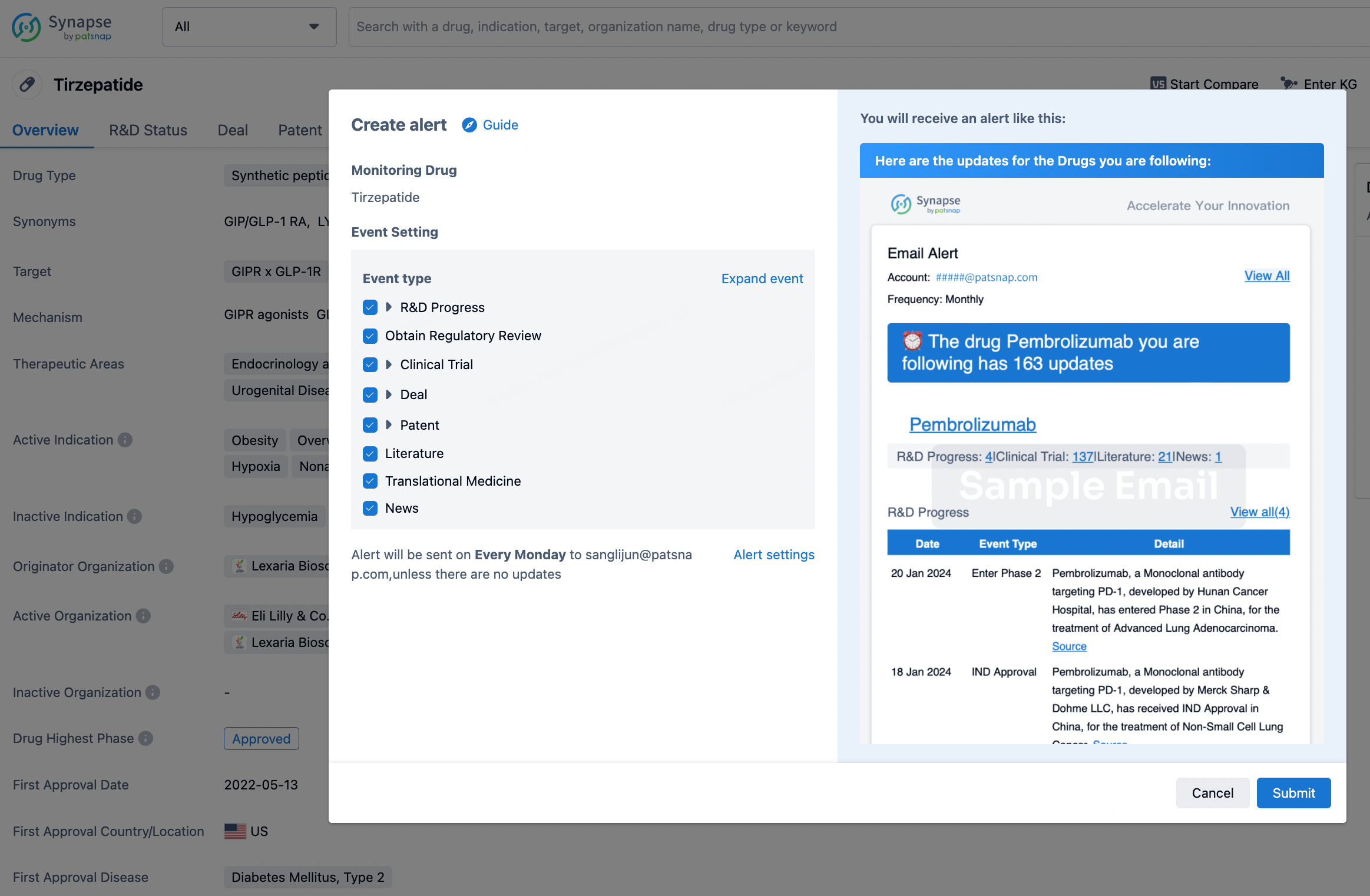
In the Synapse database, you can stay updated on the latest research and development advances of all drugs. This service is accessible anytime and anywhere, with updates available daily or weekly. Use the "Set Alert" function to stay informed. Click on the image below to embark on a brand new journey of drug discovery!

AI Agents Built for Biopharma Breakthroughs
Accelerate discovery. Empower decisions. Transform outcomes.
Get started for free today!
Accelerate Strategic R&D decision making with Synapse, PatSnap’s AI-powered Connected Innovation Intelligence Platform Built for Life Sciences Professionals.
Start your data trial now!
Synapse data is also accessible to external entities via APIs or data packages. Empower better decisions with the latest in pharmaceutical intelligence.