Request Demo
What are the side effects of Ibritumomab Tiuxetan?
12 July 2024
Ibritumomab tiuxetan, a radioimmunotherapy drug, is primarily used in the treatment of certain types of non-Hodgkin lymphoma (NHL). Like any potent medication, it is essential to understand the potential side effects associated with its use. This knowledge is crucial for both patients and healthcare providers to manage and mitigate any adverse reactions effectively.
One of the most common side effects of ibritumomab tiuxetan is a reduction in blood cell counts, a condition known as cytopenia. This includes a decrease in white blood cells (neutropenia), red blood cells (anemia), and platelets (thrombocytopenia). Neutropenia can increase the risk of infections, anemia may cause fatigue and weakness, and thrombocytopenia can lead to easy bruising and bleeding. These effects are typically monitored through regular blood tests, and dose adjustments or supportive treatments like transfusions may be employed to manage severe cases.
Another significant side effect is the potential for infusion-related reactions. These reactions can occur during or shortly after the administration of the drug and may include symptoms such as fever, chills, rash, low blood pressure, and shortness of breath. Premedication with antihistamines and corticosteroids is often used to reduce the likelihood of these reactions. Patients are closely monitored during the infusion process to promptly address any adverse symptoms.
Gastrointestinal issues are also reported among patients receiving ibritumomab tiuxetan. These can include nausea, vomiting, diarrhea, and abdominal pain. These symptoms can usually be managed with standard anti-nausea medications and dietary adjustments, but severe cases may require more intensive interventions.
Patients may also experience fatigue, which can be a direct side effect of the drug or a consequence of anemia. This fatigue can range from mild to severe and can significantly impact the patient's quality of life. It is important for patients to communicate their levels of fatigue to their healthcare providers, who can offer strategies to help manage this symptom.
In some cases, ibritumomab tiuxetan can cause liver toxicity, which is observed through elevated liver enzymes in blood tests. Regular monitoring of liver function is essential, and any significant abnormalities may necessitate a reduction in dosage or discontinuation of the treatment.
There is also a risk of developing secondary malignancies, such as leukemia or myelodysplastic syndrome, following treatment with ibritumomab tiuxetan. Although this is a relatively rare side effect, it underscores the importance of long-term follow-up and vigilance for any new symptoms or changes in health status.
Furthermore, some patients may experience mild to moderate allergic reactions, including itching, rash, or swelling at the injection site. These reactions are typically manageable with antihistamines and corticosteroids.
Lastly, it is worth noting that ibritumomab tiuxetan, being a radiopharmaceutical, carries a risk of radiation exposure to patients and healthcare providers. Proper handling and administration protocols are crucial to minimize exposure and ensure safety.
In conclusion, while ibritumomab tiuxetan offers significant therapeutic benefits for patients with certain types of non-Hodgkin lymphoma, it is associated with a range of potential side effects, from blood cell count reductions and infusion reactions to gastrointestinal issues and fatigue. Close monitoring, proactive management strategies, and comprehensive patient education are essential components in optimizing the safety and efficacy of this treatment. Consulting with healthcare providers to understand and manage these side effects can help improve the overall treatment experience and outcomes for patients.
One of the most common side effects of ibritumomab tiuxetan is a reduction in blood cell counts, a condition known as cytopenia. This includes a decrease in white blood cells (neutropenia), red blood cells (anemia), and platelets (thrombocytopenia). Neutropenia can increase the risk of infections, anemia may cause fatigue and weakness, and thrombocytopenia can lead to easy bruising and bleeding. These effects are typically monitored through regular blood tests, and dose adjustments or supportive treatments like transfusions may be employed to manage severe cases.
Another significant side effect is the potential for infusion-related reactions. These reactions can occur during or shortly after the administration of the drug and may include symptoms such as fever, chills, rash, low blood pressure, and shortness of breath. Premedication with antihistamines and corticosteroids is often used to reduce the likelihood of these reactions. Patients are closely monitored during the infusion process to promptly address any adverse symptoms.
Gastrointestinal issues are also reported among patients receiving ibritumomab tiuxetan. These can include nausea, vomiting, diarrhea, and abdominal pain. These symptoms can usually be managed with standard anti-nausea medications and dietary adjustments, but severe cases may require more intensive interventions.
Patients may also experience fatigue, which can be a direct side effect of the drug or a consequence of anemia. This fatigue can range from mild to severe and can significantly impact the patient's quality of life. It is important for patients to communicate their levels of fatigue to their healthcare providers, who can offer strategies to help manage this symptom.
In some cases, ibritumomab tiuxetan can cause liver toxicity, which is observed through elevated liver enzymes in blood tests. Regular monitoring of liver function is essential, and any significant abnormalities may necessitate a reduction in dosage or discontinuation of the treatment.
There is also a risk of developing secondary malignancies, such as leukemia or myelodysplastic syndrome, following treatment with ibritumomab tiuxetan. Although this is a relatively rare side effect, it underscores the importance of long-term follow-up and vigilance for any new symptoms or changes in health status.
Furthermore, some patients may experience mild to moderate allergic reactions, including itching, rash, or swelling at the injection site. These reactions are typically manageable with antihistamines and corticosteroids.
Lastly, it is worth noting that ibritumomab tiuxetan, being a radiopharmaceutical, carries a risk of radiation exposure to patients and healthcare providers. Proper handling and administration protocols are crucial to minimize exposure and ensure safety.
In conclusion, while ibritumomab tiuxetan offers significant therapeutic benefits for patients with certain types of non-Hodgkin lymphoma, it is associated with a range of potential side effects, from blood cell count reductions and infusion reactions to gastrointestinal issues and fatigue. Close monitoring, proactive management strategies, and comprehensive patient education are essential components in optimizing the safety and efficacy of this treatment. Consulting with healthcare providers to understand and manage these side effects can help improve the overall treatment experience and outcomes for patients.
How to obtain the latest development progress of all drugs?
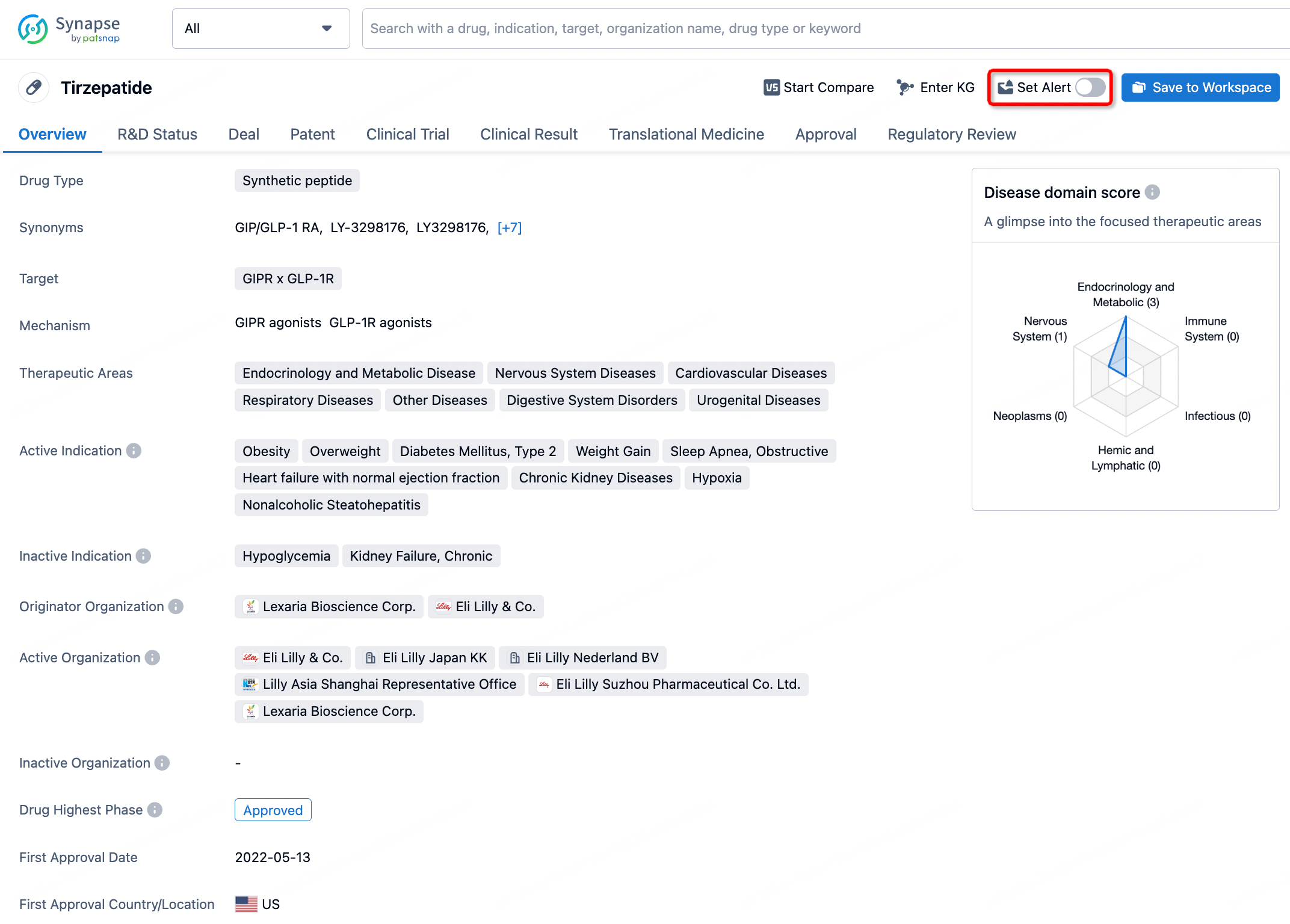
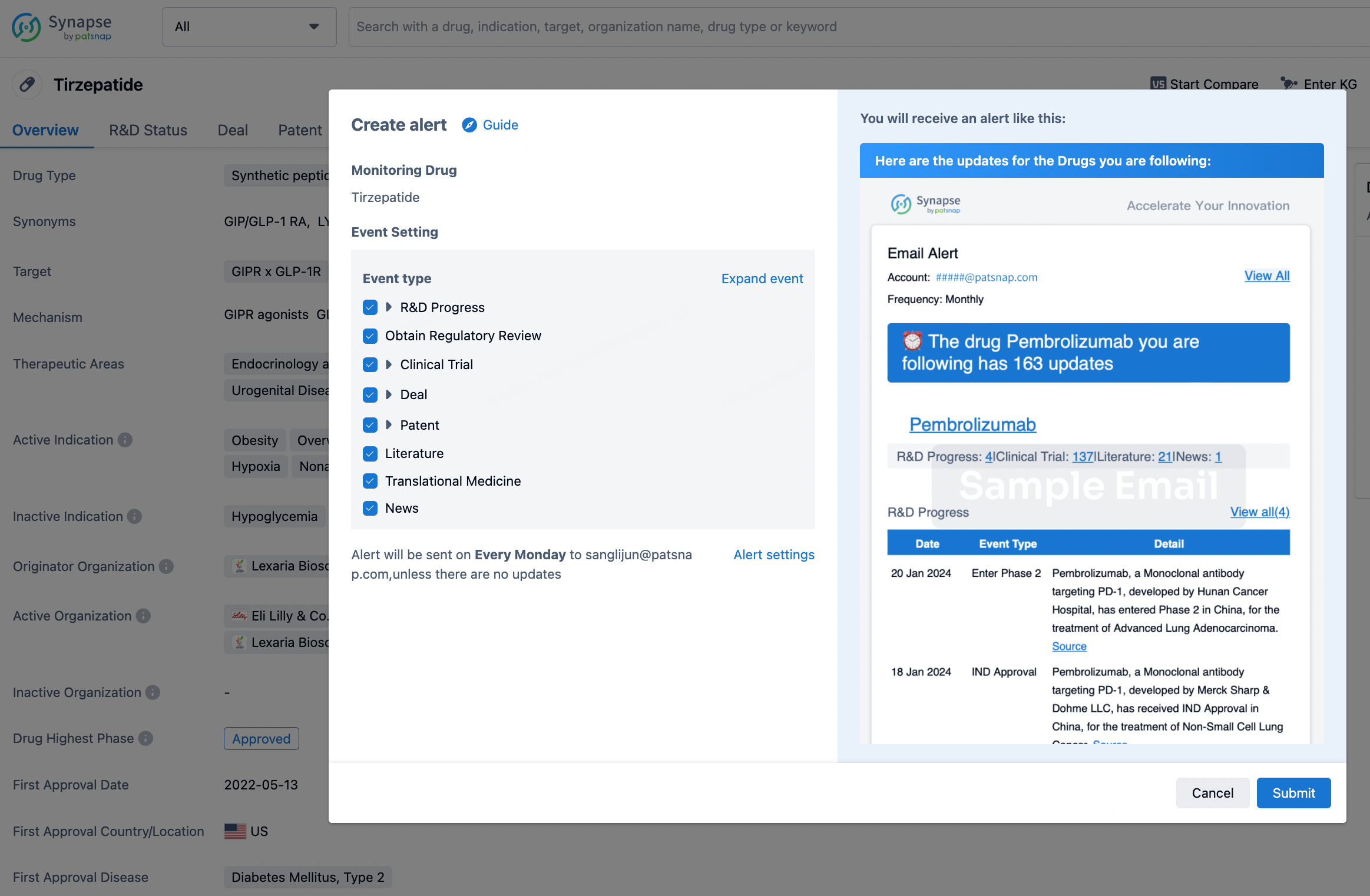
In the Synapse database, you can stay updated on the latest research and development advances of all drugs. This service is accessible anytime and anywhere, with updates available daily or weekly. Use the "Set Alert" function to stay informed. Click on the image below to embark on a brand new journey of drug discovery!
AI Agents Built for Biopharma Breakthroughs
Accelerate discovery. Empower decisions. Transform outcomes.
Get started for free today!
Accelerate Strategic R&D decision making with Synapse, PatSnap’s AI-powered Connected Innovation Intelligence Platform Built for Life Sciences Professionals.
Start your data trial now!
Synapse data is also accessible to external entities via APIs or data packages. Empower better decisions with the latest in pharmaceutical intelligence.