Request Demo
What are the side effects of Moxalactam Disodium?
12 July 2024
Moxalactam Disodium is a type of antibiotic that belongs to the cephalosporin class. It is used to treat a variety of bacterial infections by inhibiting cell wall synthesis, which is crucial for bacterial survival. While Moxalactam Disodium can be effective in combating infections, it is important to be aware of its potential side effects. Understanding these can help both patients and healthcare providers manage and mitigate risks associated with its use.
One of the most common side effects associated with Moxalactam Disodium is gastrointestinal discomfort. Patients often report symptoms such as nausea, vomiting, and diarrhea. These symptoms can range from mild to severe, depending on the individual's reaction to the medication. In some cases, alterations in the normal gut flora can lead to a condition known as antibiotic-associated colitis, which can be particularly distressing and may require additional treatment.
Another frequent side effect involves hypersensitivity reactions. As with many antibiotics, allergic reactions to Moxalactam Disodium can occur. These reactions can manifest as skin rashes, itching, or more severe forms like urticaria (hives) and anaphylaxis, which is a life-threatening condition that requires immediate medical attention. Patients with a known allergy to penicillin or other cephalosporins should inform their healthcare provider, as cross-reactivity can occur.
Moxalactam Disodium can also have hematologic side effects. These may include eosinophilia, thrombocytopenia, and leukopenia, which refer to the increase or decrease in particular types of blood cells. While these changes are usually reversible upon discontinuation of the drug, they can pose significant risks if not monitored properly. In rare cases, the drug may cause hemolytic anemia, a condition where red blood cells are destroyed faster than they can be produced.
Renal and hepatic side effects are also noteworthy. Moxalactam Disodium can cause an elevation in blood urea nitrogen (BUN) and serum creatinine levels, indicating potential kidney dysfunction. In severe cases, acute renal failure may occur. Liver function tests may also show elevated levels of transaminases, which could indicate liver stress or damage. Therefore, regular monitoring of kidney and liver function is advisable for patients on this medication.
Another important aspect to consider is neurotoxicity. Though rare, Moxalactam Disodium can cause central nervous system side effects, including headache, dizziness, and seizures. Patients with pre-existing central nervous system disorders or those taking high doses are at a higher risk. It is crucial to report any unusual neurological symptoms to a healthcare provider immediately.
Localized reactions at the injection site can also be troublesome for some patients. Pain, swelling, and redness at the site of intravenous or intramuscular injection are commonly reported. While these reactions are generally mild and self-limiting, they can be uncomfortable and may require symptomatic treatment.
In conclusion, while Moxalactam Disodium is an effective antibiotic for treating various bacterial infections, it is not without its side effects. Gastrointestinal discomfort, hypersensitivity reactions, hematologic changes, renal and hepatic dysfunctions, neurotoxicity, and localized injection site reactions are among the potential adverse effects. Awareness and early detection of these side effects can help in managing them more effectively. Always consult a healthcare provider for personalized advice and regular monitoring to ensure the safe use of Moxalactam Disodium.
One of the most common side effects associated with Moxalactam Disodium is gastrointestinal discomfort. Patients often report symptoms such as nausea, vomiting, and diarrhea. These symptoms can range from mild to severe, depending on the individual's reaction to the medication. In some cases, alterations in the normal gut flora can lead to a condition known as antibiotic-associated colitis, which can be particularly distressing and may require additional treatment.
Another frequent side effect involves hypersensitivity reactions. As with many antibiotics, allergic reactions to Moxalactam Disodium can occur. These reactions can manifest as skin rashes, itching, or more severe forms like urticaria (hives) and anaphylaxis, which is a life-threatening condition that requires immediate medical attention. Patients with a known allergy to penicillin or other cephalosporins should inform their healthcare provider, as cross-reactivity can occur.
Moxalactam Disodium can also have hematologic side effects. These may include eosinophilia, thrombocytopenia, and leukopenia, which refer to the increase or decrease in particular types of blood cells. While these changes are usually reversible upon discontinuation of the drug, they can pose significant risks if not monitored properly. In rare cases, the drug may cause hemolytic anemia, a condition where red blood cells are destroyed faster than they can be produced.
Renal and hepatic side effects are also noteworthy. Moxalactam Disodium can cause an elevation in blood urea nitrogen (BUN) and serum creatinine levels, indicating potential kidney dysfunction. In severe cases, acute renal failure may occur. Liver function tests may also show elevated levels of transaminases, which could indicate liver stress or damage. Therefore, regular monitoring of kidney and liver function is advisable for patients on this medication.
Another important aspect to consider is neurotoxicity. Though rare, Moxalactam Disodium can cause central nervous system side effects, including headache, dizziness, and seizures. Patients with pre-existing central nervous system disorders or those taking high doses are at a higher risk. It is crucial to report any unusual neurological symptoms to a healthcare provider immediately.
Localized reactions at the injection site can also be troublesome for some patients. Pain, swelling, and redness at the site of intravenous or intramuscular injection are commonly reported. While these reactions are generally mild and self-limiting, they can be uncomfortable and may require symptomatic treatment.
In conclusion, while Moxalactam Disodium is an effective antibiotic for treating various bacterial infections, it is not without its side effects. Gastrointestinal discomfort, hypersensitivity reactions, hematologic changes, renal and hepatic dysfunctions, neurotoxicity, and localized injection site reactions are among the potential adverse effects. Awareness and early detection of these side effects can help in managing them more effectively. Always consult a healthcare provider for personalized advice and regular monitoring to ensure the safe use of Moxalactam Disodium.
How to obtain the latest development progress of all drugs?
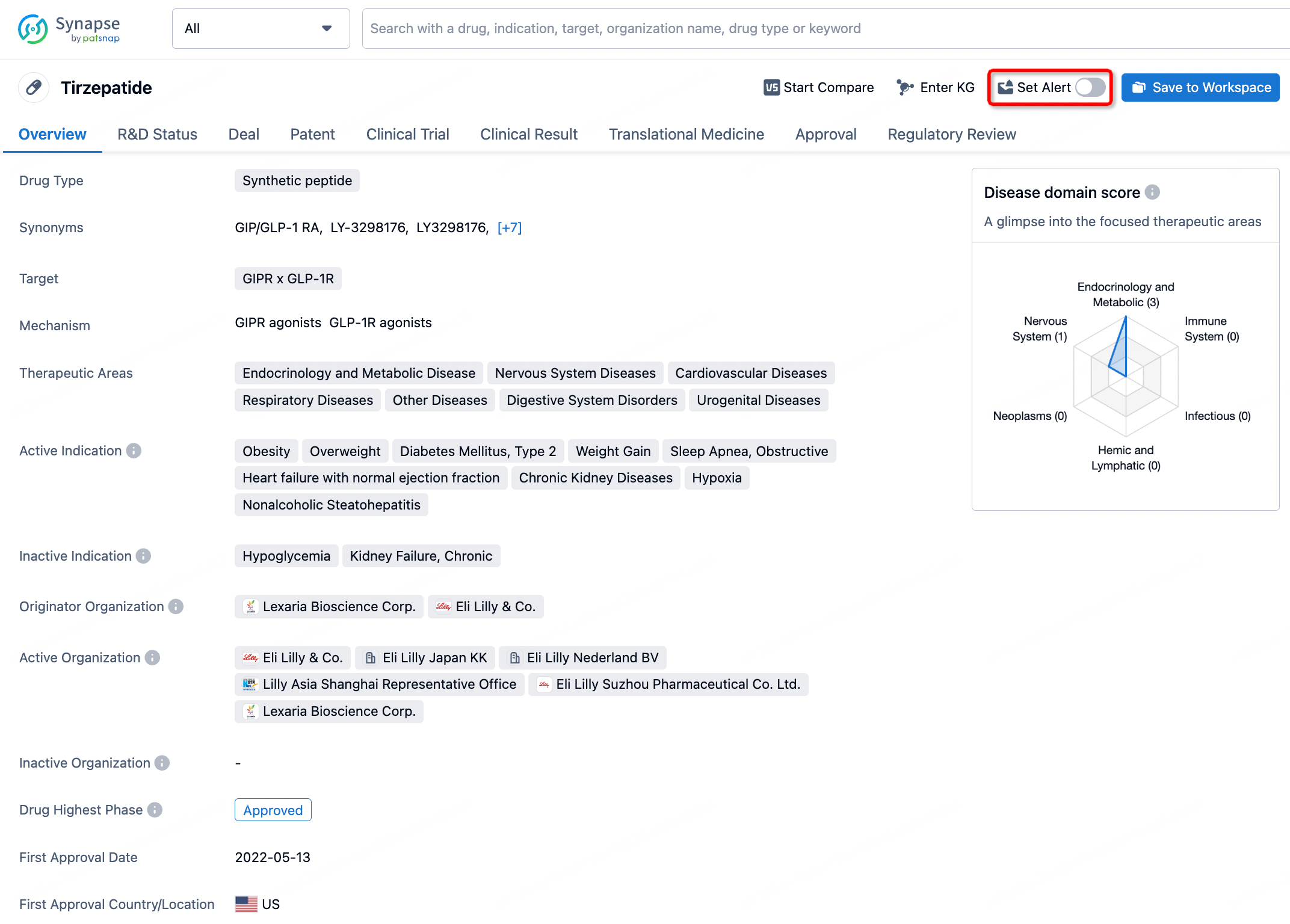
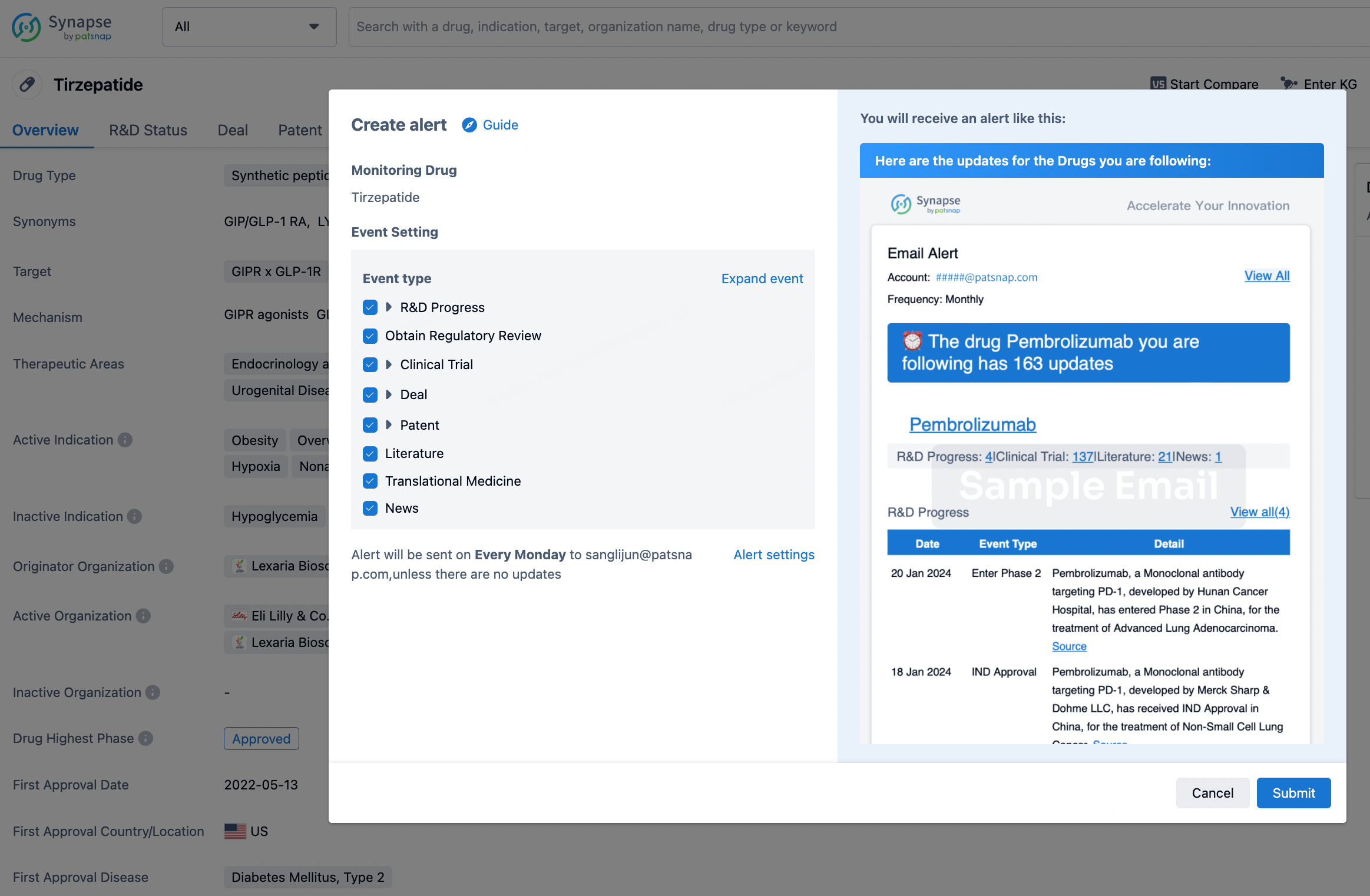
In the Synapse database, you can stay updated on the latest research and development advances of all drugs. This service is accessible anytime and anywhere, with updates available daily or weekly. Use the "Set Alert" function to stay informed. Click on the image below to embark on a brand new journey of drug discovery!

AI Agents Built for Biopharma Breakthroughs
Accelerate discovery. Empower decisions. Transform outcomes.
Get started for free today!
Accelerate Strategic R&D decision making with Synapse, PatSnap’s AI-powered Connected Innovation Intelligence Platform Built for Life Sciences Professionals.
Start your data trial now!
Synapse data is also accessible to external entities via APIs or data packages. Empower better decisions with the latest in pharmaceutical intelligence.