Request Demo
What are the side effects of Nicomol?
12 July 2024
Nicomol, a pharmaceutical compound often prescribed for specific health conditions, can be highly effective in managing the issues for which it is indicated. However, like any medication, it is important to be aware of its potential side effects. Understanding these possible adverse effects helps patients and healthcare providers make informed decisions about its use.
One of the most common side effects associated with Nicomol is gastrointestinal discomfort. Patients may experience symptoms such as nausea, vomiting, or abdominal pain. These issues are typically mild but can be distressing for some individuals, especially if they persist.
In addition to gastrointestinal issues, some users of Nicomol report experiencing headaches. The severity of these headaches can vary, ranging from mild to moderate. While not common, these headaches can sometimes be intense enough to interfere with daily activities.
Dizziness is another frequently reported side effect. This sensation can make individuals feel unsteady or lightheaded and may lead to concerns about balance and the risk of falls. It is advisable for patients experiencing dizziness to avoid activities that require full alertness, such as driving or operating heavy machinery, until they understand how the medication affects them.
Allergic reactions, though rare, are possible with any medication, including Nicomol. Signs of an allergic reaction might include rash, itching, swelling, severe dizziness, and trouble breathing. If any of these symptoms occur, it is imperative to seek immediate medical attention.
Some patients might experience cardiovascular side effects. These could manifest as palpitations or an irregular heartbeat. While these symptoms can be unsettling, they are typically rare. However, any new or worsening cardiovascular symptoms should be promptly discussed with a healthcare provider.
Another potential side effect is changes in blood pressure. Nicomol can sometimes cause either an increase or decrease in blood pressure, which may need to be monitored by a healthcare professional, especially in patients with pre-existing blood pressure conditions.
In rare cases, more serious side effects can occur. These might include liver toxicity, which can be indicated by symptoms such as yellowing of the skin or eyes (jaundice), dark urine, or persistent nausea and vomiting. Blood disorders are also a rare but serious concern, with symptoms such as easy bruising or bleeding, or signs of infection (fever, persistent sore throat) indicating a need for urgent medical evaluation.
Finally, some individuals might experience mental or mood changes while taking Nicomol. Symptoms such as confusion, depression, or anxiety should be reported to a healthcare provider, as they might indicate the need for an adjustment in medication or additional support.
In conclusion, while Nicomol can be a highly beneficial treatment for many patients, being aware of its potential side effects is crucial. Patients should always communicate openly with their healthcare providers about any new or worsening symptoms to manage their health effectively while on Nicomol.
One of the most common side effects associated with Nicomol is gastrointestinal discomfort. Patients may experience symptoms such as nausea, vomiting, or abdominal pain. These issues are typically mild but can be distressing for some individuals, especially if they persist.
In addition to gastrointestinal issues, some users of Nicomol report experiencing headaches. The severity of these headaches can vary, ranging from mild to moderate. While not common, these headaches can sometimes be intense enough to interfere with daily activities.
Dizziness is another frequently reported side effect. This sensation can make individuals feel unsteady or lightheaded and may lead to concerns about balance and the risk of falls. It is advisable for patients experiencing dizziness to avoid activities that require full alertness, such as driving or operating heavy machinery, until they understand how the medication affects them.
Allergic reactions, though rare, are possible with any medication, including Nicomol. Signs of an allergic reaction might include rash, itching, swelling, severe dizziness, and trouble breathing. If any of these symptoms occur, it is imperative to seek immediate medical attention.
Some patients might experience cardiovascular side effects. These could manifest as palpitations or an irregular heartbeat. While these symptoms can be unsettling, they are typically rare. However, any new or worsening cardiovascular symptoms should be promptly discussed with a healthcare provider.
Another potential side effect is changes in blood pressure. Nicomol can sometimes cause either an increase or decrease in blood pressure, which may need to be monitored by a healthcare professional, especially in patients with pre-existing blood pressure conditions.
In rare cases, more serious side effects can occur. These might include liver toxicity, which can be indicated by symptoms such as yellowing of the skin or eyes (jaundice), dark urine, or persistent nausea and vomiting. Blood disorders are also a rare but serious concern, with symptoms such as easy bruising or bleeding, or signs of infection (fever, persistent sore throat) indicating a need for urgent medical evaluation.
Finally, some individuals might experience mental or mood changes while taking Nicomol. Symptoms such as confusion, depression, or anxiety should be reported to a healthcare provider, as they might indicate the need for an adjustment in medication or additional support.
In conclusion, while Nicomol can be a highly beneficial treatment for many patients, being aware of its potential side effects is crucial. Patients should always communicate openly with their healthcare providers about any new or worsening symptoms to manage their health effectively while on Nicomol.
How to obtain the latest development progress of all drugs?
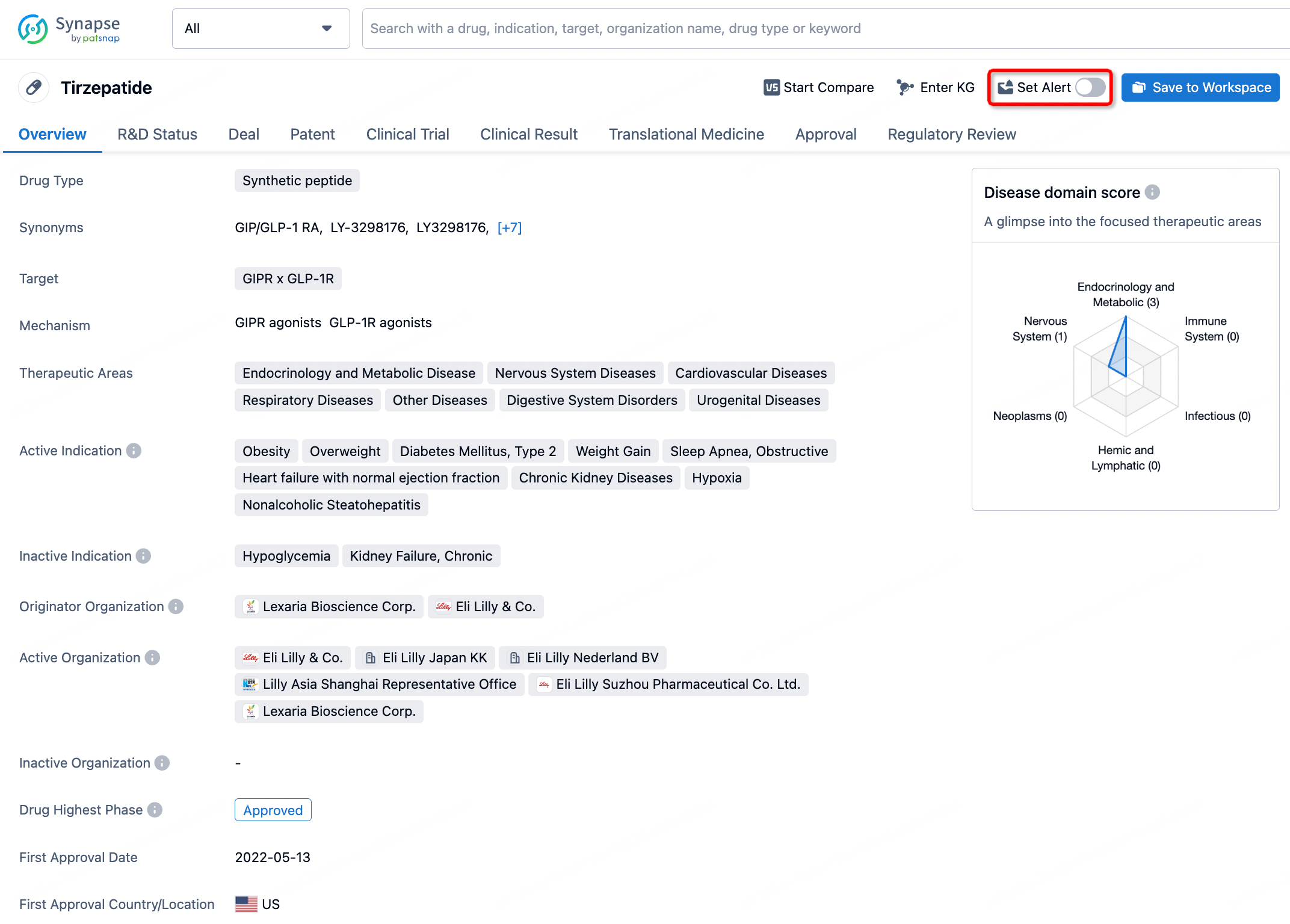
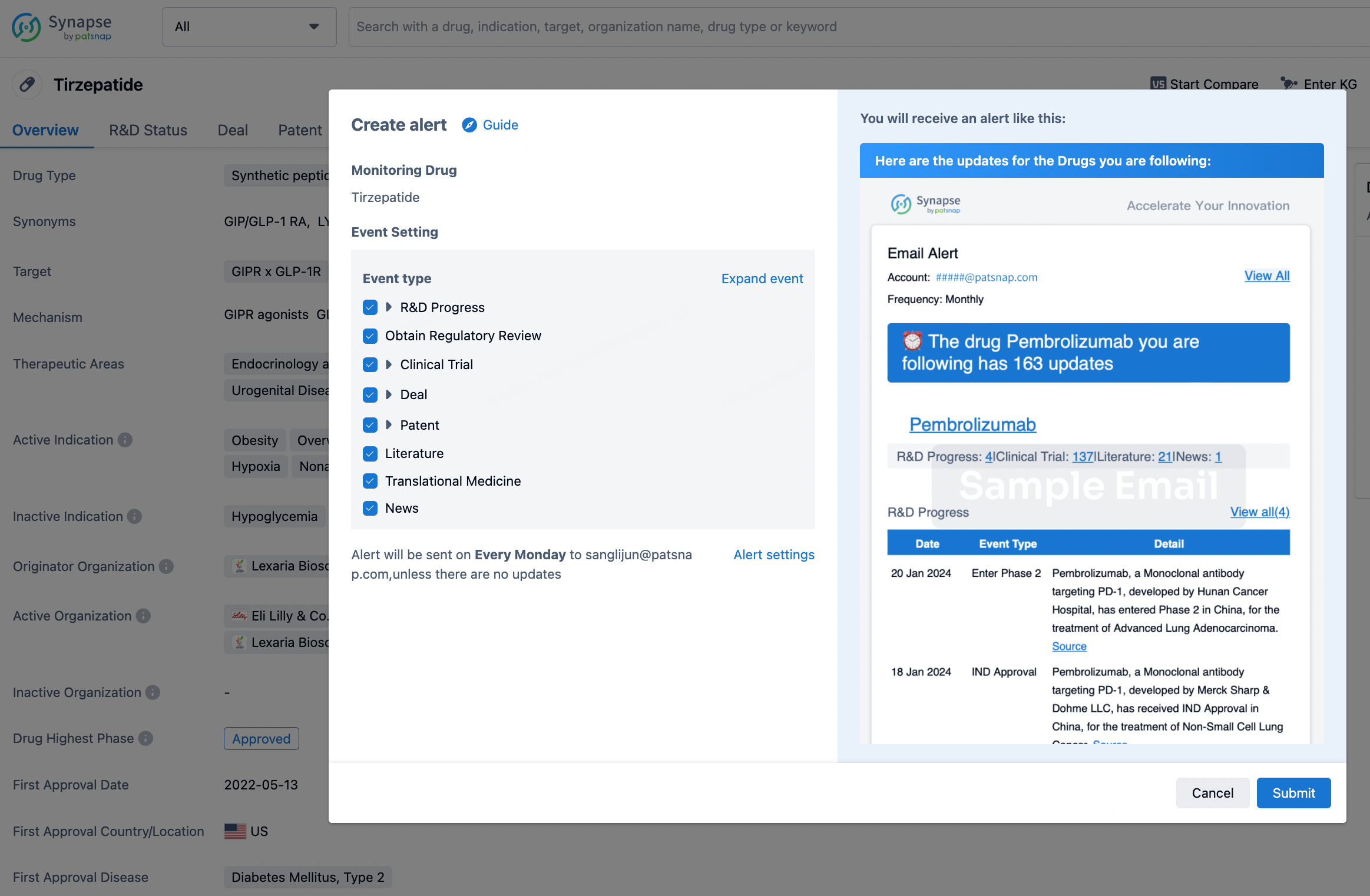
In the Synapse database, you can stay updated on the latest research and development advances of all drugs. This service is accessible anytime and anywhere, with updates available daily or weekly. Use the "Set Alert" function to stay informed. Click on the image below to embark on a brand new journey of drug discovery!

AI Agents Built for Biopharma Breakthroughs
Accelerate discovery. Empower decisions. Transform outcomes.
Get started for free today!
Accelerate Strategic R&D decision making with Synapse, PatSnap’s AI-powered Connected Innovation Intelligence Platform Built for Life Sciences Professionals.
Start your data trial now!
Synapse data is also accessible to external entities via APIs or data packages. Empower better decisions with the latest in pharmaceutical intelligence.