Request Demo
What are the side effects of Nipradilol?
12 July 2024
Nipradilol is a beta-blocker and nitric oxide donor that is primarily used in the treatment of glaucoma and ocular hypertension. It works by reducing intraocular pressure, which can help prevent damage to the optic nerve and loss of vision. Like any medication, Nipradilol may have side effects, and it is important for patients to be aware of these potential reactions to use the medication safely and effectively.
One of the most common side effects of Nipradilol involves eye discomfort. Patients may experience burning, stinging, or itching in the eyes when they first apply the drops. These sensations are usually mild and temporary but can be bothersome. If the discomfort persists or becomes severe, it is advisable to consult a healthcare provider.
Another side effect that can occur is blurred vision. This can happen immediately after the administration of Nipradilol eye drops and usually lasts for a short period. Patients should avoid driving or operating heavy machinery until their vision has cleared to prevent accidents and injuries.
Nipradilol can also lead to systemic side effects due to its beta-blocking properties. These effects are less common but can be more serious. Systemic side effects may include dizziness, fatigue, headache, and shortness of breath. In some cases, the medication can cause a decrease in heart rate or blood pressure, which could be problematic for individuals with certain cardiovascular conditions. Therefore, it is crucial to inform the healthcare provider of any pre-existing medical conditions or current medications to prevent adverse interactions.
Allergic reactions to Nipradilol are rare but possible. Symptoms of an allergic reaction may include rash, itching, swelling (especially of the face, tongue, or throat), severe dizziness, and trouble breathing. If any of these symptoms occur, it is critical to seek immediate medical attention.
In some cases, prolonged use of Nipradilol may lead to changes in eye color. This is particularly notable in individuals with lighter-colored eyes, such as blue or green. The change occurs gradually and may not be reversible even after discontinuation of the medication. Patients should be aware of this potential side effect and discuss it with their healthcare provider if they have concerns.
Additionally, Nipradilol can interact with other medications. For instance, using it alongside other beta-blockers or antiglaucoma agents can enhance the effects and side effects of both drugs. Therefore, it is essential to keep a comprehensive list of all medications and share this with the prescribing doctor.
It is also important to note that not everyone will experience side effects, and some individuals may tolerate the medication very well. However, monitoring for any adverse reactions is crucial, and any unusual symptoms should be reported to a healthcare provider promptly.
In conclusion, while Nipradilol is effective in managing glaucoma and ocular hypertension, it comes with a range of potential side effects that patients should be aware of. These include common local effects like eye discomfort and blurred vision, as well as less common but more serious systemic effects. Patients should use the medication as prescribed and maintain open communication with their healthcare provider to ensure safe and effective treatment.
One of the most common side effects of Nipradilol involves eye discomfort. Patients may experience burning, stinging, or itching in the eyes when they first apply the drops. These sensations are usually mild and temporary but can be bothersome. If the discomfort persists or becomes severe, it is advisable to consult a healthcare provider.
Another side effect that can occur is blurred vision. This can happen immediately after the administration of Nipradilol eye drops and usually lasts for a short period. Patients should avoid driving or operating heavy machinery until their vision has cleared to prevent accidents and injuries.
Nipradilol can also lead to systemic side effects due to its beta-blocking properties. These effects are less common but can be more serious. Systemic side effects may include dizziness, fatigue, headache, and shortness of breath. In some cases, the medication can cause a decrease in heart rate or blood pressure, which could be problematic for individuals with certain cardiovascular conditions. Therefore, it is crucial to inform the healthcare provider of any pre-existing medical conditions or current medications to prevent adverse interactions.
Allergic reactions to Nipradilol are rare but possible. Symptoms of an allergic reaction may include rash, itching, swelling (especially of the face, tongue, or throat), severe dizziness, and trouble breathing. If any of these symptoms occur, it is critical to seek immediate medical attention.
In some cases, prolonged use of Nipradilol may lead to changes in eye color. This is particularly notable in individuals with lighter-colored eyes, such as blue or green. The change occurs gradually and may not be reversible even after discontinuation of the medication. Patients should be aware of this potential side effect and discuss it with their healthcare provider if they have concerns.
Additionally, Nipradilol can interact with other medications. For instance, using it alongside other beta-blockers or antiglaucoma agents can enhance the effects and side effects of both drugs. Therefore, it is essential to keep a comprehensive list of all medications and share this with the prescribing doctor.
It is also important to note that not everyone will experience side effects, and some individuals may tolerate the medication very well. However, monitoring for any adverse reactions is crucial, and any unusual symptoms should be reported to a healthcare provider promptly.
In conclusion, while Nipradilol is effective in managing glaucoma and ocular hypertension, it comes with a range of potential side effects that patients should be aware of. These include common local effects like eye discomfort and blurred vision, as well as less common but more serious systemic effects. Patients should use the medication as prescribed and maintain open communication with their healthcare provider to ensure safe and effective treatment.
How to obtain the latest development progress of all drugs?
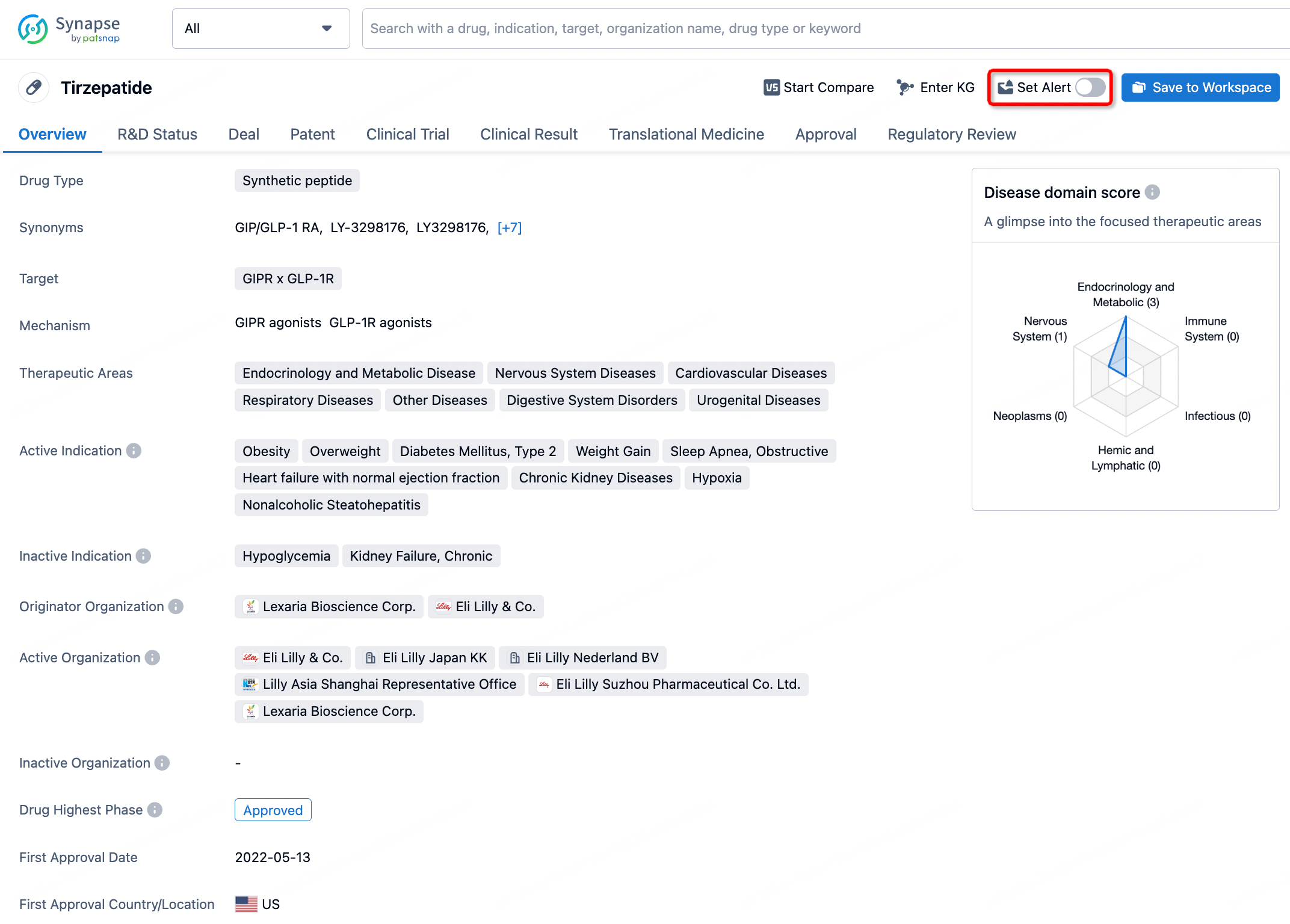
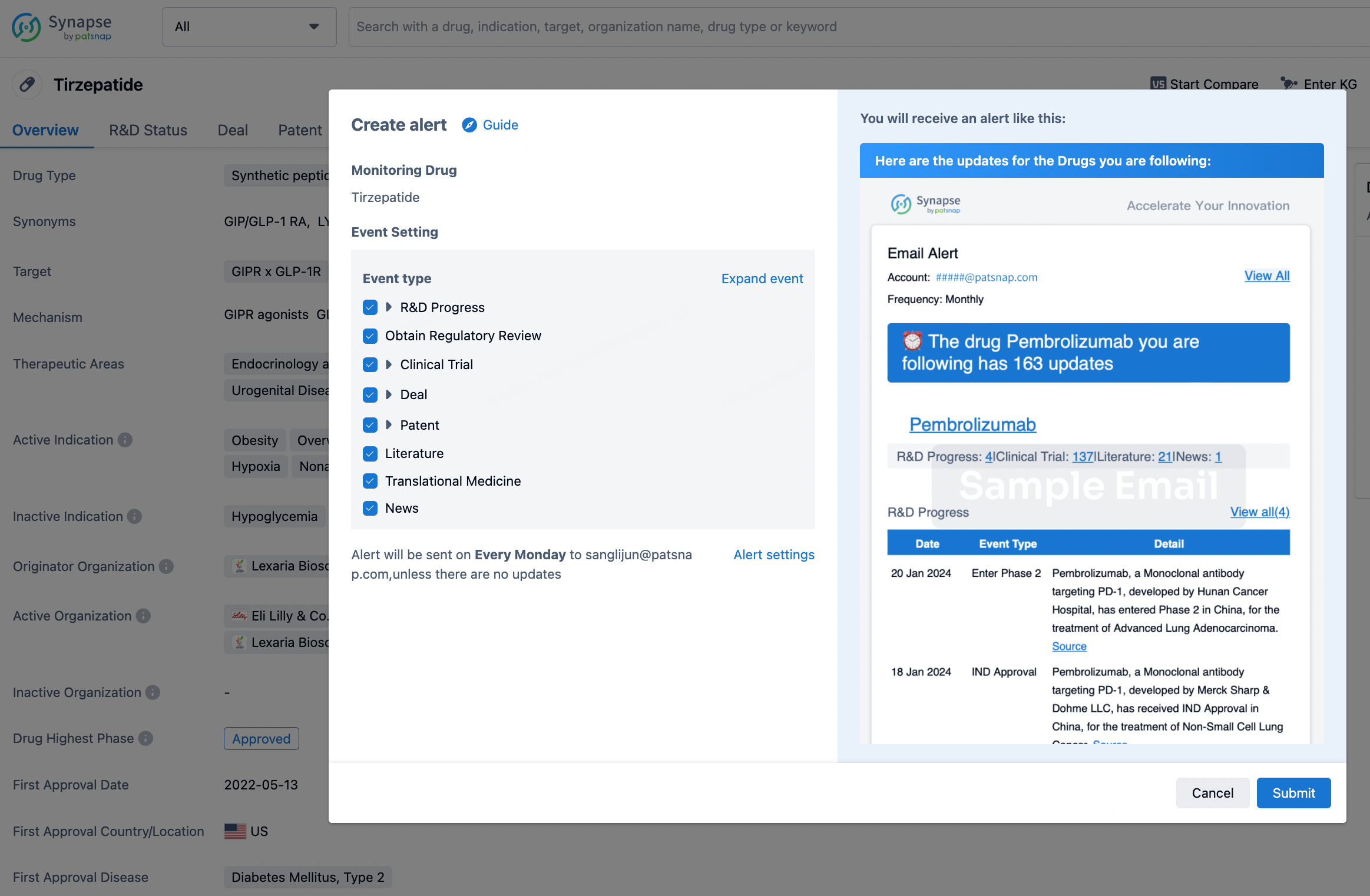
In the Synapse database, you can stay updated on the latest research and development advances of all drugs. This service is accessible anytime and anywhere, with updates available daily or weekly. Use the "Set Alert" function to stay informed. Click on the image below to embark on a brand new journey of drug discovery!

AI Agents Built for Biopharma Breakthroughs
Accelerate discovery. Empower decisions. Transform outcomes.
Get started for free today!
Accelerate Strategic R&D decision making with Synapse, PatSnap’s AI-powered Connected Innovation Intelligence Platform Built for Life Sciences Professionals.
Start your data trial now!
Synapse data is also accessible to external entities via APIs or data packages. Empower better decisions with the latest in pharmaceutical intelligence.