Request Demo
What are the side effects of Progabide?
15 July 2024
Progabide is a pharmaceutical drug primarily used as an anticonvulsant in the treatment of various kinds of epilepsy. It works by modulating the neurotransmitter GABA (gamma-aminobutyric acid), which helps in stabilizing neuronal activity in the brain. While Progabide can be effective in managing seizure disorders, it is essential to be aware of its potential side effects. Understanding these side effects can help in making informed decisions about its use.
One of the most common side effects of Progabide is drowsiness. Since the drug acts on the central nervous system, it can induce a sedative effect, making individuals feel unusually sleepy or lethargic. This drowsiness can interfere with daily activities and may pose a risk when engaging in tasks that require alertness, such as driving or operating heavy machinery.
Another frequently reported side effect is dizziness. Patients may experience a sensation of spinning or unsteadiness, which can be particularly problematic when standing up or walking. This dizziness is often related to the drug's impact on the brain's equilibrium centers, and it may take some time for the body to adjust to this effect.
Gastrointestinal issues are also noted among Progabide users. These can include nausea, vomiting, and abdominal discomfort. These symptoms are generally mild to moderate and can often be managed with adjustments in diet or the timing of the medication. In some cases, taking Progabide with food can help alleviate these gastrointestinal side effects.
Additionally, some patients may experience psychological side effects such as mood swings, irritability, or anxiety. These emotional changes could be due to the drug's influence on brain chemistry. It is crucial to monitor any significant shifts in mood or behavior and report them to a healthcare provider, as they may necessitate adjustments in the medication regimen.
A less common but more severe side effect of Progabide is hepatotoxicity, or liver damage. Signs of liver problems include jaundice (yellowing of the skin or eyes), dark urine, severe fatigue, and abdominal pain. Regular monitoring of liver function through blood tests is often recommended for patients on long-term Progabide therapy to catch any potential issues early.
Some individuals may also experience allergic reactions to Progabide, which can manifest as skin rashes, itching, or swelling, especially of the face, lips, or throat. An allergic reaction can be serious and may require immediate medical attention. Therefore, it is important to be vigilant for signs of an allergic response when starting the medication.
Another possible side effect involves changes in blood cell counts. Progabide can sometimes lead to a reduction in white blood cells, red blood cells, or platelets, which can compromise the immune system, cause anemia, or increase the risk of bleeding and bruising. Regular blood tests are usually conducted to monitor these parameters during treatment.
In summary, while Progabide can be an effective treatment for epilepsy, it is not without its potential side effects. Common issues like drowsiness, dizziness, and gastrointestinal discomfort are often manageable and may lessen over time as the body adjusts to the medication. However, more serious side effects such as hepatotoxicity, allergic reactions, and changes in blood cell counts require careful monitoring and prompt medical attention. As with any medication, the benefits and risks should be thoroughly discussed with a healthcare provider to ensure the best possible outcome for the patient.
One of the most common side effects of Progabide is drowsiness. Since the drug acts on the central nervous system, it can induce a sedative effect, making individuals feel unusually sleepy or lethargic. This drowsiness can interfere with daily activities and may pose a risk when engaging in tasks that require alertness, such as driving or operating heavy machinery.
Another frequently reported side effect is dizziness. Patients may experience a sensation of spinning or unsteadiness, which can be particularly problematic when standing up or walking. This dizziness is often related to the drug's impact on the brain's equilibrium centers, and it may take some time for the body to adjust to this effect.
Gastrointestinal issues are also noted among Progabide users. These can include nausea, vomiting, and abdominal discomfort. These symptoms are generally mild to moderate and can often be managed with adjustments in diet or the timing of the medication. In some cases, taking Progabide with food can help alleviate these gastrointestinal side effects.
Additionally, some patients may experience psychological side effects such as mood swings, irritability, or anxiety. These emotional changes could be due to the drug's influence on brain chemistry. It is crucial to monitor any significant shifts in mood or behavior and report them to a healthcare provider, as they may necessitate adjustments in the medication regimen.
A less common but more severe side effect of Progabide is hepatotoxicity, or liver damage. Signs of liver problems include jaundice (yellowing of the skin or eyes), dark urine, severe fatigue, and abdominal pain. Regular monitoring of liver function through blood tests is often recommended for patients on long-term Progabide therapy to catch any potential issues early.
Some individuals may also experience allergic reactions to Progabide, which can manifest as skin rashes, itching, or swelling, especially of the face, lips, or throat. An allergic reaction can be serious and may require immediate medical attention. Therefore, it is important to be vigilant for signs of an allergic response when starting the medication.
Another possible side effect involves changes in blood cell counts. Progabide can sometimes lead to a reduction in white blood cells, red blood cells, or platelets, which can compromise the immune system, cause anemia, or increase the risk of bleeding and bruising. Regular blood tests are usually conducted to monitor these parameters during treatment.
In summary, while Progabide can be an effective treatment for epilepsy, it is not without its potential side effects. Common issues like drowsiness, dizziness, and gastrointestinal discomfort are often manageable and may lessen over time as the body adjusts to the medication. However, more serious side effects such as hepatotoxicity, allergic reactions, and changes in blood cell counts require careful monitoring and prompt medical attention. As with any medication, the benefits and risks should be thoroughly discussed with a healthcare provider to ensure the best possible outcome for the patient.
How to obtain the latest development progress of all drugs?
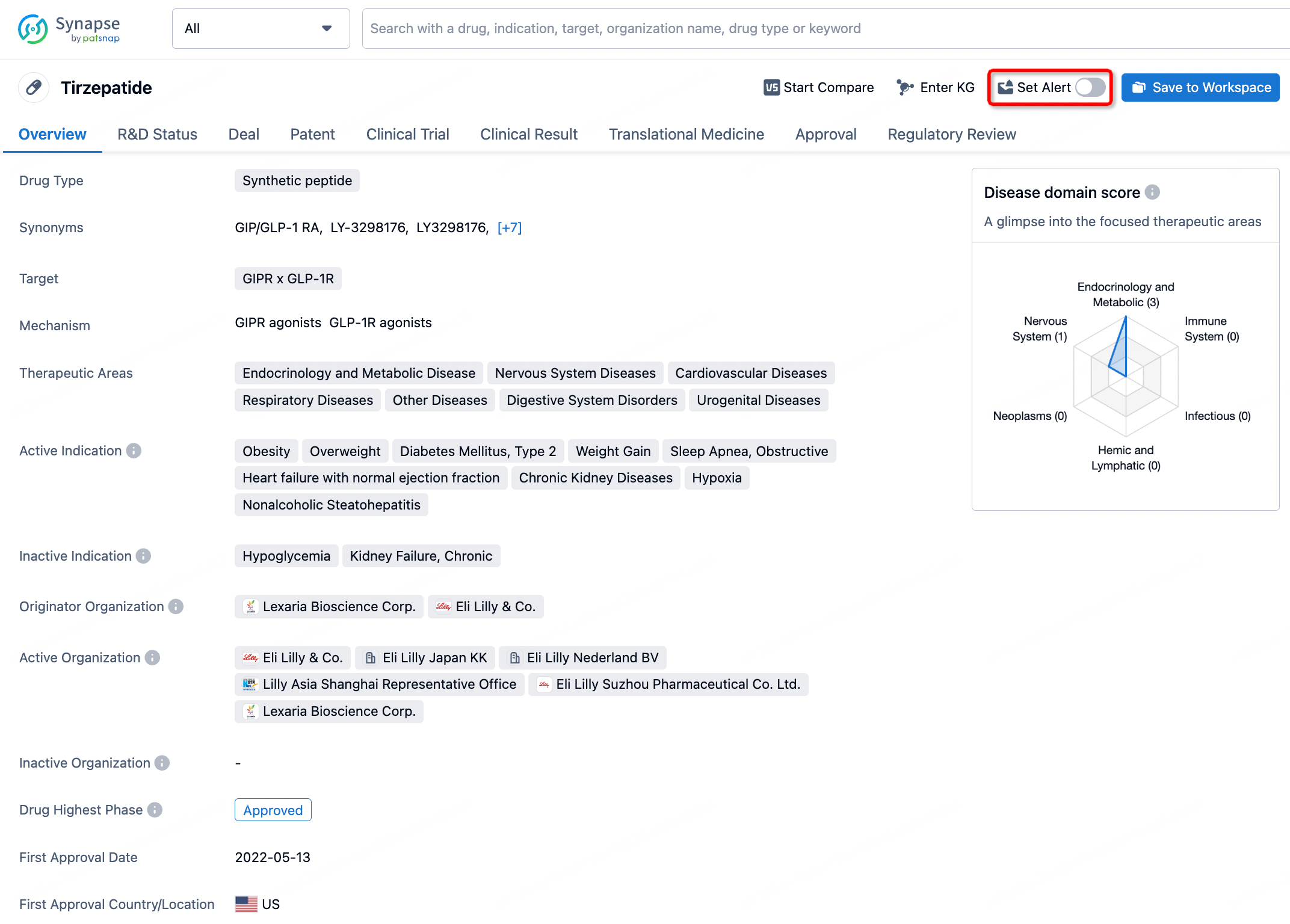
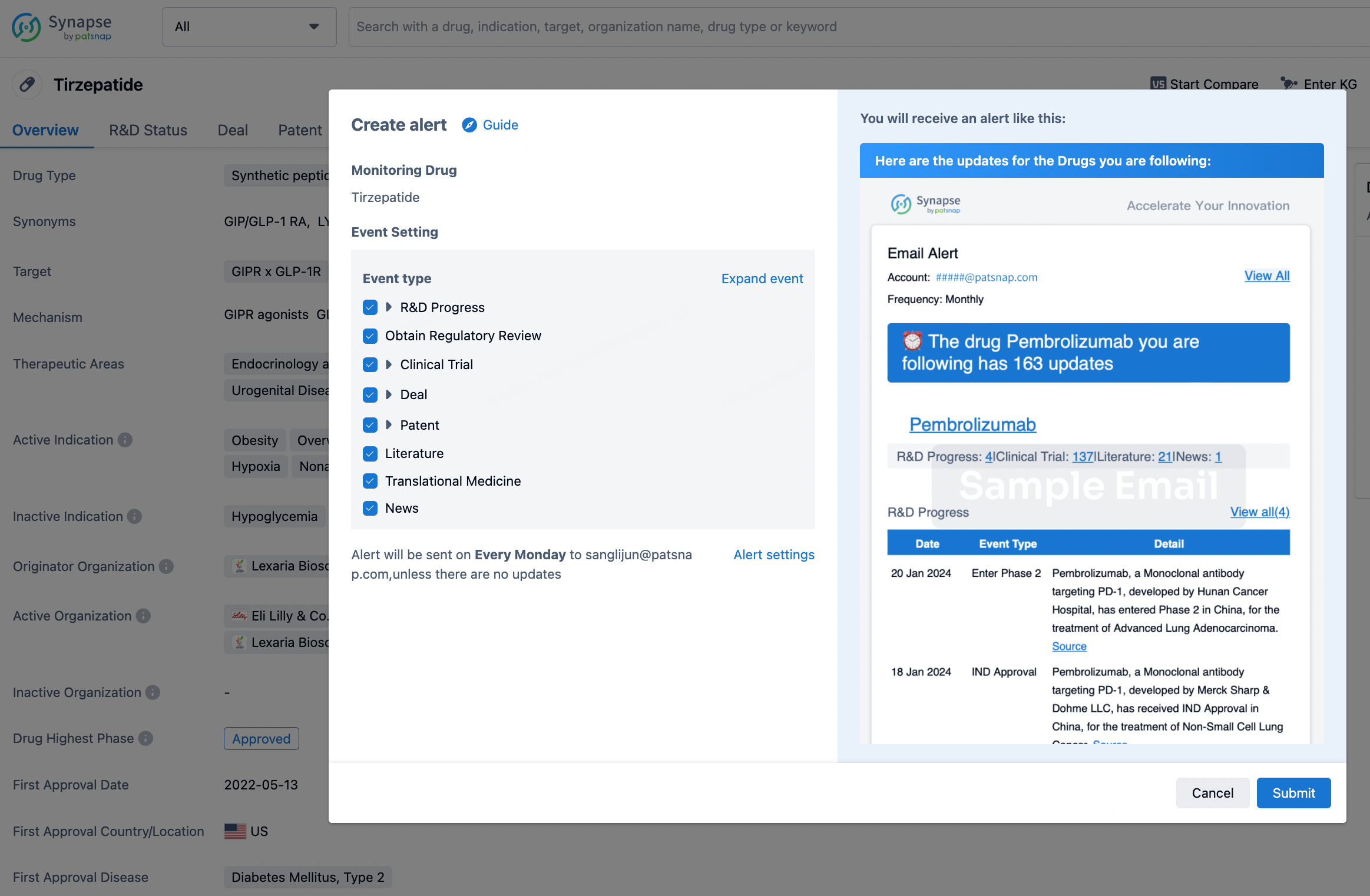
In the Synapse database, you can stay updated on the latest research and development advances of all drugs. This service is accessible anytime and anywhere, with updates available daily or weekly. Use the "Set Alert" function to stay informed. Click on the image below to embark on a brand new journey of drug discovery!

AI Agents Built for Biopharma Breakthroughs
Accelerate discovery. Empower decisions. Transform outcomes.
Get started for free today!
Accelerate Strategic R&D decision making with Synapse, PatSnap’s AI-powered Connected Innovation Intelligence Platform Built for Life Sciences Professionals.
Start your data trial now!
Synapse data is also accessible to external entities via APIs or data packages. Empower better decisions with the latest in pharmaceutical intelligence.