Request Demo
What are the side effects of Pronase?
12 July 2024
Pronase is a mixture of proteolytic enzymes derived from Streptomyces griseus, commonly used in various laboratory and medical procedures. While it offers significant benefits, such as aiding in the removal of proteins and improving diagnostic accuracy in certain tests, it is essential to be aware of the potential side effects that may accompany its use.
Firstly, one of the primary concerns associated with Pronase is allergic reactions. Individuals with hypersensitivity to enzymes or proteins may experience varying degrees of allergic responses. Symptoms can range from mild skin irritations, such as itching, redness, and rash, to more severe reactions like swelling, difficulty breathing, and anaphylactic shock. It is crucial for users to be vigilant and seek immediate medical attention if they exhibit signs of an allergic reaction.
Another notable side effect is gastrointestinal discomfort. When administered orally, Pronase may cause nausea, vomiting, abdominal pain, and diarrhea. These symptoms are generally temporary but can be distressing for the patient. It is advisable to monitor the individual's condition and provide supportive care as needed.
Potential respiratory issues may also arise, particularly when Pronase is used in inhalation procedures or comes into contact with the respiratory tract. Inhalation can lead to respiratory irritation, coughing, and shortness of breath. In more severe cases, bronchospasm or exacerbation of pre-existing respiratory conditions like asthma may occur. Proper precautions, such as wearing protective masks and ensuring adequate ventilation, can help mitigate these risks.
Skin contact with Pronase can lead to dermatological issues. Prolonged or repeated exposure may cause skin irritation, dryness, and sensitization. It is recommended to use appropriate protective gear, including gloves and barrier creams, to minimize direct contact and reduce the likelihood of skin-related side effects.
Furthermore, Pronase can interfere with the integrity of mucous membranes. When used in endoscopic procedures or other medical applications involving mucosal surfaces, it may cause irritation, tissue damage, or ulceration. Medical professionals must exercise caution and adhere to established guidelines to minimize mucosal exposure and mitigate potential complications.
Interaction with other medications is another consideration when using Pronase. Enzyme-based treatments can alter the pharmacokinetics of concurrent drugs, potentially affecting their absorption, distribution, metabolism, and excretion. It is essential to consult with healthcare providers to evaluate the potential interactions and adjust dosages accordingly.
Finally, special attention should be given to the use of Pronase in vulnerable populations, such as pregnant or breastfeeding individuals, the elderly, and those with pre-existing health conditions. The safety and efficacy of Pronase in these groups are not well-established, and careful assessment of the risk-benefit ratio is necessary before administration.
In conclusion, while Pronase is a valuable tool in various medical and laboratory settings, it is not without potential side effects. Allergic reactions, gastrointestinal discomfort, respiratory issues, skin irritation, mucous membrane damage, drug interactions, and considerations for vulnerable populations are key aspects to be mindful of. By understanding these risks and taking appropriate precautions, healthcare professionals and researchers can ensure the safe and effective use of Pronase.
Firstly, one of the primary concerns associated with Pronase is allergic reactions. Individuals with hypersensitivity to enzymes or proteins may experience varying degrees of allergic responses. Symptoms can range from mild skin irritations, such as itching, redness, and rash, to more severe reactions like swelling, difficulty breathing, and anaphylactic shock. It is crucial for users to be vigilant and seek immediate medical attention if they exhibit signs of an allergic reaction.
Another notable side effect is gastrointestinal discomfort. When administered orally, Pronase may cause nausea, vomiting, abdominal pain, and diarrhea. These symptoms are generally temporary but can be distressing for the patient. It is advisable to monitor the individual's condition and provide supportive care as needed.
Potential respiratory issues may also arise, particularly when Pronase is used in inhalation procedures or comes into contact with the respiratory tract. Inhalation can lead to respiratory irritation, coughing, and shortness of breath. In more severe cases, bronchospasm or exacerbation of pre-existing respiratory conditions like asthma may occur. Proper precautions, such as wearing protective masks and ensuring adequate ventilation, can help mitigate these risks.
Skin contact with Pronase can lead to dermatological issues. Prolonged or repeated exposure may cause skin irritation, dryness, and sensitization. It is recommended to use appropriate protective gear, including gloves and barrier creams, to minimize direct contact and reduce the likelihood of skin-related side effects.
Furthermore, Pronase can interfere with the integrity of mucous membranes. When used in endoscopic procedures or other medical applications involving mucosal surfaces, it may cause irritation, tissue damage, or ulceration. Medical professionals must exercise caution and adhere to established guidelines to minimize mucosal exposure and mitigate potential complications.
Interaction with other medications is another consideration when using Pronase. Enzyme-based treatments can alter the pharmacokinetics of concurrent drugs, potentially affecting their absorption, distribution, metabolism, and excretion. It is essential to consult with healthcare providers to evaluate the potential interactions and adjust dosages accordingly.
Finally, special attention should be given to the use of Pronase in vulnerable populations, such as pregnant or breastfeeding individuals, the elderly, and those with pre-existing health conditions. The safety and efficacy of Pronase in these groups are not well-established, and careful assessment of the risk-benefit ratio is necessary before administration.
In conclusion, while Pronase is a valuable tool in various medical and laboratory settings, it is not without potential side effects. Allergic reactions, gastrointestinal discomfort, respiratory issues, skin irritation, mucous membrane damage, drug interactions, and considerations for vulnerable populations are key aspects to be mindful of. By understanding these risks and taking appropriate precautions, healthcare professionals and researchers can ensure the safe and effective use of Pronase.
How to obtain the latest development progress of all drugs?
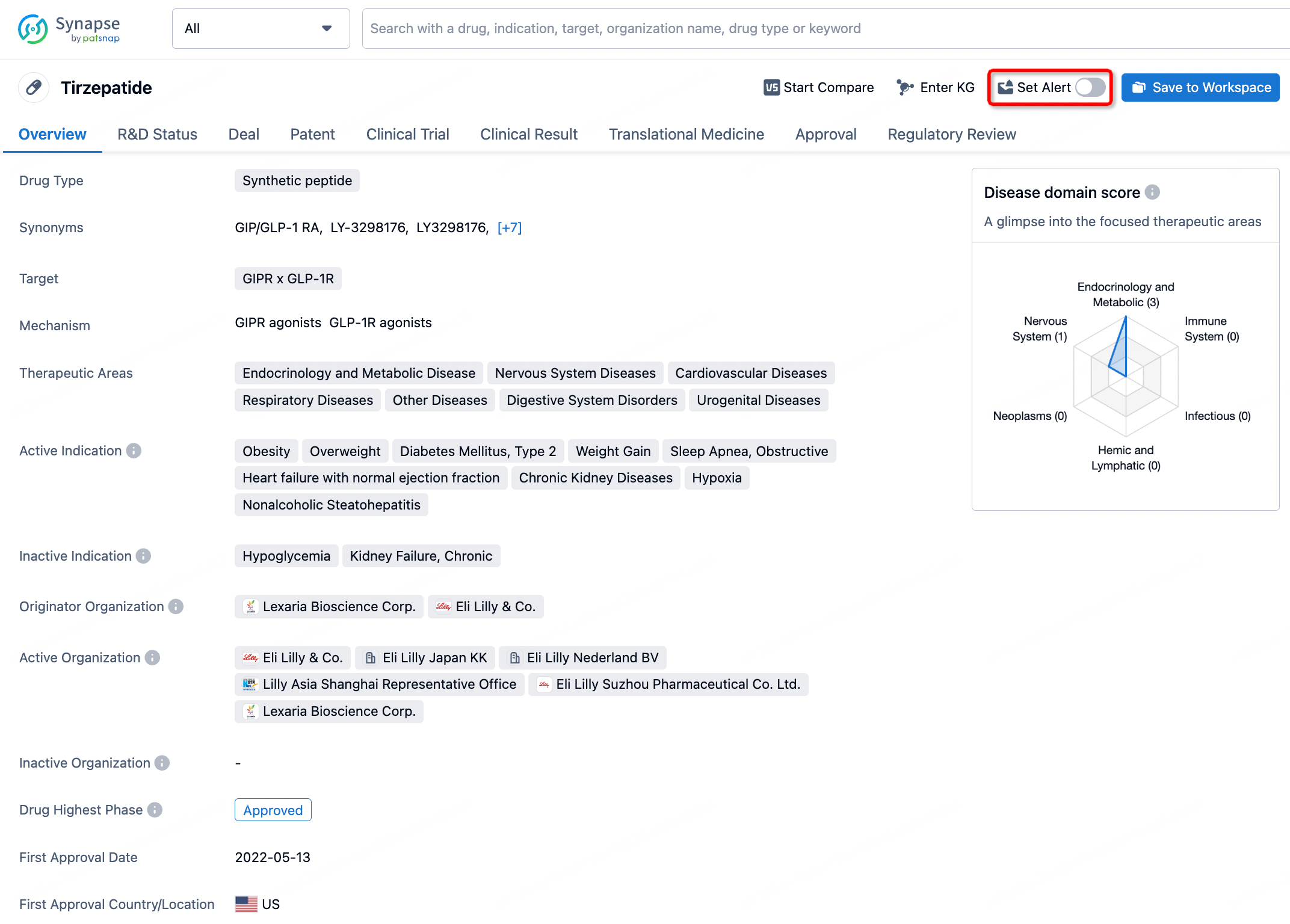
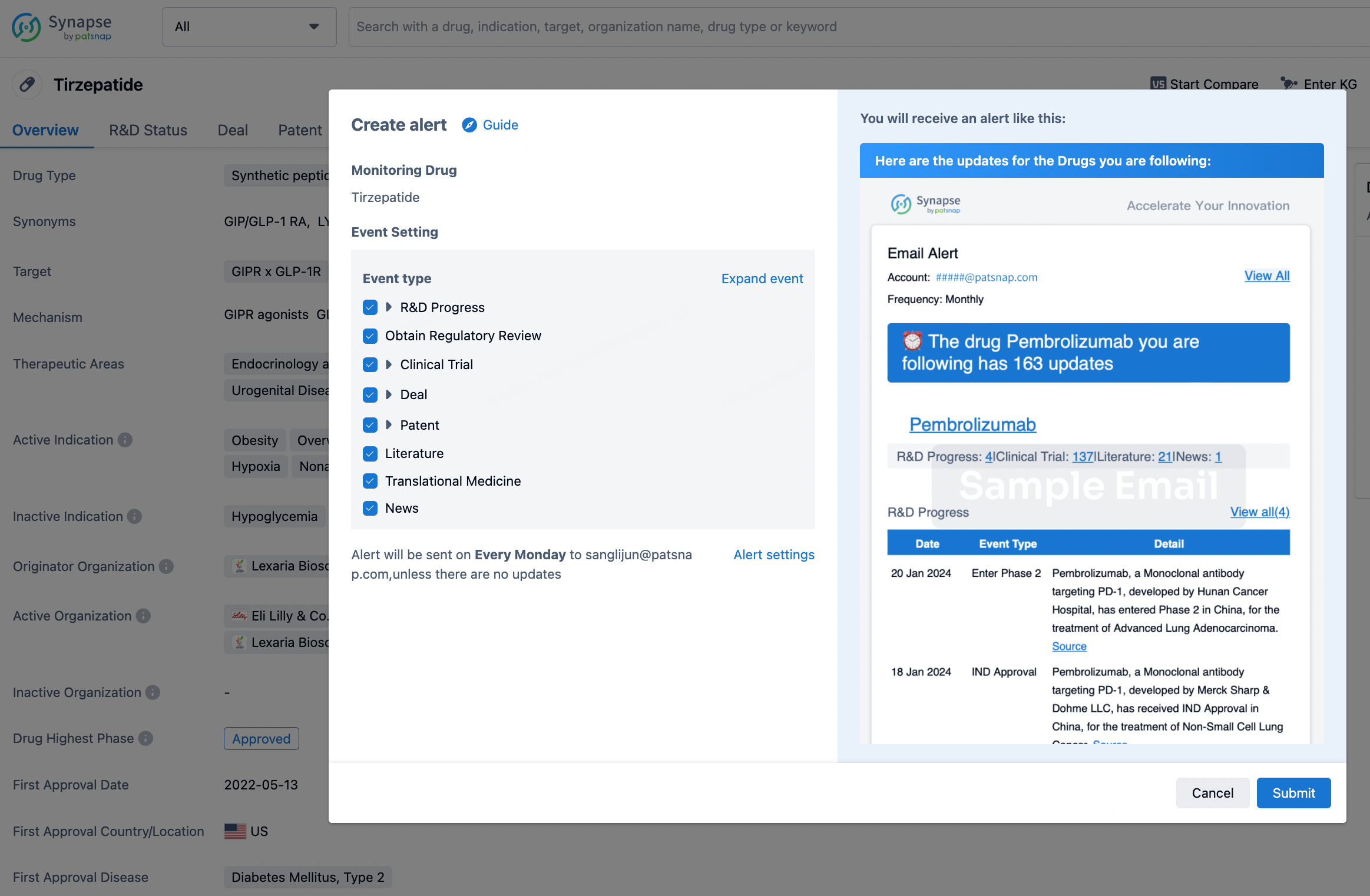
In the Synapse database, you can stay updated on the latest research and development advances of all drugs. This service is accessible anytime and anywhere, with updates available daily or weekly. Use the "Set Alert" function to stay informed. Click on the image below to embark on a brand new journey of drug discovery!

AI Agents Built for Biopharma Breakthroughs
Accelerate discovery. Empower decisions. Transform outcomes.
Get started for free today!
Accelerate Strategic R&D decision making with Synapse, PatSnap’s AI-powered Connected Innovation Intelligence Platform Built for Life Sciences Professionals.
Start your data trial now!
Synapse data is also accessible to external entities via APIs or data packages. Empower better decisions with the latest in pharmaceutical intelligence.