Request Demo
What are the side effects of Prosultiamine?
15 July 2024
Prosultiamine, also known as thiamine propyl disulfide, is a synthetic derivative of thiamine, also known as vitamin B1. It is commonly used to treat thiamine deficiencies and related conditions. Like any medication, it is essential to understand its potential side effects before starting treatment.
One of the more common side effects of Prosultiamine is gastrointestinal discomfort. Users may experience symptoms such as nausea, stomach upset, or diarrhea. These symptoms are generally mild and tend to resolve on their own as the body adjusts to the medication. However, if these symptoms persist or worsen, it is advisable to consult a healthcare provider.
Another potential side effect is allergic reactions. Though rare, some individuals may develop an allergic response to Prosultiamine. Symptoms of an allergic reaction can include itching, rash, swelling (particularly of the face, tongue, or throat), dizziness, and difficulty breathing. If an allergic reaction occurs, it is crucial to seek immediate medical attention.
Prosultiamine may also cause headaches in some individuals. This side effect can vary in intensity and duration. For most people, these headaches are temporary and subside after the initial period of taking the drug. Nonetheless, if headaches are severe or persistent, it is advisable to reach out to a healthcare professional for guidance.
Another side effect that has been reported is changes in mood or mental state. Some users have experienced symptoms such as irritability, agitation, or mood swings while taking Prosultiamine. While these symptoms are generally not severe, they can be unsettling. If mood changes become pronounced or interfere with daily life, it is essential to discuss them with a healthcare provider.
Dizziness or lightheadedness is another potential side effect of Prosultiamine. This can be particularly noticeable when standing up quickly from a seated or lying position. To minimize this risk, it is recommended to rise slowly and steadily to give the body time to adjust.
In rare instances, some people may experience neuromuscular issues, such as muscle weakness or twitching. These side effects are uncommon but should be monitored closely. If any neuromuscular symptoms appear, consulting a healthcare provider is essential to rule out other underlying conditions.
It is also important to note that taking Prosultiamine in doses higher than recommended can increase the likelihood of side effects. Always adhere to the prescribed dosage and consult a healthcare provider before making any changes to the regimen.
While Prosultiamine is generally considered safe and well-tolerated, it is not without potential side effects. Being aware of these possible reactions can help users monitor their health and seek medical advice when necessary. Always consult a healthcare provider for personalized advice and treatment plans tailored to individual health needs.
One of the more common side effects of Prosultiamine is gastrointestinal discomfort. Users may experience symptoms such as nausea, stomach upset, or diarrhea. These symptoms are generally mild and tend to resolve on their own as the body adjusts to the medication. However, if these symptoms persist or worsen, it is advisable to consult a healthcare provider.
Another potential side effect is allergic reactions. Though rare, some individuals may develop an allergic response to Prosultiamine. Symptoms of an allergic reaction can include itching, rash, swelling (particularly of the face, tongue, or throat), dizziness, and difficulty breathing. If an allergic reaction occurs, it is crucial to seek immediate medical attention.
Prosultiamine may also cause headaches in some individuals. This side effect can vary in intensity and duration. For most people, these headaches are temporary and subside after the initial period of taking the drug. Nonetheless, if headaches are severe or persistent, it is advisable to reach out to a healthcare professional for guidance.
Another side effect that has been reported is changes in mood or mental state. Some users have experienced symptoms such as irritability, agitation, or mood swings while taking Prosultiamine. While these symptoms are generally not severe, they can be unsettling. If mood changes become pronounced or interfere with daily life, it is essential to discuss them with a healthcare provider.
Dizziness or lightheadedness is another potential side effect of Prosultiamine. This can be particularly noticeable when standing up quickly from a seated or lying position. To minimize this risk, it is recommended to rise slowly and steadily to give the body time to adjust.
In rare instances, some people may experience neuromuscular issues, such as muscle weakness or twitching. These side effects are uncommon but should be monitored closely. If any neuromuscular symptoms appear, consulting a healthcare provider is essential to rule out other underlying conditions.
It is also important to note that taking Prosultiamine in doses higher than recommended can increase the likelihood of side effects. Always adhere to the prescribed dosage and consult a healthcare provider before making any changes to the regimen.
While Prosultiamine is generally considered safe and well-tolerated, it is not without potential side effects. Being aware of these possible reactions can help users monitor their health and seek medical advice when necessary. Always consult a healthcare provider for personalized advice and treatment plans tailored to individual health needs.
How to obtain the latest development progress of all drugs?
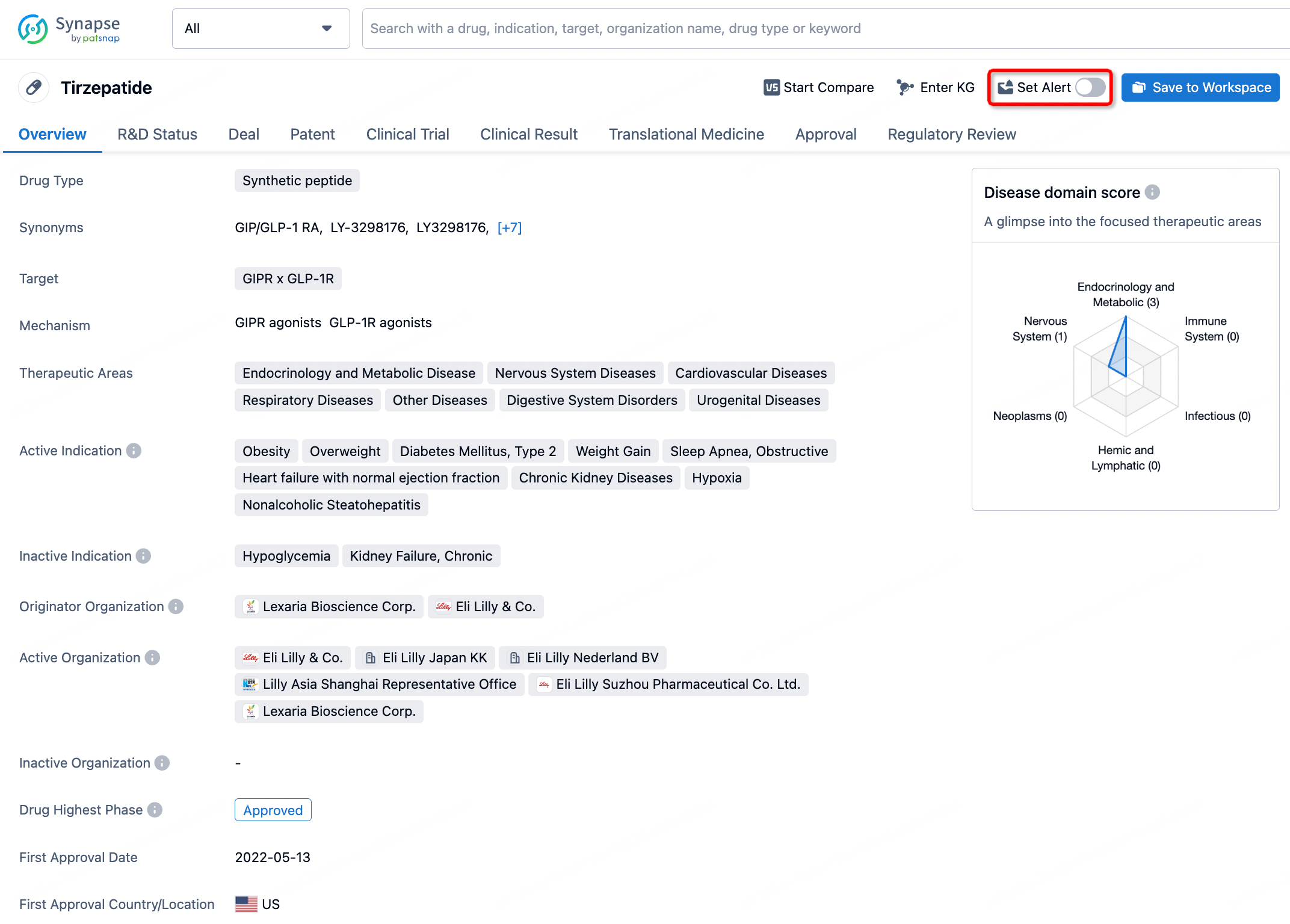
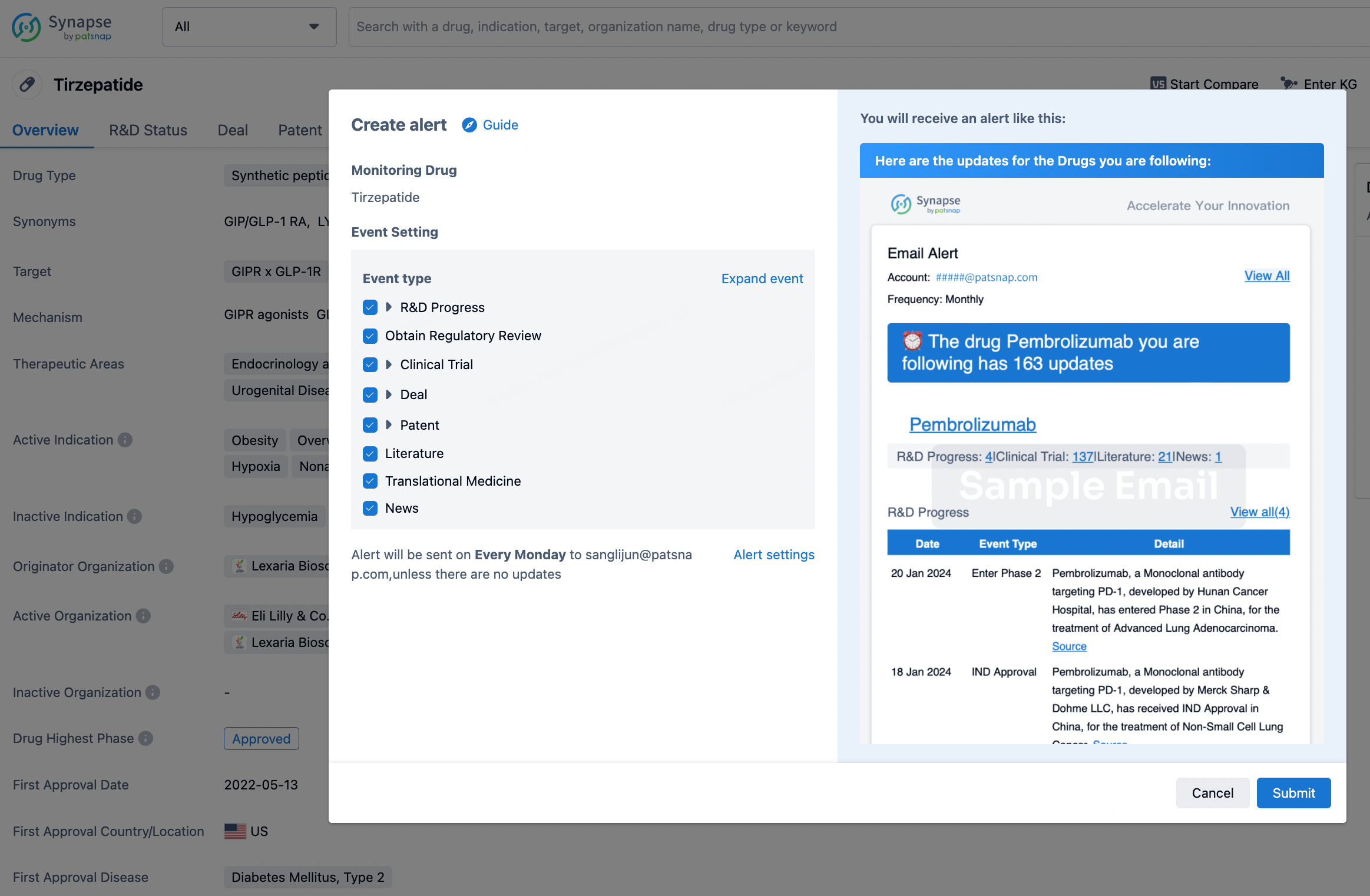
In the Synapse database, you can stay updated on the latest research and development advances of all drugs. This service is accessible anytime and anywhere, with updates available daily or weekly. Use the "Set Alert" function to stay informed. Click on the image below to embark on a brand new journey of drug discovery!

AI Agents Built for Biopharma Breakthroughs
Accelerate discovery. Empower decisions. Transform outcomes.
Get started for free today!
Accelerate Strategic R&D decision making with Synapse, PatSnap’s AI-powered Connected Innovation Intelligence Platform Built for Life Sciences Professionals.
Start your data trial now!
Synapse data is also accessible to external entities via APIs or data packages. Empower better decisions with the latest in pharmaceutical intelligence.