Request Demo
What are the side effects of Reviparin Sodium?
12 July 2024
Reviparin Sodium is an anticoagulant medication, commonly used to prevent and treat deep vein thrombosis and pulmonary embolism. Like any medication, it carries the potential for side effects, which patients and healthcare providers should be aware of before initiating treatment. Understanding these side effects enables better management of the risks involved with its use.
One of the most common side effects of Reviparin Sodium is bleeding. This can manifest in various ways, from minor bruises to more severe hemorrhagic events. Patients may experience nosebleeds, gum bleeding, or prolonged bleeding from cuts. In more serious cases, internal bleeding can occur, leading to symptoms such as black or tarry stools, blood in the urine, or severe headaches, which could indicate bleeding in the brain. It’s crucial for patients to report any unusual bleeding to their healthcare provider immediately.
Another side effect to consider is thrombocytopenia, a condition characterized by a lower than normal number of platelets in the blood. Platelets are essential for clot formation, and a deficiency can exacerbate the risk of bleeding. Symptoms of thrombocytopenia include easy bruising, prolonged bleeding from cuts, and petechiae, which are small red or purple spots on the skin caused by bleeding underneath.
Allergic reactions to Reviparin Sodium are also possible, though they are less common. Symptoms of an allergic reaction can range from mild to severe and may include rash, itching, swelling, severe dizziness, and difficulty breathing. An allergic reaction is a medical emergency requiring immediate attention.
Injection site reactions are another frequent side effect. Patients may notice pain, redness, or swelling at the site where the medication is injected. These reactions are usually mild and resolve on their own, but persistent or severe symptoms should be discussed with a healthcare provider.
In rare instances, patients may develop osteoporosis with prolonged use of Reviparin Sodium. This condition involves the weakening of bones, making them more susceptible to fractures. Osteoporosis is more likely to occur with long-term use, and patients on extended anticoagulant therapy should be monitored for bone density.
Some patients may experience elevated liver enzymes during treatment with Reviparin Sodium. This side effect is typically detected through blood tests and may not produce noticeable symptoms. However, significant changes in liver enzyme levels can indicate liver damage, necessitating further evaluation and potential modification of therapy.
It’s also essential to consider the interaction of Reviparin Sodium with other medications. Combining this anticoagulant with other drugs that affect blood clotting, such as antiplatelet agents or nonsteroidal anti-inflammatory drugs (NSAIDs), can increase the risk of bleeding. Patients should inform their healthcare providers of all medications they are taking to avoid potential adverse interactions.
Lastly, as with any medication, individual responses to Reviparin Sodium can vary. Factors such as age, overall health, and other underlying medical conditions can influence the likelihood and severity of side effects. Regular medical monitoring and open communication with healthcare providers are crucial for managing these risks effectively.
In conclusion, while Reviparin Sodium is an effective anticoagulant for preventing and treating thromboembolic disorders, it carries potential side effects that require careful consideration and monitoring. Patients should be vigilant about reporting any unusual symptoms and adhere to their healthcare provider’s recommendations to minimize risks and ensure safe and effective treatment.
One of the most common side effects of Reviparin Sodium is bleeding. This can manifest in various ways, from minor bruises to more severe hemorrhagic events. Patients may experience nosebleeds, gum bleeding, or prolonged bleeding from cuts. In more serious cases, internal bleeding can occur, leading to symptoms such as black or tarry stools, blood in the urine, or severe headaches, which could indicate bleeding in the brain. It’s crucial for patients to report any unusual bleeding to their healthcare provider immediately.
Another side effect to consider is thrombocytopenia, a condition characterized by a lower than normal number of platelets in the blood. Platelets are essential for clot formation, and a deficiency can exacerbate the risk of bleeding. Symptoms of thrombocytopenia include easy bruising, prolonged bleeding from cuts, and petechiae, which are small red or purple spots on the skin caused by bleeding underneath.
Allergic reactions to Reviparin Sodium are also possible, though they are less common. Symptoms of an allergic reaction can range from mild to severe and may include rash, itching, swelling, severe dizziness, and difficulty breathing. An allergic reaction is a medical emergency requiring immediate attention.
Injection site reactions are another frequent side effect. Patients may notice pain, redness, or swelling at the site where the medication is injected. These reactions are usually mild and resolve on their own, but persistent or severe symptoms should be discussed with a healthcare provider.
In rare instances, patients may develop osteoporosis with prolonged use of Reviparin Sodium. This condition involves the weakening of bones, making them more susceptible to fractures. Osteoporosis is more likely to occur with long-term use, and patients on extended anticoagulant therapy should be monitored for bone density.
Some patients may experience elevated liver enzymes during treatment with Reviparin Sodium. This side effect is typically detected through blood tests and may not produce noticeable symptoms. However, significant changes in liver enzyme levels can indicate liver damage, necessitating further evaluation and potential modification of therapy.
It’s also essential to consider the interaction of Reviparin Sodium with other medications. Combining this anticoagulant with other drugs that affect blood clotting, such as antiplatelet agents or nonsteroidal anti-inflammatory drugs (NSAIDs), can increase the risk of bleeding. Patients should inform their healthcare providers of all medications they are taking to avoid potential adverse interactions.
Lastly, as with any medication, individual responses to Reviparin Sodium can vary. Factors such as age, overall health, and other underlying medical conditions can influence the likelihood and severity of side effects. Regular medical monitoring and open communication with healthcare providers are crucial for managing these risks effectively.
In conclusion, while Reviparin Sodium is an effective anticoagulant for preventing and treating thromboembolic disorders, it carries potential side effects that require careful consideration and monitoring. Patients should be vigilant about reporting any unusual symptoms and adhere to their healthcare provider’s recommendations to minimize risks and ensure safe and effective treatment.
How to obtain the latest development progress of all drugs?
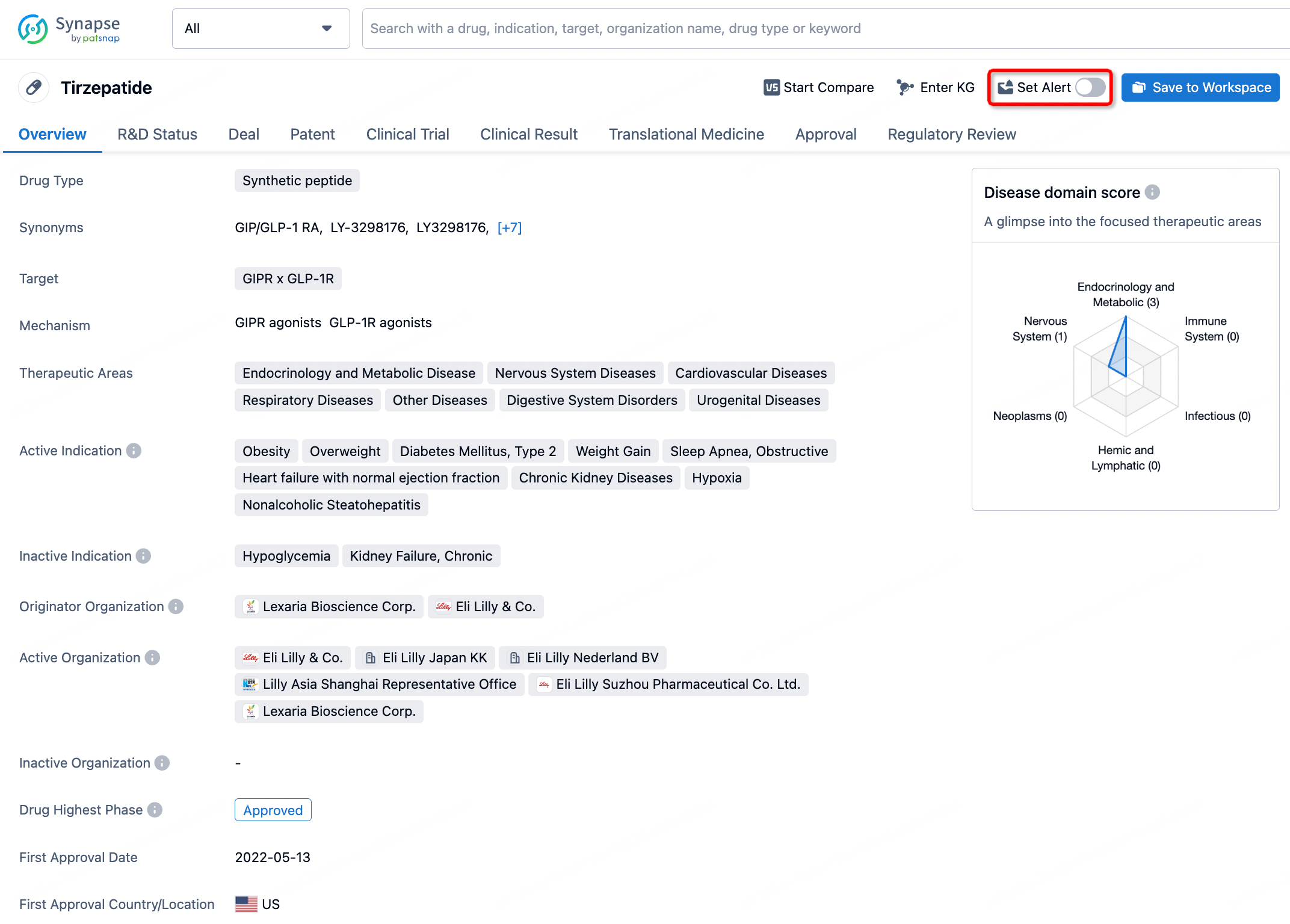
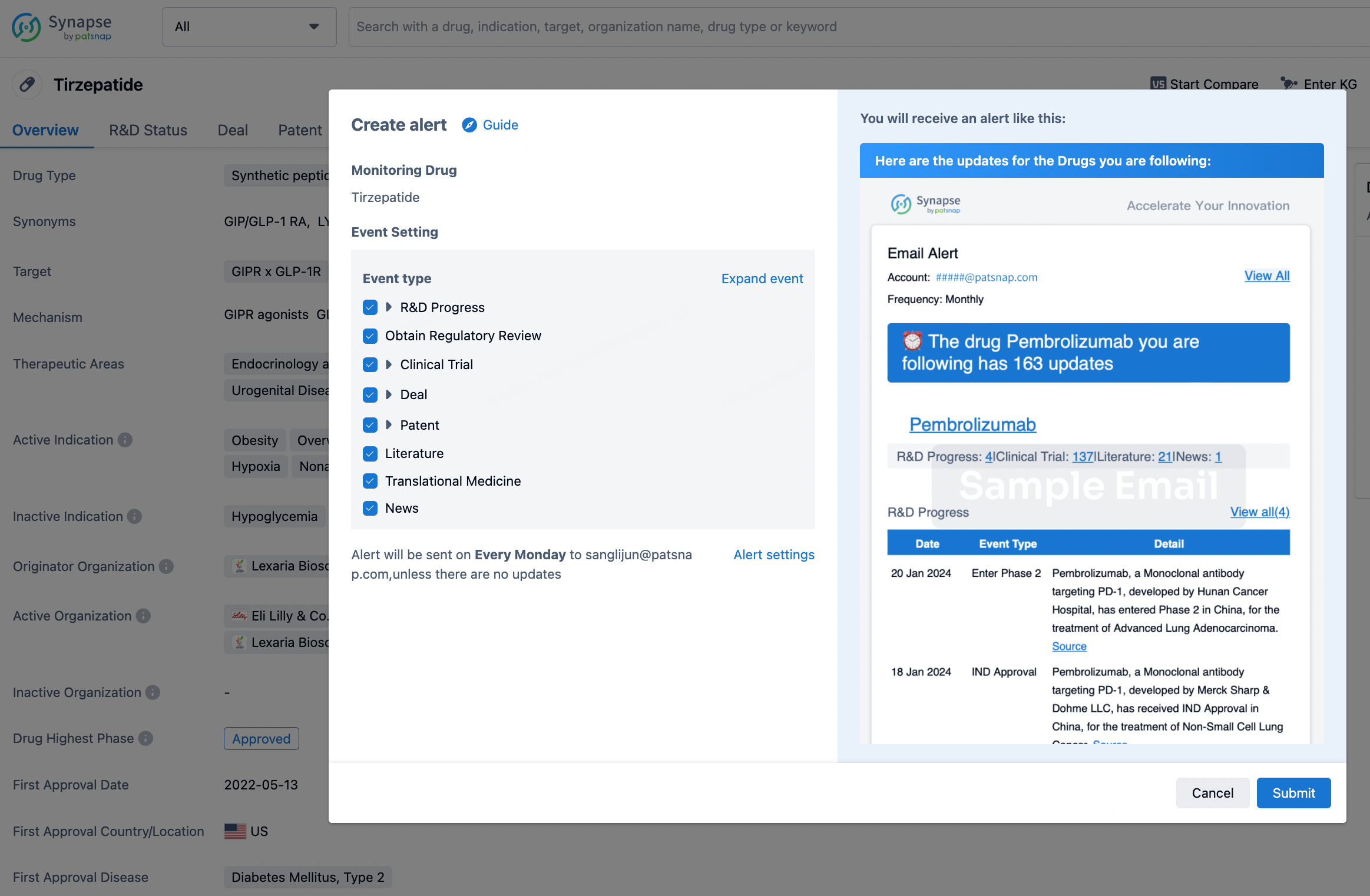
In the Synapse database, you can stay updated on the latest research and development advances of all drugs. This service is accessible anytime and anywhere, with updates available daily or weekly. Use the "Set Alert" function to stay informed. Click on the image below to embark on a brand new journey of drug discovery!
AI Agents Built for Biopharma Breakthroughs
Accelerate discovery. Empower decisions. Transform outcomes.
Get started for free today!
Accelerate Strategic R&D decision making with Synapse, PatSnap’s AI-powered Connected Innovation Intelligence Platform Built for Life Sciences Professionals.
Start your data trial now!
Synapse data is also accessible to external entities via APIs or data packages. Empower better decisions with the latest in pharmaceutical intelligence.