Request Demo
What are the side effects of Rolapitant Hydrochloride?
12 July 2024
Rolapitant Hydrochloride is a medication commonly used to prevent nausea and vomiting caused by chemotherapy. While it can be highly effective for this purpose, it is important to be aware of the potential side effects associated with its use. Understanding these side effects can help patients and healthcare providers make informed decisions about treatment options.
One of the most commonly reported side effects of Rolapitant Hydrochloride is fatigue. Patients may experience a decrease in energy levels and a general sense of tiredness. This can be particularly challenging for individuals already dealing with the physical demands of chemotherapy. It is important for patients to communicate any feelings of excessive fatigue to their healthcare provider, as adjustments to treatment or supportive care measures may be needed.
Another frequent side effect is hiccups. While this may seem relatively minor, persistent hiccups can be uncomfortable and disruptive. If hiccups become severe or particularly bothersome, patients should consult their physician for potential remedies or interventions.
Gastrointestinal issues are also commonly associated with Rolapitant Hydrochloride. These can include constipation, indigestion, and loss of appetite. Maintaining a balanced diet and staying hydrated can help manage these symptoms to some extent. In some cases, healthcare providers may recommend dietary adjustments or prescribe medications to alleviate these gastrointestinal side effects.
Headaches are another possible side effect. While mild headaches can often be managed with over-the-counter pain relievers, severe or persistent headaches should be reported to a healthcare provider. It is important to distinguish between a simple headache and signs of more serious conditions, especially in patients undergoing chemotherapy.
Dizziness and dizziness-related falls are also concerns with Rolapitant Hydrochloride. Patients experiencing dizziness should take care to move slowly and avoid activities that could lead to injury, such as driving or operating heavy machinery. If dizziness persists, medical advice should be sought.
Some patients may experience skin reactions, such as rashes or itching. These skin issues can vary in severity from mild irritation to more pronounced reactions. Keeping the skin moisturized and avoiding irritants can help mitigate these symptoms. Severe skin reactions should be promptly reported to a healthcare provider.
Rolapitant Hydrochloride can also affect the liver, leading to increased liver enzymes in blood tests. While this is typically monitored by healthcare providers during treatment, it is crucial for patients to inform their doctors of any history of liver issues or symptoms such as jaundice, dark urine, or severe abdominal pain.
Less commonly, patients may experience more severe side effects such as allergic reactions. Signs of an allergic reaction can include difficulty breathing, swelling of the face or throat, and severe skin rashes. These reactions require immediate medical attention.
Overall, while Rolapitant Hydrochloride is effective in preventing chemotherapy-induced nausea and vomiting, it is associated with a range of potential side effects. Patients should be well-informed about these possible side effects and maintain open communication with their healthcare providers. Timely reporting and management of side effects can help improve the overall treatment experience and ensure the best possible outcomes.
One of the most commonly reported side effects of Rolapitant Hydrochloride is fatigue. Patients may experience a decrease in energy levels and a general sense of tiredness. This can be particularly challenging for individuals already dealing with the physical demands of chemotherapy. It is important for patients to communicate any feelings of excessive fatigue to their healthcare provider, as adjustments to treatment or supportive care measures may be needed.
Another frequent side effect is hiccups. While this may seem relatively minor, persistent hiccups can be uncomfortable and disruptive. If hiccups become severe or particularly bothersome, patients should consult their physician for potential remedies or interventions.
Gastrointestinal issues are also commonly associated with Rolapitant Hydrochloride. These can include constipation, indigestion, and loss of appetite. Maintaining a balanced diet and staying hydrated can help manage these symptoms to some extent. In some cases, healthcare providers may recommend dietary adjustments or prescribe medications to alleviate these gastrointestinal side effects.
Headaches are another possible side effect. While mild headaches can often be managed with over-the-counter pain relievers, severe or persistent headaches should be reported to a healthcare provider. It is important to distinguish between a simple headache and signs of more serious conditions, especially in patients undergoing chemotherapy.
Dizziness and dizziness-related falls are also concerns with Rolapitant Hydrochloride. Patients experiencing dizziness should take care to move slowly and avoid activities that could lead to injury, such as driving or operating heavy machinery. If dizziness persists, medical advice should be sought.
Some patients may experience skin reactions, such as rashes or itching. These skin issues can vary in severity from mild irritation to more pronounced reactions. Keeping the skin moisturized and avoiding irritants can help mitigate these symptoms. Severe skin reactions should be promptly reported to a healthcare provider.
Rolapitant Hydrochloride can also affect the liver, leading to increased liver enzymes in blood tests. While this is typically monitored by healthcare providers during treatment, it is crucial for patients to inform their doctors of any history of liver issues or symptoms such as jaundice, dark urine, or severe abdominal pain.
Less commonly, patients may experience more severe side effects such as allergic reactions. Signs of an allergic reaction can include difficulty breathing, swelling of the face or throat, and severe skin rashes. These reactions require immediate medical attention.
Overall, while Rolapitant Hydrochloride is effective in preventing chemotherapy-induced nausea and vomiting, it is associated with a range of potential side effects. Patients should be well-informed about these possible side effects and maintain open communication with their healthcare providers. Timely reporting and management of side effects can help improve the overall treatment experience and ensure the best possible outcomes.
How to obtain the latest development progress of all drugs?
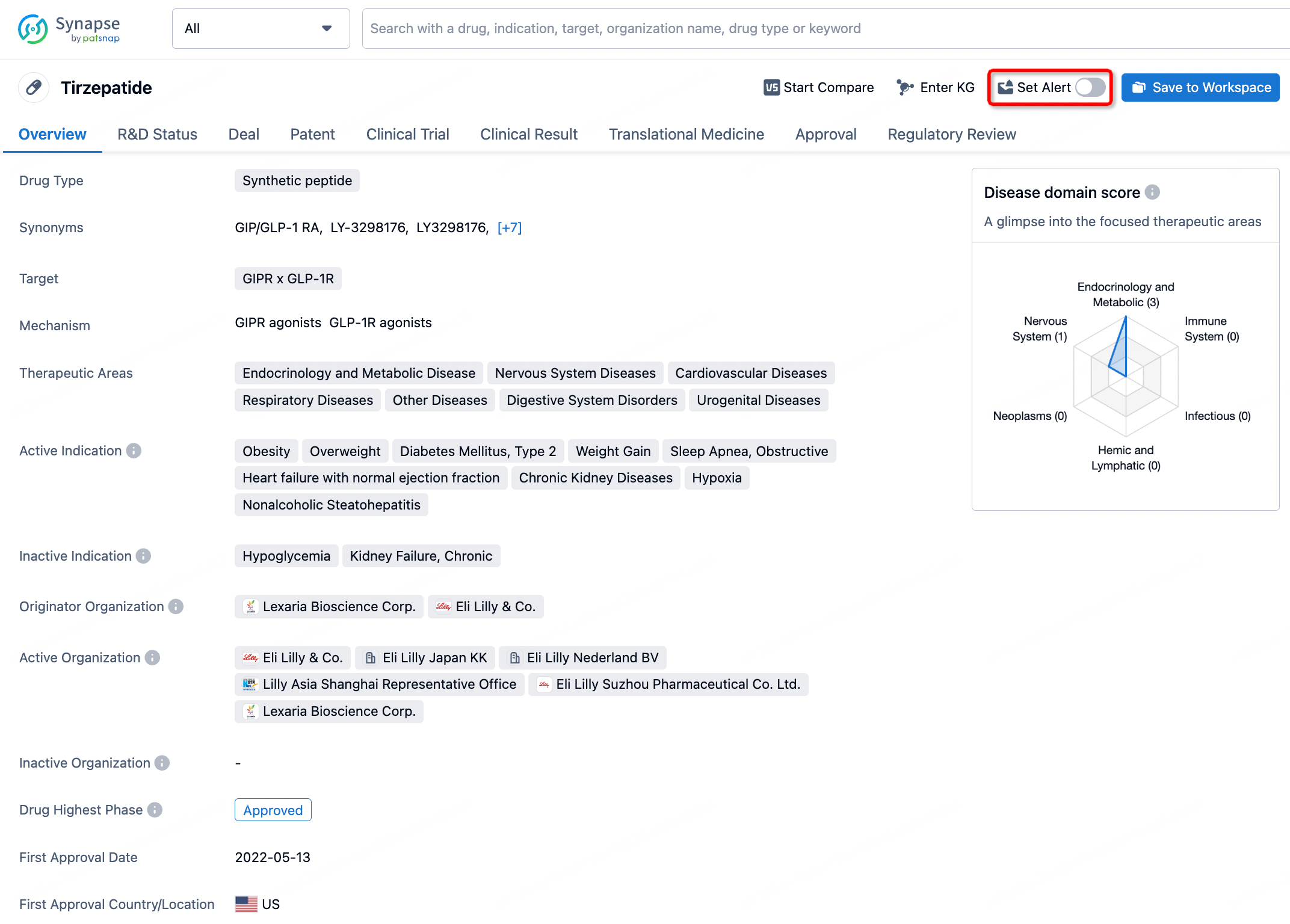
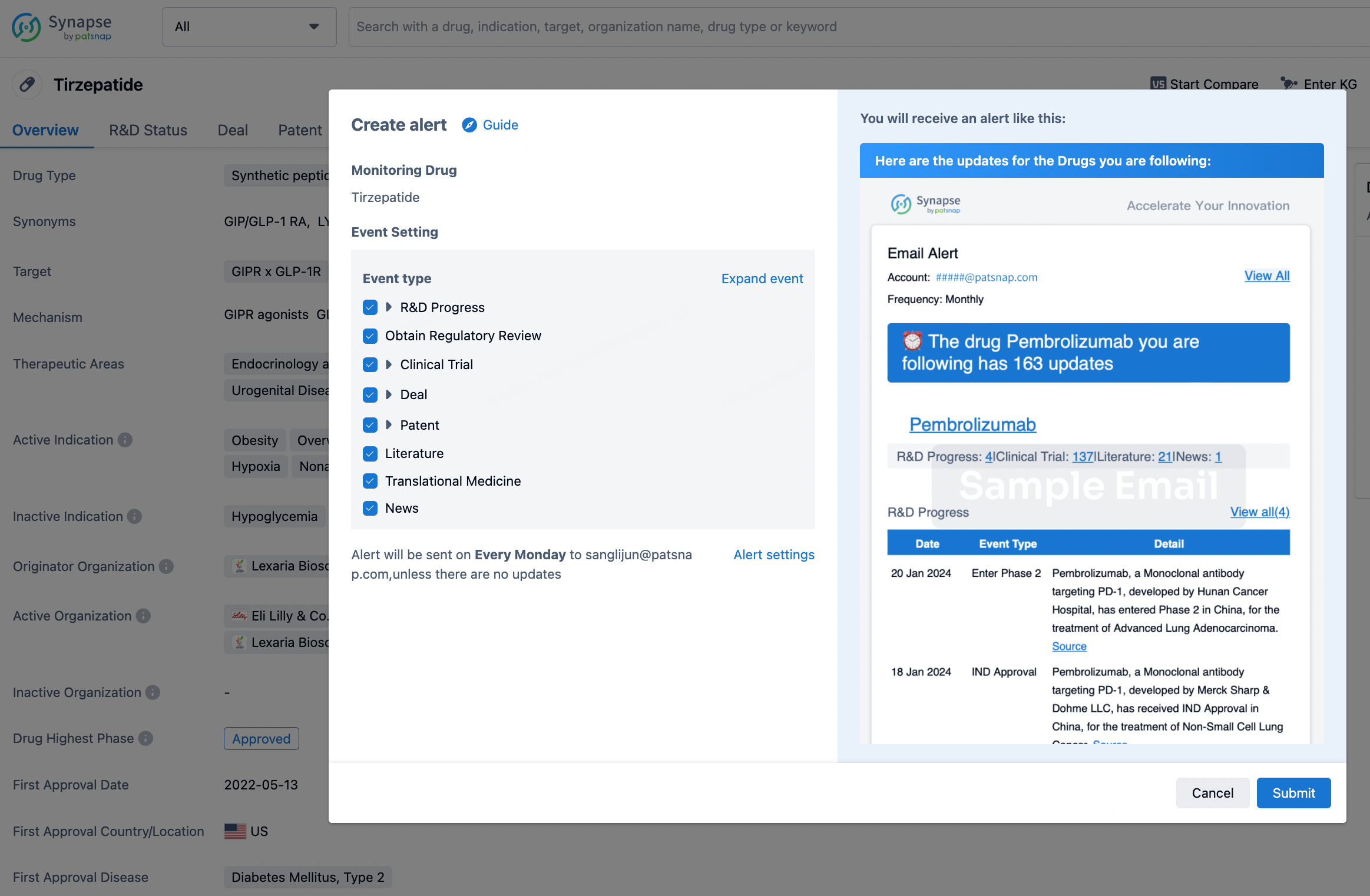
In the Synapse database, you can stay updated on the latest research and development advances of all drugs. This service is accessible anytime and anywhere, with updates available daily or weekly. Use the "Set Alert" function to stay informed. Click on the image below to embark on a brand new journey of drug discovery!

AI Agents Built for Biopharma Breakthroughs
Accelerate discovery. Empower decisions. Transform outcomes.
Get started for free today!
Accelerate Strategic R&D decision making with Synapse, PatSnap’s AI-powered Connected Innovation Intelligence Platform Built for Life Sciences Professionals.
Start your data trial now!
Synapse data is also accessible to external entities via APIs or data packages. Empower better decisions with the latest in pharmaceutical intelligence.