Request Demo
What are the side effects of Romlusevimab?
12 July 2024
Romlusevimab is a monoclonal antibody medication that has garnered attention for its potential therapeutic benefits in treating certain conditions. Like all medications, Romlusevimab can cause side effects. Understanding these side effects is crucial for both patients and healthcare providers to manage and mitigate potential risks effectively.
One of the most common side effects reported with Romlusevimab is infusion-related reactions. These reactions can occur during or shortly after the administration of the medication. Symptoms of infusion-related reactions may include fever, chills, nausea, headache, rash, and hypotension. In some cases, these reactions can be severe, requiring immediate medical attention.
Another frequently observed side effect is gastrointestinal disturbances. Patients may experience symptoms such as diarrhea, nausea, vomiting, and abdominal pain. While these symptoms are generally mild to moderate in severity, they can be uncomfortable and may affect the patient's quality of life.
Romlusevimab can also affect the immune system, leading to an increased risk of infections. Patients may become more susceptible to bacterial, viral, or fungal infections while on this medication. It is essential for patients to monitor for signs of infection, such as fever, chills, sore throat, or unusual fatigue, and to seek medical advice promptly if these symptoms occur.
Some patients taking Romlusevimab have reported experiencing allergic reactions. These reactions can range from mild to severe and may include symptoms such as rash, itching, swelling, dizziness, and difficulty breathing. Severe allergic reactions, known as anaphylaxis, require immediate emergency medical intervention.
In addition to these more common side effects, Romlusevimab has been associated with certain laboratory abnormalities. These may include changes in blood cell counts, liver function tests, and kidney function tests. Regular monitoring of laboratory parameters is recommended to detect any potential abnormalities early and to adjust the treatment regimen as necessary.
There are also potential cardiovascular side effects linked to Romlusevimab use. These can include hypertension (high blood pressure), which may require the initiation or adjustment of antihypertensive therapy. Patients with pre-existing cardiovascular conditions should be closely monitored while receiving Romlusevimab.
Patients have also reported experiencing musculoskeletal pain, including joint pain and muscle aches. While these symptoms are typically mild to moderate, they can be persistent and may require symptomatic treatment.
It is important to note that not all patients will experience these side effects, and some may experience side effects not listed here. The overall risk of side effects can vary based on individual patient factors, including underlying medical conditions, concomitant medications, and overall health status.
Patients considering or receiving Romlusevimab should have thorough discussions with their healthcare providers to understand the potential risks and benefits of the treatment. Healthcare providers should provide comprehensive information and support to help patients manage any side effects that may arise.
In conclusion, while Romlusevimab offers potential therapeutic benefits, it is associated with a range of side effects that patients and healthcare providers need to be aware of. Regular monitoring, prompt recognition, and appropriate management of side effects are essential to ensure the safe and effective use of Romlusevimab.
One of the most common side effects reported with Romlusevimab is infusion-related reactions. These reactions can occur during or shortly after the administration of the medication. Symptoms of infusion-related reactions may include fever, chills, nausea, headache, rash, and hypotension. In some cases, these reactions can be severe, requiring immediate medical attention.
Another frequently observed side effect is gastrointestinal disturbances. Patients may experience symptoms such as diarrhea, nausea, vomiting, and abdominal pain. While these symptoms are generally mild to moderate in severity, they can be uncomfortable and may affect the patient's quality of life.
Romlusevimab can also affect the immune system, leading to an increased risk of infections. Patients may become more susceptible to bacterial, viral, or fungal infections while on this medication. It is essential for patients to monitor for signs of infection, such as fever, chills, sore throat, or unusual fatigue, and to seek medical advice promptly if these symptoms occur.
Some patients taking Romlusevimab have reported experiencing allergic reactions. These reactions can range from mild to severe and may include symptoms such as rash, itching, swelling, dizziness, and difficulty breathing. Severe allergic reactions, known as anaphylaxis, require immediate emergency medical intervention.
In addition to these more common side effects, Romlusevimab has been associated with certain laboratory abnormalities. These may include changes in blood cell counts, liver function tests, and kidney function tests. Regular monitoring of laboratory parameters is recommended to detect any potential abnormalities early and to adjust the treatment regimen as necessary.
There are also potential cardiovascular side effects linked to Romlusevimab use. These can include hypertension (high blood pressure), which may require the initiation or adjustment of antihypertensive therapy. Patients with pre-existing cardiovascular conditions should be closely monitored while receiving Romlusevimab.
Patients have also reported experiencing musculoskeletal pain, including joint pain and muscle aches. While these symptoms are typically mild to moderate, they can be persistent and may require symptomatic treatment.
It is important to note that not all patients will experience these side effects, and some may experience side effects not listed here. The overall risk of side effects can vary based on individual patient factors, including underlying medical conditions, concomitant medications, and overall health status.
Patients considering or receiving Romlusevimab should have thorough discussions with their healthcare providers to understand the potential risks and benefits of the treatment. Healthcare providers should provide comprehensive information and support to help patients manage any side effects that may arise.
In conclusion, while Romlusevimab offers potential therapeutic benefits, it is associated with a range of side effects that patients and healthcare providers need to be aware of. Regular monitoring, prompt recognition, and appropriate management of side effects are essential to ensure the safe and effective use of Romlusevimab.
How to obtain the latest development progress of all drugs?
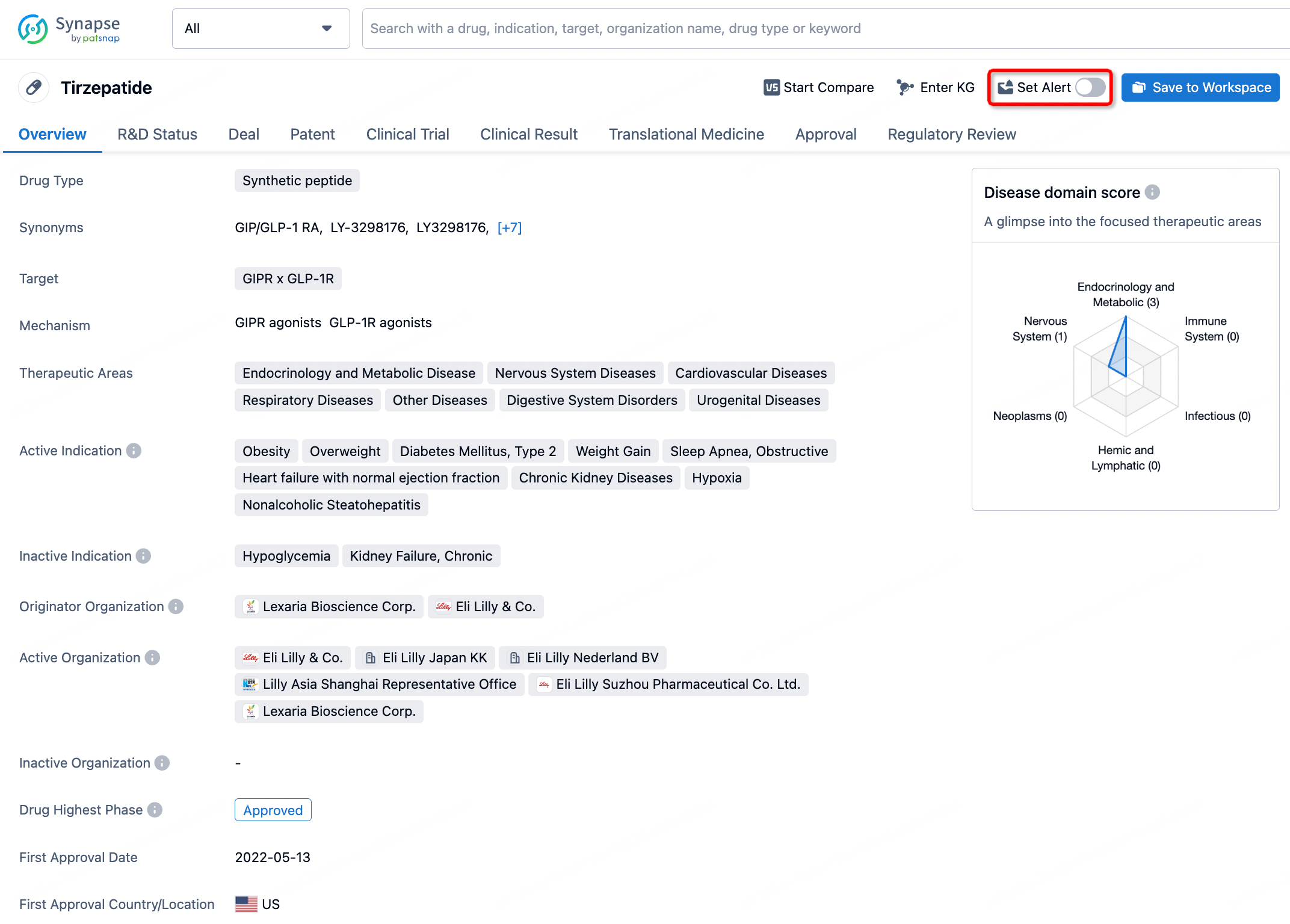
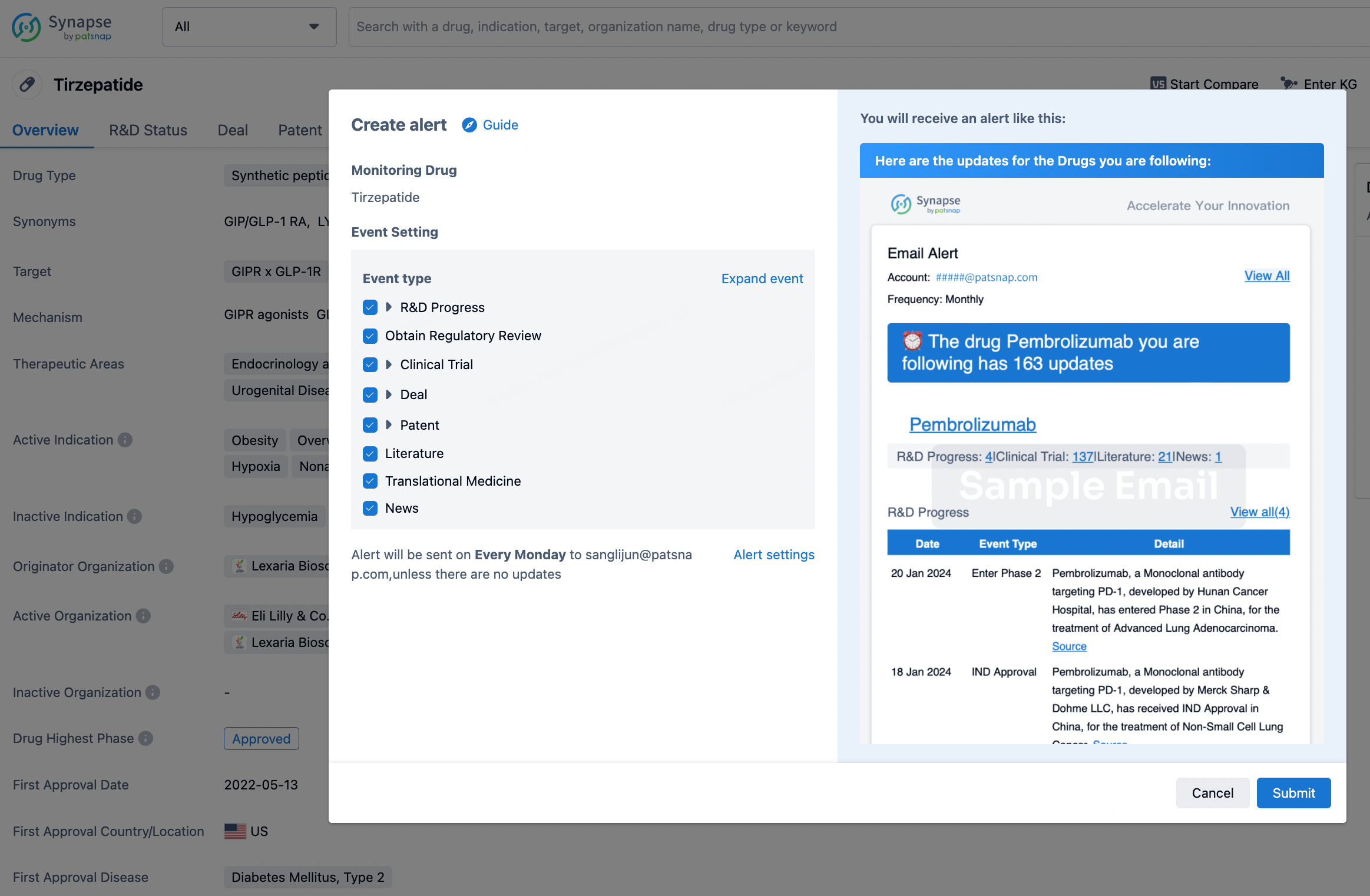
In the Synapse database, you can stay updated on the latest research and development advances of all drugs. This service is accessible anytime and anywhere, with updates available daily or weekly. Use the "Set Alert" function to stay informed. Click on the image below to embark on a brand new journey of drug discovery!

AI Agents Built for Biopharma Breakthroughs
Accelerate discovery. Empower decisions. Transform outcomes.
Get started for free today!
Accelerate Strategic R&D decision making with Synapse, PatSnap’s AI-powered Connected Innovation Intelligence Platform Built for Life Sciences Professionals.
Start your data trial now!
Synapse data is also accessible to external entities via APIs or data packages. Empower better decisions with the latest in pharmaceutical intelligence.