Request Demo
What are the side effects of Sodium Oligomannurarate?
12 July 2024
Sodium Oligomannurarate, also known as GV-971, is a compound derived from marine brown algae and has been studied for its potential therapeutic benefits, particularly in the treatment of Alzheimer’s disease. While promising in its potential, it is important to recognize and understand the side effects associated with its use.
Clinical trials and studies have provided some insights into the side effects of Sodium Oligomannurarate. The most commonly reported side effects include gastrointestinal disturbances, such as nausea, vomiting, diarrhea, and abdominal pain. These symptoms are often mild to moderate in nature and tend to resolve on their own without requiring significant medical intervention. However, persistent or severe gastrointestinal discomfort may necessitate medical consultation.
Another side effect observed in some patients is dizziness or a feeling of lightheadedness. This might be due to the body's adjustment to the compound and typically does not pose a significant risk. However, individuals experiencing severe dizziness should avoid driving or operating heavy machinery and should seek medical advice if symptoms persist.
Headaches are also mentioned as a possible side effect. While generally mild, these headaches can become bothersome to some patients. In such cases, over-the-counter pain relievers may be used, but it is always advisable to consult a healthcare provider before combining medications.
Allergic reactions, though rare, can occur. Symptoms of an allergic reaction may include rash, itching, swelling, severe dizziness, and trouble breathing. If any of these symptoms arise, it is crucial to seek immediate medical attention.
Sodium Oligomannurarate may also affect blood pressure. Some individuals have reported experiencing fluctuations in their blood pressure levels. Monitoring blood pressure regularly while on this medication can help in identifying any significant changes early on.
In more rare instances, some patients have reported experiencing joint pain or muscle aches. This could be due to an inflammatory response and should be discussed with a healthcare provider, especially if the pain is persistent or affects daily activities.
It is essential to note that the side effect profile of Sodium Oligomannurarate is still being studied, and long-term effects are not fully understood. Therefore, ongoing monitoring by healthcare professionals is recommended for individuals using this treatment.
Patients with pre-existing conditions, such as kidney or liver issues, should exercise caution when using Sodium Oligomannurarate. These conditions could potentially exacerbate side effects or lead to more severe health complications.
In summary, while Sodium Oligomannurarate shows potential benefits, particularly for Alzheimer’s disease, it is not without its side effects. Most side effects are mild to moderate and include gastrointestinal disturbances, dizziness, headaches, allergic reactions, blood pressure fluctuations, and joint or muscle pain. Patients should remain vigilant and in regular contact with their healthcare providers to manage and mitigate any adverse effects. As research continues, a clearer understanding of the long-term safety and efficacy of Sodium Oligomannurarate will emerge, guiding its future use in medical treatments.
Clinical trials and studies have provided some insights into the side effects of Sodium Oligomannurarate. The most commonly reported side effects include gastrointestinal disturbances, such as nausea, vomiting, diarrhea, and abdominal pain. These symptoms are often mild to moderate in nature and tend to resolve on their own without requiring significant medical intervention. However, persistent or severe gastrointestinal discomfort may necessitate medical consultation.
Another side effect observed in some patients is dizziness or a feeling of lightheadedness. This might be due to the body's adjustment to the compound and typically does not pose a significant risk. However, individuals experiencing severe dizziness should avoid driving or operating heavy machinery and should seek medical advice if symptoms persist.
Headaches are also mentioned as a possible side effect. While generally mild, these headaches can become bothersome to some patients. In such cases, over-the-counter pain relievers may be used, but it is always advisable to consult a healthcare provider before combining medications.
Allergic reactions, though rare, can occur. Symptoms of an allergic reaction may include rash, itching, swelling, severe dizziness, and trouble breathing. If any of these symptoms arise, it is crucial to seek immediate medical attention.
Sodium Oligomannurarate may also affect blood pressure. Some individuals have reported experiencing fluctuations in their blood pressure levels. Monitoring blood pressure regularly while on this medication can help in identifying any significant changes early on.
In more rare instances, some patients have reported experiencing joint pain or muscle aches. This could be due to an inflammatory response and should be discussed with a healthcare provider, especially if the pain is persistent or affects daily activities.
It is essential to note that the side effect profile of Sodium Oligomannurarate is still being studied, and long-term effects are not fully understood. Therefore, ongoing monitoring by healthcare professionals is recommended for individuals using this treatment.
Patients with pre-existing conditions, such as kidney or liver issues, should exercise caution when using Sodium Oligomannurarate. These conditions could potentially exacerbate side effects or lead to more severe health complications.
In summary, while Sodium Oligomannurarate shows potential benefits, particularly for Alzheimer’s disease, it is not without its side effects. Most side effects are mild to moderate and include gastrointestinal disturbances, dizziness, headaches, allergic reactions, blood pressure fluctuations, and joint or muscle pain. Patients should remain vigilant and in regular contact with their healthcare providers to manage and mitigate any adverse effects. As research continues, a clearer understanding of the long-term safety and efficacy of Sodium Oligomannurarate will emerge, guiding its future use in medical treatments.
How to obtain the latest development progress of all drugs?
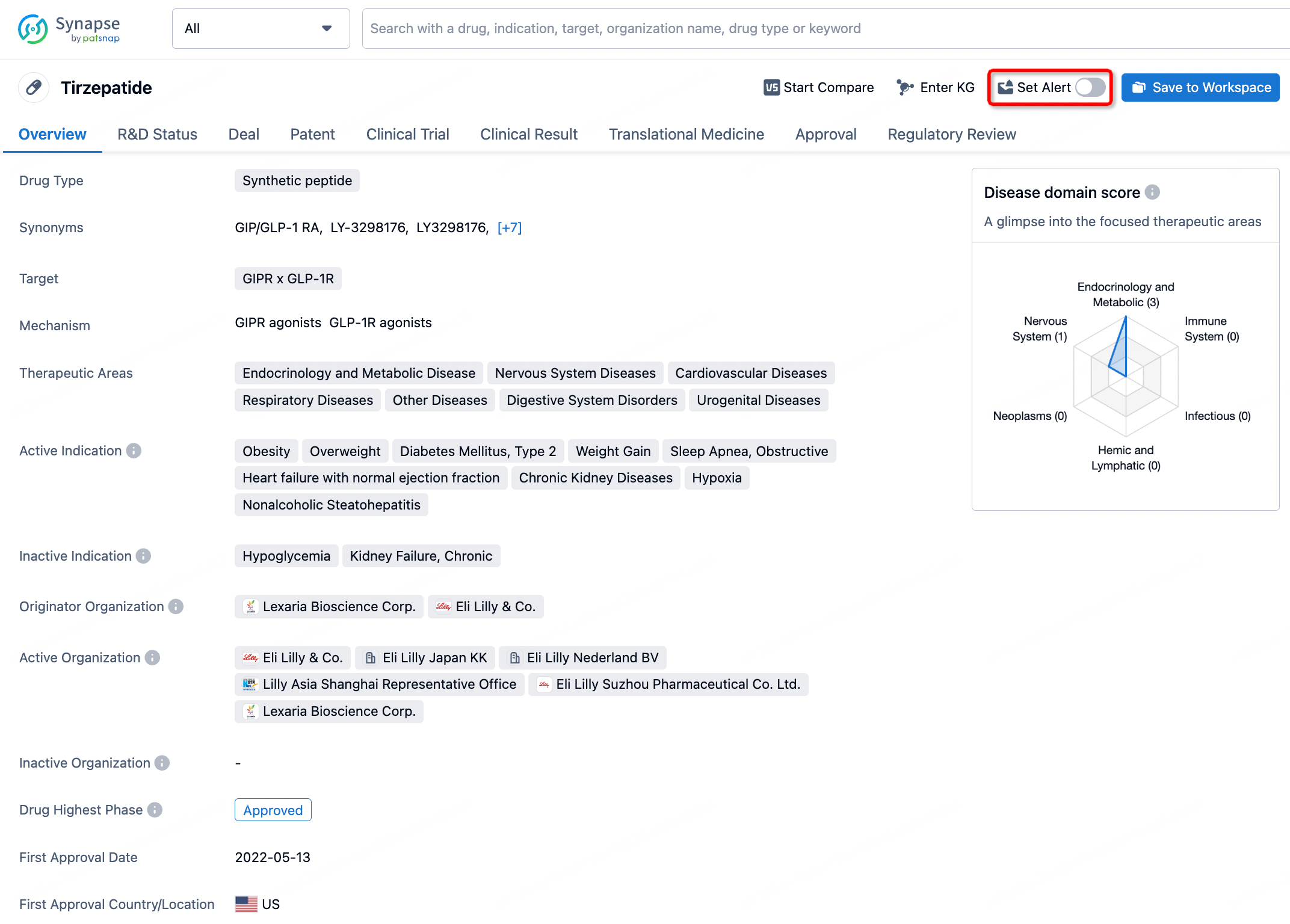
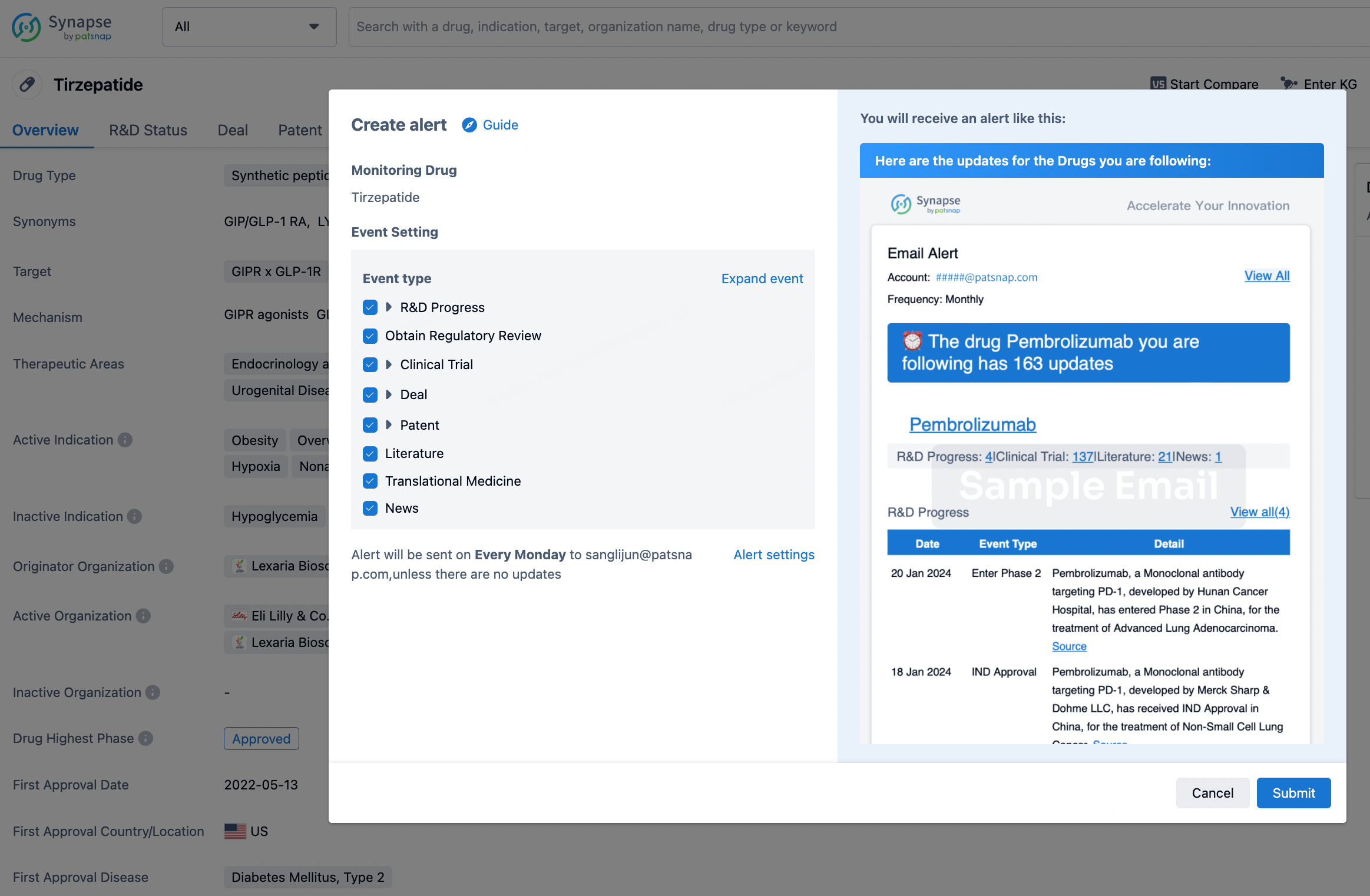
In the Synapse database, you can stay updated on the latest research and development advances of all drugs. This service is accessible anytime and anywhere, with updates available daily or weekly. Use the "Set Alert" function to stay informed. Click on the image below to embark on a brand new journey of drug discovery!

AI Agents Built for Biopharma Breakthroughs
Accelerate discovery. Empower decisions. Transform outcomes.
Get started for free today!
Accelerate Strategic R&D decision making with Synapse, PatSnap’s AI-powered Connected Innovation Intelligence Platform Built for Life Sciences Professionals.
Start your data trial now!
Synapse data is also accessible to external entities via APIs or data packages. Empower better decisions with the latest in pharmaceutical intelligence.