Request Demo
What are the side effects of Sovateltide?
12 July 2024
Sovateltide is a novel therapeutic agent that has been gaining attention for its promising effects in the treatment of various neurological conditions, such as stroke, Alzheimer's disease, and traumatic brain injury. As with any medication, understanding the potential side effects is essential for both healthcare providers and patients. This article delves into the known and potential side effects of Sovateltide to provide a comprehensive overview.
Sovateltide operates by targeting the endothelin B receptor (ETB) in the brain, which plays a crucial role in neuroprotection, neurogenesis, and cerebral blood flow regulation. While its therapeutic benefits are compelling, it is important to be aware of the side effects that may accompany its use.
One of the primary side effects observed with Sovateltide is mild to moderate headache. This is a common side effect for many medications that affect the central nervous system, likely due to changes in cerebral blood flow or neurochemical alterations. Patients experiencing persistent or severe headaches should consult their healthcare provider for potential adjustments in dosage or supportive care measures.
Another reported side effect is dizziness, which could be related to the drug's action on the central nervous system and vascular regulation. Dizziness may vary in intensity and could be transient. Patients are advised to avoid activities that require full alertness, such as driving or operating heavy machinery, until they understand how Sovateltide affects their body.
Nausea and gastrointestinal discomfort are also potential side effects. These symptoms might be a result of the body's adjustment to the medication. Eating smaller, more frequent meals and staying hydrated can help mitigate these GI-related side effects. If nausea persists or becomes severe, consulting a healthcare provider is recommended.
Some patients have reported experiencing fatigue or general weakness. This could be due to the body's adaptation to a new medication or the underlying condition being treated. Ensuring adequate rest and balanced nutrition can help manage these symptoms. Persistent or worsening fatigue should be discussed with a healthcare professional.
A less common but noteworthy side effect is hypotension, or low blood pressure. Sovateltide's impact on blood vessels may lead to a drop in blood pressure, causing symptoms like lightheadedness, fainting, or an unusual increase in heart rate. Patients are encouraged to monitor their blood pressure regularly and report significant changes to their healthcare provider.
Allergic reactions, though rare, are possible with any medication. Symptoms such as rash, itching, swelling, severe dizziness, and difficulty breathing require immediate medical attention. It is crucial to inform healthcare providers of any known allergies before starting Sovateltide.
It's important to note that the side effect profile of Sovateltide is still being studied, as it is a relatively new drug under clinical investigation. Long-term data is limited, and ongoing research may uncover additional side effects or clarify the frequency and severity of known ones. Therefore, patients should maintain open communication with their healthcare providers and report any unusual or persistent symptoms.
In conclusion, while Sovateltide holds significant promise for treating neurological disorders, it is not without potential side effects. Common side effects include headaches, dizziness, nausea, gastrointestinal discomfort, fatigue, and hypotension. Rare but serious allergic reactions are also possible. As with any medication, careful monitoring and communication with healthcare providers are essential to manage side effects and ensure the safe and effective use of Sovateltide.
Sovateltide operates by targeting the endothelin B receptor (ETB) in the brain, which plays a crucial role in neuroprotection, neurogenesis, and cerebral blood flow regulation. While its therapeutic benefits are compelling, it is important to be aware of the side effects that may accompany its use.
One of the primary side effects observed with Sovateltide is mild to moderate headache. This is a common side effect for many medications that affect the central nervous system, likely due to changes in cerebral blood flow or neurochemical alterations. Patients experiencing persistent or severe headaches should consult their healthcare provider for potential adjustments in dosage or supportive care measures.
Another reported side effect is dizziness, which could be related to the drug's action on the central nervous system and vascular regulation. Dizziness may vary in intensity and could be transient. Patients are advised to avoid activities that require full alertness, such as driving or operating heavy machinery, until they understand how Sovateltide affects their body.
Nausea and gastrointestinal discomfort are also potential side effects. These symptoms might be a result of the body's adjustment to the medication. Eating smaller, more frequent meals and staying hydrated can help mitigate these GI-related side effects. If nausea persists or becomes severe, consulting a healthcare provider is recommended.
Some patients have reported experiencing fatigue or general weakness. This could be due to the body's adaptation to a new medication or the underlying condition being treated. Ensuring adequate rest and balanced nutrition can help manage these symptoms. Persistent or worsening fatigue should be discussed with a healthcare professional.
A less common but noteworthy side effect is hypotension, or low blood pressure. Sovateltide's impact on blood vessels may lead to a drop in blood pressure, causing symptoms like lightheadedness, fainting, or an unusual increase in heart rate. Patients are encouraged to monitor their blood pressure regularly and report significant changes to their healthcare provider.
Allergic reactions, though rare, are possible with any medication. Symptoms such as rash, itching, swelling, severe dizziness, and difficulty breathing require immediate medical attention. It is crucial to inform healthcare providers of any known allergies before starting Sovateltide.
It's important to note that the side effect profile of Sovateltide is still being studied, as it is a relatively new drug under clinical investigation. Long-term data is limited, and ongoing research may uncover additional side effects or clarify the frequency and severity of known ones. Therefore, patients should maintain open communication with their healthcare providers and report any unusual or persistent symptoms.
In conclusion, while Sovateltide holds significant promise for treating neurological disorders, it is not without potential side effects. Common side effects include headaches, dizziness, nausea, gastrointestinal discomfort, fatigue, and hypotension. Rare but serious allergic reactions are also possible. As with any medication, careful monitoring and communication with healthcare providers are essential to manage side effects and ensure the safe and effective use of Sovateltide.
How to obtain the latest development progress of all drugs?
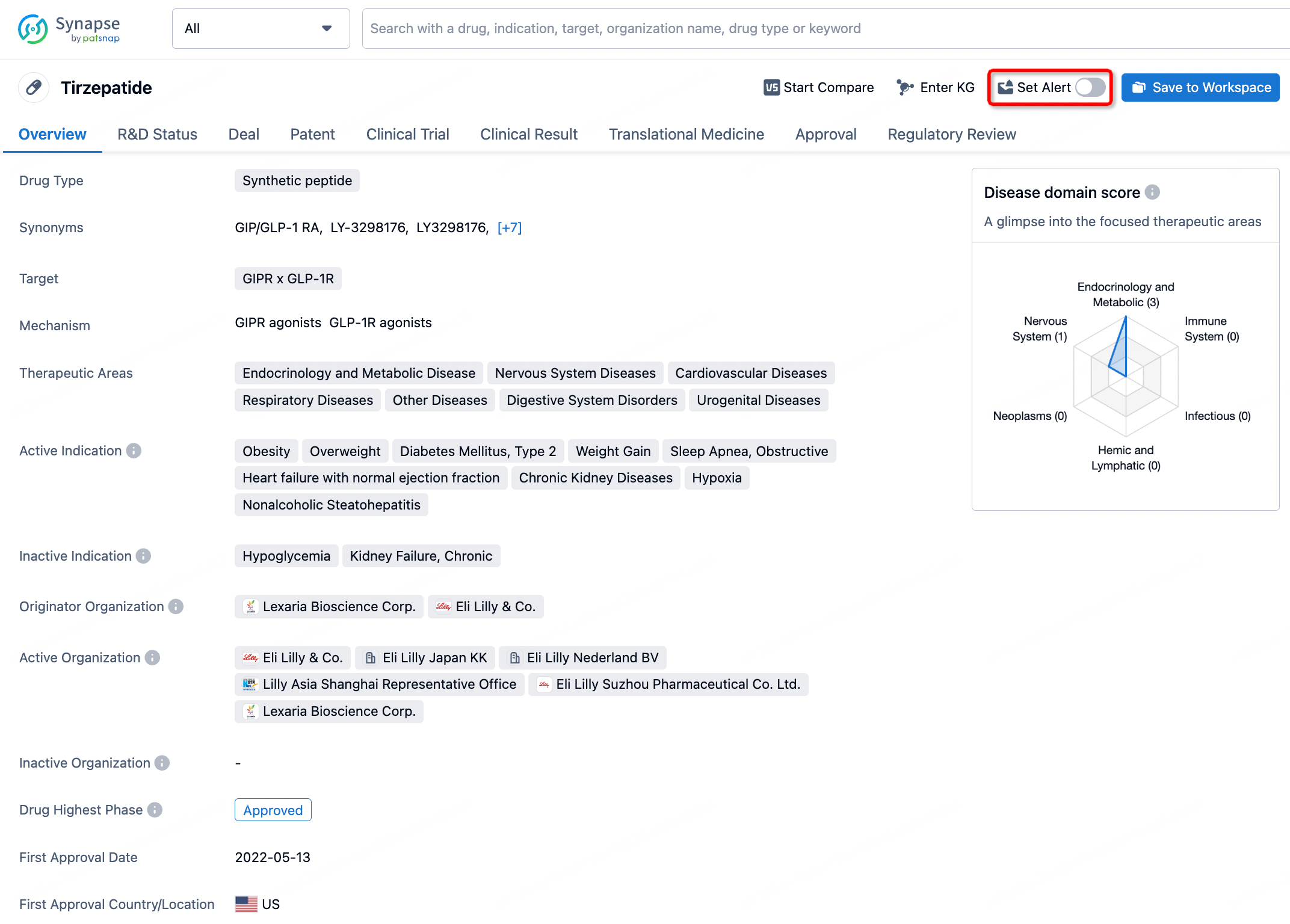
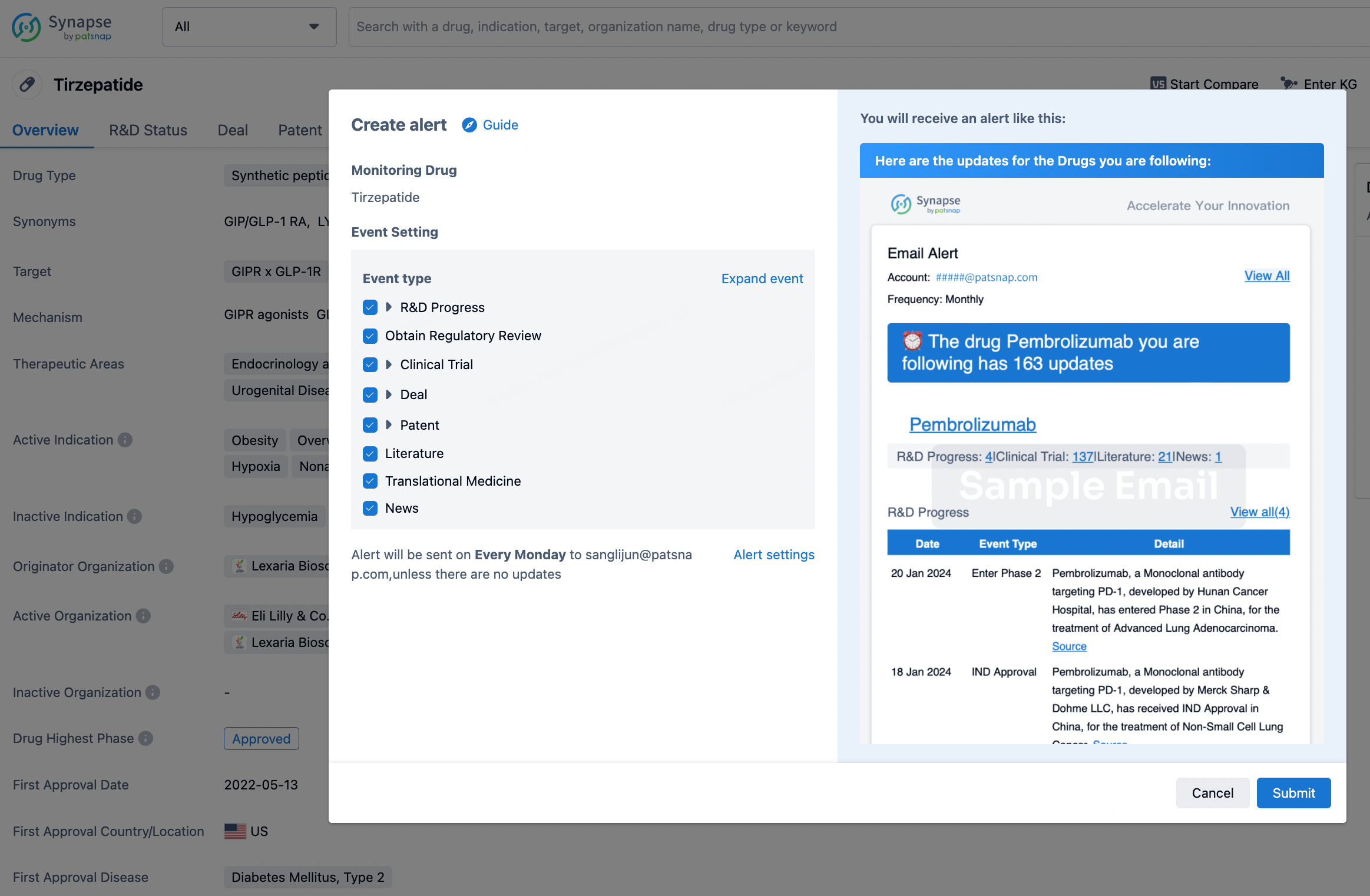
In the Synapse database, you can stay updated on the latest research and development advances of all drugs. This service is accessible anytime and anywhere, with updates available daily or weekly. Use the "Set Alert" function to stay informed. Click on the image below to embark on a brand new journey of drug discovery!

AI Agents Built for Biopharma Breakthroughs
Accelerate discovery. Empower decisions. Transform outcomes.
Get started for free today!
Accelerate Strategic R&D decision making with Synapse, PatSnap’s AI-powered Connected Innovation Intelligence Platform Built for Life Sciences Professionals.
Start your data trial now!
Synapse data is also accessible to external entities via APIs or data packages. Empower better decisions with the latest in pharmaceutical intelligence.