Request Demo
What are the side effects of Tetrachlorodecaoxide?
12 July 2024
Tetrachlorodecaoxide (TCDO) is a chemical compound that has been utilized in various medical and industrial applications. While it offers therapeutic benefits, it is crucial to be aware of its potential side effects to ensure safe usage. This article aims to provide a comprehensive overview of the side effects associated with Tetrachlorodecaoxide.
One of the primary uses of Tetrachlorodecaoxide is in wound healing and infection control due to its antimicrobial properties. However, like many chemical agents, its application can lead to certain adverse reactions. The side effects of TCDO can be categorized into local and systemic effects.
Local side effects are those that occur at the site of application. Common local side effects include skin irritation and redness. Patients may experience burning sensations, itching, or discomfort upon application. These symptoms are usually mild and temporary, resolving once the treatment is discontinued. However, in some cases, prolonged exposure can lead to more severe skin reactions such as dermatitis or allergic contact reactions. It is advisable to perform a patch test before extensive use to mitigate these risks.
Systemic side effects are less common but can occur, particularly if TCDO is absorbed into the bloodstream in significant amounts. Although rare, some patients have reported experiencing headaches, dizziness, and nausea following the use of Tetrachlorodecaoxide. These symptoms are generally mild and transient but should be monitored closely. If systemic side effects persist, it is essential to seek medical advice promptly.
Moreover, patients with pre-existing conditions should exercise caution when using Tetrachlorodecaoxide. Individuals with compromised skin integrity, such as those with extensive burns or chronic skin conditions, may be at higher risk of experiencing adverse reactions. Additionally, patients with known hypersensitivity to chlorinated compounds should avoid using TCDO to prevent potential allergic responses.
It is also important to consider the potential environmental impact of TCDO. Improper disposal or excessive use can lead to environmental contamination, which may have indirect health effects on a larger population. Therefore, it is crucial to follow proper usage guidelines and disposal protocols to minimize environmental hazards.
In conclusion, while Tetrachlorodecaoxide offers valuable therapeutic benefits, it is not without its side effects. Local side effects such as skin irritation and redness are common, whereas systemic effects like headaches and nausea are rare but possible. Patients with pre-existing skin conditions or sensitivities should exercise caution and consult healthcare professionals before use. Awareness and adherence to proper usage and disposal guidelines are key to mitigating risks and ensuring safe and effective application of Tetrachlorodecaoxide.
One of the primary uses of Tetrachlorodecaoxide is in wound healing and infection control due to its antimicrobial properties. However, like many chemical agents, its application can lead to certain adverse reactions. The side effects of TCDO can be categorized into local and systemic effects.
Local side effects are those that occur at the site of application. Common local side effects include skin irritation and redness. Patients may experience burning sensations, itching, or discomfort upon application. These symptoms are usually mild and temporary, resolving once the treatment is discontinued. However, in some cases, prolonged exposure can lead to more severe skin reactions such as dermatitis or allergic contact reactions. It is advisable to perform a patch test before extensive use to mitigate these risks.
Systemic side effects are less common but can occur, particularly if TCDO is absorbed into the bloodstream in significant amounts. Although rare, some patients have reported experiencing headaches, dizziness, and nausea following the use of Tetrachlorodecaoxide. These symptoms are generally mild and transient but should be monitored closely. If systemic side effects persist, it is essential to seek medical advice promptly.
Moreover, patients with pre-existing conditions should exercise caution when using Tetrachlorodecaoxide. Individuals with compromised skin integrity, such as those with extensive burns or chronic skin conditions, may be at higher risk of experiencing adverse reactions. Additionally, patients with known hypersensitivity to chlorinated compounds should avoid using TCDO to prevent potential allergic responses.
It is also important to consider the potential environmental impact of TCDO. Improper disposal or excessive use can lead to environmental contamination, which may have indirect health effects on a larger population. Therefore, it is crucial to follow proper usage guidelines and disposal protocols to minimize environmental hazards.
In conclusion, while Tetrachlorodecaoxide offers valuable therapeutic benefits, it is not without its side effects. Local side effects such as skin irritation and redness are common, whereas systemic effects like headaches and nausea are rare but possible. Patients with pre-existing skin conditions or sensitivities should exercise caution and consult healthcare professionals before use. Awareness and adherence to proper usage and disposal guidelines are key to mitigating risks and ensuring safe and effective application of Tetrachlorodecaoxide.
How to obtain the latest development progress of all drugs?
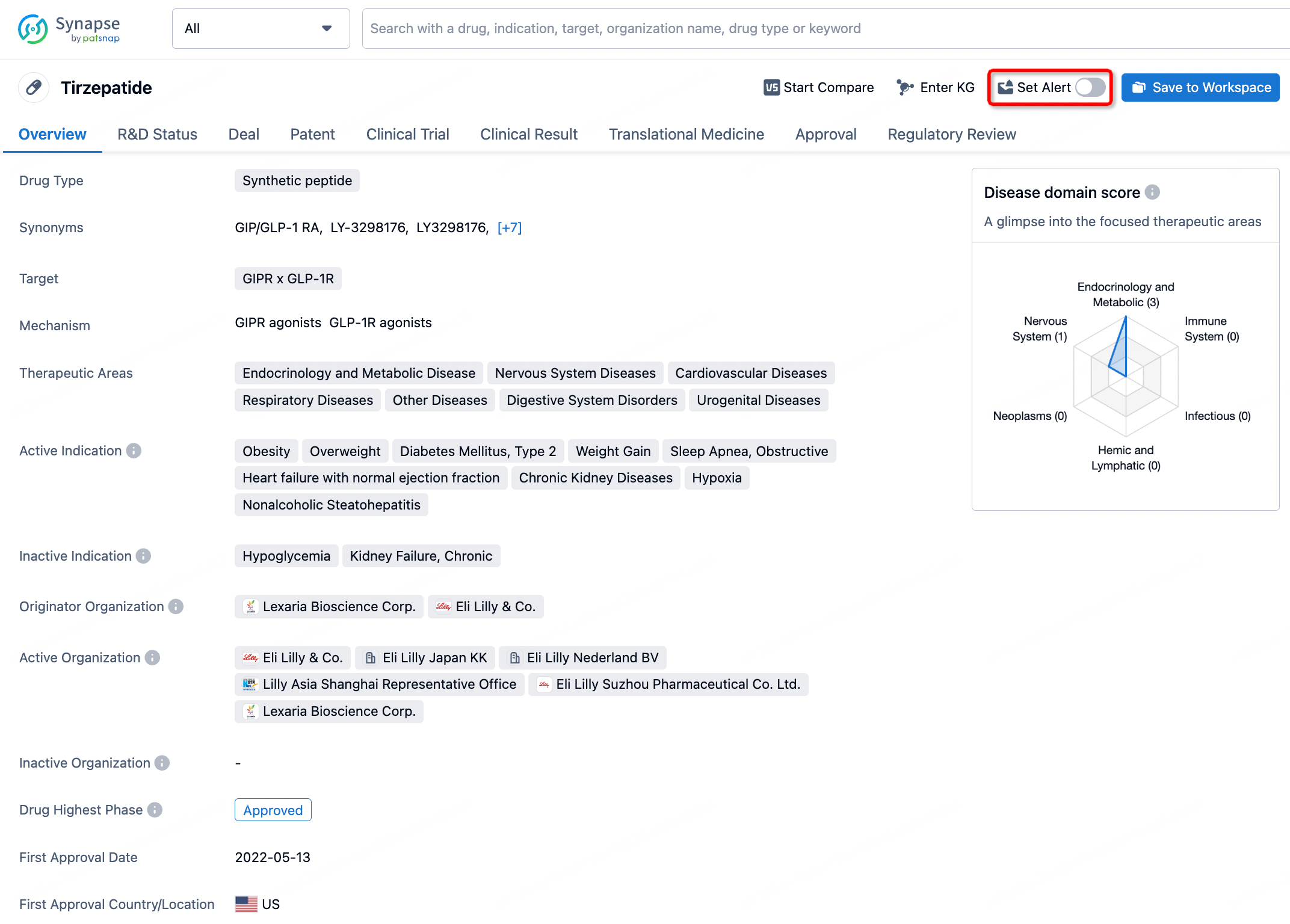
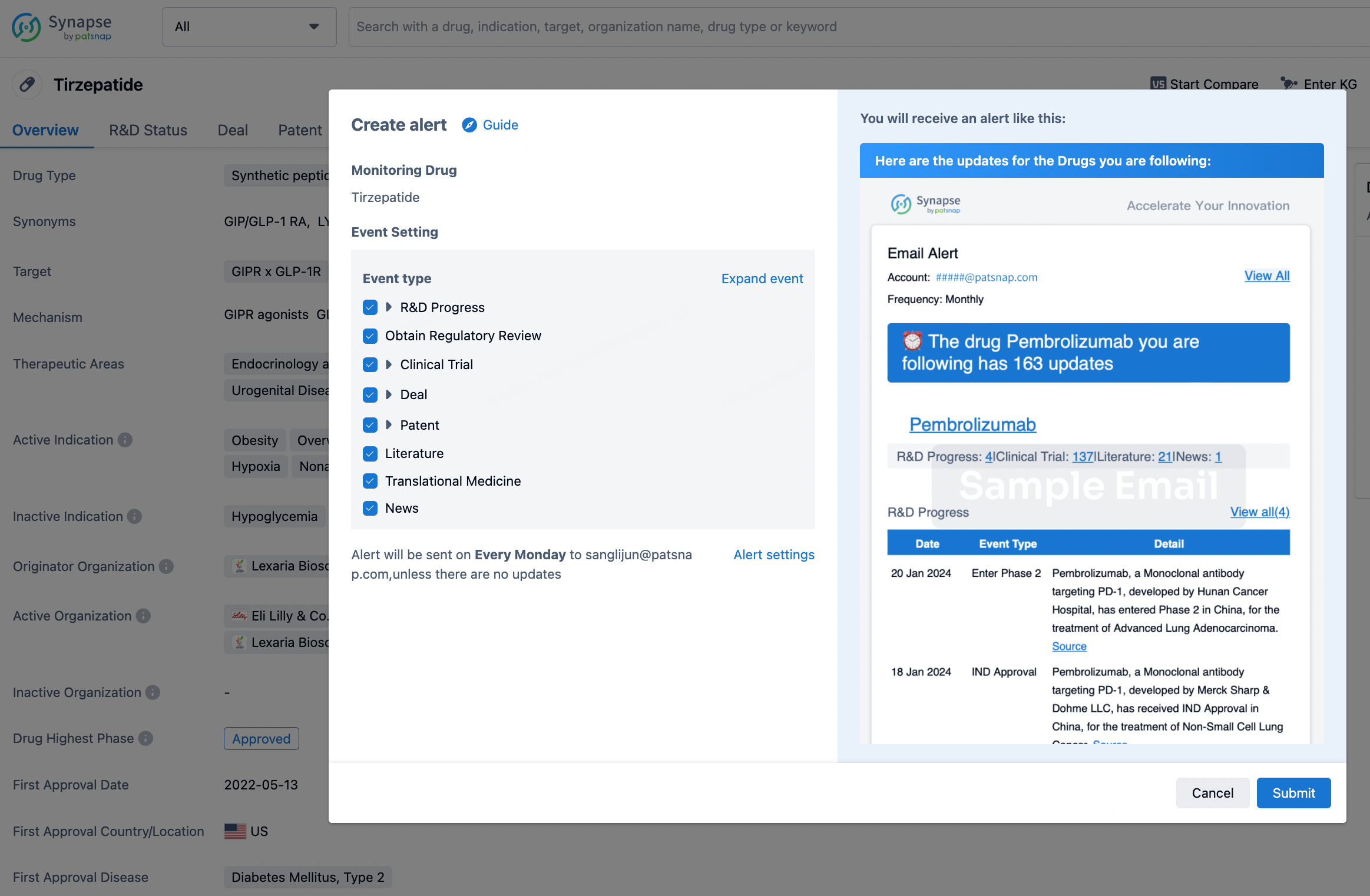
In the Synapse database, you can stay updated on the latest research and development advances of all drugs. This service is accessible anytime and anywhere, with updates available daily or weekly. Use the "Set Alert" function to stay informed. Click on the image below to embark on a brand new journey of drug discovery!
AI Agents Built for Biopharma Breakthroughs
Accelerate discovery. Empower decisions. Transform outcomes.
Get started for free today!
Accelerate Strategic R&D decision making with Synapse, PatSnap’s AI-powered Connected Innovation Intelligence Platform Built for Life Sciences Professionals.
Start your data trial now!
Synapse data is also accessible to external entities via APIs or data packages. Empower better decisions with the latest in pharmaceutical intelligence.