Request Demo
What are the side effects of TP-305?
15 July 2024
TP-305 is an experimental medication that has shown promise in treating a variety of conditions. However, like all medications, it does come with potential side effects that patients and healthcare providers should be aware of. Understanding these side effects is crucial for making informed decisions about its use.
One of the most commonly reported side effects of TP-305 is gastrointestinal discomfort. Patients have frequently reported symptoms such as nausea, vomiting, and diarrhea. These symptoms can range from mild to severe and are often dose-dependent, meaning higher doses of TP-305 are more likely to cause these issues. To minimize these effects, healthcare providers may recommend taking the medication with food or at a lower initial dose.
Another significant side effect associated with TP-305 is dizziness and lightheadedness. Some patients have experienced these symptoms, especially when standing up quickly or after prolonged periods of inactivity. This could be particularly concerning for individuals who operate heavy machinery or drive, as their ability to perform these tasks safely could be compromised. Doctors may advise patients to avoid such activities until they know how TP-305 affects them.
Headaches are another common complaint among TP-305 users. These headaches can vary in intensity and duration, with some patients experiencing only mild discomfort while others suffer from more severe pain. Over-the-counter pain relievers may help manage these headaches, but if they persist, it is advisable to consult a healthcare provider.
Fatigue and drowsiness are additional side effects that have been observed in patients taking TP-305. These symptoms can interfere with daily activities and overall quality of life. Patients experiencing significant drowsiness should discuss this with their healthcare provider, as adjusting the dosage or timing of the medication might help alleviate these issues.
Allergic reactions, although less common, have been reported with TP-305. Symptoms of an allergic reaction can include rash, itching, swelling, severe dizziness, and trouble breathing. If any of these symptoms occur, it is critical to seek immediate medical attention, as allergic reactions can be life-threatening.
Some patients have also reported experiencing mood changes and cognitive disturbances while on TP-305. These can include feelings of depression, anxiety, or confusion. These symptoms should be taken seriously, and any significant changes in mood or cognition should be reported to a healthcare provider as soon as possible.
Long-term use of TP-305 might be associated with more severe side effects, although research is still ongoing. Potential long-term effects could include liver toxicity and kidney damage, but more data is needed to confirm these risks. Regular monitoring through blood tests and other diagnostic measures may be recommended for patients on long-term TP-305 therapy to detect any early signs of organ damage.
In conclusion, while TP-305 holds promise as an effective treatment for various conditions, it is not without its side effects. Patients should be closely monitored by their healthcare providers to manage these side effects effectively and to make any necessary adjustments to their treatment plan. Anyone considering TP-305 should have a thorough discussion with their healthcare provider to weigh the potential benefits against the possible risks.
One of the most commonly reported side effects of TP-305 is gastrointestinal discomfort. Patients have frequently reported symptoms such as nausea, vomiting, and diarrhea. These symptoms can range from mild to severe and are often dose-dependent, meaning higher doses of TP-305 are more likely to cause these issues. To minimize these effects, healthcare providers may recommend taking the medication with food or at a lower initial dose.
Another significant side effect associated with TP-305 is dizziness and lightheadedness. Some patients have experienced these symptoms, especially when standing up quickly or after prolonged periods of inactivity. This could be particularly concerning for individuals who operate heavy machinery or drive, as their ability to perform these tasks safely could be compromised. Doctors may advise patients to avoid such activities until they know how TP-305 affects them.
Headaches are another common complaint among TP-305 users. These headaches can vary in intensity and duration, with some patients experiencing only mild discomfort while others suffer from more severe pain. Over-the-counter pain relievers may help manage these headaches, but if they persist, it is advisable to consult a healthcare provider.
Fatigue and drowsiness are additional side effects that have been observed in patients taking TP-305. These symptoms can interfere with daily activities and overall quality of life. Patients experiencing significant drowsiness should discuss this with their healthcare provider, as adjusting the dosage or timing of the medication might help alleviate these issues.
Allergic reactions, although less common, have been reported with TP-305. Symptoms of an allergic reaction can include rash, itching, swelling, severe dizziness, and trouble breathing. If any of these symptoms occur, it is critical to seek immediate medical attention, as allergic reactions can be life-threatening.
Some patients have also reported experiencing mood changes and cognitive disturbances while on TP-305. These can include feelings of depression, anxiety, or confusion. These symptoms should be taken seriously, and any significant changes in mood or cognition should be reported to a healthcare provider as soon as possible.
Long-term use of TP-305 might be associated with more severe side effects, although research is still ongoing. Potential long-term effects could include liver toxicity and kidney damage, but more data is needed to confirm these risks. Regular monitoring through blood tests and other diagnostic measures may be recommended for patients on long-term TP-305 therapy to detect any early signs of organ damage.
In conclusion, while TP-305 holds promise as an effective treatment for various conditions, it is not without its side effects. Patients should be closely monitored by their healthcare providers to manage these side effects effectively and to make any necessary adjustments to their treatment plan. Anyone considering TP-305 should have a thorough discussion with their healthcare provider to weigh the potential benefits against the possible risks.
How to obtain the latest development progress of all drugs?
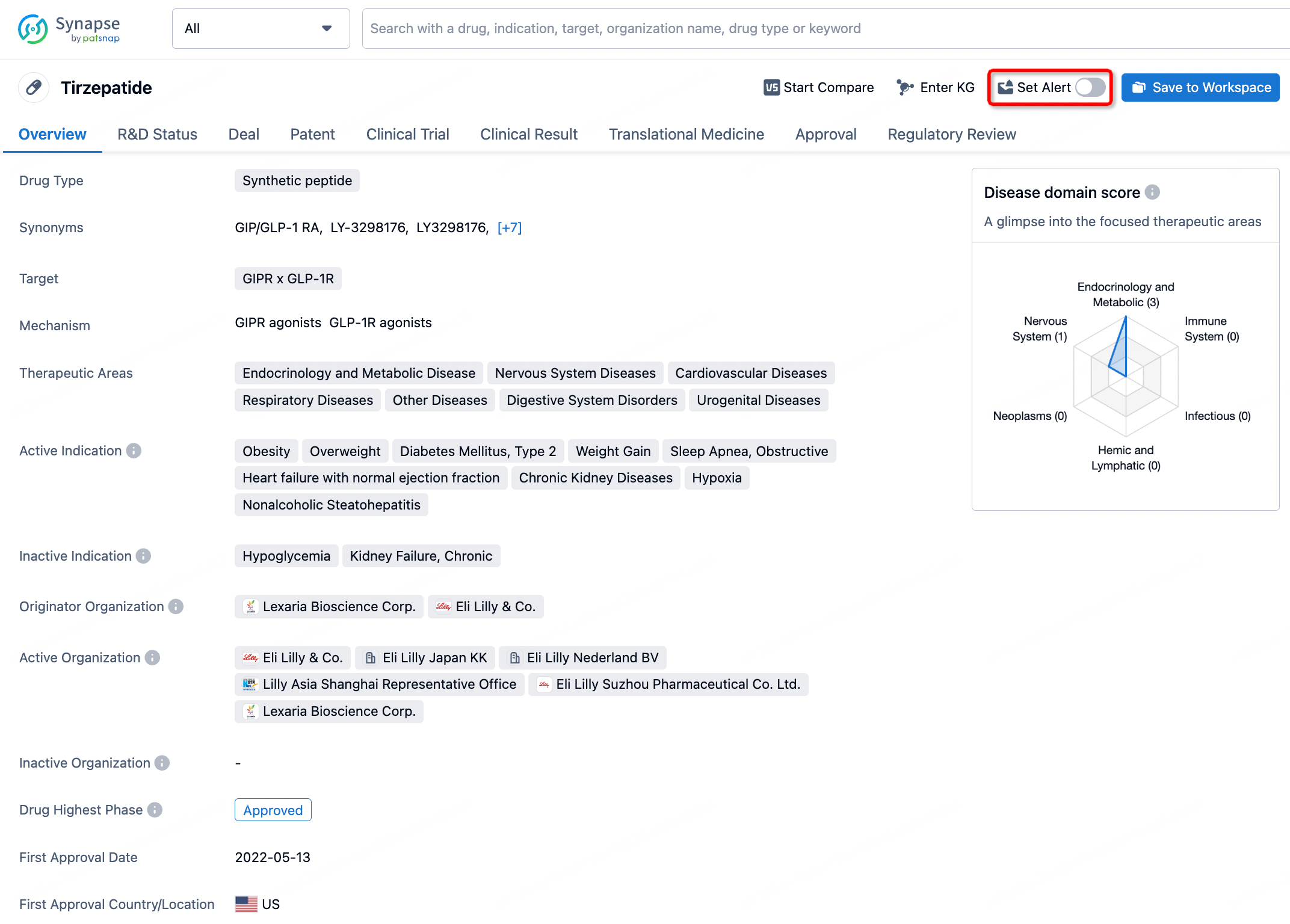
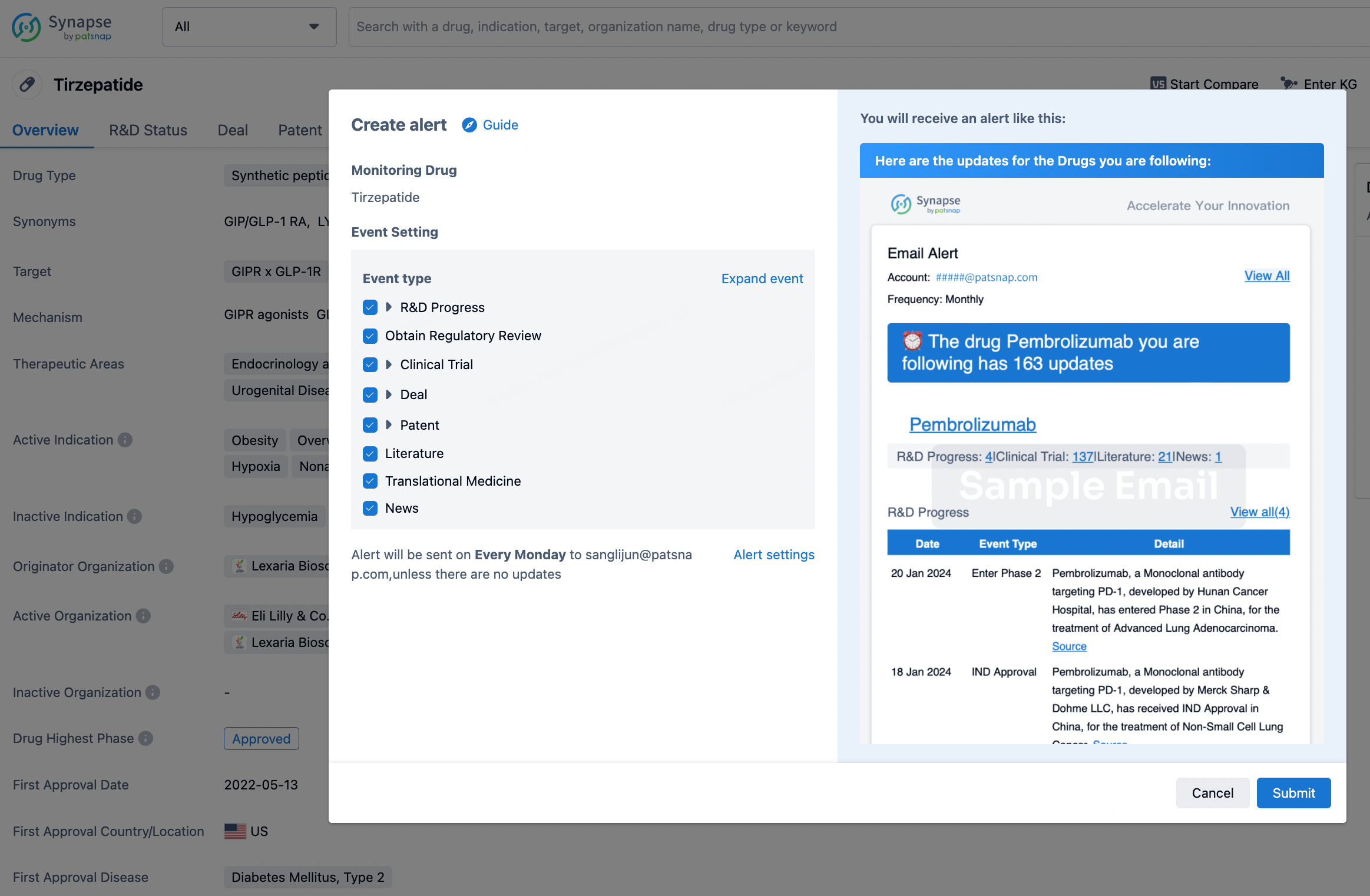
In the Synapse database, you can stay updated on the latest research and development advances of all drugs. This service is accessible anytime and anywhere, with updates available daily or weekly. Use the "Set Alert" function to stay informed. Click on the image below to embark on a brand new journey of drug discovery!

AI Agents Built for Biopharma Breakthroughs
Accelerate discovery. Empower decisions. Transform outcomes.
Get started for free today!
Accelerate Strategic R&D decision making with Synapse, PatSnap’s AI-powered Connected Innovation Intelligence Platform Built for Life Sciences Professionals.
Start your data trial now!
Synapse data is also accessible to external entities via APIs or data packages. Empower better decisions with the latest in pharmaceutical intelligence.