Request Demo
What are the side effects of Velmanase alfa-tycv?
12 July 2024
Velmanase alfa-tycv is a relatively new therapeutic enzyme replacement medication, prescribed primarily for individuals who have been diagnosed with alpha-mannosidosis. Alpha-mannosidosis is a rare genetic disorder that impacts the body's ability to break down certain complex sugars due to a deficiency in the enzyme alpha-mannosidase. While Velmanase alfa-tycv has shown promise in managing some of the symptoms associated with this condition, it is essential to be well-informed about the potential side effects of this medication.
Like any pharmaceutical treatment, Velmanase alfa-tycv does come with a range of possible side effects, categorized into common, less common, and rare. Awareness of these side effects can help patients and healthcare providers make informed decisions about their treatment options.
Common side effects include mild to moderate reactions that are frequently reported by patients undergoing treatment with Velmanase alfa-tycv. Some of these common side effects are infusion-related reactions such as headaches, fever, nausea, chills, and fatigue. These symptoms often occur during or shortly after the administration of the drug and may diminish with subsequent treatments as the body adjusts to the medication. Other common side effects include skin reactions at the injection site, such as redness, swelling, or discomfort. These are generally manageable and can be treated with over-the-counter medications or by adjusting the infusion rate.
Less common side effects are those that occur less frequently but still warrant attention. These may include gastrointestinal issues such as diarrhea, abdominal pain, or vomiting. Some patients have also reported experiencing respiratory problems, including shortness of breath, cough, or nasal congestion. Although these side effects are less common, they can be more distressing and may require medical intervention to manage.
Rare side effects are those that occur infrequently but are potentially more severe. These can include allergic reactions, which may manifest as hives, swelling of the face or throat, difficulty breathing, or severe skin rashes. In such cases, it is crucial to seek immediate medical attention, as these reactions can be life-threatening. Another rare but serious side effect is the development of antibodies against Velmanase alfa-tycv, which can reduce the effectiveness of the drug over time and may necessitate alternative treatments.
In addition to these side effects, there may be other risks associated with long-term use of Velmanase alfa-tycv that are not yet fully understood, given the relative novelty of the medication. Therefore, ongoing monitoring and regular consultations with healthcare providers are essential for patients receiving this treatment.
Patients should also be aware of the importance of reporting any side effects they experience to their healthcare provider, as this information contributes to a better understanding of the medication's safety profile and aids in the management of their condition.
In conclusion, while Velmanase alfa-tycv offers significant benefits for individuals with alpha-mannosidosis by addressing the enzyme deficiency at the root of the disorder, it is not without its potential side effects. By staying informed and maintaining open communication with healthcare providers, patients can navigate these challenges and optimize their treatment outcomes.
Like any pharmaceutical treatment, Velmanase alfa-tycv does come with a range of possible side effects, categorized into common, less common, and rare. Awareness of these side effects can help patients and healthcare providers make informed decisions about their treatment options.
Common side effects include mild to moderate reactions that are frequently reported by patients undergoing treatment with Velmanase alfa-tycv. Some of these common side effects are infusion-related reactions such as headaches, fever, nausea, chills, and fatigue. These symptoms often occur during or shortly after the administration of the drug and may diminish with subsequent treatments as the body adjusts to the medication. Other common side effects include skin reactions at the injection site, such as redness, swelling, or discomfort. These are generally manageable and can be treated with over-the-counter medications or by adjusting the infusion rate.
Less common side effects are those that occur less frequently but still warrant attention. These may include gastrointestinal issues such as diarrhea, abdominal pain, or vomiting. Some patients have also reported experiencing respiratory problems, including shortness of breath, cough, or nasal congestion. Although these side effects are less common, they can be more distressing and may require medical intervention to manage.
Rare side effects are those that occur infrequently but are potentially more severe. These can include allergic reactions, which may manifest as hives, swelling of the face or throat, difficulty breathing, or severe skin rashes. In such cases, it is crucial to seek immediate medical attention, as these reactions can be life-threatening. Another rare but serious side effect is the development of antibodies against Velmanase alfa-tycv, which can reduce the effectiveness of the drug over time and may necessitate alternative treatments.
In addition to these side effects, there may be other risks associated with long-term use of Velmanase alfa-tycv that are not yet fully understood, given the relative novelty of the medication. Therefore, ongoing monitoring and regular consultations with healthcare providers are essential for patients receiving this treatment.
Patients should also be aware of the importance of reporting any side effects they experience to their healthcare provider, as this information contributes to a better understanding of the medication's safety profile and aids in the management of their condition.
In conclusion, while Velmanase alfa-tycv offers significant benefits for individuals with alpha-mannosidosis by addressing the enzyme deficiency at the root of the disorder, it is not without its potential side effects. By staying informed and maintaining open communication with healthcare providers, patients can navigate these challenges and optimize their treatment outcomes.
How to obtain the latest development progress of all drugs?
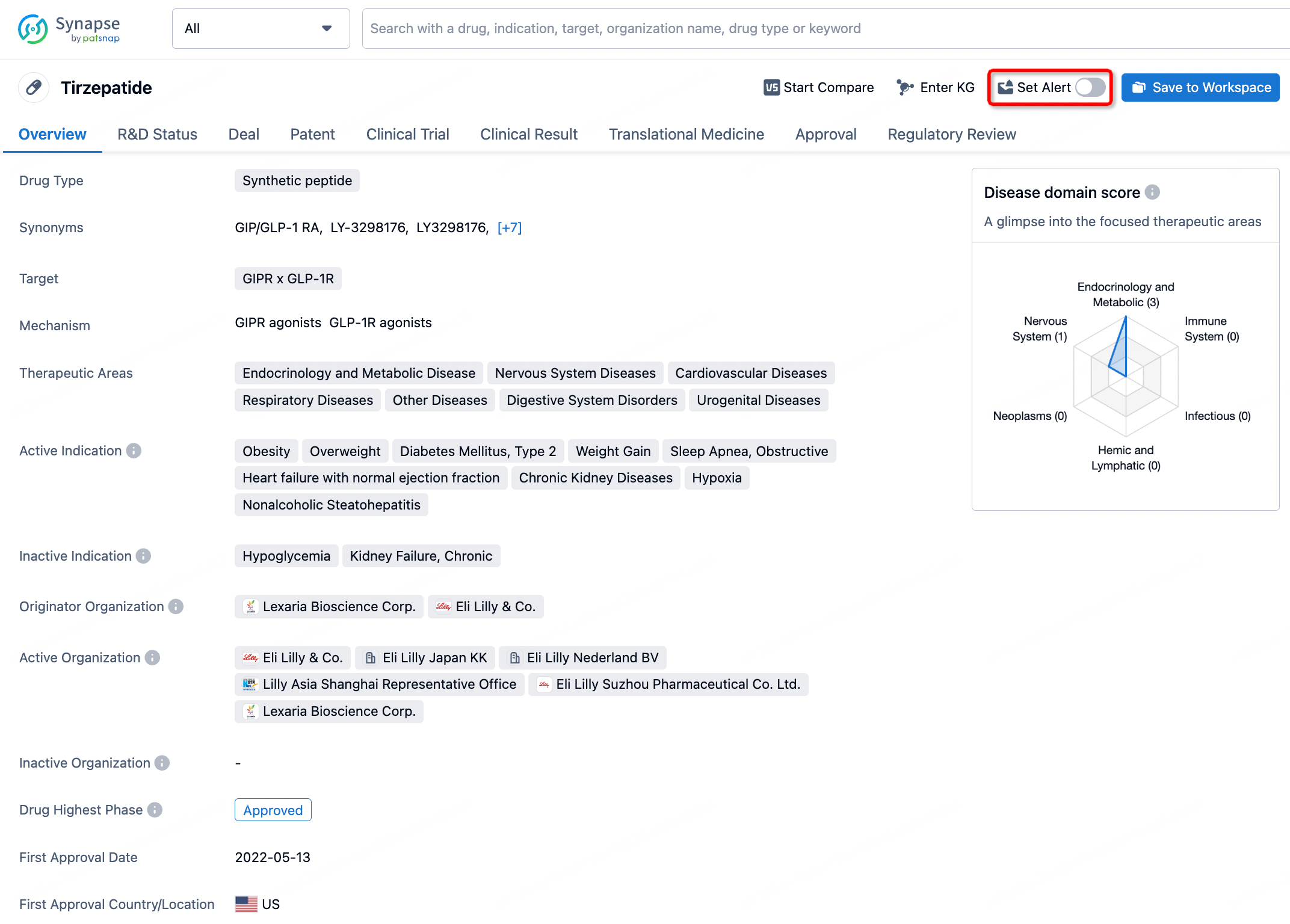
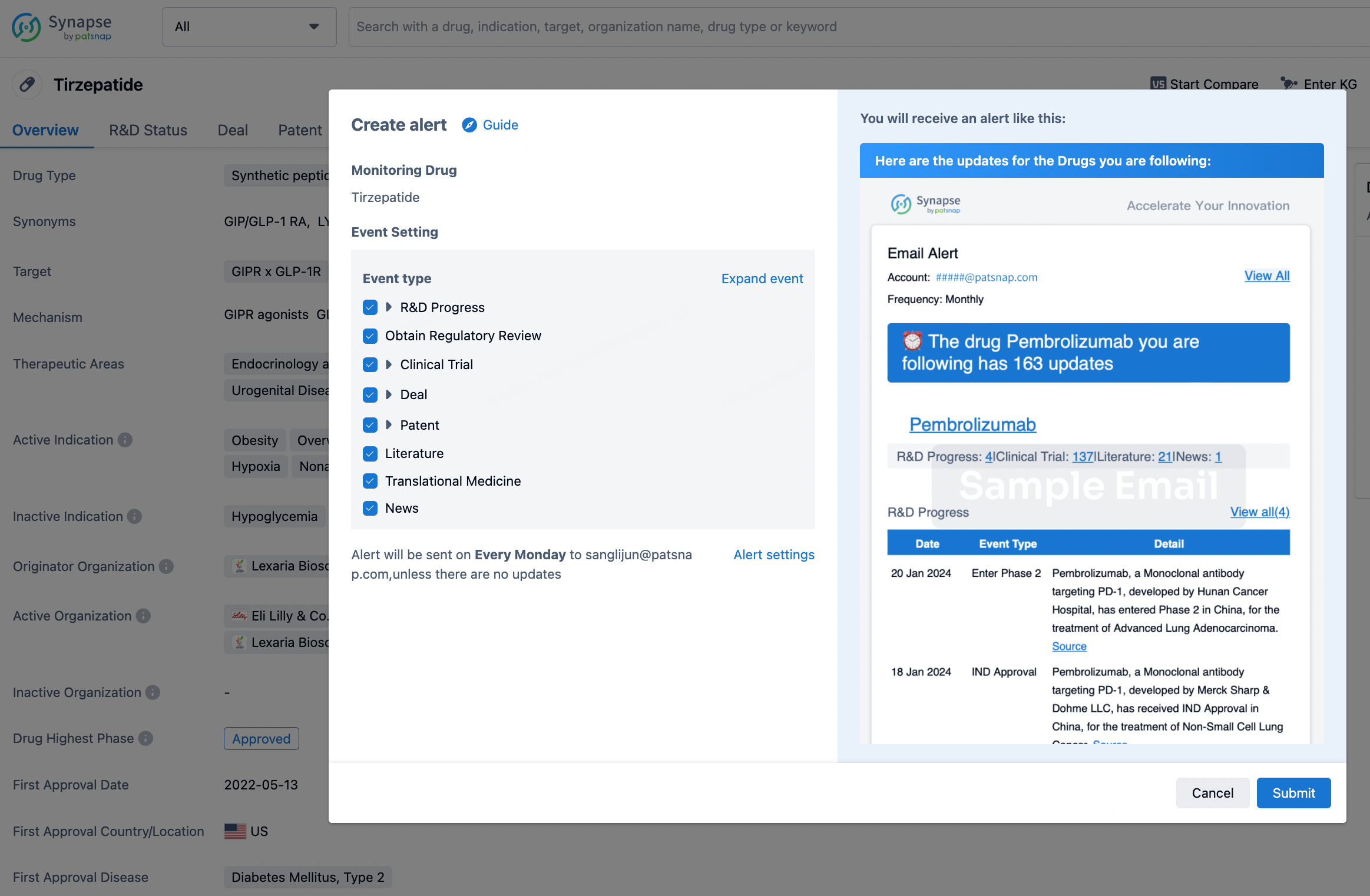
In the Synapse database, you can stay updated on the latest research and development advances of all drugs. This service is accessible anytime and anywhere, with updates available daily or weekly. Use the "Set Alert" function to stay informed. Click on the image below to embark on a brand new journey of drug discovery!
AI Agents Built for Biopharma Breakthroughs
Accelerate discovery. Empower decisions. Transform outcomes.
Get started for free today!
Accelerate Strategic R&D decision making with Synapse, PatSnap’s AI-powered Connected Innovation Intelligence Platform Built for Life Sciences Professionals.
Start your data trial now!
Synapse data is also accessible to external entities via APIs or data packages. Empower better decisions with the latest in pharmaceutical intelligence.