Request Demo
What are Tie-2 antagonists and how do they work?
21 June 2024
Tie-2 antagonists are a fascinating area of study in the field of biomedical research, as they hold great potential for therapeutic applications in various diseases. The Tie-2 receptor, a part of the tyrosine kinase receptor family, plays a pivotal role in angiogenesis and vascular stability, making it a critical target in conditions where blood vessel formation and function are compromised. By antagonizing this receptor, researchers hope to modulate abnormal blood vessel activity and address a range of medical conditions.
Tie-2, short for Tyrosine kinase with immunoglobulin-like and EGF-like domains 2, is primarily expressed on endothelial cells, which are the cells lining the interior surface of blood vessels. It interacts with angiopoietins, especially Angiopoietin-1 (Ang-1) and Angiopoietin-2 (Ang-2), to regulate the formation and maintenance of blood vessels. Ang-1 generally promotes vessel stability and maturation, while Ang-2 can either promote or inhibit angiogenesis depending on the context. Tie-2 antagonists work by inhibiting the activity of this receptor, thereby affecting the downstream signaling pathways that control these processes.
The mechanism of action of Tie-2 antagonists involves blocking the receptor’s ability to interact with its ligands, Ang-1 and Ang-2. This inhibition can prevent the receptor from activating intracellular signaling cascades that lead to endothelial cell survival, proliferation, and migration—key steps in the formation of new blood vessels. By disrupting these pathways, Tie-2 antagonists effectively reduce abnormal angiogenesis and can help normalize the vascular environment. This is particularly useful in diseases where pathological blood vessel formation is a hallmark, such as cancer, diabetic retinopathy, and age-related macular degeneration.
The use of Tie-2 antagonists extends across various medical disciplines, primarily due to the receptor’s central role in vascular biology. One of the most promising applications is in oncology. Tumors require a blood supply to grow and metastasize, and they often hijack the body’s angiogenesis mechanisms to create new blood vessels. By inhibiting Tie-2, researchers can potentially starve tumors of their blood supply, slowing their growth and making them more susceptible to other treatments like chemotherapy and radiation.
In addition to cancer, Tie-2 antagonists are being explored in the context of ocular diseases such as diabetic retinopathy and age-related macular degeneration (AMD). Both conditions are characterized by abnormal blood vessel growth in the retina, leading to vision loss. By targeting Tie-2, it is possible to reduce this pathological angiogenesis and preserve vision. Early clinical trials have shown promise in using Tie-2 antagonists to treat these debilitating eye conditions, offering hope for new therapeutic options.
Another area where Tie-2 antagonists show potential is in inflammatory diseases. The Tie-2 receptor is involved in maintaining vascular integrity and preventing excessive leakage and inflammation. In diseases like sepsis or certain chronic inflammatory conditions, the vascular barrier can become compromised, leading to severe complications. By stabilizing the blood vessels through Tie-2 inhibition, it may be possible to reduce inflammation and improve outcomes in these patients.
The development of Tie-2 antagonists is still in its early stages, with much of the research focused on understanding the complexities of the Tie-2 signaling pathway and its interactions with other cellular mechanisms. Despite this, the initial results from preclinical and clinical studies are encouraging. As our understanding of Tie-2 and its role in disease continues to grow, so too does the potential for these antagonists to become a vital part of the therapeutic arsenal against a range of diseases.
In conclusion, Tie-2 antagonists represent a promising frontier in the treatment of diseases characterized by abnormal blood vessel activity. By inhibiting the Tie-2 receptor, these agents can disrupt pathological angiogenesis and stabilize the vascular environment, offering potential benefits in cancer, ocular diseases, and inflammatory conditions. As research progresses, we can expect to see more refined and effective Tie-2 antagonists making their way into clinical practice, bringing hope to patients suffering from these challenging diseases.
Tie-2, short for Tyrosine kinase with immunoglobulin-like and EGF-like domains 2, is primarily expressed on endothelial cells, which are the cells lining the interior surface of blood vessels. It interacts with angiopoietins, especially Angiopoietin-1 (Ang-1) and Angiopoietin-2 (Ang-2), to regulate the formation and maintenance of blood vessels. Ang-1 generally promotes vessel stability and maturation, while Ang-2 can either promote or inhibit angiogenesis depending on the context. Tie-2 antagonists work by inhibiting the activity of this receptor, thereby affecting the downstream signaling pathways that control these processes.
The mechanism of action of Tie-2 antagonists involves blocking the receptor’s ability to interact with its ligands, Ang-1 and Ang-2. This inhibition can prevent the receptor from activating intracellular signaling cascades that lead to endothelial cell survival, proliferation, and migration—key steps in the formation of new blood vessels. By disrupting these pathways, Tie-2 antagonists effectively reduce abnormal angiogenesis and can help normalize the vascular environment. This is particularly useful in diseases where pathological blood vessel formation is a hallmark, such as cancer, diabetic retinopathy, and age-related macular degeneration.
The use of Tie-2 antagonists extends across various medical disciplines, primarily due to the receptor’s central role in vascular biology. One of the most promising applications is in oncology. Tumors require a blood supply to grow and metastasize, and they often hijack the body’s angiogenesis mechanisms to create new blood vessels. By inhibiting Tie-2, researchers can potentially starve tumors of their blood supply, slowing their growth and making them more susceptible to other treatments like chemotherapy and radiation.
In addition to cancer, Tie-2 antagonists are being explored in the context of ocular diseases such as diabetic retinopathy and age-related macular degeneration (AMD). Both conditions are characterized by abnormal blood vessel growth in the retina, leading to vision loss. By targeting Tie-2, it is possible to reduce this pathological angiogenesis and preserve vision. Early clinical trials have shown promise in using Tie-2 antagonists to treat these debilitating eye conditions, offering hope for new therapeutic options.
Another area where Tie-2 antagonists show potential is in inflammatory diseases. The Tie-2 receptor is involved in maintaining vascular integrity and preventing excessive leakage and inflammation. In diseases like sepsis or certain chronic inflammatory conditions, the vascular barrier can become compromised, leading to severe complications. By stabilizing the blood vessels through Tie-2 inhibition, it may be possible to reduce inflammation and improve outcomes in these patients.
The development of Tie-2 antagonists is still in its early stages, with much of the research focused on understanding the complexities of the Tie-2 signaling pathway and its interactions with other cellular mechanisms. Despite this, the initial results from preclinical and clinical studies are encouraging. As our understanding of Tie-2 and its role in disease continues to grow, so too does the potential for these antagonists to become a vital part of the therapeutic arsenal against a range of diseases.
In conclusion, Tie-2 antagonists represent a promising frontier in the treatment of diseases characterized by abnormal blood vessel activity. By inhibiting the Tie-2 receptor, these agents can disrupt pathological angiogenesis and stabilize the vascular environment, offering potential benefits in cancer, ocular diseases, and inflammatory conditions. As research progresses, we can expect to see more refined and effective Tie-2 antagonists making their way into clinical practice, bringing hope to patients suffering from these challenging diseases.
How to obtain the latest development progress of all targets?
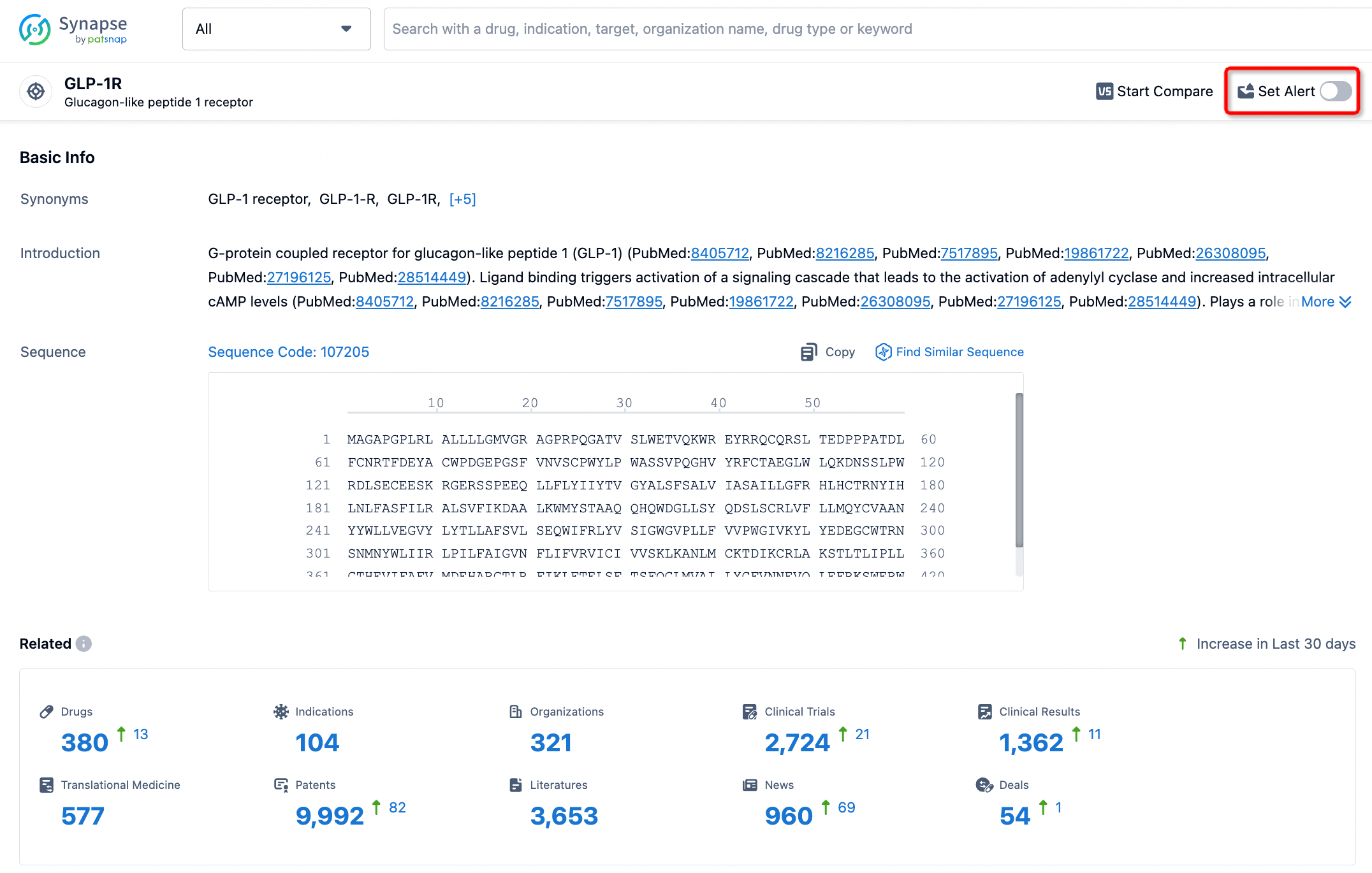
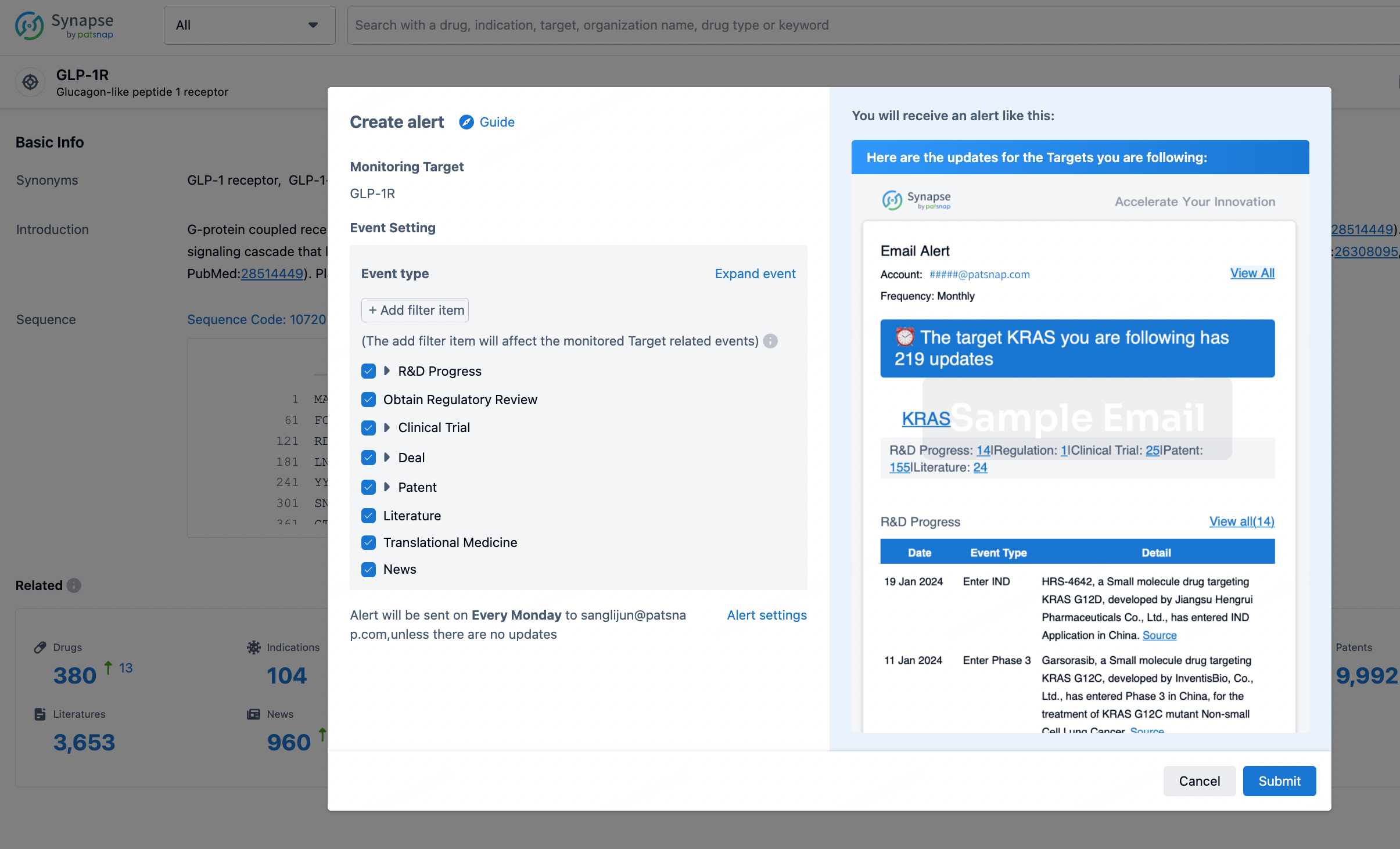
In the Synapse database, you can stay updated on the latest research and development advances of all targets. This service is accessible anytime and anywhere, with updates available daily or weekly. Use the "Set Alert" function to stay informed. Click on the image below to embark on a brand new journey of drug discovery!
Hiro LS Researcher
The AI Search Engine Built to Accelerate Biopharma Decisions
Search across billion-scale life sciences data to uncover signals, validate evidence, and act with confidence.
Ask any biopharma research question→
Get started for free today!
Accelerate Strategic R&D decision making with Synapse, Patsnap’s AI-powered Connected Innovation Intelligence Platform Built for Life Sciences Professionals.
Discover Synapse Data Servers
Synapse data is now integrated into the PatSnap LS Model Context Protocol (MCP) service. Customize your LLM agent now using our MCP server!