Request Demo
What are TIMD4 agonists and how do they work?
25 June 2024
TIMD4 agonists are an emerging class of therapeutic agents that are attracting significant attention in the field of immunology and oncology. TIMD4, or T-cell immunoglobulin and mucin-domain containing-4, is a protein that plays a crucial role in the immune system, particularly in regulating immune responses. By targeting this protein, TIMD4 agonists offer a promising approach for modulating immune functions and treating various diseases. This blog post will explore the mechanisms by which TIMD4 agonists work, their potential therapeutic applications, and the ongoing research in this exciting area of medicine.
TIMD4 agonists operate by interacting with the TIMD4 protein found on the surface of certain immune cells, including macrophages and dendritic cells. TIMD4 acts as a phosphatidylserine receptor, which means it can bind to phosphatidylserine, a phospholipid that becomes exposed on the surface of apoptotic (dying) cells. This interaction is part of the body's natural process for clearing away dead cells and maintaining tissue homeostasis.
By binding to TIMD4, agonists can influence the signaling pathways that regulate immune cell activity. Specifically, TIMD4 agonists can enhance the clearance of apoptotic cells, thereby reducing inflammation and promoting immune tolerance. This mechanism is particularly important in autoimmune diseases, where the body's immune system mistakenly attacks its own tissues, leading to chronic inflammation and tissue damage. By promoting the removal of apoptotic cells, TIMD4 agonists help to restore balance in the immune system and prevent the overactive immune responses that characterize autoimmune disorders.
In addition to their role in clearing apoptotic cells, TIMD4 agonists can also modulate the activation and function of various immune cells, including T cells and macrophages. This modulation can help to enhance the body’s immune responses against cancer cells and other pathogens, making TIMD4 agonists a potential tool for cancer immunotherapy.
TIMD4 agonists are currently being investigated for their potential use in a range of diseases and conditions. One of the most promising applications is in the treatment of autoimmune diseases such as rheumatoid arthritis, lupus, and multiple sclerosis. In these conditions, the immune system becomes dysregulated and attacks the body’s own tissues. By promoting the clearance of apoptotic cells and reducing inflammation, TIMD4 agonists can help to alleviate the symptoms of these diseases and improve patients' quality of life.
In the field of oncology, TIMD4 agonists are being explored as a novel approach to cancer immunotherapy. Cancer cells can evade the immune system by creating an immunosuppressive microenvironment that inhibits immune cell activation. By modulating the activity of immune cells, TIMD4 agonists can help to overcome this immunosuppression and enhance the body’s ability to recognize and destroy cancer cells. Preliminary studies have shown that TIMD4 agonists can boost the effectiveness of existing cancer therapies, such as checkpoint inhibitors, and improve patient outcomes.
Moreover, TIMD4 agonists have potential applications in the treatment of chronic inflammatory diseases, such as inflammatory bowel disease (IBD) and psoriasis. These conditions are characterized by persistent inflammation that can cause significant tissue damage and impair organ function. By modulating immune responses and reducing inflammation, TIMD4 agonists offer a new therapeutic strategy for managing these chronic conditions.
Ongoing research into TIMD4 agonists is focused on understanding their mechanisms of action, optimizing their therapeutic potential, and evaluating their safety and efficacy in clinical trials. Scientists are also exploring the possibility of combining TIMD4 agonists with other immunotherapies to enhance their effectiveness and broaden their therapeutic applications.
In conclusion, TIMD4 agonists represent a promising new class of therapeutic agents with the potential to revolutionize the treatment of autoimmune diseases, cancer, and chronic inflammatory conditions. By harnessing the power of the immune system and promoting immune tolerance, TIMD4 agonists offer hope for patients with these challenging diseases. As research continues to advance, we can look forward to new and innovative treatments that leverage the unique properties of TIMD4 agonists to improve health outcomes and enhance quality of life.
TIMD4 agonists operate by interacting with the TIMD4 protein found on the surface of certain immune cells, including macrophages and dendritic cells. TIMD4 acts as a phosphatidylserine receptor, which means it can bind to phosphatidylserine, a phospholipid that becomes exposed on the surface of apoptotic (dying) cells. This interaction is part of the body's natural process for clearing away dead cells and maintaining tissue homeostasis.
By binding to TIMD4, agonists can influence the signaling pathways that regulate immune cell activity. Specifically, TIMD4 agonists can enhance the clearance of apoptotic cells, thereby reducing inflammation and promoting immune tolerance. This mechanism is particularly important in autoimmune diseases, where the body's immune system mistakenly attacks its own tissues, leading to chronic inflammation and tissue damage. By promoting the removal of apoptotic cells, TIMD4 agonists help to restore balance in the immune system and prevent the overactive immune responses that characterize autoimmune disorders.
In addition to their role in clearing apoptotic cells, TIMD4 agonists can also modulate the activation and function of various immune cells, including T cells and macrophages. This modulation can help to enhance the body’s immune responses against cancer cells and other pathogens, making TIMD4 agonists a potential tool for cancer immunotherapy.
TIMD4 agonists are currently being investigated for their potential use in a range of diseases and conditions. One of the most promising applications is in the treatment of autoimmune diseases such as rheumatoid arthritis, lupus, and multiple sclerosis. In these conditions, the immune system becomes dysregulated and attacks the body’s own tissues. By promoting the clearance of apoptotic cells and reducing inflammation, TIMD4 agonists can help to alleviate the symptoms of these diseases and improve patients' quality of life.
In the field of oncology, TIMD4 agonists are being explored as a novel approach to cancer immunotherapy. Cancer cells can evade the immune system by creating an immunosuppressive microenvironment that inhibits immune cell activation. By modulating the activity of immune cells, TIMD4 agonists can help to overcome this immunosuppression and enhance the body’s ability to recognize and destroy cancer cells. Preliminary studies have shown that TIMD4 agonists can boost the effectiveness of existing cancer therapies, such as checkpoint inhibitors, and improve patient outcomes.
Moreover, TIMD4 agonists have potential applications in the treatment of chronic inflammatory diseases, such as inflammatory bowel disease (IBD) and psoriasis. These conditions are characterized by persistent inflammation that can cause significant tissue damage and impair organ function. By modulating immune responses and reducing inflammation, TIMD4 agonists offer a new therapeutic strategy for managing these chronic conditions.
Ongoing research into TIMD4 agonists is focused on understanding their mechanisms of action, optimizing their therapeutic potential, and evaluating their safety and efficacy in clinical trials. Scientists are also exploring the possibility of combining TIMD4 agonists with other immunotherapies to enhance their effectiveness and broaden their therapeutic applications.
In conclusion, TIMD4 agonists represent a promising new class of therapeutic agents with the potential to revolutionize the treatment of autoimmune diseases, cancer, and chronic inflammatory conditions. By harnessing the power of the immune system and promoting immune tolerance, TIMD4 agonists offer hope for patients with these challenging diseases. As research continues to advance, we can look forward to new and innovative treatments that leverage the unique properties of TIMD4 agonists to improve health outcomes and enhance quality of life.
How to obtain the latest development progress of all targets?
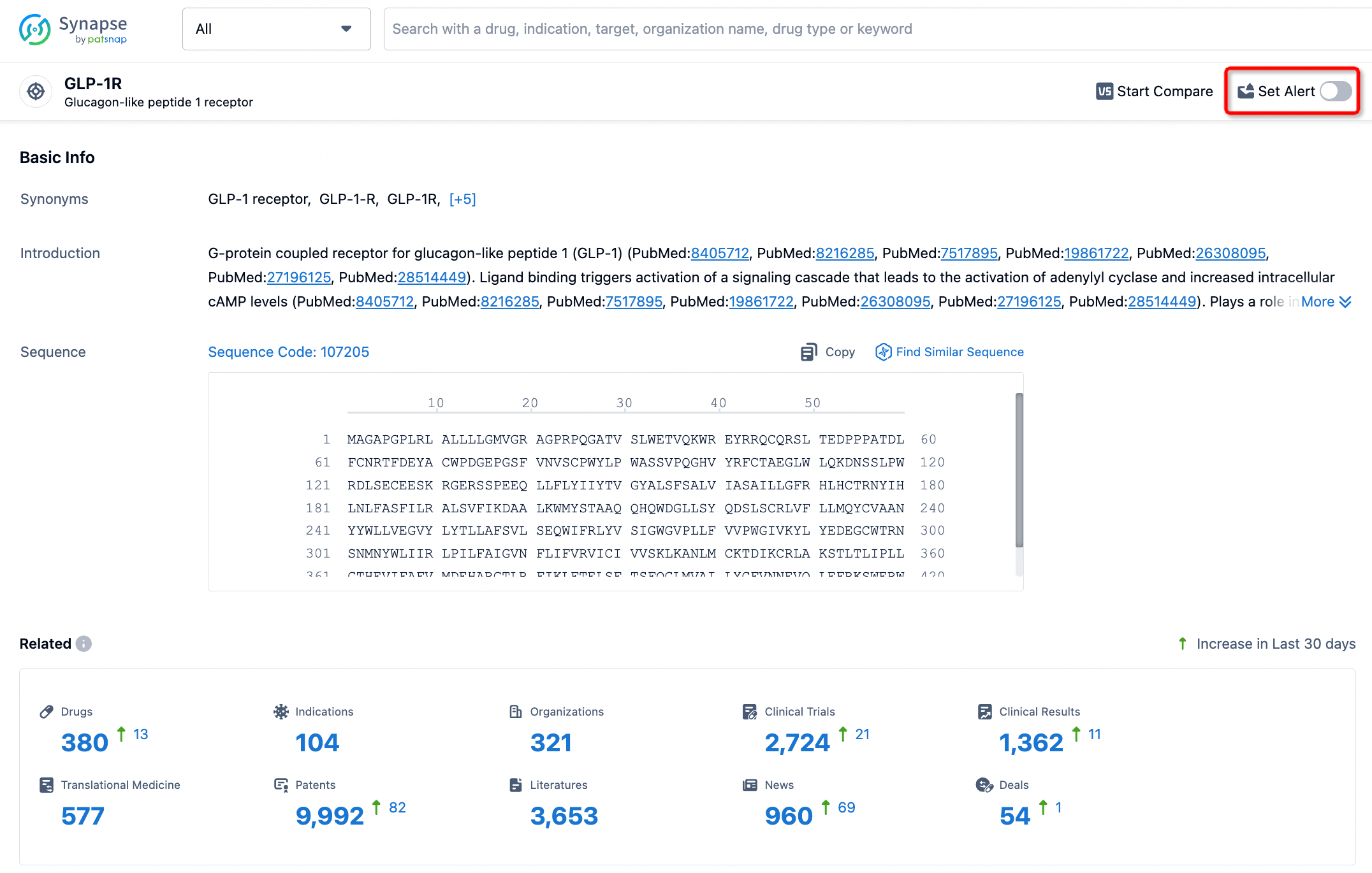
In the Synapse database, you can stay updated on the latest research and development advances of all targets. This service is accessible anytime and anywhere, with updates available daily or weekly. Use the "Set Alert" function to stay informed. Click on the image below to embark on a brand new journey of drug discovery!


AI Agents Built for Biopharma Breakthroughs
Accelerate discovery. Empower decisions. Transform outcomes.
Get started for free today!
Accelerate Strategic R&D decision making with Synapse, PatSnap’s AI-powered Connected Innovation Intelligence Platform Built for Life Sciences Professionals.
Start your data trial now!
Synapse data is also accessible to external entities via APIs or data packages. Empower better decisions with the latest in pharmaceutical intelligence.