Request Demo
What is AD-209 used for?
28 June 2024
In recent years, the landscape of medical research has seen the emergence of numerous promising compounds, with AD-209 being a prominent candidate. This investigational drug has garnered attention due to its unique mechanisms and potential applications in treating complex medical conditions. Developed by a coalition of leading research institutions and biopharmaceutical companies, AD-209 is a testament to the collaborative efforts aimed at tackling some of the most challenging diseases today.
AD-209 is primarily targeted at treating various forms of cancer, with a focus on solid tumors and hematologic malignancies. The drug belongs to a new class of targeted therapies known as small molecule inhibitors, which are designed to interfere with specific cellular processes crucial for cancer cell survival and proliferation. The compound's development is spearheaded by a consortium involving top-tier academic institutions and pharmaceutical giants, ensuring a robust and comprehensive research approach. Currently, AD-209 is in the advanced stages of clinical trials, with Phase II trials demonstrating promising results in terms of efficacy and safety.
AD-209's mechanism of action is rooted in its ability to inhibit a specific enzyme known as tyrosine kinase. This enzyme plays a vital role in the signaling pathways that regulate cell division, survival, and migration. In cancer cells, these pathways are often dysregulated, leading to uncontrolled growth and metastasis. AD-209 selectively targets and binds to the tyrosine kinase enzyme, thereby blocking its activity. This inhibition disrupts the downstream signaling cascades, ultimately inducing apoptosis (programmed cell death) in cancer cells while sparing normal, healthy cells.
Moreover, AD-209 has shown an ability to overcome resistance mechanisms that often render traditional chemotherapy and other targeted therapies ineffective. By targeting a unique binding site on the tyrosine kinase enzyme, AD-209 can circumvent common mutations that lead to drug resistance. This characteristic not only enhances its therapeutic potential but also positions AD-209 as a valuable option for patients who have exhausted other treatment avenues.
The primary indication for AD-209 is the treatment of various cancer types, with a particular emphasis on those that are resistant to existing therapies. Solid tumors, such as those found in lung, breast, and colorectal cancers, have been the focus of much of the early research. Hematologic cancers, including certain types of leukemia and lymphoma, are also key targets due to the drug's ability to disrupt abnormal signaling pathways that drive these diseases.
In clinical trials, AD-209 has demonstrated significant antitumor activity, with notable reductions in tumor size and progression-free survival in patients. These trials have also highlighted the drug's manageable safety profile, with most adverse effects being mild to moderate in severity. Common side effects include fatigue, nausea, and mild gastrointestinal disturbances, which are consistent with those observed in other targeted therapies.
Beyond its applications in oncology, researchers are exploring the potential of AD-209 in other therapeutic areas. Preliminary studies suggest that the drug's mechanism of action may be beneficial in treating certain autoimmune diseases and inflammatory conditions. By modulating the same signaling pathways implicated in cancer, AD-209 could potentially help regulate immune responses and reduce inflammation.
The journey of AD-209 from the laboratory to the clinic underscores the importance of innovative research and collaboration in the fight against cancer. As the drug continues to undergo rigorous testing and evaluation, the medical community remains hopeful that AD-209 will emerge as a powerful new tool in the arsenal against one of humanity's most formidable foes.
In conclusion, AD-209 represents a significant advancement in targeted cancer therapy, offering hope to patients with limited treatment options. Its unique mechanism of action, coupled with promising clinical trial results, positions it as a potential game-changer in oncology. As research progresses, the full impact of AD-209 on patient outcomes and its potential applications in other diseases will become clearer, paving the way for a new era of precision medicine.
AD-209 is primarily targeted at treating various forms of cancer, with a focus on solid tumors and hematologic malignancies. The drug belongs to a new class of targeted therapies known as small molecule inhibitors, which are designed to interfere with specific cellular processes crucial for cancer cell survival and proliferation. The compound's development is spearheaded by a consortium involving top-tier academic institutions and pharmaceutical giants, ensuring a robust and comprehensive research approach. Currently, AD-209 is in the advanced stages of clinical trials, with Phase II trials demonstrating promising results in terms of efficacy and safety.
AD-209's mechanism of action is rooted in its ability to inhibit a specific enzyme known as tyrosine kinase. This enzyme plays a vital role in the signaling pathways that regulate cell division, survival, and migration. In cancer cells, these pathways are often dysregulated, leading to uncontrolled growth and metastasis. AD-209 selectively targets and binds to the tyrosine kinase enzyme, thereby blocking its activity. This inhibition disrupts the downstream signaling cascades, ultimately inducing apoptosis (programmed cell death) in cancer cells while sparing normal, healthy cells.
Moreover, AD-209 has shown an ability to overcome resistance mechanisms that often render traditional chemotherapy and other targeted therapies ineffective. By targeting a unique binding site on the tyrosine kinase enzyme, AD-209 can circumvent common mutations that lead to drug resistance. This characteristic not only enhances its therapeutic potential but also positions AD-209 as a valuable option for patients who have exhausted other treatment avenues.
The primary indication for AD-209 is the treatment of various cancer types, with a particular emphasis on those that are resistant to existing therapies. Solid tumors, such as those found in lung, breast, and colorectal cancers, have been the focus of much of the early research. Hematologic cancers, including certain types of leukemia and lymphoma, are also key targets due to the drug's ability to disrupt abnormal signaling pathways that drive these diseases.
In clinical trials, AD-209 has demonstrated significant antitumor activity, with notable reductions in tumor size and progression-free survival in patients. These trials have also highlighted the drug's manageable safety profile, with most adverse effects being mild to moderate in severity. Common side effects include fatigue, nausea, and mild gastrointestinal disturbances, which are consistent with those observed in other targeted therapies.
Beyond its applications in oncology, researchers are exploring the potential of AD-209 in other therapeutic areas. Preliminary studies suggest that the drug's mechanism of action may be beneficial in treating certain autoimmune diseases and inflammatory conditions. By modulating the same signaling pathways implicated in cancer, AD-209 could potentially help regulate immune responses and reduce inflammation.
The journey of AD-209 from the laboratory to the clinic underscores the importance of innovative research and collaboration in the fight against cancer. As the drug continues to undergo rigorous testing and evaluation, the medical community remains hopeful that AD-209 will emerge as a powerful new tool in the arsenal against one of humanity's most formidable foes.
In conclusion, AD-209 represents a significant advancement in targeted cancer therapy, offering hope to patients with limited treatment options. Its unique mechanism of action, coupled with promising clinical trial results, positions it as a potential game-changer in oncology. As research progresses, the full impact of AD-209 on patient outcomes and its potential applications in other diseases will become clearer, paving the way for a new era of precision medicine.
How to obtain the latest development progress of all drugs?
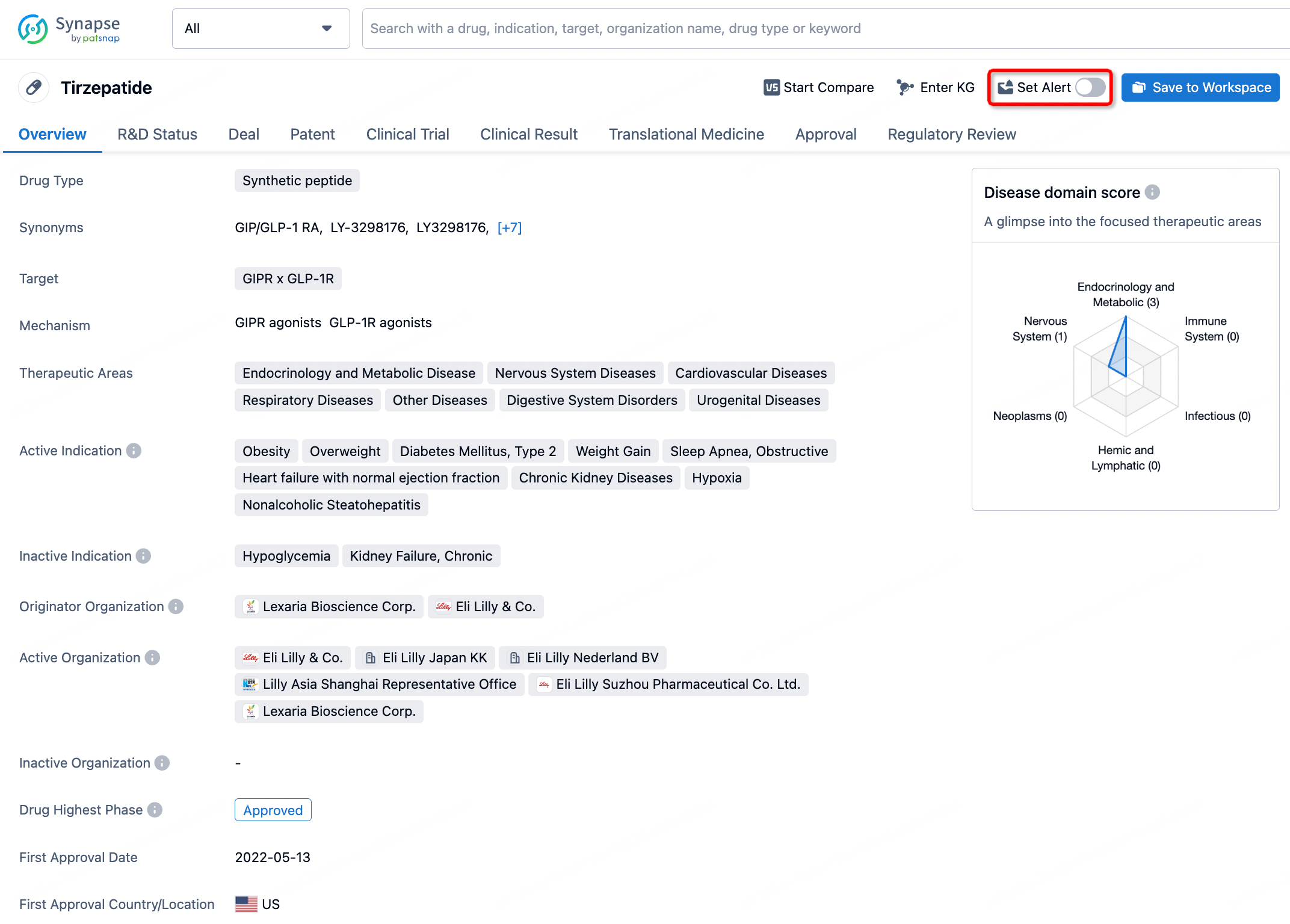
In the Synapse database, you can stay updated on the latest research and development advances of all drugs. This service is accessible anytime and anywhere, with updates available daily or weekly. Use the "Set Alert" function to stay informed. Click on the image below to embark on a brand new journey of drug discovery!

AI Agents Built for Biopharma Breakthroughs
Accelerate discovery. Empower decisions. Transform outcomes.
Get started for free today!
Accelerate Strategic R&D decision making with Synapse, PatSnap’s AI-powered Connected Innovation Intelligence Platform Built for Life Sciences Professionals.
Start your data trial now!
Synapse data is also accessible to external entities via APIs or data packages. Empower better decisions with the latest in pharmaceutical intelligence.