Request Demo
What is Adagloxad simolenin used for?
28 June 2024
In recent years, the pharmaceutical landscape has seen a surge of innovative drugs designed to tackle some of the most stubborn and debilitating diseases. One such promising development is Adagloxad simolenin. This novel therapeutic agent has been attracting significant attention from both the scientific community and those eagerly awaiting new treatment options. In this blog post, we will delve into the specifics of Adagloxad simolenin, its mechanism of action, and the indications for which it is being developed.
Adagloxad simolenin is a novel drug designed to target specific pathways involved in the body's immune response. It is primarily being researched and developed by leading institutions and pharmaceutical companies. As a biologic therapeutic, Adagloxad simolenin is a type of monoclonal antibody, which means it is engineered to recognize and bind to specific proteins in the body. The drug is currently being investigated for its potential in treating a range of autoimmune diseases and certain types of cancer. Research progress has been substantial, with several clinical trials already completed and others ongoing. These trials are essential to determine the safety and efficacy of the drug in different patient populations.
The mechanism of action of Adagloxad simolenin is both intriguing and complex. At its core, the drug works by targeting and inhibiting specific proteins that play a crucial role in the immune response. In autoimmune diseases, the immune system mistakenly attacks the body’s own tissues. Adagloxad simolenin specifically targets these errant immune responses by binding to proteins involved in the inflammatory process, thereby reducing inflammation and preventing tissue damage. This targeted approach allows the drug to modulate the immune system precisely, reducing the risk of widespread immune suppression that can leave patients vulnerable to infections.
Additionally, in the context of cancer, Adagloxad simolenin shows potential by targeting proteins that contribute to the growth and survival of cancer cells. By binding to these proteins, the drug can help to slow down or even stop the progression of the disease. This dual functionality of Adagloxad simolenin makes it a particularly exciting candidate in the field of therapeutic agents, offering hope for treatments that are both effective and have manageable side effects.
The indications for Adagloxad simolenin are still being fully determined through ongoing research, but current studies have highlighted several promising areas. One of the primary indications is for the treatment of autoimmune diseases such as rheumatoid arthritis, lupus, and multiple sclerosis. These conditions are characterized by chronic inflammation and tissue damage due to the immune system mistakenly targeting the body’s own cells. By modulating the immune response, Adagloxad simolenin has the potential to alleviate symptoms, improve quality of life, and slow disease progression in patients with these autoimmune disorders.
In addition to autoimmune diseases, Adagloxad simolenin is also being studied for its potential in oncology. Certain types of cancer, including lymphoma and melanoma, have shown responsiveness to treatments that involve modulating the immune system. By targeting specific proteins that aid in the survival and proliferation of cancer cells, Adagloxad simolenin could offer a new avenue for cancer treatment, potentially in combination with other therapies.
While the research is still evolving, the clinical trials conducted so far have shown promise. Early-phase trials have primarily focused on assessing the safety and tolerability of the drug, with results indicating that Adagloxad simolenin is well-tolerated with manageable side effects. Later-phase trials are now evaluating the efficacy of the drug in larger patient populations and across different indications. These trials will be crucial in determining the ultimate therapeutic potential of Adagloxad simolenin.
In conclusion, Adagloxad simolenin represents a significant step forward in the development of targeted therapies for autoimmune diseases and cancer. By precisely modulating the immune system, this novel drug offers a promising approach to treating conditions that have long posed challenges to patients and healthcare providers. As research progresses, we can look forward to more definitive answers regarding its efficacy and safety, potentially leading to new treatment options that could improve the lives of many.
Adagloxad simolenin is a novel drug designed to target specific pathways involved in the body's immune response. It is primarily being researched and developed by leading institutions and pharmaceutical companies. As a biologic therapeutic, Adagloxad simolenin is a type of monoclonal antibody, which means it is engineered to recognize and bind to specific proteins in the body. The drug is currently being investigated for its potential in treating a range of autoimmune diseases and certain types of cancer. Research progress has been substantial, with several clinical trials already completed and others ongoing. These trials are essential to determine the safety and efficacy of the drug in different patient populations.
The mechanism of action of Adagloxad simolenin is both intriguing and complex. At its core, the drug works by targeting and inhibiting specific proteins that play a crucial role in the immune response. In autoimmune diseases, the immune system mistakenly attacks the body’s own tissues. Adagloxad simolenin specifically targets these errant immune responses by binding to proteins involved in the inflammatory process, thereby reducing inflammation and preventing tissue damage. This targeted approach allows the drug to modulate the immune system precisely, reducing the risk of widespread immune suppression that can leave patients vulnerable to infections.
Additionally, in the context of cancer, Adagloxad simolenin shows potential by targeting proteins that contribute to the growth and survival of cancer cells. By binding to these proteins, the drug can help to slow down or even stop the progression of the disease. This dual functionality of Adagloxad simolenin makes it a particularly exciting candidate in the field of therapeutic agents, offering hope for treatments that are both effective and have manageable side effects.
The indications for Adagloxad simolenin are still being fully determined through ongoing research, but current studies have highlighted several promising areas. One of the primary indications is for the treatment of autoimmune diseases such as rheumatoid arthritis, lupus, and multiple sclerosis. These conditions are characterized by chronic inflammation and tissue damage due to the immune system mistakenly targeting the body’s own cells. By modulating the immune response, Adagloxad simolenin has the potential to alleviate symptoms, improve quality of life, and slow disease progression in patients with these autoimmune disorders.
In addition to autoimmune diseases, Adagloxad simolenin is also being studied for its potential in oncology. Certain types of cancer, including lymphoma and melanoma, have shown responsiveness to treatments that involve modulating the immune system. By targeting specific proteins that aid in the survival and proliferation of cancer cells, Adagloxad simolenin could offer a new avenue for cancer treatment, potentially in combination with other therapies.
While the research is still evolving, the clinical trials conducted so far have shown promise. Early-phase trials have primarily focused on assessing the safety and tolerability of the drug, with results indicating that Adagloxad simolenin is well-tolerated with manageable side effects. Later-phase trials are now evaluating the efficacy of the drug in larger patient populations and across different indications. These trials will be crucial in determining the ultimate therapeutic potential of Adagloxad simolenin.
In conclusion, Adagloxad simolenin represents a significant step forward in the development of targeted therapies for autoimmune diseases and cancer. By precisely modulating the immune system, this novel drug offers a promising approach to treating conditions that have long posed challenges to patients and healthcare providers. As research progresses, we can look forward to more definitive answers regarding its efficacy and safety, potentially leading to new treatment options that could improve the lives of many.
How to obtain the latest development progress of all drugs?
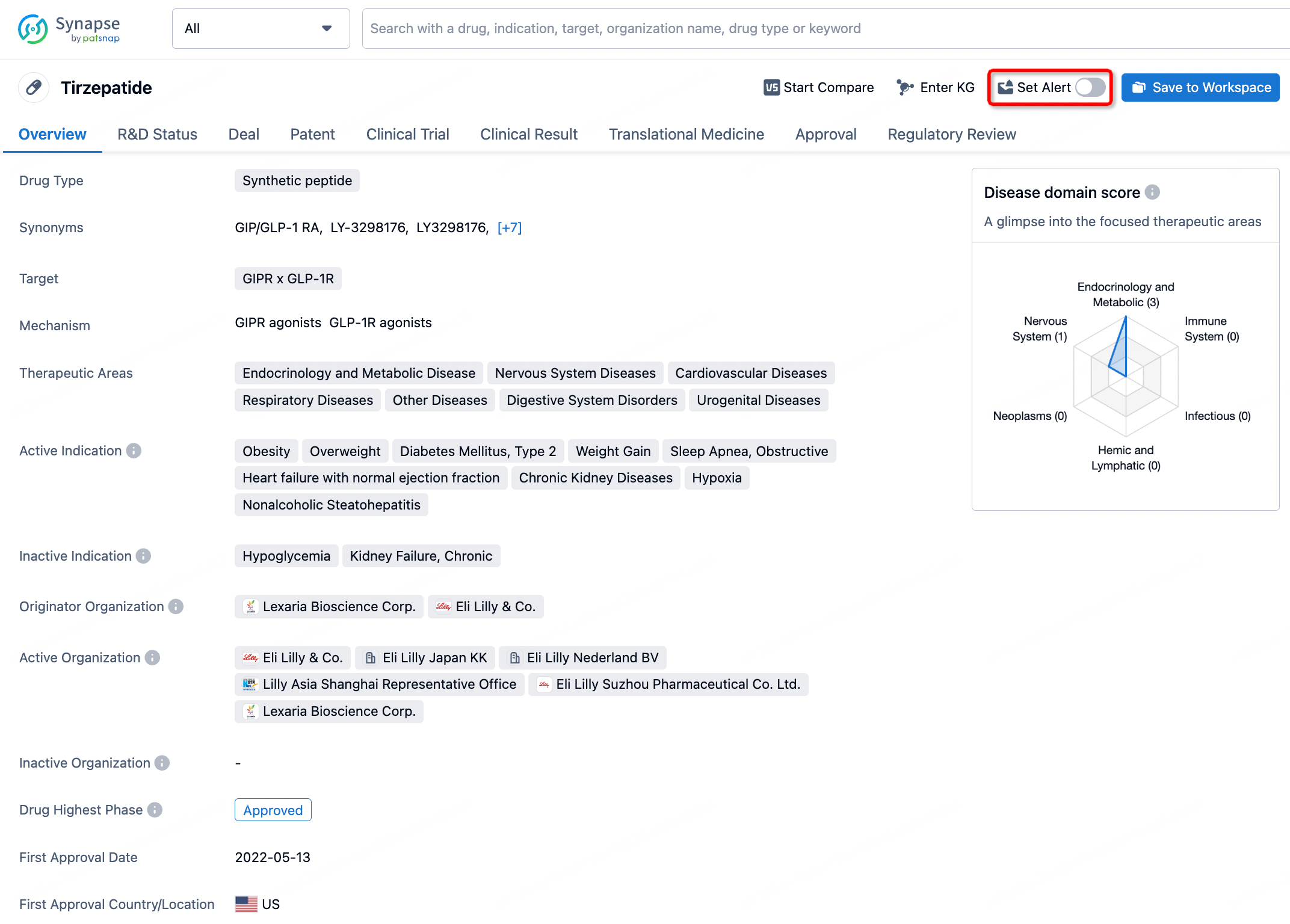
In the Synapse database, you can stay updated on the latest research and development advances of all drugs. This service is accessible anytime and anywhere, with updates available daily or weekly. Use the "Set Alert" function to stay informed. Click on the image below to embark on a brand new journey of drug discovery!

AI Agents Built for Biopharma Breakthroughs
Accelerate discovery. Empower decisions. Transform outcomes.
Get started for free today!
Accelerate Strategic R&D decision making with Synapse, PatSnap’s AI-powered Connected Innovation Intelligence Platform Built for Life Sciences Professionals.
Start your data trial now!
Synapse data is also accessible to external entities via APIs or data packages. Empower better decisions with the latest in pharmaceutical intelligence.