Request Demo
What is Asfotase alpha used for?
14 June 2024
Asfotase alpha is a groundbreaking therapeutic innovation that has garnered significant attention in the medical community for its promising benefits in treating a rare genetic disorder known as hypophosphatasia (HPP). Marketed under trade names like Strensiq, Asfotase alpha is an enzyme replacement therapy specifically designed to address this debilitating condition. It was developed by Alexion Pharmaceuticals, a company known for its focus on rare diseases and innovative treatments. Asfotase alpha targets tissue non-specific alkaline phosphatase (TNSALP), an enzyme crucial for bone mineralization. The deficiency of this enzyme leads to the accumulation of substrates that cause the severe skeletal and systemic manifestations seen in HPP. The drug has received regulatory approval for various forms of hypophosphatasia, ranging from perinatal/infantile-onset to juvenile-onset. Clinical trials have demonstrated its efficacy in improving bone mineralization, growth, and overall survival in affected patients.
The mechanism of action of Asfotase alpha revolves around its ability to replace the deficient alkaline phosphatase enzyme. It is a recombinant protein that combines the catalytic domain of TNSALP with a deca-aspartate (D10) peptide used to enhance its localization to mineralized tissues like bones and teeth. By doing so, Asfotase alpha helps in breaking down accumulated inorganic pyrophosphate (PPi), a natural substrate of TNSALP that inhibits mineralization. The reduction of PPi levels facilitates the normal deposition of calcium and phosphate in the bone matrix, thereby normalizing bone formation and mineralization. This mechanism not only addresses the skeletal abnormalities but also improves the systemic complications associated with hypophosphatasia, such as muscle weakness and respiratory difficulties.
Administering Asfotase alpha typically involves subcutaneous injections, a method that ensures the drug is delivered directly into the fatty tissue under the skin for optimal absorption. The dosage and frequency of administration depend on the patient's weight and the severity of the condition. For instance, pediatric patients often receive higher doses per kilogram of body weight compared to adults. The onset of action can vary, but clinical improvements in bone mineralization and function are usually observed within a few months of initiating therapy. Continuous treatment is often required to maintain the therapeutic benefits, and regular monitoring by healthcare providers ensures optimal dosing and management of any potential side effects.
Asfotase alpha, like any other medication, comes with its own set of side effects and contraindications. Common side effects include injection site reactions such as redness, swelling, and pain. Less frequently, patients may experience systemic reactions like fever, chills, and fatigue. More serious, albeit rare, side effects include hypersensitivity reactions, which can manifest as anaphylaxis or severe allergic reactions. Patients with a known hypersensitivity to Asfotase alpha or any of its components should not receive the drug. Additionally, caution is advised in patients with a history of severe immune-mediated reactions. Long-term surveillance is essential to detect and manage any emerging side effects, given the chronic nature of the treatment.
When considering drug interactions, it is crucial to note that Asfotase alpha may interact with other medications, although such interactions are relatively rare due to its targeted mechanism of action. Nonetheless, healthcare providers should be informed of all concomitant medications the patient is taking, including over-the-counter drugs and supplements. Drugs that alter calcium and phosphate metabolism could theoretically influence the efficacy of Asfotase alpha. Therefore, medications such as bisphosphonates, which inhibit bone resorption, or phosphate supplements, should be used cautiously and under strict medical supervision. Regular follow-ups and blood tests help in monitoring these interactions and adjusting the treatment regimen as needed.
In conclusion, Asfotase alpha represents a significant advancement in the treatment of hypophosphatasia, offering hope to patients affected by this rare and often devastating disease. By replacing the deficient alkaline phosphatase enzyme, it addresses the root cause of the condition and improves both skeletal and systemic symptoms. While the drug is generally well-tolerated, monitoring for side effects and potential drug interactions is essential to ensure its safe and effective use. As research continues, it is hoped that even more refined treatments will emerge, further improving the quality of life for those living with hypophosphatasia.
The mechanism of action of Asfotase alpha revolves around its ability to replace the deficient alkaline phosphatase enzyme. It is a recombinant protein that combines the catalytic domain of TNSALP with a deca-aspartate (D10) peptide used to enhance its localization to mineralized tissues like bones and teeth. By doing so, Asfotase alpha helps in breaking down accumulated inorganic pyrophosphate (PPi), a natural substrate of TNSALP that inhibits mineralization. The reduction of PPi levels facilitates the normal deposition of calcium and phosphate in the bone matrix, thereby normalizing bone formation and mineralization. This mechanism not only addresses the skeletal abnormalities but also improves the systemic complications associated with hypophosphatasia, such as muscle weakness and respiratory difficulties.
Administering Asfotase alpha typically involves subcutaneous injections, a method that ensures the drug is delivered directly into the fatty tissue under the skin for optimal absorption. The dosage and frequency of administration depend on the patient's weight and the severity of the condition. For instance, pediatric patients often receive higher doses per kilogram of body weight compared to adults. The onset of action can vary, but clinical improvements in bone mineralization and function are usually observed within a few months of initiating therapy. Continuous treatment is often required to maintain the therapeutic benefits, and regular monitoring by healthcare providers ensures optimal dosing and management of any potential side effects.
Asfotase alpha, like any other medication, comes with its own set of side effects and contraindications. Common side effects include injection site reactions such as redness, swelling, and pain. Less frequently, patients may experience systemic reactions like fever, chills, and fatigue. More serious, albeit rare, side effects include hypersensitivity reactions, which can manifest as anaphylaxis or severe allergic reactions. Patients with a known hypersensitivity to Asfotase alpha or any of its components should not receive the drug. Additionally, caution is advised in patients with a history of severe immune-mediated reactions. Long-term surveillance is essential to detect and manage any emerging side effects, given the chronic nature of the treatment.
When considering drug interactions, it is crucial to note that Asfotase alpha may interact with other medications, although such interactions are relatively rare due to its targeted mechanism of action. Nonetheless, healthcare providers should be informed of all concomitant medications the patient is taking, including over-the-counter drugs and supplements. Drugs that alter calcium and phosphate metabolism could theoretically influence the efficacy of Asfotase alpha. Therefore, medications such as bisphosphonates, which inhibit bone resorption, or phosphate supplements, should be used cautiously and under strict medical supervision. Regular follow-ups and blood tests help in monitoring these interactions and adjusting the treatment regimen as needed.
In conclusion, Asfotase alpha represents a significant advancement in the treatment of hypophosphatasia, offering hope to patients affected by this rare and often devastating disease. By replacing the deficient alkaline phosphatase enzyme, it addresses the root cause of the condition and improves both skeletal and systemic symptoms. While the drug is generally well-tolerated, monitoring for side effects and potential drug interactions is essential to ensure its safe and effective use. As research continues, it is hoped that even more refined treatments will emerge, further improving the quality of life for those living with hypophosphatasia.
How to obtain the latest development progress of all drugs?
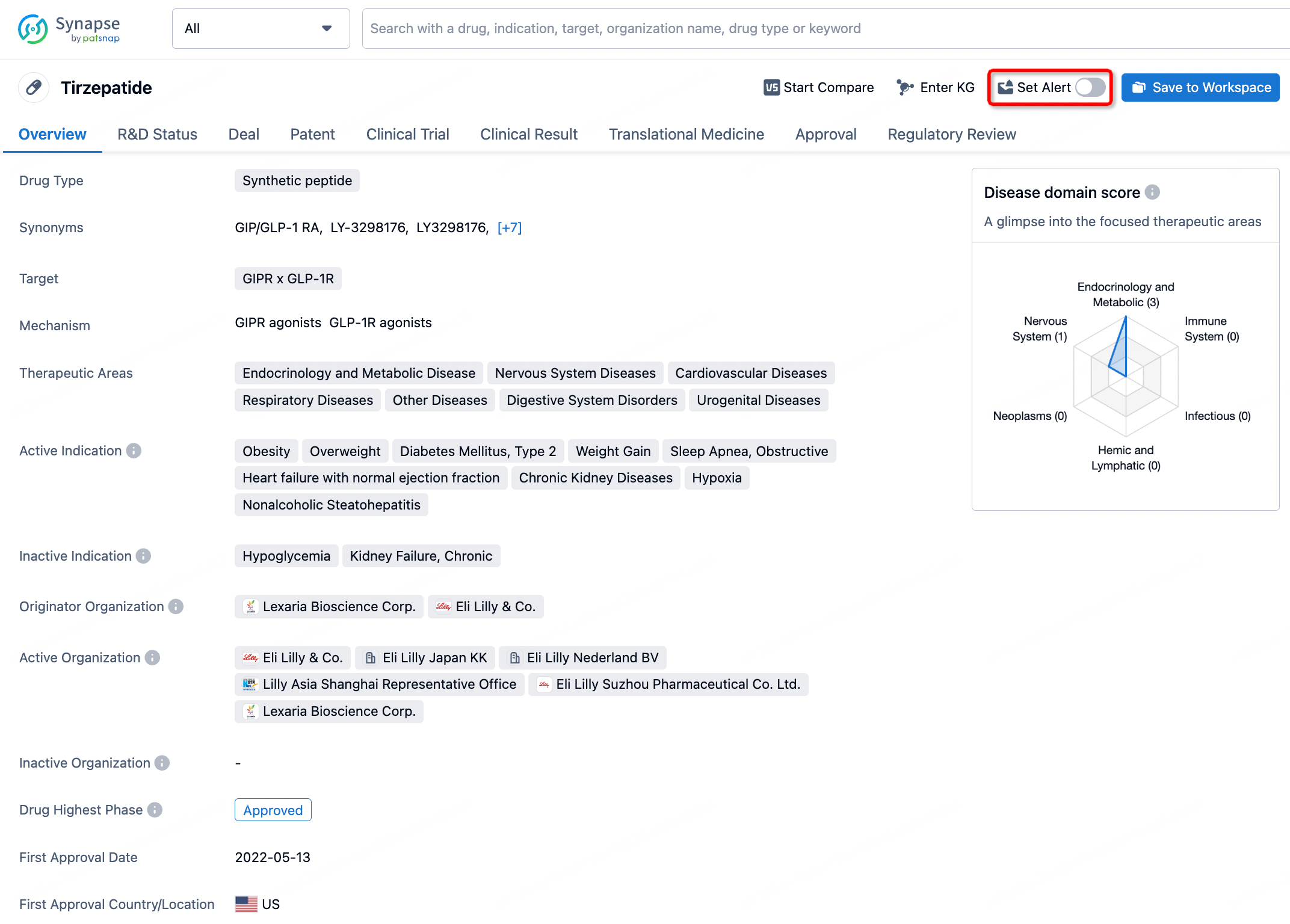
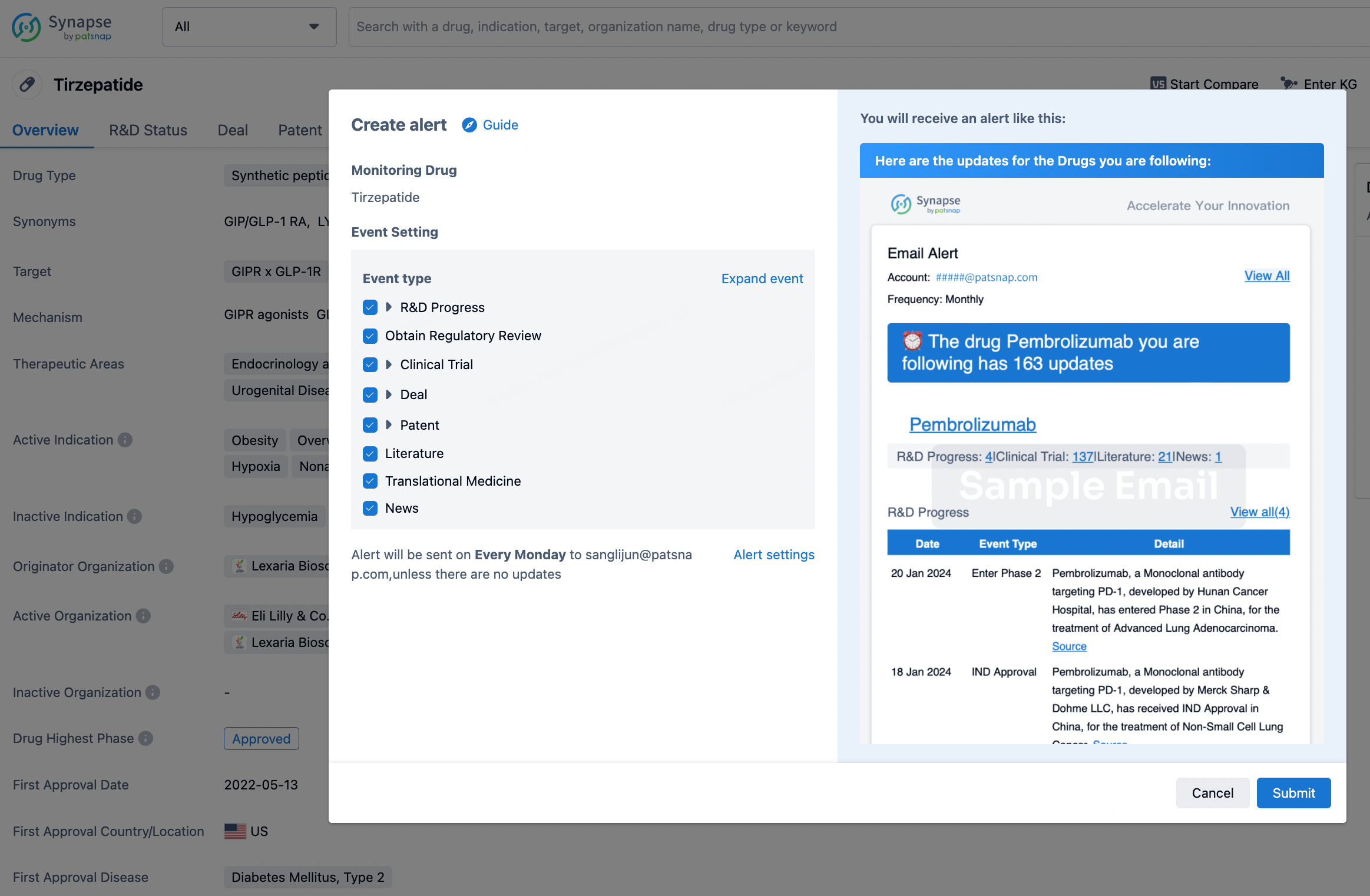
In the Synapse database, you can stay updated on the latest research and development advances of all drugs. This service is accessible anytime and anywhere, with updates available daily or weekly. Use the "Set Alert" function to stay informed. Click on the image below to embark on a brand new journey of drug discovery!
Hiro LS Researcher
The AI Search Engine Built to Accelerate Biopharma Decisions
Search across billion-scale life sciences data to uncover signals, validate evidence, and act with confidence.
Ask any biopharma research question→
Get started for free today!
Accelerate Strategic R&D decision making with Synapse, Patsnap’s AI-powered Connected Innovation Intelligence Platform Built for Life Sciences Professionals.
Discover Synapse Data Servers
Synapse data is now integrated into the PatSnap LS Model Context Protocol (MCP) service. Customize your LLM agent now using our MCP server!