Request Demo
What is BCDA-02 used for?
28 June 2024
In the rapidly evolving world of medical research, BCDA-02 has emerged as a promising new drug that could potentially revolutionize treatment methodologies for a variety of conditions. Developed by a collaborative team of researchers from leading institutions, BCDA-02 targets specific pathways within the body to produce its therapeutic effects. Classified as a biologic drug, BCDA-02 is currently being studied for its effectiveness in treating autoimmune diseases, with some preliminary data also suggesting potential applications in oncology. The drug is presently in Phase II clinical trials, and early results have generated significant optimism among the scientific community and healthcare providers.
BCDA-02 operates through a unique mechanism of action that sets it apart from many existing treatments. At its core, BCDA-02 is designed to modulate the immune system. The drug works by targeting specific cytokines—proteins that play a crucial role in cell signaling within the immune system. By binding to these cytokines, BCDA-02 can either inhibit or stimulate their activity, depending on the therapeutic requirement. This targeted approach allows for a more precise modulation of the immune response, reducing inflammation and preventing the immune system from attacking healthy tissues, which is a common issue in autoimmune diseases.
Furthermore, BCDA-02 leverages advanced bioengineering techniques to ensure that it has a high affinity for its target cytokines, maximizing its efficacy while minimizing potential side effects. The drug is administered intravenously, which allows for swift absorption and rapid onset of action. The pharmacokinetics of BCDA-02 have been studied extensively, revealing a favorable profile in terms of both efficacy and safety. It has a relatively long half-life, which means that patients may not need frequent dosing—a significant advantage in terms of compliance and convenience.
The primary indication for BCDA-02 is the treatment of autoimmune diseases, particularly rheumatoid arthritis (RA) and systemic lupus erythematosus (SLE). Both conditions involve an aberrant immune response that leads to chronic inflammation and tissue damage. Existing treatments for these conditions often involve broad-spectrum immunosuppressants, which can leave patients vulnerable to infections and other complications. BCDA-02 offers a more targeted approach, aiming to modulate the immune system without broadly suppressing it.
In the case of rheumatoid arthritis, BCDA-02 has shown promise in reducing joint inflammation and slowing disease progression. Preliminary clinical data indicate that patients treated with BCDA-02 experience significant improvements in joint pain and function, as well as a reduction in biomarkers associated with inflammation. These findings suggest that BCDA-02 could become a valuable addition to the existing arsenal of RA treatments, offering hope to patients who have not responded well to conventional therapies.
For systemic lupus erythematosus, the challenges are even more significant due to the systemic nature of the disease, which can affect multiple organs and systems within the body. Early clinical trials of BCDA-02 in SLE patients have shown promising results, with reductions in disease activity and improvements in quality of life. The drug's ability to precisely target specific cytokines involved in the inflammatory process makes it particularly suitable for managing such a complex condition.
In addition to its applications in autoimmune diseases, BCDA-02 is also being explored for its potential in oncology. Certain types of cancer, such as lymphoma, involve dysregulation of the immune system. Researchers are investigating whether BCDA-02 can help modulate the immune response in a way that enhances the body's ability to combat cancer cells. While this line of research is still in its early stages, the initial data are encouraging and warrant further investigation.
In summary, BCDA-02 represents a significant advancement in the field of medical research, offering a targeted and potentially more effective treatment option for autoimmune diseases like rheumatoid arthritis and systemic lupus erythematosus. Its unique mechanism of action and favorable pharmacokinetic profile make it a promising candidate for further development. As research progresses, BCDA-02 may also find applications in oncology, broadening its therapeutic potential. The ongoing clinical trials will provide more definitive answers, but the future certainly looks bright for this innovative drug.
BCDA-02 operates through a unique mechanism of action that sets it apart from many existing treatments. At its core, BCDA-02 is designed to modulate the immune system. The drug works by targeting specific cytokines—proteins that play a crucial role in cell signaling within the immune system. By binding to these cytokines, BCDA-02 can either inhibit or stimulate their activity, depending on the therapeutic requirement. This targeted approach allows for a more precise modulation of the immune response, reducing inflammation and preventing the immune system from attacking healthy tissues, which is a common issue in autoimmune diseases.
Furthermore, BCDA-02 leverages advanced bioengineering techniques to ensure that it has a high affinity for its target cytokines, maximizing its efficacy while minimizing potential side effects. The drug is administered intravenously, which allows for swift absorption and rapid onset of action. The pharmacokinetics of BCDA-02 have been studied extensively, revealing a favorable profile in terms of both efficacy and safety. It has a relatively long half-life, which means that patients may not need frequent dosing—a significant advantage in terms of compliance and convenience.
The primary indication for BCDA-02 is the treatment of autoimmune diseases, particularly rheumatoid arthritis (RA) and systemic lupus erythematosus (SLE). Both conditions involve an aberrant immune response that leads to chronic inflammation and tissue damage. Existing treatments for these conditions often involve broad-spectrum immunosuppressants, which can leave patients vulnerable to infections and other complications. BCDA-02 offers a more targeted approach, aiming to modulate the immune system without broadly suppressing it.
In the case of rheumatoid arthritis, BCDA-02 has shown promise in reducing joint inflammation and slowing disease progression. Preliminary clinical data indicate that patients treated with BCDA-02 experience significant improvements in joint pain and function, as well as a reduction in biomarkers associated with inflammation. These findings suggest that BCDA-02 could become a valuable addition to the existing arsenal of RA treatments, offering hope to patients who have not responded well to conventional therapies.
For systemic lupus erythematosus, the challenges are even more significant due to the systemic nature of the disease, which can affect multiple organs and systems within the body. Early clinical trials of BCDA-02 in SLE patients have shown promising results, with reductions in disease activity and improvements in quality of life. The drug's ability to precisely target specific cytokines involved in the inflammatory process makes it particularly suitable for managing such a complex condition.
In addition to its applications in autoimmune diseases, BCDA-02 is also being explored for its potential in oncology. Certain types of cancer, such as lymphoma, involve dysregulation of the immune system. Researchers are investigating whether BCDA-02 can help modulate the immune response in a way that enhances the body's ability to combat cancer cells. While this line of research is still in its early stages, the initial data are encouraging and warrant further investigation.
In summary, BCDA-02 represents a significant advancement in the field of medical research, offering a targeted and potentially more effective treatment option for autoimmune diseases like rheumatoid arthritis and systemic lupus erythematosus. Its unique mechanism of action and favorable pharmacokinetic profile make it a promising candidate for further development. As research progresses, BCDA-02 may also find applications in oncology, broadening its therapeutic potential. The ongoing clinical trials will provide more definitive answers, but the future certainly looks bright for this innovative drug.
How to obtain the latest development progress of all drugs?
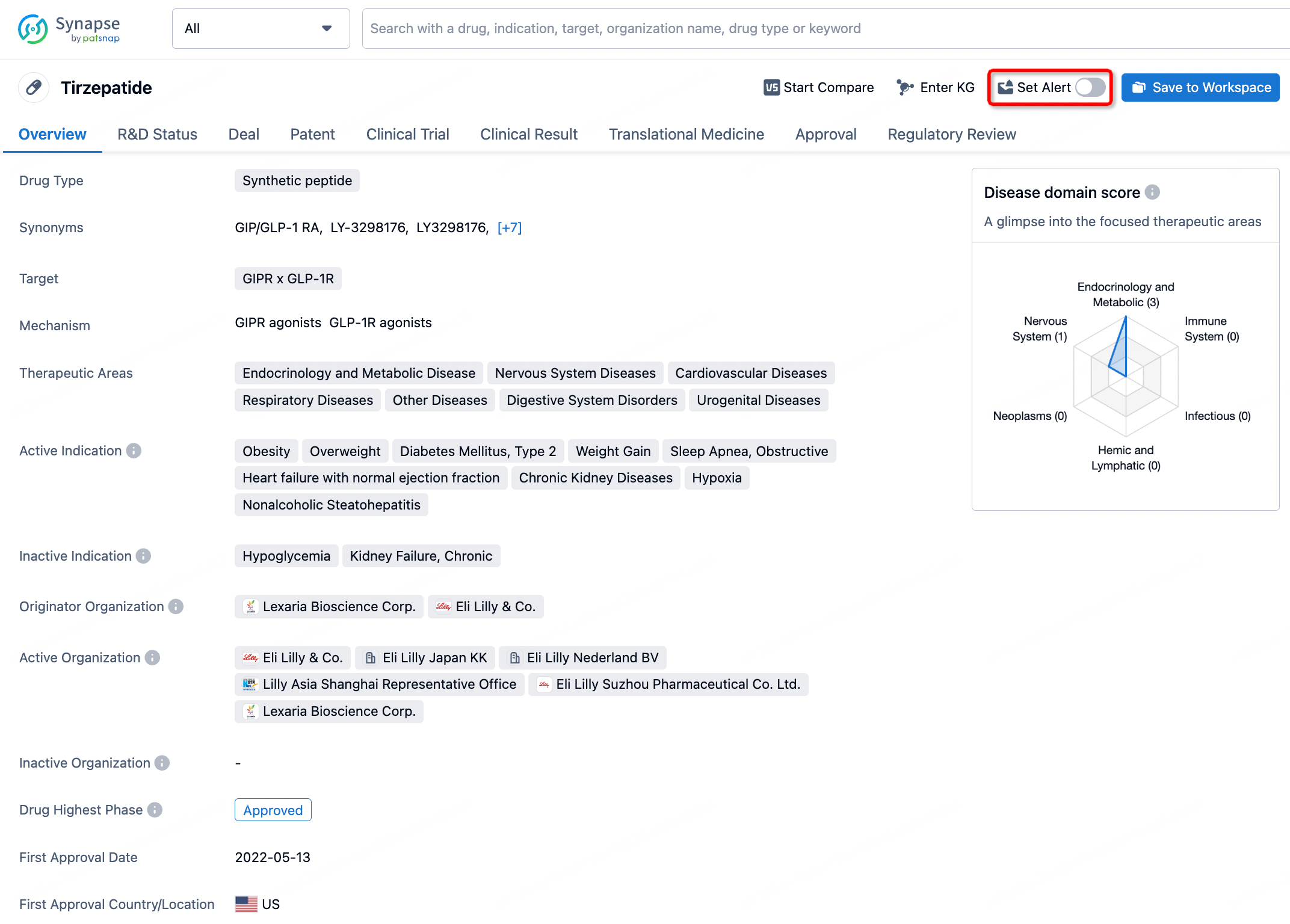
In the Synapse database, you can stay updated on the latest research and development advances of all drugs. This service is accessible anytime and anywhere, with updates available daily or weekly. Use the "Set Alert" function to stay informed. Click on the image below to embark on a brand new journey of drug discovery!


AI Agents Built for Biopharma Breakthroughs
Accelerate discovery. Empower decisions. Transform outcomes.
Get started for free today!
Accelerate Strategic R&D decision making with Synapse, PatSnap’s AI-powered Connected Innovation Intelligence Platform Built for Life Sciences Professionals.
Start your data trial now!
Synapse data is also accessible to external entities via APIs or data packages. Empower better decisions with the latest in pharmaceutical intelligence.