Request Demo
What is Benzylpenicilloyl Polylysine used for?
17 June 2024
Benzylpenicilloyl Polylysine, commonly known under trade names such as Pre-Pen, is a diagnostic agent predominantly used to determine hypersensitivity to penicillin antibiotics. This reagent is widely produced and researched by various pharmaceutical companies and institutions specializing in allergy and immunology. It is a crucial tool for healthcare providers to diagnose penicillin allergy accurately and avoid unnecessary avoidance of this common class of antibiotics. As a skin testing agent, Benzylpenicilloyl Polylysine helps to identify whether a patient has an IgE-mediated hypersensitivity reaction to penicillin. The use of this agent reduces the risk of anaphylaxis and other severe allergic reactions by ensuring that only patients who are truly allergic to penicillin avoid its use. Benzylpenicilloyl Polylysine has undergone extensive studies and clinical trials to validate its efficacy and safety, with ongoing research aiming to improve its diagnostic accuracy and minimize adverse effects.
Benzylpenicilloyl Polylysine acts by mimicking the major antigenic determinant of penicillin. When injected intradermally, it binds to specific IgE antibodies present on mast cells in individuals who are truly allergic to penicillin. This binding triggers the release of histamine and other mediators, resulting in a localized skin reaction characterized by a wheal and flare response. This reaction forms the basis of the skin test, allowing healthcare providers to determine the presence of penicillin-specific IgE antibodies. The mechanism of action thus relies on the body's immune response to the antigenic determinant, providing a direct method to assess potential allergic reactions without exposing the patient to a full therapeutic dose of penicillin.
Benzylpenicilloyl Polylysine is administered via intradermal injection, typically on the forearm, as part of a comprehensive penicillin allergy skin testing protocol. The administration process begins with the application of a small amount of the reagent into the dermis using a fine needle. The test site is then observed for 15 to 20 minutes for any signs of a localized allergic reaction, such as erythema (redness), induration (hardening), or the formation of a wheal (raised bump). A positive reaction is indicated by the presence of a wheal and flare response, confirming penicillin hypersensitivity. Conversely, the absence of such a reaction suggests that the patient is not allergic to penicillin and can safely receive penicillin-based antibiotics if needed. It is crucial to note that the skin test should always be performed under medical supervision, as severe allergic reactions, though rare, may occur.
While Benzylpenicilloyl Polylysine is generally well-tolerated, some patients may experience side effects. Common reactions include localized pain, redness, itching, or swelling at the injection site. These symptoms are typically mild and resolve on their own. However, in rare cases, patients may experience systemic allergic reactions, including anaphylaxis, which can be life-threatening and require immediate medical intervention. Contraindications for the use of Benzylpenicilloyl Polylysine include a history of severe or immediate hypersensitivity reactions to penicillin or any of the test's components. Patients with active skin infections, severe dermatological conditions, or compromised immune systems may also be advised against undergoing the skin test. It is essential for healthcare providers to conduct a thorough medical history and assessment to identify any potential risks before administering Benzylpenicilloyl Polylysine.
Certain medications can affect the results of the Benzylpenicilloyl Polylysine skin test by interfering with the immune response or the skin's ability to react. For instance, antihistamines, which are commonly used to treat allergies, can suppress the skin's reaction and lead to false-negative results. Patients are typically advised to discontinue antihistamines for a specified period before undergoing the test. Other medications that may affect the test outcome include corticosteroids, immunosuppressants, and certain psychiatric drugs. Additionally, patients on beta-blockers may have an increased risk of severe allergic reactions and may not respond adequately to emergency treatment, such as epinephrine, if anaphylaxis occurs during the test. It is crucial for patients to inform their healthcare providers of all medications they are currently taking, including over-the-counter drugs and supplements, to ensure an accurate and safe assessment of penicillin allergy.
In conclusion, Benzylpenicilloyl Polylysine plays a vital role in the diagnostic process for penicillin allergy, offering a reliable method to identify individuals with true hypersensitivity. Understanding its mechanism of action, proper administration techniques, potential side effects, and interactions with other medications is essential for healthcare providers to utilize this diagnostic tool effectively. By accurately identifying penicillin allergies, Benzylpenicilloyl Polylysine helps to ensure the safe use of penicillin antibiotics, ultimately improving patient care and antibiotic stewardship. Ongoing research and advancements in this field continue to enhance the safety and accuracy of penicillin allergy testing, providing better outcomes for patients worldwide.
Benzylpenicilloyl Polylysine acts by mimicking the major antigenic determinant of penicillin. When injected intradermally, it binds to specific IgE antibodies present on mast cells in individuals who are truly allergic to penicillin. This binding triggers the release of histamine and other mediators, resulting in a localized skin reaction characterized by a wheal and flare response. This reaction forms the basis of the skin test, allowing healthcare providers to determine the presence of penicillin-specific IgE antibodies. The mechanism of action thus relies on the body's immune response to the antigenic determinant, providing a direct method to assess potential allergic reactions without exposing the patient to a full therapeutic dose of penicillin.
Benzylpenicilloyl Polylysine is administered via intradermal injection, typically on the forearm, as part of a comprehensive penicillin allergy skin testing protocol. The administration process begins with the application of a small amount of the reagent into the dermis using a fine needle. The test site is then observed for 15 to 20 minutes for any signs of a localized allergic reaction, such as erythema (redness), induration (hardening), or the formation of a wheal (raised bump). A positive reaction is indicated by the presence of a wheal and flare response, confirming penicillin hypersensitivity. Conversely, the absence of such a reaction suggests that the patient is not allergic to penicillin and can safely receive penicillin-based antibiotics if needed. It is crucial to note that the skin test should always be performed under medical supervision, as severe allergic reactions, though rare, may occur.
While Benzylpenicilloyl Polylysine is generally well-tolerated, some patients may experience side effects. Common reactions include localized pain, redness, itching, or swelling at the injection site. These symptoms are typically mild and resolve on their own. However, in rare cases, patients may experience systemic allergic reactions, including anaphylaxis, which can be life-threatening and require immediate medical intervention. Contraindications for the use of Benzylpenicilloyl Polylysine include a history of severe or immediate hypersensitivity reactions to penicillin or any of the test's components. Patients with active skin infections, severe dermatological conditions, or compromised immune systems may also be advised against undergoing the skin test. It is essential for healthcare providers to conduct a thorough medical history and assessment to identify any potential risks before administering Benzylpenicilloyl Polylysine.
Certain medications can affect the results of the Benzylpenicilloyl Polylysine skin test by interfering with the immune response or the skin's ability to react. For instance, antihistamines, which are commonly used to treat allergies, can suppress the skin's reaction and lead to false-negative results. Patients are typically advised to discontinue antihistamines for a specified period before undergoing the test. Other medications that may affect the test outcome include corticosteroids, immunosuppressants, and certain psychiatric drugs. Additionally, patients on beta-blockers may have an increased risk of severe allergic reactions and may not respond adequately to emergency treatment, such as epinephrine, if anaphylaxis occurs during the test. It is crucial for patients to inform their healthcare providers of all medications they are currently taking, including over-the-counter drugs and supplements, to ensure an accurate and safe assessment of penicillin allergy.
In conclusion, Benzylpenicilloyl Polylysine plays a vital role in the diagnostic process for penicillin allergy, offering a reliable method to identify individuals with true hypersensitivity. Understanding its mechanism of action, proper administration techniques, potential side effects, and interactions with other medications is essential for healthcare providers to utilize this diagnostic tool effectively. By accurately identifying penicillin allergies, Benzylpenicilloyl Polylysine helps to ensure the safe use of penicillin antibiotics, ultimately improving patient care and antibiotic stewardship. Ongoing research and advancements in this field continue to enhance the safety and accuracy of penicillin allergy testing, providing better outcomes for patients worldwide.
How to obtain the latest development progress of all drugs?
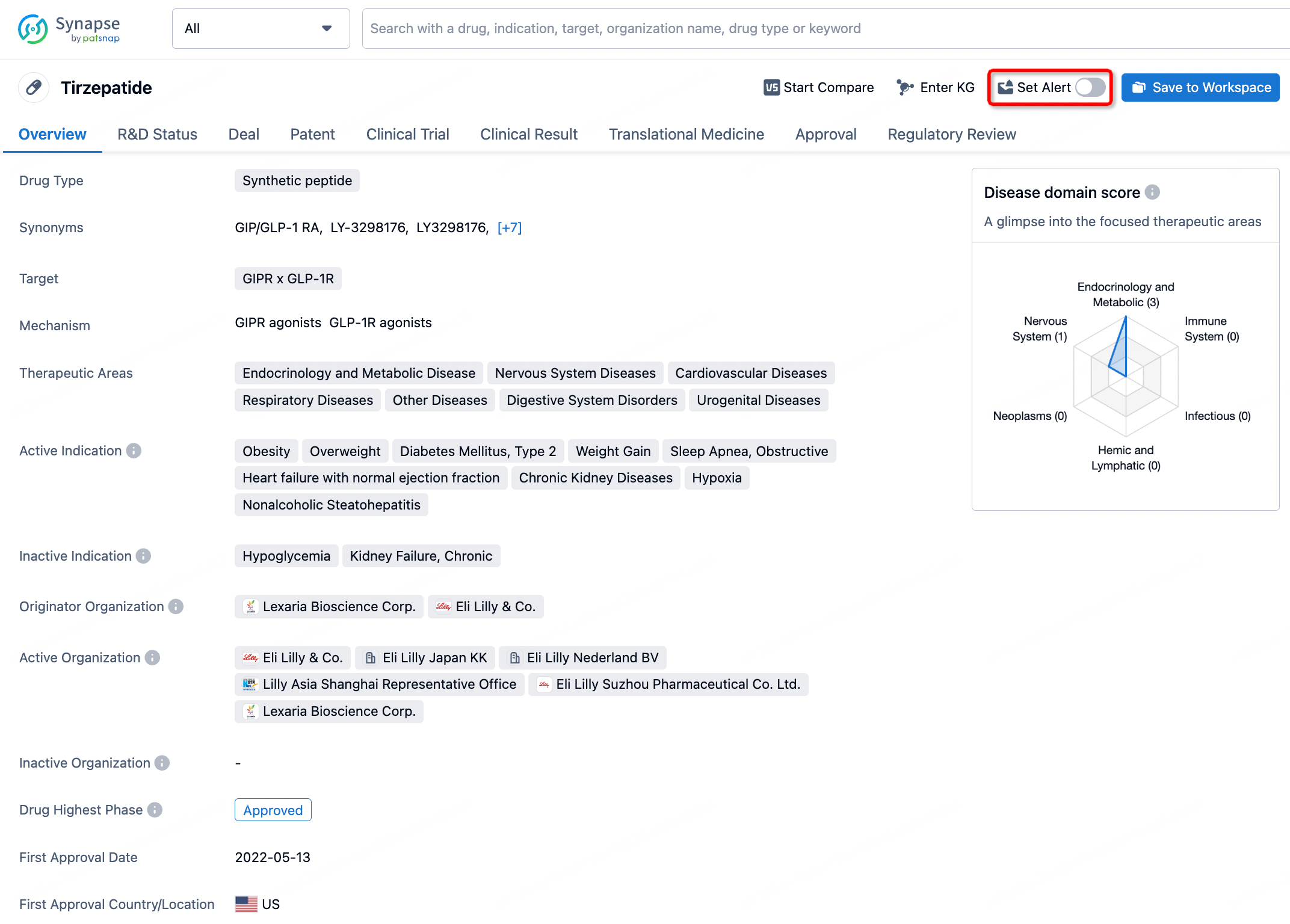
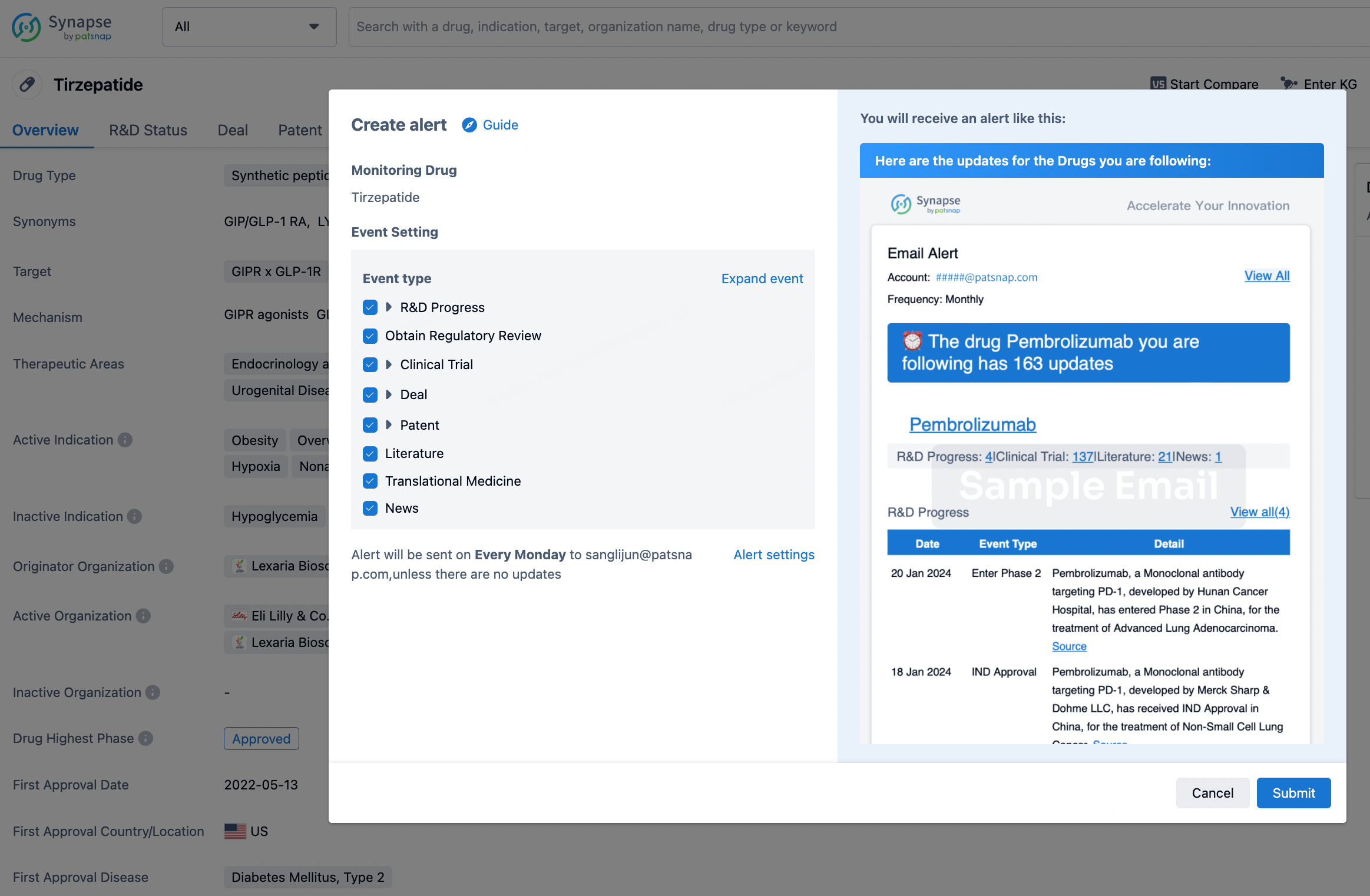
In the Synapse database, you can stay updated on the latest research and development advances of all drugs. This service is accessible anytime and anywhere, with updates available daily or weekly. Use the "Set Alert" function to stay informed. Click on the image below to embark on a brand new journey of drug discovery!

AI Agents Built for Biopharma Breakthroughs
Accelerate discovery. Empower decisions. Transform outcomes.
Get started for free today!
Accelerate Strategic R&D decision making with Synapse, PatSnap’s AI-powered Connected Innovation Intelligence Platform Built for Life Sciences Professionals.
Start your data trial now!
Synapse data is also accessible to external entities via APIs or data packages. Empower better decisions with the latest in pharmaceutical intelligence.